How to Transfer Files Between Cloud Storage Services
Cloud-to-cloud file transfer moves files directly between storage providers without downloading to a local device first. This guide covers five practical methods, from built-in provider tools to API-based imports, ranked by speed and convenience so you can pick the right approach for your situation.


What Cloud-to-Cloud File Transfer Actually Means
Cloud-to-cloud file transfer is the process of moving files from one cloud storage provider to another without routing data through your local machine. Instead of downloading files from Google Drive to your laptop and re-uploading them to Dropbox, you set up a direct path between the two services, and the files move through data center connections.
This matters more than it used to. Over 54% of people now use three or more cloud storage providers, according to recent surveys. Teams commonly split files across Google Drive for collaboration, Dropbox for external sharing, OneDrive for Microsoft integrations, and Box for compliance-sensitive documents. When a project moves teams, a vendor changes, or you consolidate storage accounts, you need a way to move files between these services without the manual grind.
The download-reupload approach has three practical problems that get worse as file volumes grow:
- It wastes bandwidth twice. You download files from Provider A using your internet connection, then upload the same files to Provider B using that same connection. A 50 GB migration consumes 100 GB of your bandwidth.
- It depends on your local machine staying online. If your laptop goes to sleep, your Wi-Fi drops, or your browser tab closes mid-transfer, you get a partial migration with no easy way to resume.
- It strips metadata and permissions. Downloaded files lose their sharing settings, version history, and folder structure. You start from scratch on the destination side.
Server-side transfer methods avoid all three problems. The files move between cloud data centers at gigabit speeds while your machine does something else entirely.
Related guides
- How to Consolidate Multiple Cloud Storage Accounts Without Losing FilesMost teams scatter files across Google Drive, Dropbox, OneDrive, and Box without a plan. Over time, duplicate files...
- How to Transfer Google Drive Files to Another Account or ServiceGoogle Drive transfer is the process of moving files, folders, or entire accounts from Google Drive to another Google...
- How to Import Cloud Files Without Downloading Them FirstServer-side cloud import copies files directly between cloud providers without routing data through your local machine....
- How to Plan a Cloud Storage Migration: The Complete ChecklistMoving files between cloud providers is straightforward until it isn't. Permission mismatches, broken sharing links,...
- Fastest Cloud Storage Services Compared: Speed Benchmarks 2026Cloud storage speed goes beyond raw upload numbers. Specialized UDP-based services like MASV offer the fastest raw...
- How to Transfer Files Between Computers: Fast, Secure Methods ComparedLearning how to transfer files between computers requires matching data volume and physical proximity to the right...
More on this subject: File Sharing (155 guides)
5 Methods for Cloud-to-Cloud Transfer, Ranked
Not every cloud migration is the same. Moving 20 documents between personal accounts is a different problem from migrating 500 GB of project files across enterprise platforms. Here are five methods ranked from most convenient to most flexible, so you can match the approach to your situation.
1. URL Import Through a Cloud Workspace
The fastest method for most people. Some cloud platforms can pull files directly from another provider using OAuth authentication. You connect your source account (Google Drive, Dropbox, OneDrive, or Box), select the files or folders, and the platform imports them server-side.
Fastio's Cloud Import works this way. You authenticate with your source provider through OAuth, pick the folders you want, and Fastio pulls them into your workspace without touching your local machine. Folder structures stay intact, and imported files are automatically indexed for search and AI-powered Q&A if you have Intelligence Mode enabled.
Best for: Teams consolidating from multiple cloud providers into a single workspace. Works well for migrations under 50 GB where you want files immediately searchable and organized.
Speed: Fast. Transfers happen at data center speeds. A 10 GB folder typically finishes in minutes rather than the hour-plus it would take through a local download-reupload cycle.
2. Third-Party Cloud Transfer Services
Dedicated transfer platforms like MultCloud, CloudFuze, and Cloudsfer connect to dozens of cloud providers and handle the file movement between them. You authenticate with both your source and destination accounts, set up a transfer job, and the service manages the process.
These tools work well when you need to move files between two providers that have no native integration with each other, like transferring from pCloud to Wasabi. Most offer scheduling features so you can run transfers overnight or set up recurring syncs.
Best for: One-time migrations between providers that don't support direct import. Also useful for ongoing sync between two cloud accounts.
Speed: Moderate. Free tiers on most services throttle transfer speeds. Paid plans typically transfer faster, but still slower than native provider tools or API-based approaches.
Limitations to watch: Free plans on services like MultCloud limit the total data you can transfer per month (often 5 GB). Some services route files through their own servers, which raises questions about data security for sensitive files.
3. Native Provider Migration Tools
The major cloud platforms have their own migration tools designed for large-scale data movement:
- Google Storage Transfer Service moves data between S3, Azure Blob Storage, and Google Cloud Storage. It handles petabyte-scale transfers with automatic retry and detailed logging.
- Azure Data Box and AzCopy handle migrations into Azure, including from AWS S3 and on-premises storage.
- AWS DataSync automates data movement between on-premises storage, S3, and other AWS services.
These tools are purpose-built for enterprise migrations where you are going all-in on a single cloud provider. They handle throttling, error recovery, and logging at a level that third-party tools can't match.
Best for: Large enterprise migrations (hundreds of GB to petabytes) where the destination is AWS, Azure, or Google Cloud infrastructure.
Speed: Very fast for supported source-destination pairs. Google's Storage Transfer Service can saturate a network link because it runs entirely within Google's infrastructure when the source is already in a supported cloud.
Limitations: These tools only move files INTO their own ecosystem. Google Storage Transfer Service won't help you move files from Google Drive to Dropbox. They're one-directional funnels designed to bring data into the provider's platform.
4. Open-Source CLI Tools (rclone)
rclone is the Swiss Army knife of cloud file transfer. It supports over 70 cloud storage providers and can copy, sync, or move files between any combination of them from the command line.
A basic rclone transfer looks like this:
rclone copy gdrive:ProjectFiles dropbox:ProjectFiles --transfers 8
That command copies everything in your Google Drive ProjectFiles folder to the same path in Dropbox, using 8 parallel transfer threads. rclone handles authentication through OAuth for most providers and stores credentials locally in an encrypted config file.
Best for: Technical users who want full control over the transfer process. Particularly useful for recurring transfers that you want to automate with cron jobs or CI/CD pipelines.
Speed: Depends on your machine's bandwidth and the --transfers flag. rclone downloads files to your machine and re-uploads them, so your local connection is the bottleneck. Running rclone on a cloud VM eliminates that bottleneck because the VM has a high-bandwidth connection to both providers.
Key advantage: rclone preserves timestamps, handles deduplication, and supports incremental sync. After the initial transfer, subsequent runs only move files that changed.
5. Custom API Integration
For teams with specific requirements or large-scale recurring transfers, building a custom integration using cloud provider APIs gives the most control. You write code that authenticates with both the source and destination APIs, enumerates files, and orchestrates the transfer with your own error handling and logging.
This approach makes sense when you need to transform files during transfer (renaming, converting formats, filtering by metadata), integrate the migration into an existing data pipeline, or handle edge cases that off-the-shelf tools don't cover.
Best for: Engineering teams with specific transformation or orchestration requirements. Overkill for straightforward migrations.
Speed: Variable. A well-built pipeline running on cloud infrastructure can be very fast, but development time is measured in days rather than minutes.


Stop Juggling Multiple Cloud Accounts
Import files from Google Drive, Dropbox, OneDrive, and Box into one workspace with 250 GB of storage or more. Start your 14-day Business Trial.
How to Transfer Files Without Downloading to Your Computer
The most common question about cloud-to-cloud transfer is whether you can skip the local download entirely. The answer is yes, but the method depends on what you are moving and where it is going.
For files in Google Drive, Dropbox, OneDrive, or Box, the simplest path is a cloud workspace with built-in import. Fastio's Cloud Import connects to these four providers through OAuth. You pick folders from your source account, and Fastio copies them server-side. Your laptop never touches the files, and the folder hierarchy stays intact.
For files in S3, Azure Blob, or Google Cloud Storage, use the destination provider's native migration tool. Google Storage Transfer Service can pull from S3 and Azure. AWS DataSync handles the reverse. These transfers run entirely within cloud infrastructure.
For any other provider combination, third-party services like MultCloud or Cloudsfer act as intermediaries. You authenticate with both accounts, and the service coordinates the transfer through its own servers.
If you need more control, run rclone on a cloud VM instead of your laptop. Spin up a small instance on DigitalOcean, Linode, or a free-tier cloud VM. The VM has a high-bandwidth data center connection, so rclone transfers files between providers at near-native speeds without touching your local network.
The key principle across all these methods: keep the data path between data centers. Every time files route through a residential internet connection, you add hours to the transfer and introduce failure points.
What Happens to Permissions and Metadata
One thing no transfer method handles perfectly is permissions. When you move files from Google Drive to another provider, the sharing settings, comments, and version history from Google Drive don't carry over. This is a limitation of how cloud storage APIs work, not a flaw in any specific tool.
Plan for this before you start:
- Export a list of shared files and their collaborators from the source provider
- Set up equivalent sharing permissions on the destination after the transfer completes
- Communicate the change to collaborators so they update their bookmarks and links
- If version history matters, consider keeping the source account read-only for a transition period rather than deleting it immediately
Picking the Right Method for Your Migration
The best transfer method depends on three factors: how much data you are moving, how often you need to do it, and how technical your team is.
Small one-time transfers (under 10 GB)
Use URL import or a third-party transfer service. The setup takes minutes, and the transfer finishes before you could configure anything more sophisticated. Fastio's Cloud Import handles this well for files coming from Google Drive, Dropbox, OneDrive, or Box.
Medium migrations (10 GB to 500 GB)
A third-party transfer service or rclone running on a cloud VM. At this scale, transfer speed and reliability matter. Free tiers on transfer services may not cut it, so budget for a paid plan or use rclone with parallel threads on a VM. Test with a small subset first to catch permission issues or file name encoding problems before committing to the full migration.
Large enterprise migrations (500 GB and up)
Native provider tools (Google Storage Transfer Service, AWS DataSync, Azure Data Box) or a custom API pipeline. At this scale, you need detailed logging, automatic retry, bandwidth throttling to avoid disrupting other services, and a way to verify that every file arrived intact. The major cloud providers built these features into their migration tools because they handle this scale routinely.
Recurring sync between providers
rclone with --sync mode or a third-party service with scheduling. If you need to keep two cloud accounts in sync on an ongoing basis, you want incremental sync that only transfers changed files. rclone excels here. Set it up as a cron job and it runs unattended.
Consolidating multiple cloud accounts into one workspace
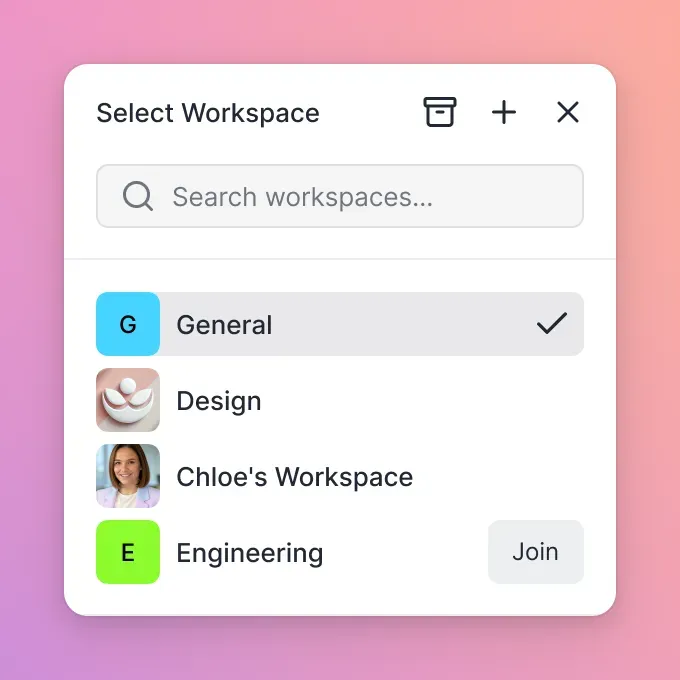
This is where a workspace-first approach shines. Rather than picking one cloud provider and migrating everything there, you can use a platform like Fastio to pull files from Google Drive, Dropbox, OneDrive, and Box into a single workspace. The imported files keep their folder structure, get indexed for search, and become available to your entire team in one place. If your team also uses AI tools, enabling Intelligence Mode means imported files are available for semantic search and document Q&A.
Common Problems and How to Solve Them
Cloud-to-cloud transfers fail in predictable ways. Here are the issues that come up most often and how to handle them.
File name conflicts and encoding issues
Different cloud providers handle special characters differently. Google Drive allows colons in file names. Windows-based services like OneDrive don't. Files with emoji, non-Latin characters, or very long paths can also cause problems during transfer.
Fix: Run a dry-run or test transfer with a small folder first. Most tools (including rclone) have a --dry-run flag that shows what would happen without actually moving files. Check the output for skipped files or name conflicts before starting the real transfer.
OAuth token expiration mid-transfer
OAuth tokens from Google
Drive and Dropbox typically expire after one hour. If your transfer takes longer than that, the token expires and the transfer fails partway through.
Fix: Use tools that handle token refresh automatically. rclone, Fastio Cloud Import, and most third-party transfer services refresh tokens in the background. If you are building a custom integration, make sure your code catches 401 errors and refreshes the token before retrying.
Storage quota on the destination
It is easy to forget that your destination account needs enough free space for everything you are transferring. Google Drive's free tier is 15 GB. If you are migrating 20 GB of files from Dropbox, you'll hit the limit and the transfer will stop partway.
Fix: Check available storage on both source and destination before starting. For large migrations, clean up the destination first or upgrade the storage plan. Fastio offers a 14-day Business Trial (card required; see /pricing/) with paid plans starting at 250 GB, handling consolidation scenarios without tight limits.
Duplicate files after partial transfers
If a transfer fails partway and you restart it, some tools re-transfer files that already made it to the destination, creating duplicates.
Fix: Use tools with incremental or resumable transfers. rclone's copy command checks file sizes and modification times and skips files that already exist at the destination. Most third-party services track transfer progress and resume from where they left off.
Shared links break after migration
Any links shared from the source provider stop working after you move the files. If your team or external collaborators use direct links to files in Google Drive, those links won't redirect to the new location.
Fix: There is no automated solution for this. Before migrating, inventory all actively shared links and update them manually after the transfer. For high-traffic shared files, consider keeping the originals in place as read-only copies for a transition period and adding a note pointing to the new location.
Setting Up a Cloud Import in Practice
Here is a concrete walkthrough of importing files from Google Drive into a Fastio workspace using Cloud Import. The same general process works for Dropbox, OneDrive, and Box.
Step 1: Create a workspace. Log into Fastio and create a new workspace for your imported files. Name it something descriptive, like "Project Archive" or "Design Assets Q1." Workspaces in Fastio act as isolated containers with their own permissions, so imported files won't mix with other projects.
Step 2: Connect your source account. Open the Cloud Import option and select Google Drive. You'll go through Google's OAuth flow, granting Fastio read access to your Drive files. Fastio doesn't store your Google password. It uses OAuth tokens that you can revoke at any time from your Google account settings.
Step 3: Select folders to import. Browse your Google Drive and pick the folders you want to bring over. You can select multiple folders in one import job. The folder structure is preserved, so nested folders come through intact.
Step 4: Start the import. Click import and let it run. The transfer happens server-side, so you can close your browser and come back later. Fastio shows progress and notifies you when the import finishes.
Step 5: Verify and organize. Once the import completes, browse the imported folders to confirm everything arrived. Check file counts against the source. If you have Intelligence Mode enabled on the workspace, your imported files are already being indexed for search and AI chat. You can ask questions about your imported documents immediately.
The whole process takes a few minutes of hands-on time. The actual transfer speed depends on how much data you are moving, but a typical 5 GB import from Google Drive finishes in under 10 minutes.
After the Import
Once your files are in a centralized workspace, you get capabilities that weren't available when files were scattered across multiple cloud providers:
- Unified search across all your files, regardless of which provider they originally came from
- Consistent permissions managed in one place instead of juggling sharing settings across Google, Dropbox, and OneDrive
- Branded sharing through Fastio's Send and Receive features, so you can share imported files with external collaborators through a professional portal instead of a raw Drive link
- Audit trails that show who accessed what and when, across your entire file collection
- AI-powered document Q&A if Intelligence Mode is enabled, so you can ask questions and get cited answers from your imported files
For teams using AI agents, imported files are accessible through Fastio's MCP server, meaning agents can search, read, and reference your consolidated file library through a single API connection rather than authenticating with each cloud provider separately.
Sources
References used to verify factual claims in this guide.
-
Over 54% of people use three or more cloud storage providers
-
Average U.S. upload speed around 62 Mbps
Frequently Asked Questions
How do I transfer files from one cloud to another without downloading?
Use a cloud platform with built-in import (like Fastio Cloud Import), a third-party transfer service (MultCloud, Cloudsfer), or run rclone on a cloud VM. All three methods move files directly between cloud data centers without routing data through your local machine. The key is keeping the data path between servers rather than pulling files through your home internet connection.
What is the fastest way to move files between cloud services?
For supported provider pairs, native migration tools like Google Storage Transfer Service are fastest because they run entirely within cloud infrastructure. For general transfers between Google Drive, Dropbox, OneDrive, or Box, a cloud workspace with URL import (like Fastio) is the fastest hands-on option since it requires minimal setup and transfers files at data center speeds.
Can I transfer files from Dropbox to Google Drive directly?
Not natively. Neither Dropbox nor Google Drive has a built-in feature to transfer files to the other. You need a third-party tool. Options include MultCloud (web-based, free for small transfers), rclone (command line, free and open source), or a cloud workspace like Fastio that can import from both Dropbox and Google Drive.
Is cloud-to-cloud transfer safe for sensitive files?
It depends on the tool. Native provider migration tools (Google Storage Transfer Service, AWS DataSync) keep data within the provider's infrastructure and encrypt transfers. Third-party services route files through their servers, so check their encryption and compliance documentation. For sensitive files, prefer tools that use OAuth (no password sharing) and encrypt data in transit with TLS.
How long does a cloud-to-cloud transfer take?
Transfer time depends on the total file size, the method used, and the providers involved. Server-side transfers between major cloud providers typically run at hundreds of megabits per second. A 10 GB transfer usually finishes in 5 to 15 minutes with a direct server-side method. The same transfer through a local download-reupload cycle could take 2 to 4 hours on a typical home internet connection.
Do I lose file permissions when transferring between cloud providers?
Yes. Sharing permissions, comments, and version history from the source provider do not transfer to the destination. These settings are specific to each provider's platform. Plan to re-establish sharing permissions on the destination after the transfer completes, and notify collaborators about the new file locations.
Can I automate recurring transfers between cloud services?
Yes. rclone supports scheduled sync through cron jobs or task schedulers. Third-party services like MultCloud offer built-in scheduling for recurring transfers. For custom needs, you can build an API integration that runs transfers on a schedule using cloud provider APIs and a serverless function or cron job.
Related Resources

Stop Juggling Multiple Cloud Accounts
Import files from Google Drive, Dropbox, OneDrive, and Box into one workspace with 250 GB of storage or more. Start your 14-day Business Trial.