How to Setup Claude Coworking Workspaces for Research Teams
Research teams often struggle with fragmented literature and disorganized data silos. Claude Coworking acts as a repository where agents and researchers can index and query academic papers together. Learn how to set up an academic agent workspace that turns raw PDFs into an interactive knowledge base.


What is Claude Coworking for Research Teams?
Claude Coworking acts as a repository where agents and researchers index, query, and annotate academic papers at the same time. Rather than treating AI as an isolated chat interface, a coworking setup integrates the large language model directly into your team's shared file environment. This turns a static folder of PDFs into an active knowledge base.
Moving to academic agent workspaces means your team stops manually hunting for citations. Instead, you direct an AI coworker that has already read every document in the folder. Claude can analyze requests, break down multi-step literature reviews, and execute them by extracting and synthesizing data from your workspace. This reduces the busywork of data management. Your researchers can then focus on hypothesis generation and analysis.
A working Claude literature review setup requires a strong coordination layer. The workspace needs to handle large file uploads and maintain persistent state. It also needs to let human researchers and autonomous agents work together without overwriting each other's progress. Fastio provides this infrastructure, turning standard storage into a collaboration engine for research teams.
Related guides
- How to Orchestrate Claude Code Agent TeamsOrchestrating parallel developer agents requires coordination to prevent file conflicts. This guide explains how to...
- How to Set Up Shared Workspaces in OpenClawOpenClaw workspace setup provides agents with persistent, shared storage for collaborative projects. Connect to the...
- Claude Code Teams: Multi-Agent Orchestration GuideClaude Code agent teams split complex coding tasks across multiple independent AI sessions. Each teammate gets its own...
- How to Build Claude Coworking Workspaces for Creative AgenciesMoving files between Dropbox, Slack, and email slows down creative teams. Designers wait for copy updates, and art...
- How to Build a Claude MCP Coworking Setup for Your TeamA Claude MCP coworking setup involves connecting shared tools and data sources to Claude via the Model Context...
- How to Connect Claude to Google Drive: Native Setup vs Fast.io MCP WorkspacesAnthropic provides a native Claude Google Drive connector for Team and Enterprise tiers, but administrative gates and...
More on this subject: Claude and Claude Code (280 guides)
Why Traditional Academic Workflows Break Down
Academic research involves reading large volumes of unstructured data. Traditional workflows force researchers to download PDFs and organize them in local folders. Then, they have to upload those files to citation managers and separately feed them into AI tools for analysis. This disconnected process is slow. It also scales poorly when multiple team members get involved.
When researchers try to collaborate using standard cloud storage, they often run into version control issues and context fragmentation. A folder full of documents might make sense to the person who created it. However, it remains confusing to new collaborators and inaccessible to standard AI chatbots without manual uploading. Conversational AI interfaces also suffer from context limits and session timeouts. This makes long-running literature reviews difficult to finish.
The core problem is that standard storage separates the data from the intelligence. To perform a complete literature review, researchers have to act as the bridge between their files and their AI tools. This manual data routing is what academic agent workspaces are built to eliminate. By integrating Claude directly into the storage layer, the data and the intelligence become one system.
The Top Tools Researchers Need in a Claude Workspace
To use Claude for research collaboration, your workspace needs specific infrastructure to support human and agent workflows. The best academic agent workspaces incorporate the following tools:
Semantic Search: Traditional keyword search is not enough for detailed literature. You need a built-in Retrieval-Augmented Generation (RAG) system that indexes files automatically. This lets researchers search across large document libraries by meaning and context instead of exact phrase matching.
Citation Tracking: When an AI agent synthesizes information, it needs to provide proof. A good workspace automatically links agent claims back to the specific source document and page number to maintain academic rigor.
Persistent Shared Storage: Agents and humans need a single source of truth. The workspace must provide reliable storage where files are instantly available to authorized users and connected AI models without redundant uploads.
Concurrent Access Control: In a multi-user environment, advisory file locks, version history, and granular access permissions let researchers and agents coordinate edits and restore previous revisions if datasets are updated simultaneously.
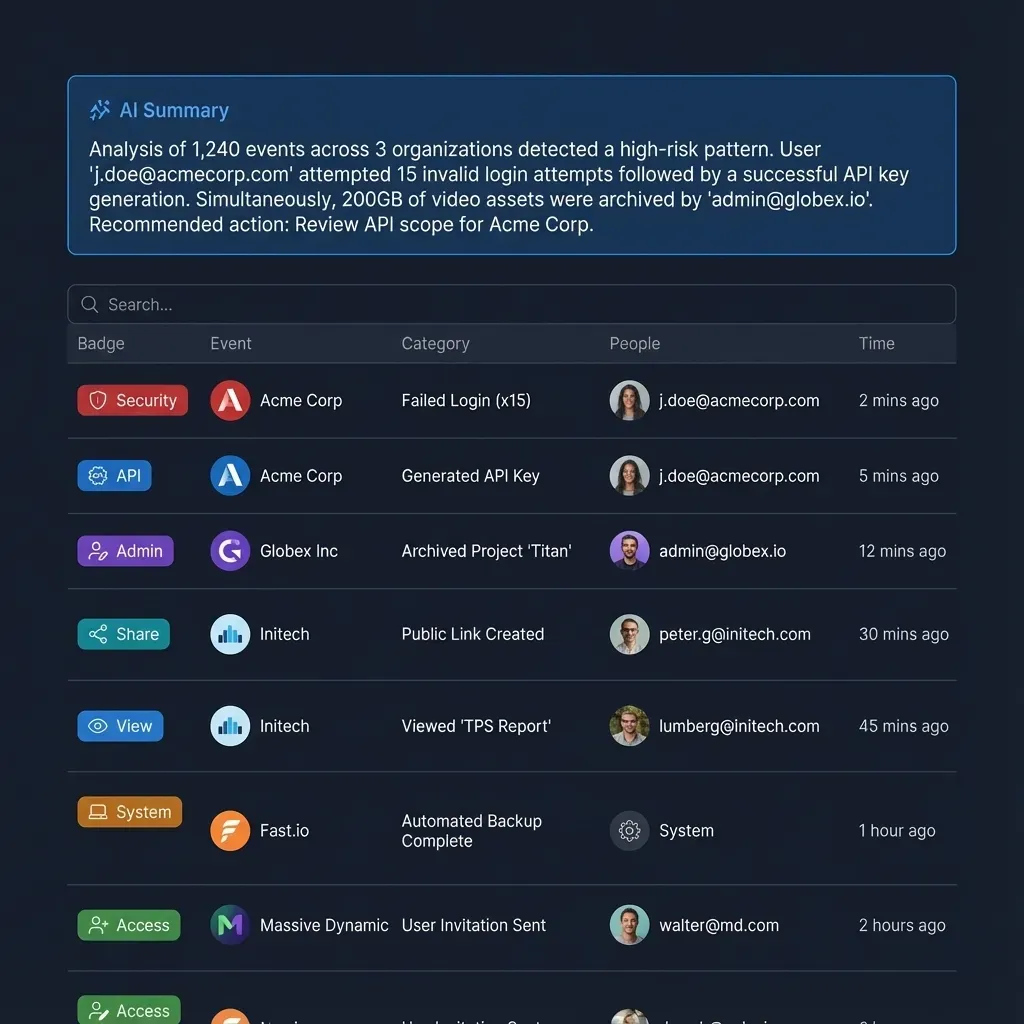
Realtime Event Feeds: Research workflows should be reactive. Fastio provides a WebSocket events feed and activity polling so your orchestration layer detects when new papers are added and prompts the AI agent to index the file.
Fastio delivers all of these capabilities natively. With its Intelligence Mode and built-in Model Context Protocol (MCP) tools, the platform provides an ideal environment for academic agent workspaces.



Ready to automate your literature reviews?
Set up your academic agent workspace today with persistent storage, consolidated MCP tools, and direct Claude integration.
How to Build Your Academic Agent Workspace
Setting up Claude coworking for research teams requires a secure, persistent connection between your files and your AI agent. The process is easy when using a platform like Fastio.
Create a Centralized Research Hub Begin by creating a shared workspace dedicated to your current research project. Instead of scattered local folders, consolidate all your literature and datasets into this single repository. If your data currently lives in Google Drive or OneDrive, you can use URL Import to pull those files into the workspace without downloading them locally.
Enable Intelligence Mode Once your files are centralized, activate Intelligence Mode on the workspace. This built-in RAG system automatically indexes every document, PDF, and dataset you add. You don't need to configure a separate vector DB or manage embedding pipelines. The workspace natively understands the contents of your research library.
Connect Claude via MCP Integrate Claude with your workspace using the Model Context Protocol. Fastio provides MCP tools via Streamable HTTP and Server-Sent Events (SSE). This connection gives Claude programmatic access to read and analyze the files within your designated repository.
Establish Collaboration Protocols Define how your human researchers will interact with the agent. You might assign Claude to handle initial literature screening, extracting methodologies and sample sizes into a shared summary document. Human researchers can then review these summaries and conduct deeper analysis on the most relevant papers.
Executing a Claude Literature Review Setup
A well-configured Claude literature review setup transforms the most tedious phase of academic research into an automated process. With your workspace established, you can direct Claude to perform thorough, multi-step reviews across your entire document library.
Start by uploading your collection of academic papers to the shared workspace. Because the environment is persistent, you only need to upload these files once. They remain securely stored and immediately accessible to both your team and your AI agent. Next, write a detailed prompt explaining your research question and the specific data points you need extracted.
For example, you might instruct Claude to review recent papers on a topic and extract the primary methodology. You can also ask it to note the sample size and summarize the core findings. Claude will process the documents in the workspace and generate a structured report. Because the agent operates within the workspace, it can save its output directly back to the shared folder. This makes the results instantly available to the entire research team.
This approach eliminates the constraints of traditional chat interfaces. You are no longer restricted by context windows or forced to manually copy and paste text between applications. The agent works autonomously within the repository, handling the data extraction while your team focuses on interpretation.
Security and Ownership in Research Collaboration
When dealing with unpublished research or sensitive academic literature, security and access control are a top priority. Academic agent workspaces need to provide strong safeguards to keep data safe.
Fastio addresses these requirements through granular permission settings and detailed audit logs. Every action taken within the workspace is tracked. You maintain full visibility over who accessed a file and when it was modified. You can also see which agent processed specific data. This level of transparency helps teams maintain academic integrity and comply with institutional data governance policies.
The platform's ownership transfer capabilities are ideal for collaborative research grants. A lead researcher can build a workspace and structure the literature review. Then, they can transfer ownership of the entire environment to the principal investigator or funding institution. This ensures the research assets remain secure even as team compositions change over time.
With a 14-day Business Trial (credit card required), Fastio provides a secure foundation for research teams looking to implement Claude coworking across Starter, Business, and Enterprise plans.
Frequently Asked Questions
How can researchers use Claude for literature reviews?
Researchers can use Claude for literature reviews by connecting the agent to a shared workspace via the Model Context Protocol (MCP). Once connected, Claude can index uploaded PDFs and extract methodologies. It can also summarize findings and compile structured reports directly within the shared repository.
What is the best AI workspace for academics?
The best AI workspace for academics provides persistent storage and built-in document indexing. It should also include native support for agent protocols like MCP. Platforms like Fastio offer a consolidated MCP toolset, advisory file locks, file version history, granular access controls, and direct integration with models like Claude once Intelligence is enabled.
How does an academic agent workspace handle citations?
An academic agent workspace uses built-in Retrieval-Augmented Generation (RAG) to track citations accurately. When the AI agent writes summaries, it automatically links its claims back to the specific source document and page number stored within the shared repository.
Can multiple researchers interact with Claude in the same workspace?
Yes, multiple researchers can interact with Claude in the same workspace. Fastio provides advisory file locks and automatic version history so human team members and AI agents can coordinate concurrent access while querying and editing the shared literature base.
Does Fastio offer a trial for research projects?
Yes, Fastio offers a 14-day Business Trial (credit card required) before choosing from Starter, Business, or Enterprise plans. This provides ample capacity and usage-based credits to evaluate large literature reviews and collaborative agent workflows.
Related Resources

Ready to automate your literature reviews?
Set up your academic agent workspace today with persistent storage, consolidated MCP tools, and direct Claude integration.