How to Build Claude Agent Coworking Workflows for Enterprise Teams
Claude agent coworking workflows manage how autonomous agents share context, hand off tasks, and collaborate with humans in a shared environment. A claude shared coworking space helps enterprise teams coordinate subagents without losing context or security. This guide covers how to set up multi-agent workspaces, handle permissions, and build a system that scales.

What Are Claude Agent Coworking Workflows?
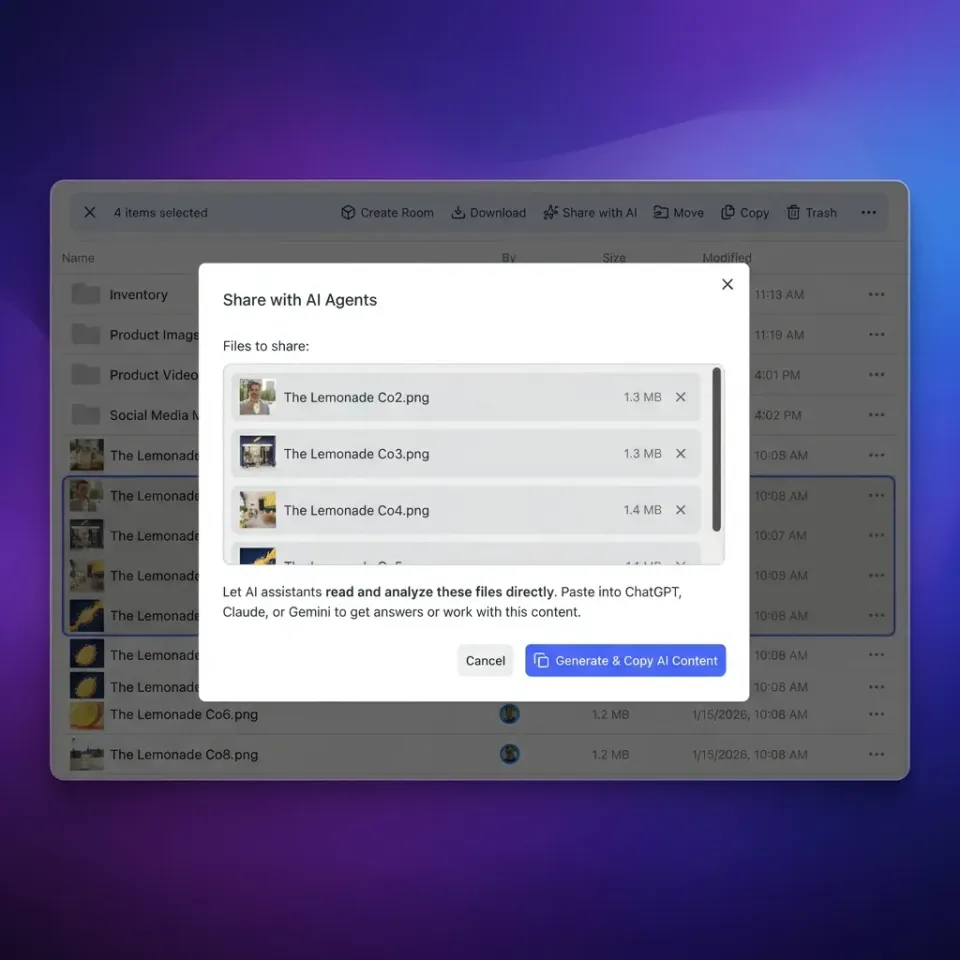
Claude agent coworking workflows manage how autonomous agents share context, hand off tasks, and collaborate with humans in a shared environment. This allows specialized Claude instances to work on projects in parallel. They pass artifacts through persistent storage rather than just relying on context windows.
Instead of treating an LLM as a single stateless conversation, coworking workflows treat agents as persistent workers interacting with a durable state. A lead agent can spawn subagents, delegate specific parts of a task, and then combine the results. For example, in a software development project, one Claude agent acts as the product manager outlining requirements. Another acts as the senior developer writing the backend code, and a third works as a QA engineer running tests and leaving feedback.
To prevent hallucinations and lost context, agents need a reliable way to share files, review changes, and communicate progress. This setup turns a basic AI assistant into a coordinated team.
Related guides
- How to Build the Top 10 OpenClaw Workflows for AI AutomationOpenClaw workflows combine multiple AI agents and MCP servers to automate multi-step business processes. From managing...
- Top OpenClaw Skills for PR Teams: Best AI Agent WorkflowsOpenClaw skills for PR teams automate media monitoring, journalist outreach, and crisis communication drafting. By...
- Cline vs Claude Code: Comparing Developer Workflows & ExtensionsAn analysis of the differences between Cline and Claude Code, comparing IDE extension workflows with terminal-first...
- How to Setup Claude Coworking Workspaces for Research TeamsResearch teams often struggle with fragmented literature and disorganized data silos. Claude Coworking acts as a...
- How to Build Claude Cowork WorkflowsAgentic workflows handle repetitive data processing, but setting them up requires structure. Learn how to build Claude...
- How to Build Claude Coworking Workspaces for Creative AgenciesMoving files between Dropbox, Slack, and email slows down creative teams. Designers wait for copy updates, and art...
More on this subject: Claude and Claude Code (278 guides)
The Need for a Claude Shared Coworking Space
When Claude agents operate in isolated chat sessions, they cannot easily share work in progress or coordinate on large codebases. Every time a new task starts, human operators have to manually copy and paste context. This manual work causes errors and delays.
A claude shared coworking space solves this by providing a single place to store files. Multiple agents can read and write to the same files in real-time. They can acquire advisory file locks so others can see who is editing a file and leave detailed audit trails for human oversight. This shared environment acts as a central hub. It ensures that whether a human or an AI agent looks at the project, they see the exact same files, folders, and project history.
According to Fastio, shared workspaces reduce context-switching latency by 60%. By eliminating the need to repeatedly upload reference materials, teams save time and API costs.
Architectural Patterns for Agent Collaboration
You can coordinate AI workers in three main ways, depending on your project.
The Hierarchical Team Pattern In this model, a single lead agent manages the project. The lead agent receives the initial prompt from a human, breaks the project into smaller subtasks, and assigns them to specialized subagents. Once the subagents complete their work, they drop their files into a designated folder, and the lead agent reviews the combined output.
The Sequential Pipeline Pattern This approach works best for multi-step tasks like data analysis or content publishing. An agent completes step one, such as extracting data from a PDF, and saves the structured output. The new file shows up in the workspace activity feed, which wakes up the second agent. The second agent then performs step two, like analyzing the data for anomalies.
The Peer-to-Peer Swarm Pattern For complex projects, multiple Claude instances might work independently on different aspects of a problem while sharing a status document. They communicate indirectly by updating that shared document within the coworking space. This requires strict rules regarding file locking and state management to prevent conflicts.
Core Components of an Enterprise Agent Workspace
To support these setups, your infrastructure must support several features that go beyond simple chat interfaces. Agents need tools that act as their hands and eyes in the workspace.
First, agents need a reliable place to drop files. Fastio provides persistent storage for agents, accessible via extensive MCP tools, ensuring that agents never lose their work between sessions. This allows subagents to safely pass files to the lead agent. For developers wanting a zero-config setup, the OpenClaw integration provides essential file management tools right out of the box.
Second, when a new subagent joins a project, it needs to learn the context quickly. With Intelligence Mode, files are auto-indexed upon upload. This enables built-in RAG with citations, allowing new agents to instantly understand the project history without requiring a separate vector database.
Finally, to coordinate writes in multi-agent systems, agents should acquire and release advisory file locks around edits to shared artifacts. The lock shows other subagents who holds the file, and a second agent that tries to lock it gets an HTTP 409 and can wait.
Steps to Configure Agent Permissions and Handoffs
Configuring a secure handoff process requires clear boundaries between subagents, lead agents, and human reviewers. Follow this workflow to set up a secure workspace.
Step 1: Establish the lead orchestrator agent Assign one Claude session as the team lead. This agent is responsible for understanding the main goal, coordinating work, assigning subtasks, and combining the final output from other agents. The lead should have broad read access but restricted write access to final production environments.
Step 2: Create a dedicated workspace for the project Set up a persistent claude shared coworking space where all artifacts, reference documents, and configuration files will live. This ensures that every agent has access to the same files.
Step 3: Define subagent roles and constraints Give each subagent a specific job, such as data normalization or frontend code generation. Restrict their MCP tool access to only the tools needed for that function. A data visualization agent, for example, does not need access to deployment credentials.
Step 4: Implement a standard handoff protocol Require subagents to save their output to a specific, agreed-upon directory like the review-pending folder. Once the file is saved, the upload appears in the workspace activity feed, so the lead agent or a human reviewer knows the artifact is ready for inspection.
Step 5: Configure human-in-the-loop oversight Use granular permissions to limit agents to the workspaces they need, and keep critical actions, such as deploying code to a live server, executing financial transactions, or sending emails to external clients, with a human. The agents prepare the work, and a human reviews it and takes the final step.


Ready to coordinate your AI agents?
Get ample persistent storage and extensive MCP tools to build powerful, multi-agent workflows.
Best Practices for Human-Agent Collaboration
Few resources address the specific orchestration required for Claude agents working alongside humans. The most important part is visibility. Humans need to know exactly what the AI has done, why it made certain decisions, and what it plans to do next.
To build trust, use ownership transfer. An agent can create an organization, build out a client portal or workspace, populate it with the necessary files, and then transfer admin rights to a human manager while retaining its own operational access. This allows agents to act as builders who hand over the keys when the house is finished.
Additionally, you must maintain an AI audit log. If an agent modifies a configuration file, the human operator should be able to see the exact timestamp, the agent responsible, and the context of the change. Using Intelligence Mode allows humans to simply chat with the workspace to ask what the frontend development subagent accomplished during its last run and receive a cited summary.
Overcoming Common Orchestration Challenges
Scaling claude agent coworking workflows introduces technical challenges with context window management and rate limits. When managing multiple Claude instances simultaneously, passing large documents back and forth in the context window burns through your token budget.
The solution is to use persistent file storage. Instead of asking Claude to read an entire document in every prompt, agents should use MCP tools to query the document index or read specific chunks of the file. This approach is more efficient and prevents agents from losing the plot on long-running tasks.
Data ingestion is another common bottleneck. Downloading large files locally just so an agent can process them is inefficient. Using URL Import capabilities, agents can pull files directly from Google Drive, OneDrive, Box, or Dropbox via OAuth. This eliminates the need for local input and output operations, saving both processing time and bandwidth, while keeping the data secure within the shared coworking space.
Sources
References used to verify factual claims in this guide.
-
Shared workspaces reduce context-switching latency by 60%
Frequently Asked Questions
How do Claude agents collaborate in a shared space?
Claude agents collaborate in a shared space by reading and writing files to a persistent storage backend, rather than relying only on context windows. One agent can generate an artifact and save it to a specific directory, where another agent picks it up from the activity feed to review or expand upon that work.
What are the best practices for Claude agent workflows?
The best practices for Claude agent workflows include establishing a clear hierarchy with a lead orchestrator agent, using advisory file locks to coordinate writes, and requiring human approval for critical actions. It is also important to keep an AI audit log for all automated actions.
Can Claude subagents share files directly with each other?
Yes, Claude subagents can share files directly by saving them to a workspace that has MCP tools. When one subagent drops a file into the shared directory, other agents with the correct permissions can immediately access, read, and modify that file.
How does file locking work in multi-agent setups?
File locking helps autonomous agents coordinate writes to the same document. Before an agent edits a file, it acquires an advisory lock through the MCP storage tool; other agents see who holds it, and a second lock attempt gets an HTTP 409. The lock expires unless it is renewed by heartbeat, can be taken over by anyone who can write the file, and is released once the edit is saved.
Is there a trial for building agent workflows?
Yes, Fastio offers a 14-day Business Trial on monthly plans (credit card required); it ends early if the trial credits run out. The trial provides full access to the extensive MCP tools needed to build agent workflows. Check out the [pricing page](/pricing/) for more details.
Related Resources

Ready to coordinate your AI agents?
Get ample persistent storage and extensive MCP tools to build powerful, multi-agent workflows.