How to Build a Fastio MCP Client in Swift
Building a Fastio MCP client in Swift requires establishing an SSE or HTTP connection to the Fastio MCP server to execute tools and read resources natively on Apple platforms. By adopting the swift model context protocol, developers can bypass generic middle layers and integrate multiple native tools directly into iOS, macOS, or visionOS applications. This allows applications to natively query workspaces, interact with AI agents, and retrieve files with high performance.

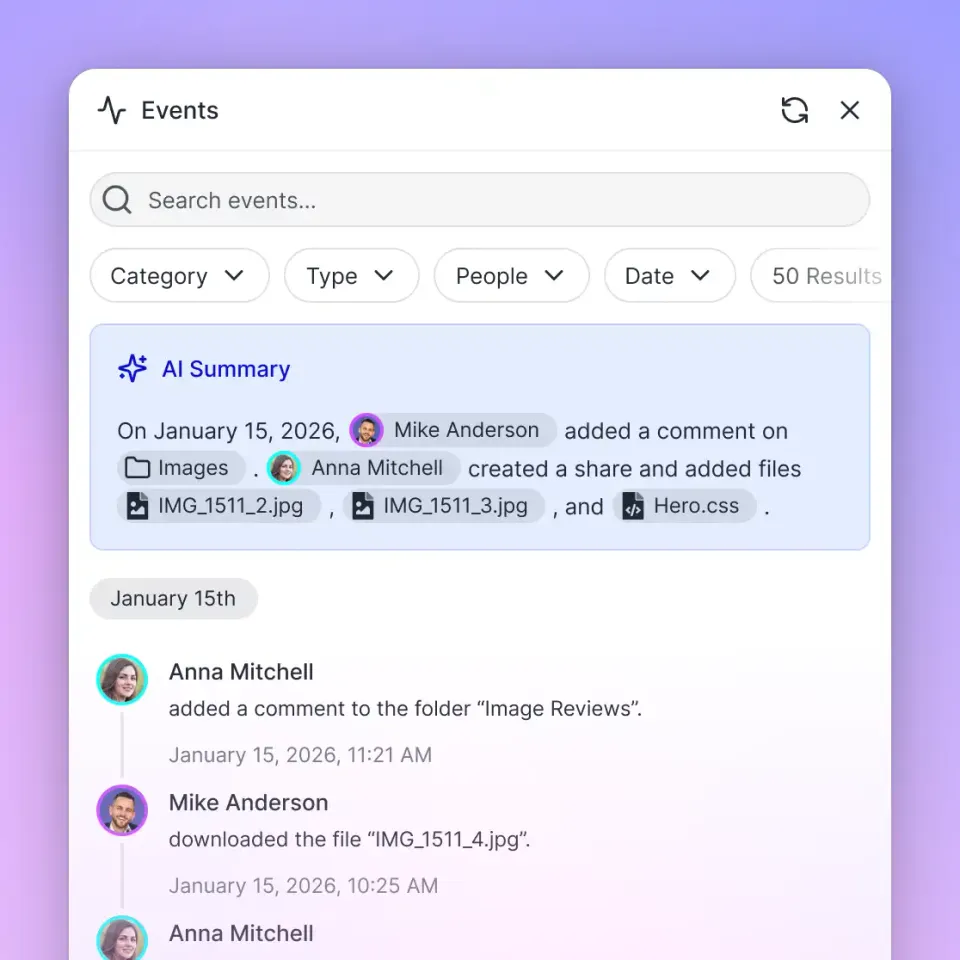
Understanding the Swift Model Context Protocol
What is the Model Context Protocol in Swift? The Model Context Protocol (MCP) in Swift is an open standard designed to facilitate communication between AI models and local or remote resources natively on Apple platforms. Instead of writing custom integration code for every API, the swift model context protocol provides a single, unified JSON-RPC 2.0 interface. This streamlines AI integration and provides flexibility across different Apple ecosystem applications.
For iOS developers, a fastio mcp swift implementation means your app can natively speak the exact same language as Claude, ChatGPT, or custom AI agents. Fastio operates as an intelligent workspace rather than just standard storage, providing an endpoint that natively supports the protocol. By building an iOS MCP client fastio application, you give your users the ability to connect their local environments securely to Fastio's intelligent layer.
Apple platforms demand strict memory management and responsive user interfaces. The model context protocol addresses these needs by standardizing how heavy lifting is delegated to remote servers. When you build an MCP client in Swift, you are essentially creating a universal adapter. The AI agent running on the server can read local files, execute local scripts, or interact with native iOS APIs like HealthKit or CoreLocation, provided your Swift client exposes those capabilities.
Integrating this protocol eliminates the need to bundle massive LLM dependencies within your app binary. Your application remains lightweight and agile, while the Fastio server manages the heavy contextual indexing and model execution. This separation of concerns is vital for mobile developers aiming to deliver powerful AI features without compromising battery life or storage constraints.
Related guides
- How to Build a Fastio MCP Client in GolangGuide to building fastio mcp client golang: A Fastio MCP client in Golang uses Go's native concurrency model to...
- How to Build a Fastio MCP Client in C# .NETBuilding a Fastio MCP client in C# .NET allows enterprise applications to securely consume intelligent file operations...
- How to Build a Fastio MCP Client in ElixirBuilding a Fastio MCP client in Elixir uses OTP to maintain highly resilient, concurrent agent workspaces that...
- How to Build a Fastio MCP Client in PythonBuilding a Fastio MCP client in Python enables seamless file management capabilities within Python-based AI agent...
- How to Build MCP Servers with .NET: A C# Developer's GuideBuilding MCP servers in .NET allows enterprise developers to expose existing business logic and data layers to AI...
- How to Build Stateful MCP Servers for Long-Running AgentsMost Model Context Protocol (MCP) servers are stateless, causing agents to forget everything between sessions. This...
More on this subject: MCP and Model Context Protocol (238 guides)
Evidence and Benchmarks: The Rise of MCP Adoption
The demand for native AI integrations is fundamentally changing how platforms are architected.
According to Deepak Gupta, the broader Model Context Protocol ecosystem is projected to grow to an estimated $4.5 billion by 2025, with forecasts suggesting that 90% of organizations will use MCP by the end of that year.
When comparing a custom REST implementation to an MCP integration, the advantages become clear. Traditional integrations require manual endpoint mapping, custom error handling, and rigid data structures. Conversely, the model context protocol allows an AI agent or a client application to dynamically discover available tools and resources at runtime. For Fastio users, this means immediate access to a consolidated MCP toolset via Streamable HTTP or SSE.
The transition to standard protocols also reduces maintenance overhead. When Fastio adds a new tool to its server, your Swift client does not require a mandatory App Store update to use it. The client dynamically queries the tools directory upon initialization and immediately surfaces the new capability to the user or the connected AI agent. This dynamic discovery mechanism is precisely why the protocol is often described as the standard for AI applications, connecting platforms that previously required bespoke engineering.


Ready to connect your Swift app to AI?
Start building with Fastio's remote MCP server. Evaluate workspaces and a consolidated MCP toolset during the 14-day Business Trial (card required; see /pricing/).
Deep Dive: Understanding the Fastio Agentic Architecture
How does Fastio handle intelligent workspaces? Fastio handles intelligent workspaces by treating every uploaded file as an active context source rather than passive storage, utilizing built-in RAG and Intelligence Mode to auto-index content. When building a fastio mcp client in swift, it is necessary to understand that you are interfacing with an active coordination layer.
Unlike commodity storage solutions like Dropbox or Google Drive, Fastio is engineered for agents. Humans use the web UI, while agents use the consolidated MCP toolset. They share the same workspaces and the same intelligence once enabled for the workspace. When your Swift application uploads a document, Fastio's Intelligence Mode indexes it once enabled. No separate vector database or complicated embedding pipeline is required.
This architecture fundamentally alters how iOS applications handle data. Instead of downloading a large PDF to the iOS device and running a local CoreML model to extract text, your swift model context protocol client simply sends a query to the Fastio server. The server utilizes its native RAG capabilities, searches the indexed workspace, and returns the specific answer with citations. This saves mobile bandwidth, preserves local processing power, and delivers significantly faster results to the end user.

Setting Up Your Swift Development Environment
How do you prepare a Swift project for MCP? Preparing a Swift project for MCP requires adding standard networking libraries or a dedicated Swift SDK to handle JSON-RPC messaging. Before writing code, ensure your environment targets iOS and macOS versions that support modern Swift concurrency features.
Step-by-step Setup:
- Initialize the Project: Create a new Xcode project or Swift Package targeting your desired Apple platforms. Ensure your deployment targets support modern async/await patterns.
- Add Dependencies: While you can write raw URLSession code, using a library like AnyCodable simplifies JSON parsing for dynamic RPC parameters. You can also integrate official or community-driven MCP Swift SDKs via Swift Package Manager.
- Configure Permissions: If your client needs to read local files or network resources, update your Info.plist with the necessary privacy descriptions like NSLocalNetworkUsageDescription.
- Provision API Keys: Obtain your Fastio workspace tokens. Since building a Fastio MCP client in Swift connects directly to the server, you need a secure way to inject these tokens at runtime. Store these securely in the iOS Keychain, not in plain text UserDefaults.
- Architect the Transport Layer: Decide whether your client will use standard input and output for local macOS tools, or HTTPClientTransport with Server-Sent Events for remote Fastio servers. For iOS applications connecting to Fastio, SSE is the required transport method.
Initializing the Fastio MCP Swift Connection (SSE Transport)
How do you establish an SSE connection in Swift? Establishing an SSE connection in Swift involves creating an HTTP GET request to the Fastio MCP server's SSE endpoint and maintaining an open read stream. Fastio supports Server-Sent Events to deliver real-time updates and maintain session state.
import Foundation

class FastioMCPClient: NSObject, URLSessionDataDelegate {
    private var session: URLSession!
    private var sseTask: URLSessionDataTask?

    override init() {
        super.init()
        let config = URLSessionConfiguration.default
        config.timeoutIntervalForRequest = .greatestFiniteMagnitude
        config.timeoutIntervalForResource = .greatestFiniteMagnitude
        self.session = URLSession(configuration: config, delegate: self, delegateQueue: nil)
    }

    func connectToFastio(endpoint: URL, token: String) {
        var request = URLRequest(url: endpoint)
        request.setValue("Bearer \(token)", forHTTPHeaderField: "Authorization")
        request.setValue("text/event-stream", forHTTPHeaderField: "Accept")
        request.setValue("no-cache", forHTTPHeaderField: "Cache-Control")

        sseTask = session.dataTask(with: request)
        sseTask?.resume()
    }

    func urlSession(_ session: URLSession, dataTask: URLSessionDataTask, didReceive data: Data) {
        // Parse the incoming SSE stream data
        // Extract JSON-RPC payloads and route them to internal handlers
    }
}
This code snippet illustrates the foundation of your connection. Once established, the Fastio server will stream events back to your iOS app. You must implement custom parsing logic inside the delegate method to handle the specific data prefixes mandated by the SSE specification. Proper buffer management is essential here, as large JSON payloads might be split across multiple delegate callbacks.
Implementing JSON-RPC 2.0 Communication
The core of the swift model context protocol relies on structured JSON-RPC 2.0 messages. Every request sent from your client to the Fastio server must include a standard JSON-RPC envelope specifying the method, parameters, and a unique identifier.
When building a fastio mcp client in swift, your message factory needs to generate strict, type-safe JSON. Apple's Codable protocol makes this exceptionally clean, provided you design your structures correctly.
struct MCPRequest<T: Encodable>: Encodable {
    let jsonrpc = "2.0"
    let id: String
    let method: String
    let params: T
}

struct InitParams: Encodable {
    let clientName: String
    let version: String
    let capabilities: [String: Bool]
}

func sendInitializationRequest() async throws {
    let params = InitParams(clientName: "iOSNativeClient", version: "1.0.0", capabilities: ["roots": true])
    let request = MCPRequest(id: UUID().uuidString, method: "initialize", params: params)

    let encoder = JSONEncoder()
    let payload = try encoder.encode(request)

    // Post payload to the Fastio transport endpoint
    // Wait for the JSON-RPC response
}
With Streamable HTTP or SSE, your client does not need to repeatedly send full context. Instead, you send the initialization request once. The server acknowledges the connection and returns its negotiated capabilities. From there, your client uses standard HTTP POST requests to send subsequent commands, while listening for responses and server-initiated events on the persistent SSE stream.
Accessing Fastio's Consolidated MCP Toolset
How do you discover available Fastio tools?
Discovering available Fastio tools requires sending a tools/list request to the MCP server, which returns a comprehensive directory of the supported operations. Fastio exposes every UI capability through these native tools.
When your iOS mcp client fastio implementation receives this list, it can dynamically render UI elements or allow an integrated LLM to choose which tools to execute. For example, to coordinate multi-agent writes, an agent can invoke the storage tool with the lock-acquire action before editing, while version history and the audit log track every update.
// Example of a tool execution payload
struct ToolExecutionParams: Encodable {
    let name: String
    let arguments: [String: String]
}

func createClientPortal() {
    let executionParams = ToolExecutionParams(
        name: "workspace/create",
        arguments: ["name": "Client Portal", "tier": "starter"]
    )
    let toolRequest = MCPRequest(id: UUID().uuidString, method: "tools/call", params: executionParams)
    // Send request...
}
During a 14-day Business Trial (card required; see /pricing/), your Swift client can evaluate workspaces, upload assets, and even transfer ownership of those workspaces to human users, all by dispatching these structured tool calls over the active transport. This ownership transfer is a critical feature: an automated agent can construct a complex workspace environment on behalf of an agency, and then transfer the entire environment to the human client, while retaining administrative access if necessary.
Handling URL Imports and OpenClaw Integrations Natively
How do you trigger URL imports via MCP?
Triggering URL imports via MCP involves executing the file/import tool with an external OAuth URL, allowing the server to pull data directly without routing traffic through the mobile device. This is a massive advantage for mobile developers.
Traditionally, if an iOS user wanted to move a file from Google Drive to a new platform, the mobile app had to download the file locally and then upload it. This consumed user data plans and required extensive background processing. With Fastio's URL Import tool exposed via the swift model context protocol, your iOS app simply sends a command. Fastio handles the server-to-server transfer, pulling files from Google Drive, OneDrive, Box, or Dropbox without any local I/O on the iPhone.
Additionally, Fastio connects seamlessly with autonomous AI agents. If your Swift client uses an AI agent, the agent can connect directly to Fastio's remote MCP server. This provides natural language file management without complex wrappers. Your Swift client acts as the interface, transcribing speech or accepting user input and forwarding requests to the agent, which manipulates the Fastio workspace.
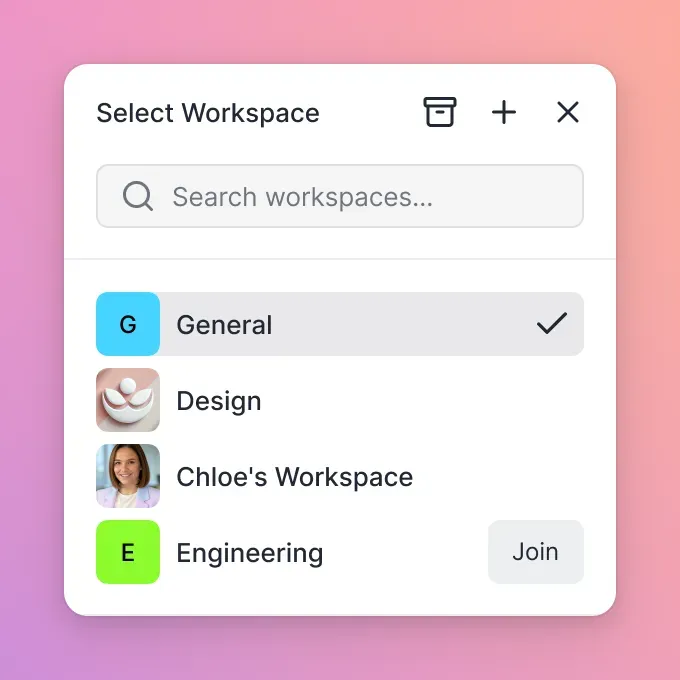
Building Native iOS MCP Client Fastio Workflows
Integrating MCP into a native iOS application goes beyond basic networking. It requires thoughtful UI and concurrency design. Apple's Swift Concurrency model pairs perfectly with the asynchronous nature of JSON-RPC.
Consider a workflow where a user asks their iOS application to analyze a PDF.
- The user selects the file via the standard document picker interface.
- The swift model context protocol client uploads the file to Fastio using URL Import or standard HTTP POST.
- Fastio's Intelligence Mode automatically indexes the file.
- The client sends a resource read or tool execution command to query the newly indexed document.
- The iOS UI updates dynamically as SSE events stream the AI's response back to the device.
By utilizing Task groups and MainActor isolation, developers can ensure that the UI remains highly responsive while the Fastio server processes complex contextual queries in the background. Also, you can use the WebSocket events feed or poll the realtime activity feed to build reactive workflows. When an external agent finishes processing a massive dataset in the Fastio workspace, server event updates notify the iOS user interface.
Handling Session State and Error Recovery
How should a Swift client handle MCP disconnections? A resilient Swift client must handle MCP disconnections by implementing exponential backoff to resume connections without data loss. Mobile networks are inherently unreliable, so your client must anticipate dropped connections.
When an SSE stream closes unexpectedly, your URLSession delegate will receive an error. You should intercept this, wait a designated interval, and attempt to reconnect. Because Fastio manages the session state server-side, you typically do not need to re-transmit massive context windows. You only need to re-establish the transport layer and synchronize the latest message ID.
This architecture ensures that agents and humans sharing the same workspaces do not experience corrupted states or redundant processing, making the overall integration highly reliable. If a user walks into an elevator and loses 5G connectivity mid-query, the Fastio server continues processing the tool execution. Once the iOS device regains connection and reconnects the SSE stream, it retrieves the completed response immediately.
Best Practices for iOS Privacy and Security with MCP
What are the security requirements for an iOS MCP client? Security requirements for an iOS MCP client include securing API keys in the Keychain, implementing App Transport Security for strict HTTPS enforcement, and validating all incoming JSON-RPC payloads. Natively connecting an application to an AI ecosystem introduces distinct security challenges that developers must navigate carefully.
First, never hardcode Fastio workspace tokens or agent credentials in your Swift source code. Use Apple's Keychain Services to encrypt and store these values securely. Second, when handling requests where the Fastio server asks for additional structured information from the user, always present a clear, native permission prompt. If the server asks to read a local contact or access location data via an MCP tool request, the iOS client must strictly enforce Apple's privacy guidelines before fulfilling the JSON-RPC response.
Fastio provides granular permissions and audit logs for workspaces. Your Swift client should expose these audit trails to the user, ensuring total transparency regarding what the AI agents are doing within the shared environment. By combining Fastio's strong cloud security with iOS's strict on-device privacy controls, you deliver an enterprise-grade AI experience.
Troubleshooting Common Swift MCP Errors
How do you debug Swift MCP connection failures? Debugging Swift MCP connection failures requires analyzing the exact JSON-RPC error codes returned by the server and verifying the SSE stream formatting. Because building a fastio mcp client in swift relies heavily on strict protocol adherence, minor malformations in your JSON payloads can cause silent failures or immediate connection drops.
One common issue is the Parse error code. This occurs when your Swift JSONEncoder produces invalid JSON. Ensure that your parameter structures do not contain unsupported data types and that strings are properly escaped. Another frequent hurdle is the Invalid Request error, which triggers when the JSON-RPC payload lacks the required protocol envelope or a valid identifier.
If your SSE connection drops immediately after initialization, verify your HTTP headers. The Fastio server requires the Accept text/event-stream header. If this is missing, the server will attempt to return a standard HTTP response rather than holding the stream open. Finally, use proxy tools during iOS development to inspect the raw SSE traffic. This visibility is highly useful when deciphering complex AI agent tool execution flows.
Advanced Concurrency Patterns with Swift MCP
How can Swift actors improve MCP client performance? Swift actors improve MCP client performance by isolating the connection state and preventing data races when multiple asynchronous tasks attempt to send JSON-RPC messages simultaneously. Managing state safely is the hardest part of building a fastio mcp client in swift.
When your iOS application scales, you might have background tasks, user interface interactions, and timer-based events all trying to execute Fastio tools concurrently. By wrapping your client in an actor, you serialize access to the underlying URLSession and sequence ID generator.
actor SafeMCPClient {
    private var connectionState: ConnectionState = .disconnected
    private var messageSequence: Int = 0

    func sendCommand<T: Encodable>(method: String, params: T) async throws -> String {
        guard connectionState == .connected else {
            throw MCPError.notConnected
        }

        messageSequence += 1
        let currentID = messageSequence

        // Construct and send the JSON-RPC payload
        // Suspend the task until the specific response ID is received
        return "Success"
    }
}
This actor-based architecture prevents scenarios where a tool execution request is sent before the server has acknowledged the initialization sequence. It also ensures that session state transitions, such as moving from connected to reconnecting, are handled atomically, preventing crashing due to inconsistent internal states.
Sources
References used to verify factual claims in this guide.
-
MCP ecosystem is projected to grow to an estimated $4.5 billion by 2025, with forecasts suggesting that 90% of organizations will utilize MCP by the end of that year
Frequently Asked Questions
How to use Model Context Protocol in Swift?
You can use the Model Context Protocol in Swift by integrating a JSON-RPC 2.0 client over an SSE transport connection. This allows your iOS or macOS application to securely communicate with an MCP server like Fastio to execute native AI tools.
How to connect iOS apps to Fastio MCP?
Connect iOS apps to Fastio MCP by establishing an HTTP GET request to the Fastio SSE endpoint and managing the resulting stream with URLSession. Once connected, your client sends standard JSON-RPC payloads to interact with Fastio's consolidated MCP toolset.
What transport method does Fastio support for Swift clients?
Fastio supports Streamable HTTP and Server-Sent Events (SSE) for remote Swift clients. These transport methods allow clients to stream events and execute tool requests without requiring bespoke protocols.
Does building an MCP client in Swift drain iOS battery life?
No, building an MCP client in Swift is highly efficient because all heavy processing and AI modeling happen on the Fastio server. The iOS client simply handles standard networking requests and renders the resulting data.
Can I use Fastio URL imports with an iOS MCP client?
Yes, your Swift MCP client can execute the URL import tool to transfer files from external sources like Google Drive or Dropbox directly into Fastio. This server-to-server transfer uses zero local iOS device bandwidth.
Related Resources

Ready to connect your Swift app to AI?
Start building with Fastio's remote MCP server. Evaluate workspaces and a consolidated MCP toolset during the 14-day Business Trial (card required; see /pricing/).