How to Streamline Board Meeting Agendas with the Right Software
Board agenda software replaces the manual cycle of drafting, revising, and distributing meeting agendas with a structured digital workflow. This guide covers the features that matter most, how approval chains and consent agendas work in practice, and what to look for when choosing a tool for your board.

Why Board Agenda Preparation Is Still a Bottleneck
Board secretaries and governance teams spend a disproportionate amount of time assembling agenda packets. The pain is not just the hours. It is the fragility of the process. Agendas drafted in Word or Google Docs get emailed back and forth, creating version confusion. Last-minute changes from the CEO or committee chair mean the secretary has to re-compile and re-send. Directors receive an outdated packet, review the wrong version, and arrive at the meeting unprepared. Directors typically spend only three to four hours reviewing those materials before a meeting, which means most of the content goes unread. A well-structured agenda does not just organize topics. It signals which items need director attention and which are routine enough to approve without discussion. Board agenda software addresses this by giving the secretary a single environment to build, route, and distribute the agenda, with version control built in so everyone always sees the latest draft.
Helpful references: Fastio Workspaces, Fastio Collaboration, and Fastio AI.
Related guides
- How to Choose Board Meeting Software That Directors Will Actually UseBoard meeting software handles the full meeting lifecycle, from building agendas and distributing board packs to...
- How to Choose Board Management Software That Actually Gets UsedBoard management software centralizes meeting preparation, document distribution, voting, and governance records in one...
- How to Choose a Board Portal for Your NonprofitGuide to board portal nonprofits: Nonprofit boards need the same secure document access, meeting management, and...
- Best Ansarada Alternatives for Virtual Data Rooms in 2026Ansarada was a well-regarded virtual data room for M&A and due diligence, but Datasite's 2024 acquisition has raised...
- How to Use a Data Room Q&A Feature for Due DiligenceA data room Q&A feature is a structured communication module inside a virtual data room that lets deal participants ask...
- How to Use Data Room Analytics and Reporting to Close Deals FasterData room analytics track how participants interact with documents during due diligence, giving deal teams visibility...
More on this subject: Data Rooms and Due Diligence (53 guides)
Core Features of Board Agenda Software
Not every board portal treats agenda building as a first-class feature. Some tack it on as a secondary function behind document storage or meeting scheduling. When evaluating tools specifically for agenda workflows, look for these capabilities: 1. Template library - Reusable agenda structures that carry forward standing items, committee reports, and recurring motions. 2. Consent agenda builder - A dedicated section for grouping routine, non-controversial items (previous minutes, standard financial reports, committee updates) into a single approval action. This is one of the most effective ways to reclaim meeting time for strategic discussion. 3. Timed item tracking - The ability to assign a time allocation to each agenda item and display a running total. Without this, meetings consistently run over because no one budgets the discussion time upfront. 4. Approval workflow - A structured route for the draft agenda to pass through the board chair (and sometimes the CEO or executive director) before distribution. This prevents the secretary from sending materials that the chair has not reviewed. 5. Auto-distribution with notifications - Once approved, the agenda and all supporting documents go out to the full board automatically, with read receipts or confirmation tracking so the secretary knows who has opened the materials. 6. Drag-and-drop reordering - The ability to move agenda items up or down in priority without reformatting the entire document. This sounds minor until you have done it manually in a Word table for the tenth time. 7. Document attachment per item - Each agenda item can have its own supporting files (financial statements, proposals, memos) attached directly, rather than bundled as a separate appendix.
How Consent Agendas Save Meeting Time
A consent agenda, sometimes called a consent calendar, bundles routine items into a single vote. The concept comes from Robert's Rules of Order and is standard practice for well-run boards. Here is how it works in practice: What belongs on the consent agenda: - Approval of previous meeting minutes
- Routine financial statements that are informational, not requiring action
- Staff and committee reports with no discussion items
- Appointment confirmations for committee chairs or volunteers
- Standard correspondence that requires acknowledgment but not debate What does not belong: - Budget approvals or significant financial decisions
- Policy changes
- Any item where a director has flagged a concern in advance
- Strategic planning topics The meeting process: The chair presents the consent agenda as a block. Before the vote, any director can request that a specific item be pulled out for separate discussion. The remaining items pass with a single motion. The key requirement is that directors actually review the consent materials before the meeting. The consent agenda only works when the full packet is distributed early enough for everyone to read it.


Organize Your Board Materials in One Workspace
Fastio gives your board a shared workspace with granular permissions, branded portals for director access, and AI-powered search across every uploaded document.
The Agenda Approval Workflow, Step by Step
A structured approval chain is what separates professional governance from ad hoc meeting planning. Here is the typical workflow that board agenda software automates: Step 1: Call for items (3 to 4 weeks before the meeting) The board secretary sends a request to committee chairs, the CEO, and board officers asking for agenda items and supporting documents. In most tools, this is a form or task assignment with a deadline.
Step 2: Draft compilation (2 to 3 weeks out) The secretary assembles submitted items into the agenda template, groups routine items into the consent section, and attaches supporting documents to each line item. Digital tools let you drag items between sections and auto-number them.
Step 3: Chair review (1 to 2 weeks out) The draft routes to the board chair for sign-off. The chair confirms priorities, adjusts item ordering, flags topics that need more time, and may add discussion points. Some boards include the CEO in this review step.
Step 4: Final preparation and board pack assembly Once the chair approves, the secretary finalizes the full board pack: agenda plus all supporting documents compiled into a single navigable package. Board agenda tools generate this automatically from the attached documents.
Step 5: Distribution (7 to 14 days before the meeting) The approved agenda and board pack go out to all directors. The system tracks who has opened the materials and sends reminders to those who have not.
Step 6: Last-minute updates (48 hours before) Any urgent changes are pushed as a versioned update with a clear change notification. Adding substantive new items at this stage is discouraged because directors will not have time to prepare. This workflow can be managed manually with email and shared drives, but it breaks down at scale.
Comparing Board Agenda Tools
The board management software market includes both full-suite platforms and focused tools. Here is how several popular options handle agenda workflows: Diligent Boards is the enterprise standard. Its agenda builder includes AI-generated meeting summaries, drag-and-drop item management, and deep compliance features. Pricing is custom and typically runs in the tens of thousands per year, which puts it out of reach for smaller boards.
OnBoard offers an intuitive interface with centralized meeting materials, real-time collaboration on agenda items, and AI-generated minutes after meetings. It is a strong mid-market option with two-factor and biometric authentication.
Boardable targets nonprofits with a built-in agenda builder, customizable templates, and time limits per agenda item. Entry-level pricing is billed annually, making it one of the more accessible options for nonprofits. The Professional tier adds built-in video conferencing.
BoardPro is popular with smaller organizations. It includes an agenda builder, board pack compiler, real-time minute-taking, and a decision register. BoardPro reports that some customers have reduced preparation from two to three days down to two to three hours.
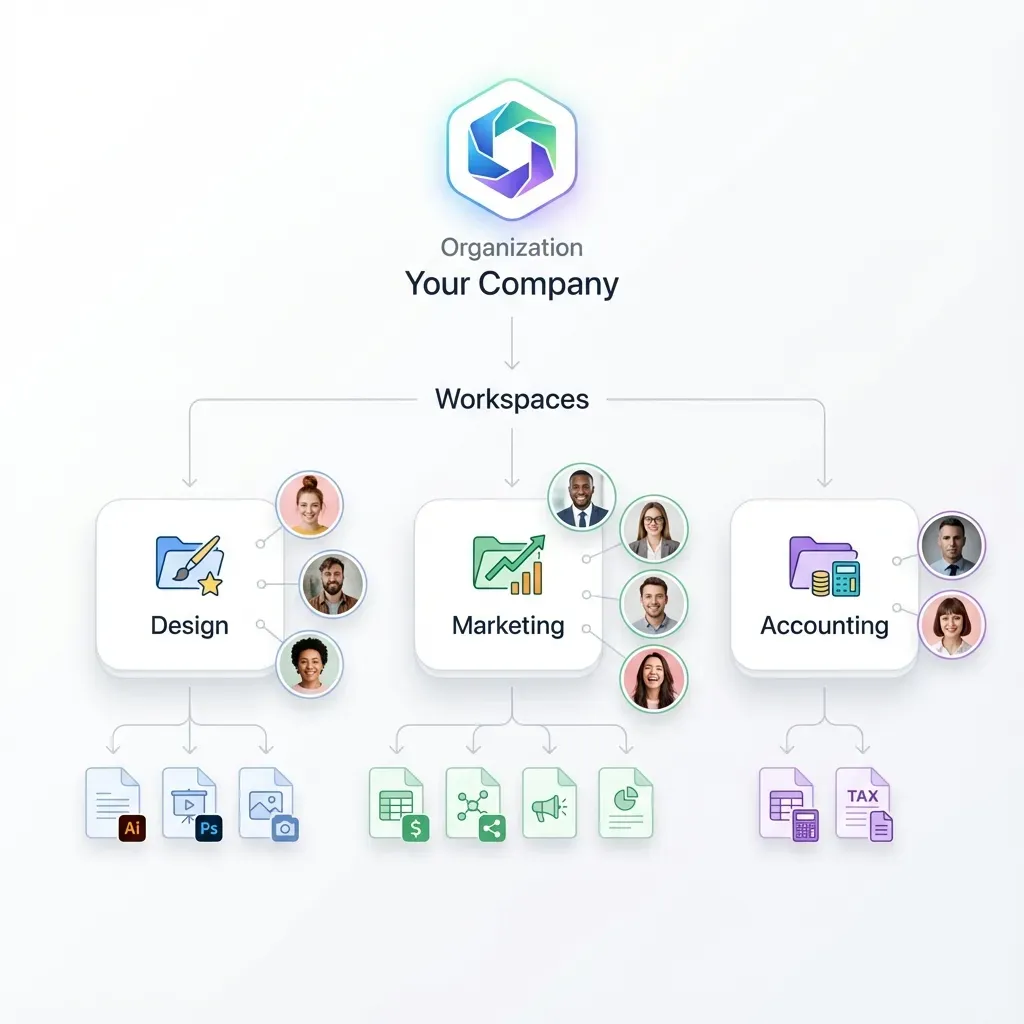
Board Intelligence focuses on strategic governance. Its annual calendar view and time analytics help boards track how much meeting time goes to routine items versus strategic discussion. The drag-and-drop agenda planner links items across meetings. For boards that need agenda management as part of a broader document workflow, rather than governance-specific features, a platform like Fastio can serve as the collaboration layer. Fastio's workspace model lets you organize agenda documents by meeting or committee, review materials with anchored comments and version history before distribution, and share the final board pack through a branded, password-protected portal. Intelligence Mode indexes uploaded documents so directors can ask questions about the materials using built-in AI chat, which is useful when the board pack runs past 200 pages. The right choice depends on your board's size, budget, and how much governance-specific functionality you actually need versus general document collaboration.
Building an Effective Board Agenda
Software helps with logistics, but the structure of the agenda itself determines whether the meeting is productive. Here are practical guidelines that apply regardless of which tool you use: Front-load strategic items. Traditional agendas start with minutes approval and financial reports, which eat into the time when directors are most alert. Move routine items to the consent agenda and open with the topics that need real discussion.
Set time limits and enforce them. Assign a specific number of minutes to each item. A 90-minute board meeting with 12 agenda items leaves about seven minutes per topic.
Include the purpose for each item. Label every agenda item as one of: information (no action needed), discussion (input requested), or decision (vote required). This tells directors how to prepare and sets expectations for the conversation.
Attach materials at the item level. Instead of a single appendix at the end of the board pack, link the relevant financial statement or proposal directly to its agenda item. Directors are more likely to review a document when it is one click away from the topic they are reading.
Send the agenda early. Seven days is the minimum. Some organizations send a preliminary agenda two to three weeks out, then follow up with the final version one week before.
Keep a running annual calendar. Plot recurring items (audit committee reports, CEO evaluation, budget approval) across the full year so each meeting's agenda reflects what is due that quarter. Board Intelligence and BoardPro both offer calendar views for this, and you can replicate it with a shared workspace folder structure in any collaboration tool.
Track action items forward. Every unresolved item from the previous meeting should appear on the next agenda with an owner and a status update. This creates accountability and prevents items from disappearing between meetings.
Sources
References used to verify factual claims in this guide.
-
Board secretaries spend an average of 15 hours assembling agenda packets per meeting
-
Directors typically spend only three to four hours reviewing board materials
Frequently Asked Questions
What is the best software for creating board agendas?
It depends on your board's size and needs. Diligent Boards is the enterprise standard for large, regulated organizations. Boardable and BoardPro offer affordable agenda builders for nonprofits and smaller boards. OnBoard sits in the mid-market with strong usability. For boards that primarily need document collaboration and distribution rather than full governance tooling, a workspace platform like Fastio can handle agenda drafts and board pack sharing.
How do you create a board meeting agenda?
Start by collecting agenda items from committee chairs and the executive team three to four weeks before the meeting. Group routine items into a consent agenda. Prioritize strategic discussion topics at the top. Assign a time limit and a purpose label (information, discussion, or decision) to each item. Route the draft through the board chair for approval, then distribute the full package to directors at least seven days in advance.
What should be included in a board agenda?
A standard board agenda includes: call to order, approval of previous minutes (often via consent agenda), committee reports, financial reports, old business (carry-forward items), new business (strategic topics, policy decisions), and adjournment. Each item should have a time allocation, a purpose label, and any supporting documents attached.
How far in advance should board agendas be sent?
The widely accepted minimum is seven days before the meeting. Some boards send a preliminary agenda two to three weeks out, then follow with the finalized version one week before. Check your organization's bylaws, as some specify a minimum notice period.
What is a consent agenda and how does it work?
A consent agenda groups routine, non-controversial items into a single approval vote. Common items include previous meeting minutes, standard financial reports, and committee updates. Any director can request that an item be pulled out for separate discussion before the vote. The remaining items pass together.
How can board agenda software reduce meeting preparation time?
Board agenda software reduces prep time by providing reusable templates, automating the approval routing between secretary and chair, compiling board packs from attached documents automatically, and distributing materials with read tracking. Organizations using dedicated tools report reducing preparation from days to hours per meeting cycle.
Related Resources

Organize Your Board Materials in One Workspace
Fastio gives your board a shared workspace with granular permissions, branded portals for director access, and AI-powered search across every uploaded document.