Best RAG Tools and Platforms for 2026
Retrieval-augmented generation tools connect large language models to external knowledge sources, letting AI generate answers grounded in your actual data rather than relying solely on training data. This guide compares 10 leading RAG platforms across frameworks, vector databases, and end-to-end solutions to help you pick the right stack.

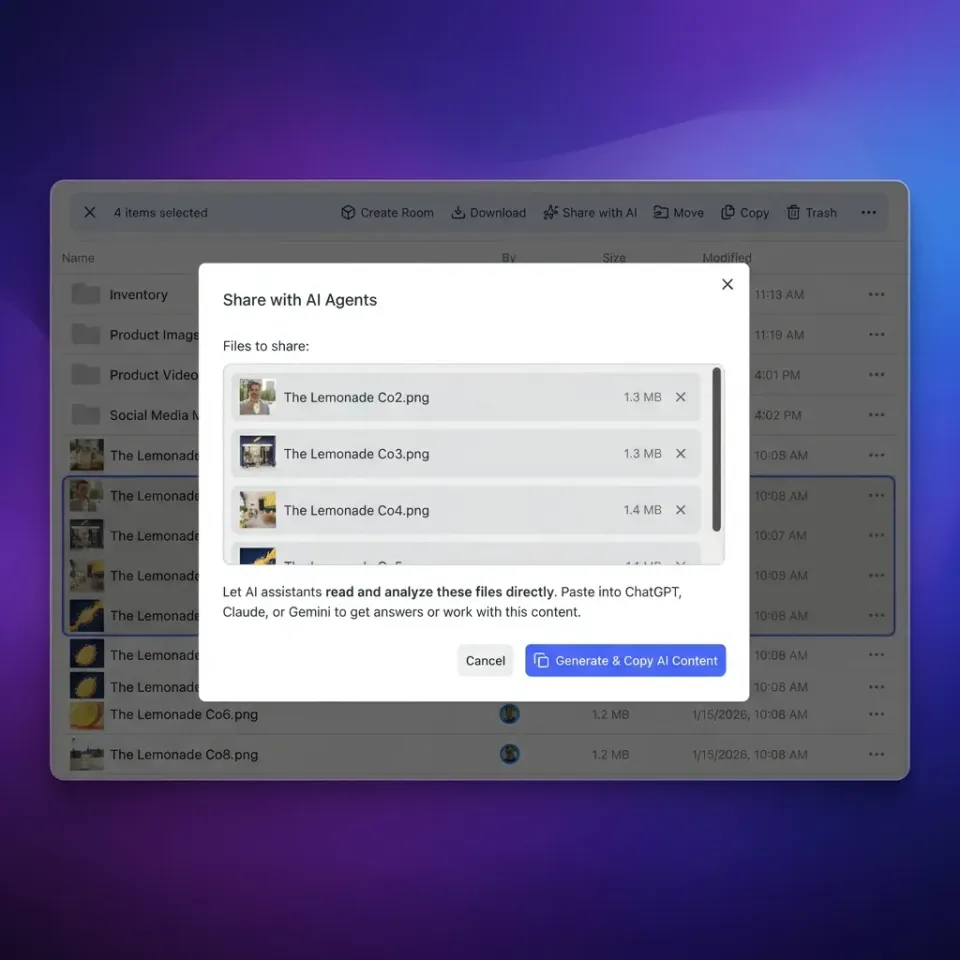
What Makes a Great RAG Platform: best RAG tools and platforms
A complete RAG system needs more than just a vector database and an LLM. You need document ingestion that handles PDFs, Word docs, and presentations. You need chunking strategies that preserve context. You need embedding models that capture semantic meaning. And you need a storage layer that keeps your source files organized and accessible. Most developers start with a framework like LangChain or LlamaIndex, add a vector database like Pinecone or Weaviate, then realize they're missing the file storage and document processing pieces. The best RAG platforms handle the full pipeline:
Document ingestion: Parse complex file formats and extract clean text Storage backend: Keep original files organized and version-controlled Chunking and embedding: Break documents into semantic chunks and generate vectors Vector search: Find relevant context based on semantic similarity Context assembly: Build prompts with retrieved information LLM integration: Connect to Claude, GPT-4, or other models Citation tracking: Link generated answers back to source documents
RAG reduces hallucination rates by up to 50% in enterprise deployments because the model answers from your actual documents instead of guessing. The RAG market is growing rapidly as enterprises move from proof-of-concept to production AI systems.
Helpful references: Fastio Workspaces, Fastio Collaboration, and Fastio AI.
Related guides
- How to Build Persistent Memory for Semantic Kernel AgentsSemantic Kernel memory lets AI agents store and retrieve information using vector embeddings. This guide covers setting...
- Best Knowledge Graph Tools for RAG: Enhancing Agent MemoryRAG systems often fail when they only use vector search. Adding a knowledge graph gives AI agents the context to...
- Best Multimodal RAG Platforms in 2026Standard RAG pipelines only search text, which means they miss the images, videos, and audio files that make up most...
- How to Perform RAG with Large Files: Strategies for Heavy DocumentsRetrieval Augmented Generation (RAG) on large files requires smart chunking, indexing, and retrieval strategies to...
- Best Embedding Models for RAG Agents in 2026Your RAG agent is only as good as its embedding model. A weak embedding layer means missed context, irrelevant...
- Best Context Engineering Tools for AI Agents in 2026Context engineering is the discipline of curating the right information for an AI agent's context window at the right...
More on this subject: Agent Memory and Storage (250 guides)
How We Evaluated These Tools
We tested RAG platforms across five criteria:
Integration complexity: How fast can you get a working RAG pipeline running? Do you need to wire together multiple services or is it end-to-end?
Document support: What file formats can it ingest? Does it handle tables, images, and structured data or just plain text?
Storage backend: Where do source files live? Can you version them, organize them into projects, and share them with non-technical users?
Deployment options: Self-hosted vs managed service? Does it scale to production workloads?
Pricing model: Free tier availability, cost per query, storage costs
Here's what we found. Consider how this fits into your broader workflow and what matters most for your team. The right choice depends on your specific requirements: file types, team size, security needs, and how you collaborate with external partners. Testing with a free account is the fast way to know if a tool works for you.
1. LangChain
LangChain is the most popular framework for building LLM applications. It provides a modular system for RAG through chains, document loaders, text splitters, vector stores, and retrievers.
Strengths:
- Massive ecosystem with 100+ integrations
- Works with any LLM (Claude, GPT-4, Gemini, open models)
- Active community and extensive documentation
- LangSmith for debugging and monitoring
Limitations:
- Requires assembling multiple components yourself
- Steep learning curve for complex pipelines
- No built-in file storage (bring your own)
Best for: Developers who want maximum flexibility and control over every stage of the RAG pipeline.
Pricing: Open source framework (free), LangSmith monitoring costs extra.
2. LlamaIndex
LlamaIndex specializes in indexing and retrieving information from complex enterprise documents. It excels at handling structured data like tables, nested PDFs, and multi-format knowledge bases.
Strengths:
- Advanced document parsing (PDFs, Word, HTML, code)
- Multiple indexing strategies (tree, keyword, vector)
- Query routing and multi-step retrieval
- Strong support for enterprise document formats
Limitations:
- Less flexible than LangChain for non-RAG use cases
- Smaller ecosystem than LangChain
- Requires vector DB setup (Pinecone, Weaviate, etc.)
Best for: Teams working with complex enterprise documents that need sophisticated retrieval strategies.
Pricing: Open source (free), managed LlamaCloud in beta. Consider how this fits into your broader workflow and what matters most for your team. The right choice depends on your specific requirements: file types, team size, security needs, and how you collaborate with external partners. Testing with a free account is the fast way to know if a tool works for you.
3. Haystack
Haystack is an open-source framework from Deepset focused on building production-ready RAG and search systems. It emphasizes modularity and composability.
Strengths:
- Pipeline-based architecture (easy to visualize and debug)
- Built-in evaluation tools for testing retrieval quality
- Support for hybrid search (keyword + semantic)
- Production-focused with monitoring and observability
Limitations:
- Smaller community than LangChain or LlamaIndex
- Documentation gaps for advanced use cases
- Requires integrating multiple services
Best for: Teams that prioritize production readiness and want built-in evaluation tools.
Pricing: Open source (free), Deepset Cloud for managed deployments. Consider how this fits into your broader workflow and what matters most for your team. The right choice depends on your specific requirements: file types, team size, security needs, and how you collaborate with external partners. Testing with a free account is the fast way to know if a tool works for you.
4. Weaviate
Weaviate is an open-source vector database optimized for RAG applications. It combines vector search with structured data filtering and supports hybrid search out of the box.
Strengths:
- Fast vector similarity search at scale
- Hybrid search (combine vectors with filters)
- Built-in vectorization modules (no separate embedding service)
- GraphQL and REST APIs
Limitations:
- Just a database, not a full RAG framework
- Need to handle document chunking and embedding yourself
- Self-hosting requires infrastructure knowledge
Best for: Teams building custom RAG pipelines who need a production-grade vector database.
Pricing: Open source self-hosted (free); managed Weaviate Cloud plans are available; see the vendor's pricing page.
5. Pinecone
Pinecone is a managed vector database that eliminates the infrastructure work of running your own vector search. It's purpose-built for production AI applications.
Strengths:
- Fully managed (no infrastructure to maintain)
- Fast vector search with real-time updates
- Metadata filtering for refined results
- Scales to billions of vectors
Limitations:
- Pricing scales with vector count and queries
- Vendor lock-in to Pinecone's infrastructure
- No built-in document ingestion or file storage
Best for: Startups that want managed infrastructure and don't want to run vector databases themselves.
Pricing: Free tier (100K vectors); paid plans are available; see the vendor's pricing page. Consider how this fits into your broader workflow and what matters most for your team. The right choice depends on your specific requirements: file types, team size, security needs, and how you collaborate with external partners. Testing with a free account is the fast way to know if a tool works for you.


Give Your AI Agents Persistent Storage
Fastio gives AI agents persistent storage with built-in RAG. Toggle Intelligence Mode to auto-index files for semantic search and AI chat with citations. generous storage.
6. Chroma
Chroma is a lightweight, open-source vector database designed specifically for RAG workflows. It focuses on developer experience with a simple API and minimal setup.
Strengths:
- easy to get started (pip install chromadb)
- Works locally or as a client-server deployment
- Integrates directly with LangChain and LlamaIndex
- Persistent storage with SQLite backend
Limitations:
- Not as feature-rich as Weaviate or Pinecone
- Performance drops with massive datasets (millions of vectors)
- Limited production-scale features
Best for: Prototyping and small to medium RAG projects where simplicity matters more than scale.
Pricing: Open source (free). Consider how this fits into your broader workflow and what matters most for your team. The right choice depends on your specific requirements: file types, team size, security needs, and how you collaborate with external partners. Testing with a free account is the fast way to know if a tool works for you.
7. Qdrant
Qdrant is an open-source vector search engine written in Rust for high performance. It supports advanced filtering, payload indexing, and multi-vector search.
Strengths:
- Fast performance (Rust implementation)
- Rich filtering options for combining vectors with metadata
- Distributed deployment for large-scale applications
- Good support for multi-tenancy
Limitations:
- Requires more configuration than plug-and-play options
- Smaller ecosystem than Weaviate or Pinecone
- Self-hosting complexity for production
Best for: Teams that need high performance and advanced filtering capabilities at scale.
Pricing: Open source (free), managed Qdrant Cloud available. Consider how this fits into your broader workflow and what matters most for your team. The right choice depends on your specific requirements: file types, team size, security needs, and how you collaborate with external partners. Testing with a free account is the fast way to know if a tool works for you.
8. Verba by Weaviate
Verba is an end-to-end RAG application built on top of Weaviate. It provides a ready-to-use interface for document ingestion, retrieval, and question answering.
Strengths:
- Complete RAG stack out of the box
- Web UI for non-technical users
- Handles document upload and chunking automatically
- Built on Weaviate's proven vector database
Limitations:
- Less flexible than building with frameworks
- Limited customization options
- Weaviate-specific (can't swap vector DB)
Best for: Teams that want a turnkey RAG solution without building from scratch.
Pricing: Open source (free), Weaviate Cloud for managed hosting. Consider how this fits into your broader workflow and what matters most for your team. The right choice depends on your specific requirements: file types, team size, security needs, and how you collaborate with external partners. Testing with a free account is the fast way to know if a tool works for you.
9. Embedchain
Embedchain is a framework that simplifies building RAG applications by handling data loading, chunking, and retrieval with minimal code. Think of it as a higher-level abstraction over LangChain.
Strengths:
- simple API (add data sources in a few lines)
- Supports multiple data types (PDF, web, YouTube, Notion)
- Auto-chunking and embedding
- Works with any LLM
Limitations:
- Less control than LangChain or LlamaIndex
- Smaller community and ecosystem
- Limited documentation for advanced features
Best for: Developers who want to build RAG apps quickly without worrying about pipeline details.
Pricing: Open source (free). Consider how this fits into your broader workflow and what matters most for your team. The right choice depends on your specific requirements: file types, team size, security needs, and how you collaborate with external partners. Testing with a free account is the fast way to know if a tool works for you.

10. Fastio with Intelligence Mode
Fastio is cloud storage built for AI agents that includes built-in RAG through Intelligence Mode. Toggle it on for any workspace and files are automatically indexed for semantic search and AI chat with citations.
Strengths:
- Full file storage included (generous storage for agents)
- No separate vector database to manage
- Built-in document ingestion for PDFs, Word, presentations
- Works with any LLM via a consolidated MCP toolset
- Ownership transfer (agent builds, human receives)
- Branded sharing and client portals
Limitations:
- Less customizable than framework-based approaches
- Best for document-centric RAG vs structured data
- Intelligence Mode required for RAG features
Best for: AI agents and teams that need file storage, document RAG, and collaboration in one platform.
Pricing: 14-day Business Trial, card required; see pricing. Fastio is unique in this list because it solves the file storage problem that every other RAG tool ignores. Your source documents live in organized workspaces where you can version them, share them with clients, and hand them off to human collaborators. Intelligence Mode turns those workspaces into queryable knowledge bases without exporting files to separate systems.
RAG Tool Comparison Table
Framework-based solutions (LangChain, LlamaIndex, Haystack, Embedchain):
- Maximum flexibility and control
- Requires assembling multiple components
- No built-in file storage
- Best for custom pipelines
Vector databases (Weaviate, Pinecone, Chroma, Qdrant):
- Core infrastructure for semantic search
- Need document ingestion separately
- Scale to large datasets
- Best as building blocks
End-to-end platforms (Verba, Fastio):
- Complete RAG stack included
- Less flexibility, faster to deploy
- Built-in file storage and UIs
- Best for teams that want working solutions now
Your choice depends on whether you want maximum control (framework + vector DB) or minimum setup time (end-to-end platform).
What About File Storage for RAG
Most RAG guides skip this part, but every RAG system needs somewhere to store source documents. Developers often end up using:
S3 buckets: Cheap but you build all the file management yourself. No versioning UI, no sharing, no collaboration.
Google Drive or Dropbox: Works for small teams but files live separately from your RAG pipeline. Moving files in and out of the vector database is manual.
Local filesystem: Fine for development but breaks when you need to deploy or share with teammates. The gap is persistent, organized file storage that connects directly to your RAG pipeline. Fastio fills this by combining cloud storage with built-in RAG. Source files stay organized in workspaces where non-technical users can upload, browse, and manage them. Intelligence Mode indexes those files automatically so you query the same workspace where files actually live. For AI agents specifically, Fastio provides the only storage backend designed for agents as first-class users. Agents get their own accounts, create workspaces, upload files, and query them through a consolidated MCP toolset or the REST API. Then transfer ownership to a human when the project is done. No other RAG tool in this list handles agent-to-human handoffs.
Choosing the Right RAG Tool
Pick based on your priorities:
Maximum flexibility: LangChain + Weaviate or Pinecone. Build exactly what you need, connect the best tools for each stage.
Enterprise documents: LlamaIndex + Qdrant. Handle complex PDFs, tables, and structured data with sophisticated retrieval strategies.
fast MVP: Embedchain or Chroma. Get a working RAG pipeline in under an hour with minimal code.
Production scale: Haystack + managed vector DB. Built-in evaluation, monitoring, and deployment tools.
File storage + RAG: Fastio. Store, organize, version, and query documents in one platform. Best for AI agents that need persistent storage.
Cost-conscious: Open source stack (LangChain + Chroma) self-hosted. Zero vendor costs, maximum control. Most teams start with one approach and evolve as requirements change. LangChain for prototyping, then migrate to managed services for production. Or start with an end-to-end platform like Verba and break out components as you need more control.
Sources
References used to verify factual claims in this guide.
-
RAG reduces hallucination rates by up to 50% in enterprise deployments because the model answers from your actual documents instead of guessing.
-
Pinecone offers a free tier supporting up to 100K vectors.
-
**Pricing**: 14-day Business Trial, card required; see /pricing/.
-
Agents get their own accounts, create workspaces, upload files, and query them through a consolidated MCP toolset or the REST API. Fastio is specifically designed for AI agents with a consolidated MCP toolset for file storage and RAG operations, letting agents upload documents, toggle Intelligence Mode, and query workspaces.
-
LLM costs depend on whether you use paid APIs like GPT-4 or Claude, or run local models.
-
compares 9 leading RAG platforms across frameworks like LangChain, LlamaIndex, Haystack, vector databases like Pinecone, Weaviate, FAISS, Milvus, MongoDB, and end-to-end solutions.
Frequently Asked Questions
What is the best RAG framework?
LangChain is the most popular RAG framework with the largest ecosystem and community. LlamaIndex is best for complex enterprise documents with tables and nested structures. Haystack is ideal for production-ready systems with built-in evaluation. The best choice depends on your specific use case and team experience.
Is LangChain or LlamaIndex better for RAG?
LangChain offers more flexibility for general LLM applications beyond RAG and has a larger ecosystem of integrations. LlamaIndex specializes in document indexing and retrieval with stronger parsing capabilities for complex formats. Choose LangChain for broad flexibility or LlamaIndex if your focus is purely document-centric RAG with sophisticated retrieval needs.
What tools do you need for RAG?
A complete RAG pipeline needs document ingestion (to parse files), an embedding model (to vectorize text), a vector database (for similarity search), a framework (to orchestrate retrieval), an LLM (to generate answers), and file storage (to keep source documents organized). Most teams use a framework like LangChain paired with a vector database like Pinecone or Weaviate, then add file storage separately.
How do I choose a RAG platform?
Start by deciding if you want to build from components (maximum control but more work) or use an end-to-end platform (faster but less flexible). Consider your document types and whether you need specialized parsing for PDFs, tables, or structured data. Evaluate whether you want to self-host or use managed services. Check if you need file storage and collaboration features beyond just vector search. Finally, look at pricing models and whether free tiers exist for prototyping.
Do I need a vector database for RAG?
Yes, RAG requires storing document embeddings in a vector database to perform semantic similarity search. Options include managed services like Pinecone, open-source databases like Weaviate or Chroma, or platforms with built-in vector storage like Fastio's Intelligence Mode. You can't do effective RAG with just keyword search because you need to find documents that are semantically similar to the user's question, not just keyword matches.
Can I use RAG with local LLMs?
Yes, frameworks like LangChain, LlamaIndex, and Haystack work with any LLM including local models like LLaMA, Mistral, or Phi. The vector database and retrieval components are LLM-agnostic. You control which embedding model generates vectors and which language model generates final answers. This flexibility lets you avoid vendor lock-in and run entirely on your own infrastructure if needed.
How much does RAG cost to run?
Costs vary based on your stack. Open source frameworks like LangChain are free. Vector databases range from free self-hosted (Chroma, Weaviate) to managed services like Pinecone with usage-based paid tiers. LLM costs depend on whether you use paid APIs like GPT-4 or Claude, or run local models. Storage costs depend on file volume. A small RAG project can run on free tiers, while production systems with millions of documents and high query volume can cost hundreds to thousands monthly.
What file formats can RAG systems handle?
Most RAG platforms support PDFs, plain text, Markdown, HTML, and Word documents through document loaders. Advanced tools like LlamaIndex and Fastio also parse presentations, spreadsheets, code files, and structured data formats. The quality of parsing matters because poorly extracted text leads to bad retrieval. Look for platforms with specialized parsers for tables, images, and complex layouts if your documents have those elements.
Can AI agents use RAG tools?
Yes, AI agents can use RAG through APIs and frameworks. LangChain and LlamaIndex provide programmatic interfaces that agents can call. Fastio is specifically designed for AI agents with a consolidated MCP toolset for file storage and RAG operations, letting agents upload documents, toggle Intelligence Mode, and query workspaces. Agents can build complete RAG systems and transfer them to human users through ownership transfer.
How does RAG reduce hallucinations?
RAG reduces hallucinations by grounding LLM responses in retrieved documents rather than relying on the model's training data alone. When you ask a question, RAG finds relevant passages from your knowledge base and includes them in the prompt as context. The LLM generates answers based on this retrieved information with citations back to source documents. This approach cuts hallucination rates by up to 50% in enterprise deployments because the model answers from facts rather than guessing.
Related Resources

Give Your AI Agents Persistent Storage
Fastio gives AI agents persistent storage with built-in RAG. Toggle Intelligence Mode to auto-index files for semantic search and AI chat with citations. generous storage.