Best RAG Deployment Platforms for Production AI Agents
Best RAG deployment platforms for production AI agents pair LLMs with vector search and knowledge bases. RAG cuts down hallucinations by 40-60% for better accuracy. We picked seven leading platforms based on scaling, cost, speed, MCP support, and multi-agent features.

Best RAG Deployment Platforms: What Is RAG?
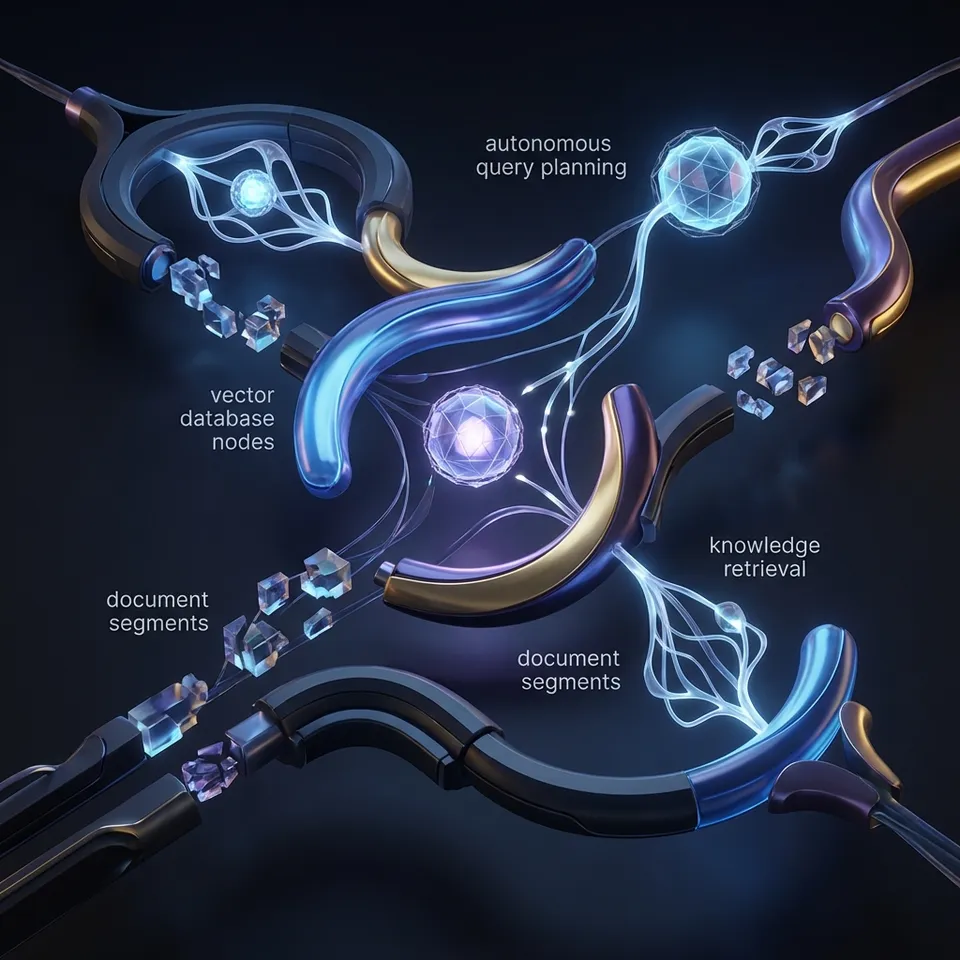
Retrieval-augmented generation (RAG) pulls data from knowledge bases to ground LLM outputs. RAG cuts down hallucinations by 40-60%.
Production AI agents run agentic RAG: multi-step retrieval, tool calls, fast vector search. Good platforms handle indexing, queries, and scaling.
RAG typically involves four steps: ingestion where documents are chunked and embedded; storage in a vector database; retrieval using similarity search; and generation where retrieved context augments the LLM prompt for accurate outputs.
Related guides
- Best RAG Tools and Platforms for 2026Retrieval-augmented generation tools connect large language models to external knowledge sources, letting AI generate...
- Best Multimodal RAG Platforms in 2026Standard RAG pipelines only search text, which means they miss the images, videos, and audio files that make up most...
- How to Manage LlamaIndex Storage for Production RAG ApplicationsLlamaIndex storage handles the persistence of document embeddings, index metadata, and raw document nodes required for...
- Best Knowledge Graph Tools for RAG: Enhancing Agent MemoryRAG systems often fail when they only use vector search. Adding a knowledge graph gives AI agents the context to...
- Best Cloud Storage for AI Agents: Top 7 Platforms ComparedCloud storage for AI agents provides persistent file access, version control, and API-driven operations that let...
- Best Embedding Models for RAG Agents in 2026Your RAG agent is only as good as its embedding model. A weak embedding layer means missed context, irrelevant...
More on this subject: Agent Memory and Storage (263 guides)
How We Selected These Platforms
We evaluated platforms using key criteria for production AI agents in agentic RAG setups:
Latency: Agentic RAG demands fast vector search to support real-time tool calls and multi-hop reasoning without delays. Scalability: Must handle high QPS with auto-scaling for agent fleets processing millions of queries daily. Pricing: Prefer free tiers for prototyping and transparent pay-per-use at scale to control costs. Deployment Ease: Serverless options with quick index creation and managed scaling. Agent Features: Native support for MCP protocols, file locks for multi-agent coordination, persistent storage beyond ephemeral caches. LLM Integrations: Supports Claude, GPT-4o, Gemini via LangChain, LlamaIndex, or direct APIs. Production Readiness: Uptime SLAs, monitoring, security (RBAC, encryption), and hybrid search (vector + keyword).
Most vector DBs excel at search but lack agent-specific workflow tools like concurrent access controls or built-in RAG pipelines.
Quick Comparison Table

1. Pinecone
Pinecone runs serverless vector databases for RAG workflows.
Strengths:
- Hybrid search (vector + keyword)
- Auto-scaling pods
- $0.33/GB stored
Limitations: Costs grow at scale. No full RAG hosting. Lacks native multi-agent coordination features like file locks.
Pinecone supports metadata filtering, hybrid search, and serverless scaling, making it suitable for real-time agent queries.
Best for: Vector retrieval in your own pipelines.
2. Amazon Bedrock Knowledge Bases
Amazon Bedrock Knowledge Bases offer managed RAG pipelines backed by S3 for enterprise agent applications.
Strengths:
- Integrates multiple LLMs (Claude, Llama, Titan) in one platform
- Enterprise security with VPC, encryption, audit logs
- Pay-per-use ~$0.25/1k tokens for ingestion and query
- Auto-syncs data from S3, Confluence, SharePoint
Limitations: AWS lock-in, complex setup for custom agents, no native MCP or multi-agent locks. Bedrock supports customizable guardrails for safer agent outputs.
Agents can use Bedrock Agents with Knowledge Bases for tool calling:
bedrock_agent = bedrock_agent_runtime.start_agent(
  agentId='your-agent-id',
  agentAliasId='your-alias',
  sessionId='session-id',
  inputText='Query with RAG context'
)
Best for: AWS-native production RAG apps with built-in agent orchestration.
3. Weaviate
Weaviate combines vector search with graph capabilities for advanced agentic RAG.
Strengths:
- GraphRAG for multi-hop retrieval in agents
- GraphQL API for complex queries
- Free sandbox, cloud from $45/mo
- Modules for hybrid search and auto-classification
Limitations: Steeper learning curve for graph features; limited agent-specific primitives like locks. GraphRAG enables complex multi-hop reasoning over connected data.
works alongside LangChain for agent retrieval:
from langchain_community.vectorstores import Weaviate
vector_store = Weaviate(client=client)
Best for: Knowledge graphs and hybrid search in agent workflows.
4. Google Vertex AI
Vertex AI Matching Engine provides vector search for RAG.
Strengths:
- Scales for enterprises
- BigQuery integration
- $0.0001/query
Limitations: Google Cloud only.
Vertex AI Vector Search offers filtered ANN indexes for billion-scale datasets, low-latency serving, and integration with BigQuery for data pipelines.
Best for: Pipelines on Google Cloud.
5. Qdrant
Qdrant Cloud focuses on fast vector search.
Strengths:
- Filtering and payloads
- $0.05/hr per pod
- On-prem option
Limitations: Fewer RAG-specific tools. No native agent orchestration or multi-agent features.
Qdrant provides efficient on-disk storage, advanced payload filtering, and quantization for cost-effective scaling.
Best for: Apps where speed matters most.
6. Azure AI Search
Azure AI Search supports vector and hybrid search.
Strengths:
- Free tier
- $0.336/1k indexed docs
- Fits Microsoft stack
Limitations: Indexing costs add up.
Supports semantic reranking, integrated vectorization, and Azure OpenAI compatibility for full RAG pipelines.
Best for: Azure and Microsoft teams.
7. Fastio Intelligent Workspaces
Fastio workspaces have built-in RAG for agents.
Strengths:
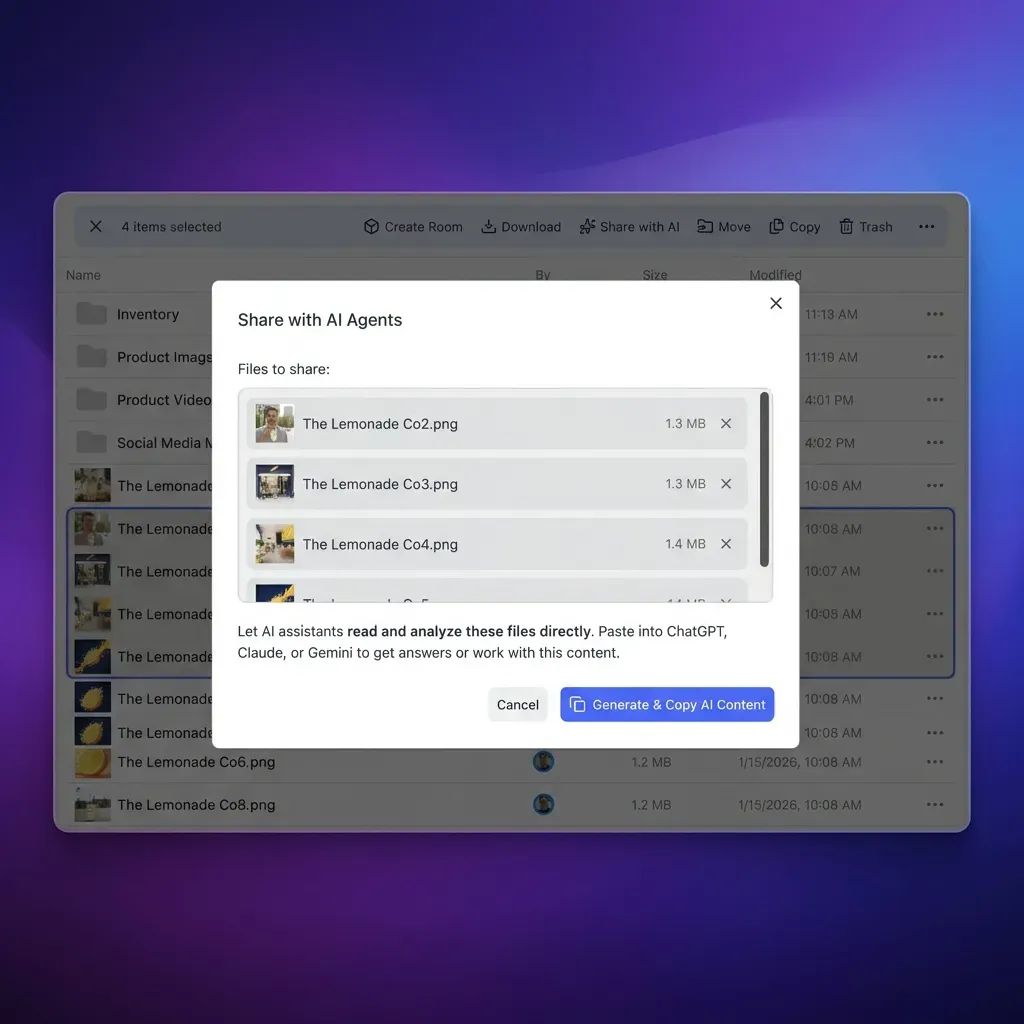
- Files indexed and searchable once Intelligence Mode is enabled
- Consolidated MCP toolset for Claude/GPT agents
- Advisory file locks and audit logs for multi-agent coordination
- 14-day Business Trial with credit card required
Files are indexed and searchable once Intelligence Mode is enabled for built-in RAG, semantic search, and AI chat with citations.
Limitations: Best for workspace RAG, not standalone vector DB.
Best for: Agent teams sharing knowledge bases via MCP. See storage for agents and MCP docs.


Give Your AI Agents Persistent Storage
Fastio gives teams shared workspaces, MCP tools, and searchable file context to run best rag deployment platforms workflows with reliable agent and human handoffs.
Which RAG Platform Should You Choose?
Consider your cloud provider and agent needs. Pick Pinecone or Qdrant for top vector search speed. Bedrock or Vertex suit large enterprises with integrated cloud services. Fastio excels for MCP-native agent teams with shared workspaces, advisory file locks, and built-in RAG once Intelligence is enabled. Test free tiers for latency, cost, and feature fit before scaling.
Sources
References used to verify factual claims in this guide.
-
RAG cuts down hallucinations by 40-60% for better accuracy.
-
Pinecone storage costs $0.33/GB per month
-
Fastio offers shared agent workspaces with built-in RAG and MCP integration Fastio runs a remote MCP server with a consolidated toolset for agent integration.
-
Weaviate provides hybrid search with plans starting at $45/mo
-
Qdrant high-performance cloud pods start at $0.05/hr
-
Azure AI Search indexing costs $0.336/1k documents
-
Google Vertex AI Matching Engine ~$0.0001/query
-
Amazon Bedrock Knowledge Bases pay-per-use ~$0.25/1k tokens
Frequently Asked Questions
What are the best RAG deployment platforms?
Top picks: Pinecone, Amazon Bedrock, Weaviate, Vertex AI, Qdrant, Azure AI Search, Fastio.
How to deploy RAG at scale?
Choose a platform, upload documents, build the index, connect a retriever to your agent code, monitor latency and costs. Serverless scales automatically.
What is agentic RAG?
Agentic RAG builds on standard RAG with multi-hop retrieval, tool calls, and error fixes via AI agents.
Do RAG platforms support MCP?
Most don't. Fastio runs a remote MCP server with a consolidated toolset for agent integration.
Which RAG platforms have the lowest latency?
Qdrant and Pinecone achieve low latencies suitable for real-time agents.
What RAG platforms support MCP for agents?
Fastio offers full MCP compatibility with a consolidated toolset. Others lack native support.
Related Resources

Give Your AI Agents Persistent Storage
Fastio gives teams shared workspaces, MCP tools, and searchable file context to run best rag deployment platforms workflows with reliable agent and human handoffs.