7 Best Privacy-Focused Storage Solutions for AI Agents
Privacy-focused storage protects sensitive AI agent workflows. We evaluate the top 7 solutions including Fastio, Proton Drive, and self-hosted tools to help you choose the right architecture.


Why AI Agents Need Specialized Privacy Storage
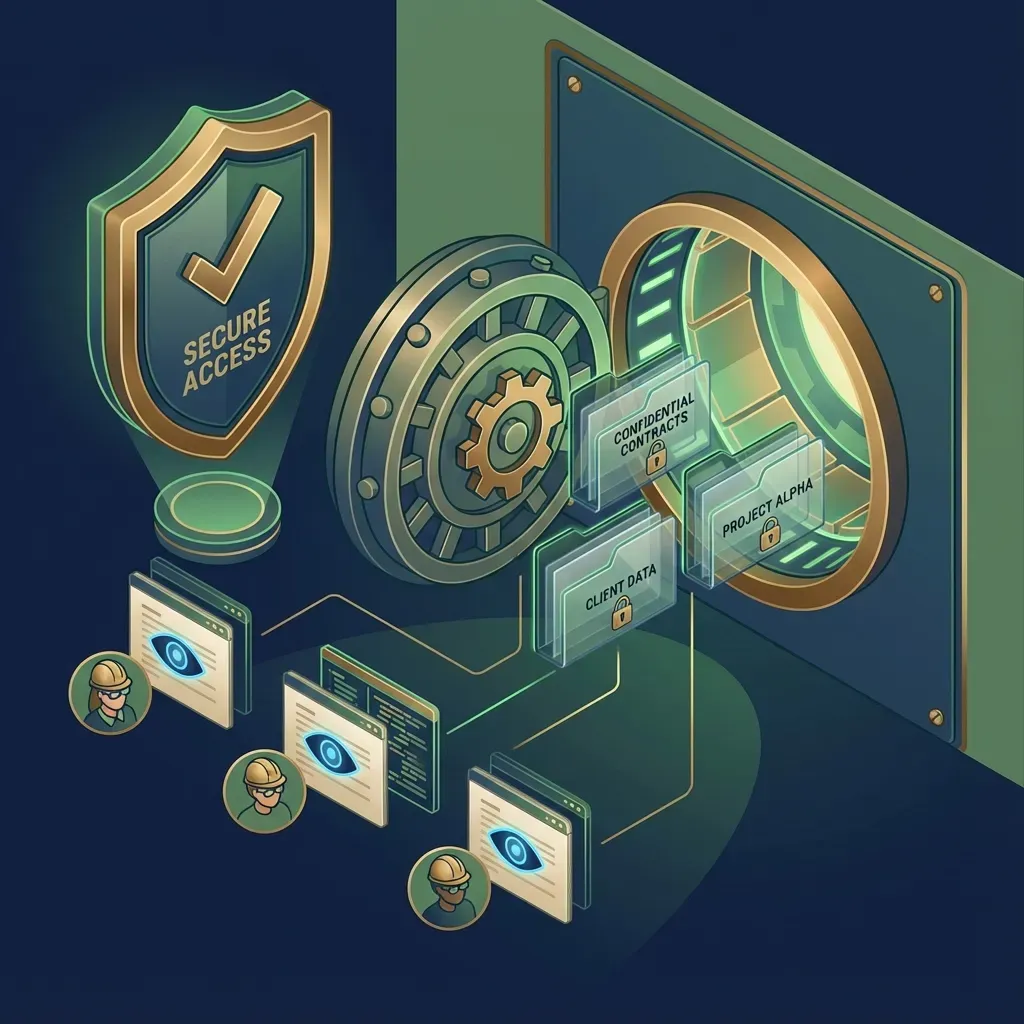
Privacy-focused storage for AI agents provides end-to-end encryption, zero-knowledge architecture, or strict access controls. These features protect sensitive agent workflows and user data. Unlike standard cloud storage, these solutions minimize the damage if a breach occurs.
Industry data shows that 65% of enterprises now require privacy-preserving storage for their AI deployments. This is about operational security, not just compliance. When an AI agent processes proprietary code, financial records, or PII, the storage layer must ensure data remains isolated. Only authorized entities should access it.
Choosing the right solution can reduce data breach risks by up to 80%. You need to balance strict security protocols with the access agents need to work.
Helpful references: Fastio Workspaces, Fastio Collaboration, and Fastio AI.
Related guides
- How to Store Legal Contracts for AI Analysis AgentsLegal contract analysis agents need secure, version-controlled storage to review and compare documents. This guide...
- How to Secure Vector Stores for AI AgentsVector stores are the memory layer for AI agents, and attackers know it. RAG poisoning, embedding manipulation, and...
- Zero Retention Workspaces for AI Agents: A Practical GuideA zero retention workspace gives AI agents a place to read, write, and process files without leaving file content...
- Fastio API Audit Log Retrieval: A Developer's TutorialAudit log retrieval via the Fastio API lets developers export and monitor agent and human workspace activity for...
- How to Scale AI Agent Storage: Strategies and SolutionsAI agent storage scaling ensures performance under growing data loads from multiple agents. As agent teams handle more...
- Best Document Storage for AI Processing: Top Solutions for 2026AI agents need somewhere to store and retrieve documents. Not every cloud storage platform is up to the task. This...
More on this subject: Agent Memory and Storage (248 guides)
What to check before scaling best privacy-focused storage for ai agents
We looked at three main factors for AI agent deployments:
- Encryption Standards: Does the provider offer end-to-end encryption (E2EE) or server-side encryption with customer-managed keys?
- Programmatic Access: Can agents use the storage via API, CLI, or MCP without breaking security rules?
- Auditability: Is there a full log of every file access, modification, and deletion the agent performs?
For autonomous agents, "privacy" usually means isolation. The storage should let you sandbox an agent to a specific workspace or folder. This ensures it cannot access your entire file structure.
Document access rules, audit trails, and retention policies before rollout so staging results are repeatable in production. This avoids late surprises and helps teams debug issues with confidence.
1. Fastio: Best for Secure Agent Control & Auditability
Fastio treats AI agents as distinct users with their own accounts and workspaces. Instead of sharing a human's API key, which gives too much access, Fastio agents work within strict limits.
Fastio uses a "Security by Isolation" model. You create a separate workspace for an agent, invite it as a collaborator, and track its actions via logs. It is not zero-knowledge because it processes files for features like HLS streaming and AI indexing.
Pros:
- Agent Isolation: Agents get a separate generous storage account.
- Detailed Permissions: Limit agents to specific workspaces or folders with read/write/admin controls.
- Full Logs: The system records every file open, download, and modification the agent makes.
- MCP-Native: Includes a remote MCP server with a consolidated toolset for file operations.
Cons:
- Not end-to-end encrypted (uses server-side encryption for AI features).
- Requires an internet connection (cloud-native).
Best For: Teams that need to audit and control agent behavior in shared projects. Pricing: 14-day Business Trial (card required); paid plans start at $9.99/mo (Starter), $49.99/mo (Business), and $199.99/mo (Enterprise). See pricing.



Give Your AI Agents Persistent Storage
Give your AI agents their own private, auditable workspace with generous storage.
2. Proton Drive: Best for End-to-End Encryption
Proton Drive is known for its strict end-to-end encryption (E2EE) and Swiss privacy laws. It works well for AI agents handling sensitive data where no third party, including the storage provider, should see the content.
This security limits access. Since files are encrypted on the client side, standard AI agents cannot read them without complex decryption logic.
Pros:
- Zero-Knowledge Encryption: Only you hold the decryption keys.
- Swiss Privacy: Protected by strong privacy laws.
- Open Source Cryptography: Vetted security implementation.
Cons:
- Hard to Automate: No native API for easy agent access (requires bridge tools).
- No Server-Side Processing: Cannot generate previews or stream media for agents.
Best For: Archiving sensitive data that agents rarely access. Pricing: Free tier available; paid plans are available; see the vendor's pricing page.
3. Nextcloud: Best for Self-Hosted Compliance
Nextcloud is a self-hosted platform that gives you control over data location and security. It mixes the usability of tools like Dropbox with the privacy of an on-premise server.
Nextcloud provides an API and WebDAV support for AI agents. This makes it easier to add to agent workflows while keeping data behind your firewall.
Pros:
- Data Control: You decide where the data lives (on-prem or private cloud).
- Extensible: Large library of apps and integrations.
- Detailed Access Control: Precise permissions for users and bots.
Cons:
- Maintenance: You must manage server updates and security patches.
- Performance: Depends on your infrastructure.
Best For: Organizations with strict rules (privacy requirements, strict security requirements) that need on-prem storage. Pricing: Free (open source); Enterprise support available.
4. ownCloud: Best for Enterprise Self-Hosting
Like Nextcloud, ownCloud focuses on the enterprise market. It highlights "Infinite Scale" architecture and integration with existing identity providers.
ownCloud works for agents that need to connect with legacy enterprise systems while keeping a private storage layer. Its "Secure View" features stop data leaks on unmanaged devices.
Pros:
- Enterprise Focus: Built for large-scale setups.
- Virtual File System: Efficient syncing for agents with limited local storage.
- Guest Users: Secure sharing with external agents.
Cons:
- Complexity: Setup and maintenance are hard for smaller teams.
- Feature Split: Some features are only in the Enterprise edition.
Best For: Large enterprises building private clouds for internal agent fleets. Pricing: Free Community Edition; Enterprise pricing by quote.
5. MinIO: Best for S3-Compatible Self-Hosting
MinIO is a high-performance, S3-compatible object store for cloud-native setups. It is a standard for private object storage in Kubernetes environments.
If your AI agents speak the S3 protocol, MinIO lets you use a private, self-hosted replacement for AWS S3 with few code changes. It supports server-side encryption and bit-rot protection.
Pros:
- S3 Compatibility: Drop-in replacement for AWS S3.
- High Performance: Good for machine learning and large datasets.
- Lightweight: Single binary deployment.
Cons:
- Technical Setup: Needs DevOps knowledge to deploy and secure.
- No UI Features: It is a raw object store, not a collaboration tool.
Best For: Developers building custom AI agent backends on Kubernetes. Pricing: Open source (AGPL); Commercial licenses available.
6. Cryptomator + S3: Best for Client-Side Encryption
Cryptomator adds a layer of client-side encryption to any cloud storage. You can pair it with basic storage like AWS S3 or Google Drive to create a private vault.
The agent must run the Cryptomator library to decrypt files. This ensures the storage provider never sees the unencrypted data.
Pros:
- Provider Agnostic: Works with most cloud storage.
- Transparent Encryption: Files are encrypted before they leave the agent's environment.
- Open Source: Verifiable security.
Cons:
- Complex Integration: Agents must handle decryption.
- No Web Access: You cannot view files in a browser without decrypting them locally.
Best For: Adding privacy to cheap, public cloud storage. Pricing: Free (Open Source); Mobile apps are paid.
7. Rclone (Encrypted): Best for Command-Line Privacy
Rclone is a CLI tool that syncs files between over 70 storage providers. Its "crypt" remote feature encrypts files on upload and decrypts on download.
Since most AI agents run in a terminal or backend, Rclone fits well. It can mount remote, encrypted storage as a local file system.
Pros:
- Universal Support: Connects to S3, Drive, Dropbox, SFTP, and more.
- On-the-Fly Encryption: Encryption for any backend.
- CLI-First: Good for headless AI agents and scripts.
Cons:
- Command Line Only: No graphical interface.
- Configuration: Needs config files and encryption keys.
Best For: Technical users and headless agents needing encrypted transport. Pricing: Free (Open Source).
Comparison of Top Privacy Storage Options
Here is how the top options compare for AI agent use cases:
Verdict:
- Choose Fastio if you need agents to collaborate with humans and require detailed audit logs.
- Choose Proton Drive if data is archival and must be hidden from the service provider.
- Choose MinIO if you are building a custom infrastructure on Kubernetes.
Sources
References used to verify factual claims in this guide.
-
65% of enterprises require privacy-preserving storage for their AI deployments
-
Data breach risks can be reduced by up to 80% with the right solution
-
top 7 solutions including Fast for privacy storage for ai agents Agents get dedicated workspaces and storage on Fastio
-
Fastio remote MCP server with a consolidated toolset for file operations
-
Rclone syncs files between over 70 storage providers
Frequently Asked Questions
What is the most private storage for AI agents?
For absolute privacy, self-hosted solutions like MinIO or Nextcloud offer the most control since data never leaves your infrastructure. For cloud solutions, Proton Drive offers the best encryption, while Fastio offers the best privacy controls for collaboration.
How do you protect AI agent data?
Protect agent data by using dedicated accounts for agents (isolation), enforcing least-privilege permissions, enabling audit logging, and using encryption both in transit and at rest.
What storage offers zero-knowledge for agents?
Proton Drive and Cryptomator offer zero-knowledge privacy, meaning the provider cannot access your data. However, this often limits an agent's ability to use server-side features like file previews or search.
Can AI agents use two-factor authentication?
Yes, advanced agents can be configured to use API keys that are managed behind MFA-protected admin accounts. Fastio allows you to revoke agent access instantly without affecting human users.
Related Resources

Give Your AI Agents Persistent Storage
Give your AI agents their own private, auditable workspace with generous storage.