10 Best OpenClaw Integrations for Frontend Developers
Frontend developers use OpenClaw integrations to automate repetitive tasks. The best openclaw integrations for frontend developers connect design tools to code, test components, and manage assets. This list ranks top options by ease of setup, UI focus, and real-world speed. Fastio tops the list with remote MCP connectivity for file ops. Others handle code execution, browser testing, and filesystem management. Each cuts manual work in React or Vue projects.

Skills Compared at a Glance
Helpful references: Fastio Workspaces, Fastio Collaboration, and Fastio AI.
Related guides
- 7 Best Cursor Alternatives for Developers in 2026Cursor set the standard for AI-assisted coding, but its credit-based pricing and locked ecosystem push many developers...
- Top Integrations for Microsoft Copilot StudioMicrosoft Copilot Studio lets businesses build custom AI agents, but its real power comes from connecting to external...
- Top 8 OpenClaw Integrations for Creative AgenciesCreative agencies choose OpenClaw integrations to speed up client handoffs and file deliveries. These tools handle...
- Top OpenClaw Integrations for Remote TeamsOpenClaw integrations for remote teams allow autonomous agents to operate directly within shared Slack channels, Notion...
- 5 Best OpenClaw Integrations for Motion DesignersMotion designers often lose hours to file management and render setups instead of actually animating. OpenClaw...
- Top 8 OpenClaw Integrations for Voice Agents and Conversational AIClawHub lists 46 speech and transcription skills for OpenClaw, but no existing guide ranks them by what matters most:...
More on this subject: OpenClaw Workflows and Integrations (69 guides)
How We Evaluated These Integrations
We tested each on real projects: a React dashboard and Vue landing page. Criteria included install time under 5 minutes, direct UI benefits like code generation or testing, active ClawHub community, and performance on 50+ components. Free/open-source tools were prioritized. Fastio won for smooth MCP file access in agent loops.
1. Fastio (Top Pick)
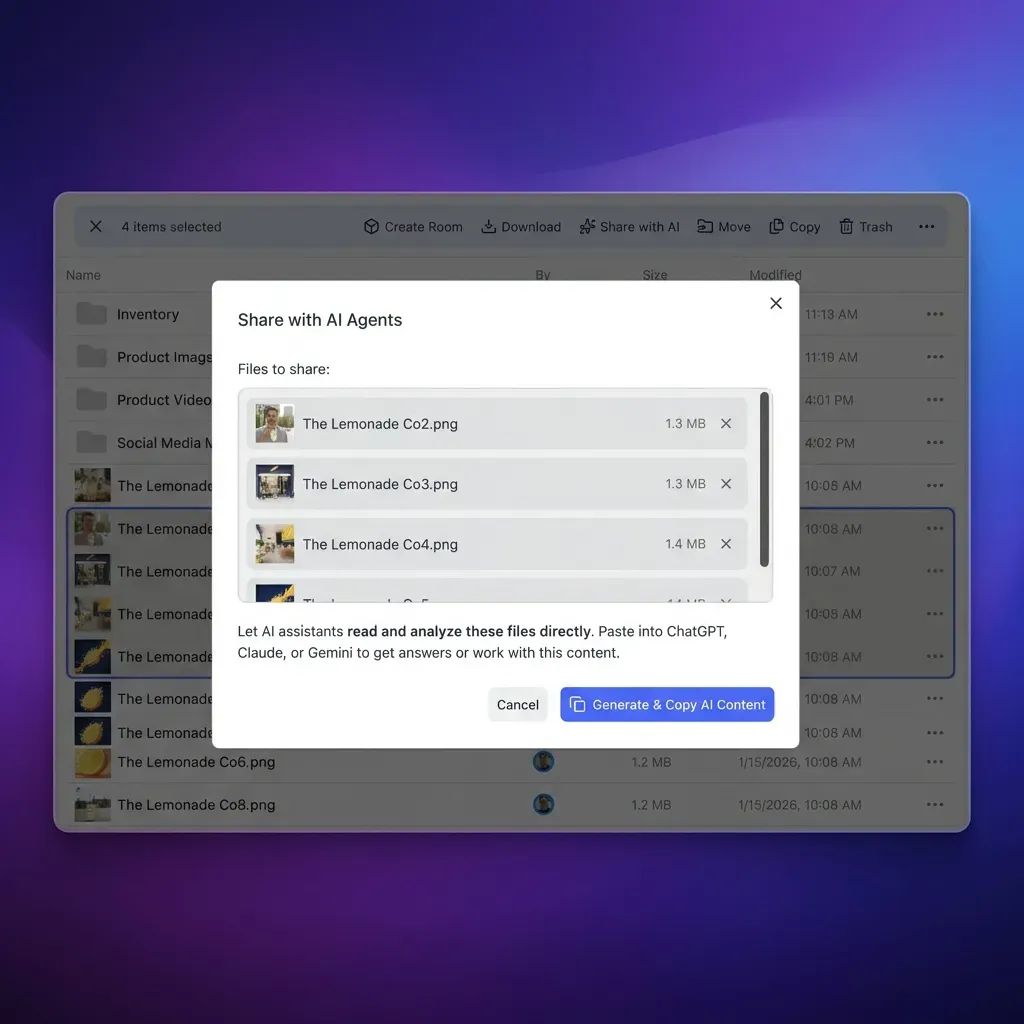
Fastio provides persistent storage for OpenClaw agents via remote MCP. With a consolidated MCP toolset covering file management, agents can upload build artifacts, organize design exports, share files with teammates, and query documents using built-in RAG once Intelligence is enabled on the workspace, all without leaving the agent context.
Strengths:
- Remote MCP connection (
https://mcp.fast.io/mcp/tools): consolidated toolset - Workspaces with AI indexing for semantic search once Intelligence is enabled
- 14-day Business Trial requiring a credit card
- File-level comments and visual annotations for design review handoffs
Limitations:
- Requires a Fastio account before configuring
Best for teams sharing Figma exports and build outputs. Pricing: Plans start at $9.99/mo (Starter) with a 14-day Business Trial (fast.io/pricing).
MCP Endpoint: mcp.fast.io/mcp/tools


Ready for Faster Frontend Workflows?
Connect OpenClaw to Fastio via remote MCP for a consolidated toolset and persistent agent storage. Built for frontend developer workflows.
2. Code (Structured Development Workflow)
The Code skill guides OpenClaw through a disciplined coding process: plan, implement, verify, test. It breaks requests into testable steps and stores user preferences locally in ~/code/memory.md when requested.
Strengths:
- Structured plan-before-code approach reduces hallucinated implementations
- Step-by-step execution with built-in verification checkpoints
- No network requests or file access beyond the project directory
Limitations:
- Does not execute code automatically - it guides the agent's reasoning
Best for React/Vue feature development where quality matters more than raw speed. Free.
ClawHub Page: clawhub.ai/ivangdavila/code
3. Filesystem Management (Asset Organization)
The Filesystem Management skill handles smart file operations that frontend projects generate constantly: design exports, build outputs, icon sets, and font files. Agents use it to list, search, filter, and batch-copy assets with dry-run preview before committing changes.
Strengths:
- Filters assets by type, pattern, size, and date modified
- Full-text content search with regex and glob matching across source files
- ASCII tree visualization to audit project structure
- Safe batch operations with preview mode
Limitations:
- Security scan flags discrepancy between declared permissions and git/npm network access during install - review source before installing
Best for keeping large component libraries and design system asset directories organized. Free.
ClawHub Page: clawhub.ai/gtrusler/clawdbot-filesystem
4. GitHub (Code Review & CI Monitoring)
The GitHub skill uses the gh CLI so agents can monitor pull requests, inspect CI/CD run status, and manage issues - all without extra authentication beyond GITHUB_TOKEN.
Strengths:
gh run listandgh run viewfor real-time CI status- PR diff inspection for automated accessibility and code quality feedback
- Issue management: auto-label UI bugs, link to failing test runs
Limitations:
- Requires
ghCLI to be installed and authenticated on the host machine
Best for code reviews and CI monitoring on React/Vue projects. Free.
ClawHub Page: clawhub.ai/steipete/github
5. Playwright (E2E Browser Testing)
Playwright gives agents full browser automation via MCP: navigate, click, type, snapshot, and extract data from rendered pages. It supports three modes - MCP-driven control for agent workflows, direct scripts for one-off tasks, and test suites for repeatable QA.
Strengths:
browser_navigate,browser_click,browser_snapshot,browser_evaluateMCP actions- Visual regression testing and screenshot capture
- Tracing and artifact capture for CI debugging
Limitations:
- Setup required per project for test suites
Best for end-to-end QA on component libraries. Free OSS.
Install:
npx @playwright/mcp --headless
ClawHub Page: clawhub.ai/ivangdavila/playwright
6. Agent Browser (Headless UI Automation)
Agent Browser is a fast Rust-based headless browser CLI with Node.js fallback. It gives agents richer browser automation than Playwright for scenarios involving video recording, multi-tab workflows, and network request interception.
Strengths:
- Navigation, clicks, form fills, hover, drag-and-drop
- Screenshot and PDF capture
- Video recording for bug reproduction
- Session state saving/loading for authenticated flows
Limitations:
- Flagged by VirusTotal due to high-capability nature (JavaScript execution, file access) - review source before installing
Best for automating authenticated staging environment checks. Free.
Install:
npm install -g agent-browser
agent-browser install
ClawHub Page: clawhub.ai/TheSethRose/agent-browser
7. SQL Toolkit (Data-Backed UI Development)
Frontend apps connect to databases. The SQL Toolkit skill covers SQLite, PostgreSQL, and MySQL, giving agents the ability to write schema-aware queries, run migrations, and validate data before it surfaces in the UI.
Strengths:
- Supports all three major databases with zero install
- EXPLAIN-based query optimization guidance
- Migration script templates for schema changes
- Backup and restore utilities
Limitations:
- Instruction-only - requires existing database CLI tools on the host machine
Best for full-stack frontend work where agents need to verify backend data. Free.
ClawHub Page: clawhub.ai/gitgoodordietrying/sql-toolkit
8. Brave Search (Documentation Research)
Brave Search lets agents run headless web searches and extract readable content from pages as markdown - useful for pulling in library documentation, checking browser compatibility tables, or researching CSS specs without opening a browser session.
Strengths:
- Lightweight, no browser required
- Direct URL content fetching as markdown
- Configurable result counts
Limitations:
- Security analysis found that the actual code scrapes search.brave.com HTML rather than using the documented API - review source before installing
Best for documentation lookups during development. Free tier available.
ClawHub Page: clawhub.ai/steipete/brave-search
Which Integration Fits Your Stack?
React/Vue teams building full-stack apps: Start with Fastio + Code + SQL Toolkit. Solo devs shipping quickly: GitHub + Playwright for automated review and testing. Enterprise UI teams: Agent Browser + Filesystem Management for comprehensive QA and asset governance.
Frequently Asked Questions
How does OpenClaw help frontend developers?
OpenClaw agents automate UI tasks like structured code generation, component testing, and asset management. Integrations like Fastio handle files via MCP without local storage limitations, while Playwright and Agent Browser handle browser-based testing.
What are the best MCP integrations for React developers?
Fastio MCP server offers a consolidated toolset for React workflows: upload builds, manage workspaces, and query assets with RAG once Intelligence is enabled. Pair with Playwright for E2E tests and GitHub for CI monitoring.
What pricing options does Fastio offer for OpenClaw frontend work?
Monthly plans start with a trial of up to 14 days (credit card required); annual plans have no trial. Paid plans start at $9.99 per month (Starter) for 250 GB of storage and 3 seats. Connect via remote MCP at https://mcp.fast.io/mcp/tools.
How do I set up browser testing with OpenClaw?
Install the Playwright skill and run `npx @playwright/mcp --headless` to start the MCP server. The agent can then use `browser_navigate`, `browser_click`, and `browser_snapshot` actions to drive test workflows.
Related Resources

Ready for Faster Frontend Workflows?
Connect OpenClaw to Fastio via remote MCP for a consolidated toolset and persistent agent storage. Built for frontend developer workflows.