How to Automate Finance Reporting with OpenClaw Integrations
Manual financial reporting is slow and error-prone. OpenClaw integrations for finance simplify reporting and reconciliation by connecting agents to your ledger, bank, and files. Save 20+ hours per month with these tools.

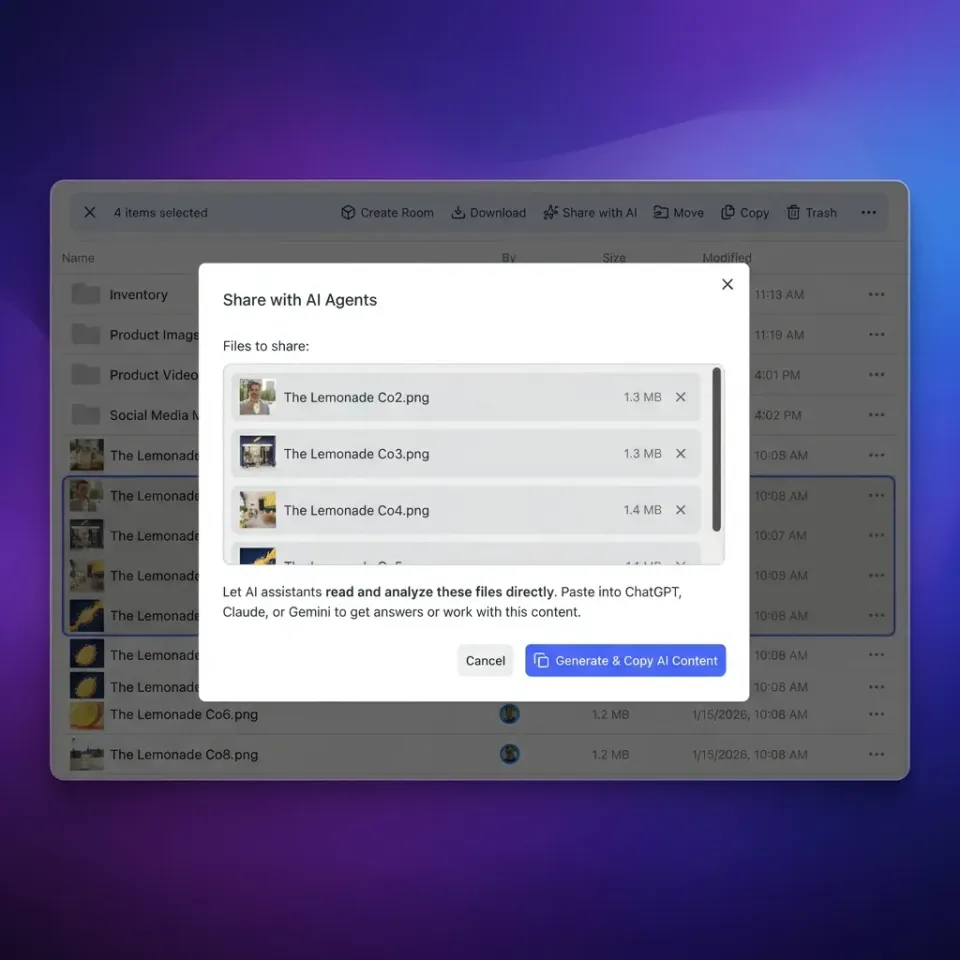
Why Finance Teams Are Adopting Local AI Agents
Finance teams often avoid AI for one reason: data privacy. Sending ledgers and transaction data to a public cloud model is risky.
OpenClaw solves this. OpenClaw is a local-first autonomous agent that runs on your infrastructure, keeping data under your control. It acts, rather than just chats. Install specific "skills" via ClawHub to turn OpenClaw into a financial analyst that connects your isolated tools.
"OpenClaw integrations for finance simplify reporting and data reconciliation."
An OpenClaw agent handles the entire pipeline: exporting Stripe CSVs, formatting them in Excel, and pasting charts into Slack.
The Shift from RPA to Agentic AI
Traditional
Robotic Process Automation (RPA) is rigid. If a button moves, the bot breaks. OpenClaw agents use LLMs to parse interfaces, so they handle changes better. They adapt to new invoice formats, handle pop-ups, and process data anomalies like a junior analyst.
Helpful references: Fastio Workspaces, Fastio Collaboration, and Fastio AI.
Related guides
- Top Integrations for Microsoft Copilot StudioMicrosoft Copilot Studio lets businesses build custom AI agents, but its real power comes from connecting to external...
- Claude Code Teams: Multi-Agent Orchestration GuideClaude Code agent teams split complex coding tasks across multiple independent AI sessions. Each teammate gets its own...
- Best OpenClaw Integrations for DevOps AutomationOpenClaw agents can manage infrastructure, deploy code, and respond to incidents without manual intervention. To build...
- Best OpenClaw Workflows for AI Storyboard and Scene PlanningOver 1 million professionals use AI storyboarding tools, but most require manual interaction per frame. OpenClaw's...
- Best OpenClaw Workflows for AI Social Media Post CreationOpenClaw social media post creation workflows chain content ideation, copy generation, image creation, and...
- Best OpenClaw Workflows for AI Workflow Automation Builder ToolsClawHub's curated index lists 529 skills across its Browser & Automation and Productivity & Tasks categories, yet most...
More on this subject: OpenClaw Workflows and Integrations (69 guides)
1. Fastio (Intelligent Storage & RAG)
Best for: Securely storing financial documents and querying them with AI.
Fastio is the workspace for your OpenClaw agent. Connect OpenClaw to Fastio to index invoices, contracts, and receipts once Intelligence is enabled. The remote MCP server exposes a consolidated toolset, from file uploads and workspace management to AI chat across your documents.
Key Features for Finance:
- Zero-Config RAG: Upload a PDF. Once Intelligence is enabled, your agent can answer questions about it ("What was the total vendor spend in Q3?").
- MCP Tools: Give your agent control over files via remote Streamable HTTP at https://mcp.fast.io/mcp/tools.
- Secure Handoff: Agents can build data rooms and transfer ownership to human finance managers.
- File Locks: Advisory file locks let agents signal active ledger updates so human or agent collaborators can wait, while version history preserves every write.
Why it fits Finance: Financial documents are often unstructured. Fastio lets your agent read and organize thousands of files with built-in citations to reduce hallucinations once Intelligence is enabled.
Implementation Tip:
Connect OpenClaw to Fastio via its remote MCP endpoint at https://mcp.fast.io/mcp/tools using Streamable HTTP. This lets your agent upload, search, and list workspace files.
MCP Endpoint: mcp.fast.io/mcp/tools

2. SQL Toolkit (Automated Ledger Queries)
Best for: Direct database queries against financial data stores.
The SQL Toolkit skill covers SQLite, PostgreSQL, and MySQL, the three databases that power most accounting and ERP systems. Agents use it to query balances, categorize transactions, and generate aggregated reports without touching a UI.
How it works:
- Auto-Aggregation: The agent writes and runs SQL queries against your transaction tables to categorize thousands of line items.
- Daily Snapshots: Schedule the agent to run a balance query every morning and alert you to anomalies.
- Variance Queries: Compare this month's spend category totals against last month in a single query.
Agentic Workflow: Ask your agent: "Generate a P&L summary for last week." The agent queries your database, aggregates the data, and presents a formatted summary, no manual export needed.
ClawHub Page: clawhub.ai/gitgoodordietrying/sql-toolkit
3. Agent Browser (Revenue Monitoring)
Best for: Real-time revenue tracking via browser automation.
Agent Browser is a fast Rust-based headless browser CLI that lets OpenClaw navigate dashboards, click elements, fill forms, take screenshots, and extract structured data from rendered pages. For finance teams, this means the agent can log into Stripe, capture MRR metrics, and extract numbers using vision, no custom API middleware required.
Use Cases:
- Instant Verification: The agent navigates to your Stripe dashboard and verifies that daily payouts match your bank deposits.
- Churn Alerts: Configure the agent to navigate the "Cancelled" events view and compile a weekly churn report.
Install:
npm install -g agent-browser
agent-browser install
ClawHub Page: clawhub.ai/TheSethRose/agent-browser


Give Your AI Agents Persistent Storage
Connect OpenClaw to Fastio for secure, intelligent file storage and a consolidated MCP toolset. Built for finance team workflows.
4. Slack & AgentMail (Reporting & Communication)
Best for: Delivering automated reports to stakeholders.
Data needs to move. OpenClaw integrates with Slack for real-time channel reporting and AgentMail for email-based delivery to clients and partners who aren't in your Slack workspace.
Automated Daily Briefing (Slack):
- Agent runs at 8:00 AM.
- Queries Fastio for new invoices.
- Checks your database for yesterday's revenue via SQL Toolkit.
- Posts a concise summary to the
#finance-updateschannel.
AgentMail for Client Reporting: AgentMail is an API-first email platform built for agents. It lets your agent create dedicated inboxes, send rich HTML reports with attachments, and receive replies via webhooks, all without rate limits.
pip install agentmail python-dotenv
ClawHub Pages: clawhub.ai/steipete/slack | clawhub.ai/adboio/agentmail
5. Filesystem Management (Data Processing)
Best for: Organizing, consolidating, and processing financial files.
Finance teams live in spreadsheets and CSVs. The Filesystem Management skill gives agents advanced file operations, smart listing with filtering, full-text content search, batch copying with dry-run preview, and directory tree visualization.
The "File Consolidation" Workflow:
- Consolidation: The agent scans a directory for all budget spreadsheets matching a date pattern and merges them into one master file.
- Error Checking: Searches file contents for common formula indicators and flags inconsistencies.
- Formatting: Moves raw CSV dumps into organized subfolders by month.
Impact: Finance automation saves teams over 20 hours per month in manual data entry and file management.
ClawHub Page: clawhub.ai/gtrusler/clawdbot-filesystem
6. Gog (Google Workspace)
Best for: Organizing financial procedures and sharing reports via Google Workspace.
The gog skill is a Google Workspace CLI for Gmail, Calendar, Drive, Contacts, Sheets, and Docs. Finance agents use it to read and write Google Sheets directly from agent prompts, export Docs as PDFs, and search Drive for historical contracts.
Documentation Automation:
- Audit Trails: When the agent performs a reconciliation, it writes a structured summary to a dedicated Google Sheet row.
- SOP Updates: Update a procedure in Google Docs and the agent reads the new version on its next run.
Install:
brew install steipete/tap/gogcli
ClawHub Page: clawhub.ai/steipete/gog
7. API Gateway (100+ Service Connections)
Best for: Connecting agents to SaaS tools without managing OAuth yourself.
The API Gateway skill from Maton acts as a passthrough proxy, giving agents access to 100+ services, including Stripe, Salesforce, HubSpot, Airtable, and Microsoft 365, through a single managed OAuth layer. For finance teams, this eliminates the work of configuring individual API keys for every connected platform.
Use Cases:
- Contract Analysis: Pull CRM data from Salesforce and cross-reference against billing records in Stripe.
- Expense Sync: Push approved expense line items from Airtable to your accounting system.
Setup requires a MATON_API_KEY from maton.ai/settings and creating OAuth connections through their control API.
ClawHub Page: clawhub.ai/byungkyu/api-gateway
Security Best Practices for Finance Agents
Security is critical when an agent handles financial data. Lock down your OpenClaw deployment:
1. Run Locally Host OpenClaw on a secure, internal server or workstation. Do not run it on a public server without a VPN. Use Fastio for storage to encrypt files at rest and in transit.
2. Least Privilege Do not give your agent Admin access to everything. Create specific API keys for each integration with limited scopes (e.g., "Read Only" for bank feeds, "Write" only for specific draft folders).
3. Human-in-the-Loop For sensitive actions like payments, configure the agent to draft the transaction and wait for approval. The agent sends a Slack message with an Approve/Reject button before executing.
4. Audit Logging Enable verbose logging. Review logs weekly to check for hallucinations or unauthorized actions. Fastio's audit logs track every file access.
Manual vs. Agentic Finance Workflows
Shifting to an OpenClaw agent workflow changes the daily process.
Document access rules, audit trails, and retention policies before rollout. This ensures staging results are repeatable and helps teams debug issues.
How to Get Started
Build your finance agent with these steps.
Step 1: Install OpenClaw Set up the local OpenClaw environment on a secure machine. Ensure it has access to your local network if connecting to on-prem tools.
Step 2: Connect Storage
Give your agent a place to store documents.
Configure your OpenClaw agent with the remote MCP URL https://mcp.fast.io/mcp/tools and an API key sent as a Bearer header. This provides tools to upload, search, and organize files immediately.
Step 3: Define Your First Workflow Start small. Automate one report (e.g., "Daily Sales"). Once reliable, expand to reconciliation.
Sources
References used to verify factual claims in this guide.
-
Finance teams save 10 hours per week with payments automation.
Frequently Asked Questions
Is OpenClaw safe for financial data?
Yes, when configured correctly. OpenClaw runs locally on your infrastructure, meaning sensitive data doesn't need to leave your control. For storage, integrating with Fastio means files are encrypted and access-controlled, offering a safer alternative to emailing spreadsheets.
How do I automate financial reports with OpenClaw?
You automate reports by chaining skills. Configure OpenClaw to fetch data (e.g., via Agent Browser for dashboard scraping or SQL Toolkit for database queries), process it (using Filesystem Management), and deliver it (via Slack or AgentMail). This workflow can be scheduled to run automatically every day or week.
Does OpenClaw work with Excel files?
Yes. OpenClaw handles Excel files natively through the Filesystem Management skill. It can read rows, update cells, and manage file versions. By combining this with Fastio storage, you can have your agent automatically version-control every iteration of your spreadsheets.
What is the cost of using OpenClaw?
OpenClaw itself is open-source and free to run locally. You pay only for the LLM API tokens (e.g., OpenAI or Anthropic) you consume and any SaaS subscriptions for the tools you integrate, like Fastio or AgentMail.
Can OpenClaw make payments?
Technically yes, but it is recommended to keep payment execution as a 'Human-in-the-Loop' process. The agent can draft the payment in your banking tool or accounting system, but a human should click the final 'Send' button for security.
Related Resources

Give Your AI Agents Persistent Storage
Connect OpenClaw to Fastio for secure, intelligent file storage and a consolidated MCP toolset. Built for finance team workflows.