8 Best MCP Servers for Video Processing in 2026
MCP servers for video processing let AI agents transcode, analyze, edit, and stream video through Model Context Protocol interfaces. This guide reviews the top tools for automating video workflows, from FFmpeg wrappers to enterprise streaming platforms.

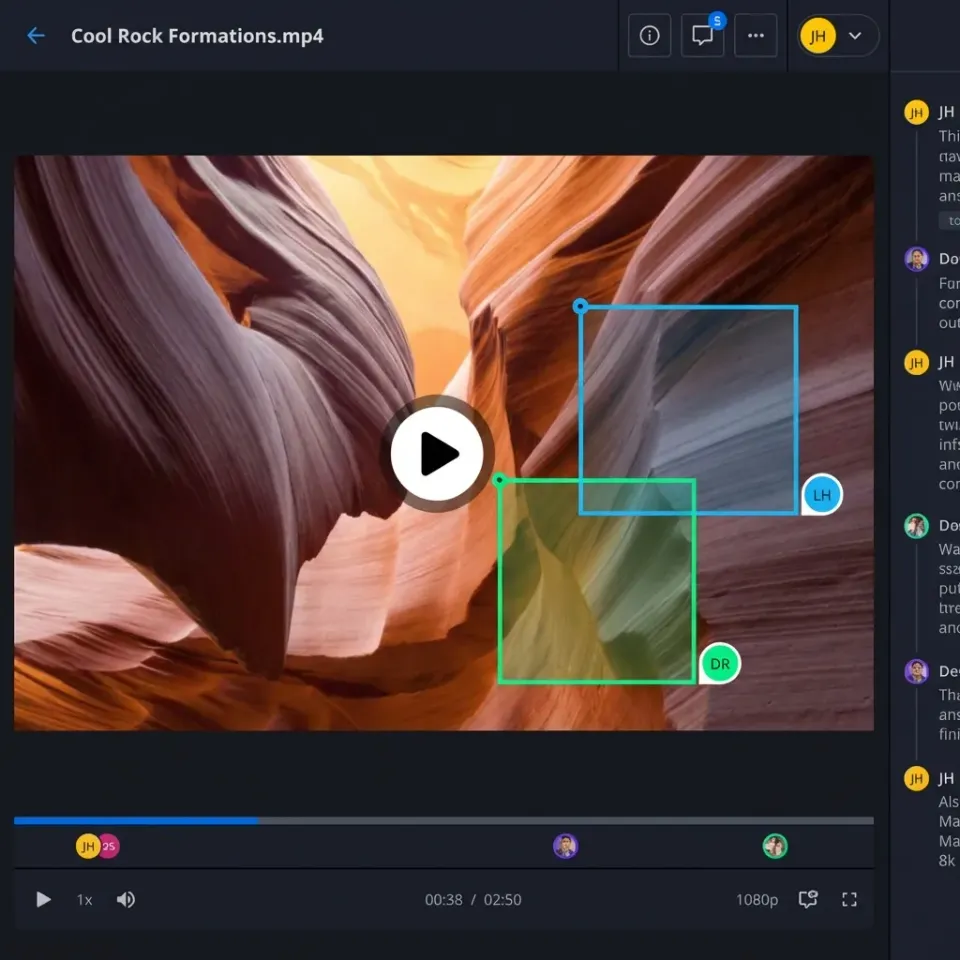
Why AI Agents Need Video MCP Servers
Video processing is hard work for AI agents. Large Language Models (LLMs) understand text and code but cannot easily edit binary media files. MCP servers for video processing fix this by giving agents a standard way to send commands to media engines.
Video MCP servers automate many common transcoding workflows. They allow agents to handle format conversion, metadata extraction, and basic editing without human help. By sending the heavy work to specialized servers like FFmpeg or cloud APIs, agents process media faster than they could with custom scripts.
Define clear tool contracts and fallback behavior so agents fail safely when dependencies are unavailable. This improves reliability in production workflows.
Helpful references: Fastio Workspaces, Fastio Collaboration, and Fastio AI.
Related guides
- Top 7 Open Source MCP Servers for AI Agents in 2026Open source MCP servers give AI agents direct access to files, databases, and APIs without black-box proprietary...
- Best MCP Servers for LLM Workflows in 2026Model Context Protocol servers give LLMs standardized access to tools, data, and services. With over 10,000 public...
- Best MCP Servers for Search: Connecting AI Agents to Real-Time DataSearch MCP servers connect AI agents to real-time web data, which cuts down on hallucinations and helps agents retrieve...
- 8 Best MCP Servers for Document Management in 2026MCP servers for document management give AI agents structured access to document repositories with capabilities like...
- Best MCP Servers for File Storage: Top 8 Tools for 2026MCP (Model Context Protocol) servers for file storage give AI agents persistent, structured access to cloud storage...
- Top 7 MCP Servers for Databases: Connecting Agents to Data (2026)MCP servers for databases connect AI agents to structured data storage. This guide ranks the top 7 servers for...
More on this subject: MCP and Model Context Protocol (238 guides)
1. FFmpeg MCP: Transcoding and Format Conversion
Best For: Granular file editing, transcoding, and format conversion.
FFmpeg-MCP is an open-source wrapper around the FFmpeg library. It exposes FFmpeg's features to AI agents through simple natural language or structured tool calls. Instead of guessing complex command-line arguments, an agent can request to "convert this MOV to MP4" or "extract audio from this clip." The MCP server translates that into the correct FFmpeg syntax.
Pros:
- Versatility: Handles almost any codec or container format.
- Cost: Free and open-source (self-hosted).
- Control: Direct access to parameters.
Cons:
- Resource Heavy: Requires local CPU/GPU resources.
- Complexity: Agents may still need help with complex filter chains.


Give Your AI Agents Persistent Storage
Stop managing temporary containers.
2. Fastio MCP: Persistent Storage & Media Layer
Best For: High-performance storage, file management, and media collaboration.
The Fastio MCP server provides the infrastructure for video agents. Video files are often too large for agent context windows or temporary containers. Fastio offers a persistent file system that agents can access via a consolidated MCP toolset.
Agents can use Fastio to store raw footage, organize dailies, and collaborate on media assets. Once Intelligence is enabled for the workspace, agents can search video transcripts and metadata stored in the file system.
Pros:
- Large Storage: Plans start at 250 GB, with a 14-day Business Trial on monthly plans.
- Persistence: Files survive beyond the agent's session.
- Integration: Works well with other tools in this list.
Cons:
- Focus: Focuses on storage and management rather than pixel-level editing.
3. Mux MCP: API-First Video Streaming
Best For: Application developers building streaming features.
Mux provides an API for video hosting and streaming. The Mux MCP server lets agents interact with this backend programmatically. An agent can upload a video asset, configure playback policies, and retrieve streaming analytics without leaving its chat interface. This works well for agents that manage content libraries or publish workflows.
Pros:
- Infrastructure: Handles encoding and delivery.
- Analytics: Detailed stats on viewer engagement.
- Reliability: High uptime and performance.
Cons:
- Cost: Usage-based pricing increases with volume.
Define clear tool contracts and fallback behavior so agents fail safely when dependencies are unavailable. This improves reliability in production workflows.
4. Cloudflare Stream MCP: Serverless Global Delivery
Best For: Global content delivery and serverless workflows.
Cloudflare Stream offers a serverless video platform on Cloudflare's global network. Its MCP integration lets agents upload videos via URL, manage live streams, and configure signed URLs for secure access. It is useful for agents that distribute content to a global audience with low latency.
Pros:
- Speed: Content is cached at the edge close to users.
- Simplicity: No servers to manage.
- Security: Strong access controls and signed URLs.
Cons:
- Lock-in: Integrated with the Cloudflare ecosystem.
Document access rules, audit trails, and retention policies before rollout so staging results are repeatable in production. This avoids late surprises and helps teams debug issues with confidence.
5. Remotion MCP: Programmatic Video Creation
Best For: Generating data-driven videos from code.
Remotion lets developers create videos using React. The Remotion MCP server allows AI agents to generate video content by writing and executing React code. This suits "faceless" video automation, where an agent takes a blog post or data set and renders a video summary using templates.
Pros:
- Automation: Code-based video generation.
- Flexibility: Flexible design via CSS/React.
- Quality: Renders high-quality MP4s.
Cons:
- Learning Curve: Requires React knowledge.
Define clear tool contracts and fallback behavior so agents fail safely when dependencies are unavailable. This improves reliability in production workflows.
6. Clipwright MCP: Spoken, On-Camera Video
Best For: Short vertical videos of an AI actor speaking a script, and faceless narrated videos.
Remotion renders video from React code. Clipwright covers the spoken, on-camera case instead: Clipwright says an agent sends a script and gets back a finished MP4 of an AI actor saying it to camera, 1080x1920 (9:16) by default. It also makes faceless videos of up to 90 seconds, with narration over an animated opening clip and image scenes. Clipwright describes itself as agent-native and MCP-first, and the same render pipeline is available through four surfaces: an MCP server (hosted, or the @clipwright/mcp-server npm package run locally), a command-line tool, a REST API, and a TypeScript SDK.
Runs are asynchronous. The agent asks a free quote tool such as quote_ugc for the price, starts the render with make_ugc, gets a run ID back at once, and polls get_run until the run succeeds or fails. Clipwright returns a link to the file and does not publish anywhere. Its developer page says files are kept for 30 days after a run finishes and the links expire sooner, so an agent should copy the finished video to its own storage in the same job.
Pros:
- Pricing: Credit packs with no subscription, starting at $10 for 1,000 credits before tax. A talking-actor clip costs 30 credits per second of finished video, so Clipwright's own example puts 10 seconds at $3.00.
- Quotes: Every paid tool has a free quote, so an agent can check the price before it spends credits.
- Failed Runs: Clipwright says a talking-actor run that fails before the video is ordered from its rendering vendor costs nothing, and neither does a failed faceless video.
Cons:
- Billing: A talking-actor run that fails after the vendor has taken on the video is still charged.
- Retention: Finished files are deleted 30 days after the run, and publishing is left to your own infrastructure.
7. Google Video Intelligence MCP: Deep Analysis
Best For: Content moderation, search, and metadata tagging.
This MCP server connects agents to Google Cloud's Video Intelligence API. It lets agents "watch" a video and extract data: identifying objects, detecting shot changes, recognizing text (OCR), and flagging inappropriate content. This turns video into structured data that LLMs can understand.
Pros:
- Intelligence: Advanced computer vision models.
- Detail: Detailed detection of entities and events.
- Scale: Processes large libraries efficiently.
Cons:
- Dependency: Requires Google Cloud credentials and billing.
Define clear tool contracts and fallback behavior so agents fail safely when dependencies are unavailable. This improves reliability in production workflows.
8. Bunny Video MCP: Cost-Effective Delivery
Best For: Projects on a budget needing reliable streaming.
Bunny.net offers a low-cost video delivery solution. A Bunny Video MCP server lets agents manage collections, upload videos, and configure players for less money than major hyperscalers. It is a good choice for startups and indie developers building agent-powered video apps.
Pros:
- Price: Low prices.
- Performance: Fast global edge network.
- Security: DRM and watermarking features included.
Cons:
- Features: Fewer advanced analytics than Mux or Cloudflare.
Document access rules, audit trails, and retention policies before rollout so staging results are repeatable in production. This avoids late surprises and helps teams debug issues with confidence.
Comparing Video MCP Servers
Pick the server based on your specific workflow needs. Here is a quick comparison:
Recommendation: Start with Fastio MCP for your storage foundation, then add FFmpeg-MCP for processing or Mux for delivery depending on your final output requirements.
To create new video, use Remotion for templated, code-driven video and Clipwright when you need a spoken, on-camera clip from a script.

Sources
Frequently Asked Questions
What is a video MCP server?
A video MCP server is a tool that implements the Model Context Protocol to show video processing features to AI agents. It connects the agent to video engines like FFmpeg, translating natural language requests into technical commands.
Can AI agents edit video files directly?
Most AI agents cannot edit video files directly because of size limits. Instead, they use MCP servers to do the editing. The agent tells the server to perform cuts, merges, or effects, and the server returns the result or a link to the file.
How do I handle large video files with agents?
Use a persistent storage MCP server like Fastio to handle large video files. Upload your video to the storage layer, then pass the file path to your processing MCP (like FFmpeg). This prevents loading the whole file into the agent's memory.
Is FFmpeg-MCP free to use?
Yes, FFmpeg-MCP is usually open-source and free. However, since it runs locally or on your own infrastructure, you must pay for the computer power (CPU/GPU) needed to process the video files.
Which MCP server is best for streaming?
Mux and Cloudflare Stream are top choices for streaming. Mux offers a developer-friendly API with detailed analytics. Cloudflare Stream is good for serverless, global delivery. Both have MCP integrations that let agents manage streaming.
Related Resources

Give Your AI Agents Persistent Storage
Stop managing temporary containers.