Best MCP Servers for Search: Connecting AI Agents to Real-Time Data
Search MCP servers connect AI agents to real-time web data, which cuts down on hallucinations and helps agents retrieve current facts. This guide compares 10 search MCP servers across keyword search, semantic search, and academic research.


What Are Search MCP Servers?
Search MCP servers connect LLMs to search engines like Google, Bing, or Exa, so agents can retrieve real-time facts and crawl the web for fresh data. Without search, AI agents rely only on their training data, which leads to outdated information and hallucinations about recent events. A search MCP server gives your AI assistant tools to query search engines programmatically. Instead of answering "I don't know what happened yesterday," your agent can search Google, parse results, and return cited facts. Real-time data access cuts AI hallucination by up to 50%, according to recent benchmarks comparing agents with and without search. Over 1,000 developers are building custom search tools for MCP, from general web search to specialized academic databases. The right server depends on whether you need breadth (Google's massive index), speed (Exa's sub-200ms queries), or semantic accuracy (Exa's neural embeddings vs. keyword matching).
Helpful references: Fastio Workspaces, Fastio Collaboration, and Fastio AI.
Related guides
- Best MCP Servers for Real-Time Data in 2026Real-time MCP servers let AI agents consume live data feeds, from stock tickers and Kafka topics to infrastructure...
- GPT Actions vs MCP: Which Integration Approach to Use?Choosing between GPT Actions and the Model Context Protocol (MCP) comes down to one question: do you want to build for...
- How to Connect Fastio MCP with Griptape AI AgentsConnecting Fastio's Model Context Protocol (MCP) server with the Griptape framework gives enterprise AI agents secure,...
- How to Integrate Fastio MCP With MetaGPTIntegrating Fastio MCP with MetaGPT gives your multi-agent teams persistent, shared file workspaces. They can store and...
- What Is Model Context Protocol (MCP)?Model Context Protocol (MCP) is an open standard that lets AI agents connect to external data sources and tools through...
- Top 7 MCP Servers for Databases: Connecting Agents to Data (2026)MCP servers for databases connect AI agents to structured data storage. This guide ranks the top 7 servers for...
More on this subject: MCP and Model Context Protocol (238 guides)
How We Evaluated These Search Servers
We tested each MCP server on these criteria:
Search Coverage: Does it index the entire web (Google, Brave) or focus on quality sources (Exa, Perplexity)?
Query Speed: How fast does it return results? Sub-200ms is what you want for real-time chat.
Result Quality: Are results relevant and current? We tested complex queries like "startups in NYC with more than 10 employees working on hardware."
Integration Complexity: Does it require API keys, rate limiting setup, or custom configuration?
Cost: Free tier availability, per-query pricing, and enterprise options.
Semantic vs. Keyword Search: Does it understand meaning (neural search) or just match keywords (traditional search)?

Keyword Search vs. Semantic Search
Traditional search engines like Google and Bing use keyword matching. They analyze link structure (PageRank) and match query terms to indexed pages. This works well for simple queries ("weather in Seattle") but struggles with complex searches ("find software engineers in the Bay Area who have a blog"). Semantic search engines like Exa use neural embeddings to understand what your query means. Instead of matching keywords, they find content that matches the intent. Exa's embedding-based approach retrieves over 20x more correct results on complex queries compared to Google, according to their Websets benchmark. For AI agents, the difference matters. If you're building a research assistant that needs detailed information, semantic search wins. If you need broad coverage and current news, keyword search is better. Most teams use both: Google for breadth and recency, Exa for conceptual accuracy.
1. Exa MCP Server
Exa is a neural search engine built specifically for AI systems. Unlike Google, which was designed for humans, Exa optimizes for API queries and semantic understanding.
Key strengths:
- Neural embeddings understand query meaning, not just keywords
- Sub-200ms response times (faster than Google)
- Websets retrieves 20x more correct results on complex queries
- API-first design with no ads or SEO-optimized noise
Limitations:
- Smaller index than Google (focuses on quality over quantity)
- Requires API key and per-query pricing
- Not ideal for simple keyword searches
Best for: Research agents, complex conceptual queries, AI applications that need high-quality results over broad coverage.
Pricing: Pay-per-query model starting at $0.001 per search.
2. Serper MCP Server (Google Search)
Serper provides Google Search results via API, giving your agent access to Google's massive index. This is the most comprehensive search option, covering billions of pages and real-time news.
Key strengths:
- Access to Google's full index (broadest coverage)
- Real-time news and recent content
- Supports image search, video search, and Google Shopping
- Reliable uptime and performance
Limitations:
- Keyword-based matching (not semantic)
- Results include SEO-optimized content and ads
- Requires Serper API key (third-party, not official Google)
- Rate limits on free tier
Best for: General-purpose search, news monitoring, agents that need the widest possible coverage.
Pricing: Free tier with 2,500 queries/month; paid plans are available for 10,000 queries and up; see the vendor's pricing page.
3. Brave Search MCP Server
Brave Search offers a privacy-focused alternative to Google with its own independent index. No tracking, no personalized bubbles, just raw search results.
Key strengths:
- Independent index (not a Google wrapper)
- Privacy-focused (no tracking or user profiling)
- Includes local business search
- Clean API with customizable result counts
Limitations:
- Smaller index than Google
- Less comprehensive for niche topics
- Newer API with fewer integrations
Best for: Privacy-conscious applications, agents that need clean results without personalization.
Pricing: Free tier with 2,000 queries/month, paid plans start at $3 per 1,000 queries. As your file library grows, finding what you need becomes the bottleneck. Folder hierarchies help, but they break down at scale. AI-powered semantic search lets you describe what you are looking for in plain language rather than remembering exact filenames or folder paths.
4. Perplexity MCP Server
Perplexity connects to the Sonar API, combining web search with AI-generated summaries. Instead of returning a list of links, it synthesizes search results into conversational answers.
Key strengths:
- AI-generated summaries with citations
- Conversational research interface
- Good for question-answering workflows
- Handles follow-up context
Limitations:
- More expensive than raw search APIs
- Summary quality depends on underlying model
- Not ideal if you need raw search results
Best for: Conversational agents, research assistants, applications where you want summaries instead of links.
Pricing: API access requires a Perplexity Pro subscription plus per-query API fees. Consider how this fits into your broader workflow and what matters most for your team. The right choice depends on your specific requirements: file types, team size, security needs, and how you collaborate with external partners. Testing with a free account is the fast way to know if a tool works for you.


Give Your AI Agents Persistent Storage
Fastio's remote MCP server provides a consolidated toolset for file storage, semantic search, and RAG. Enable Intelligence to search your files in natural language.
5. DuckDuckGo MCP Server
DuckDuckGo provides privacy-focused search results with a simple, lightweight MCP server. No API key required.
Key strengths:
- No API key required (easiest setup)
- Privacy-focused (no tracking)
- Built-in rate limiting and safe search
- Markdown-formatted results
Limitations:
- Relies on Bing's index (not independent)
- Limited customization options
- Fewer features than Google or Brave
Best for: Prototyping, simple agents, privacy-focused applications.
Pricing: Free (no API key required). Consider how this fits into your broader workflow and what matters most for your team. The right choice depends on your specific requirements: file types, team size, security needs, and how you collaborate with external partners. Testing with a free account is the fast way to know if a tool works for you.
6. Jina AI MCP Server
Jina AI specializes in web content extraction and semantic search. It's designed for agents that need to scrape and index web pages, not just retrieve search results.
Key strengths:
- Extract clean text from any URL
- Built-in fact-checking tools
- Semantic search over extracted content
- Good for building custom search indexes
Limitations:
- Not a general search engine (requires URLs)
- More complex setup than other options
- Best used alongside a search API
Best for: Agents that need to extract and process web content, custom knowledge bases.
Pricing: Free tier available; paid plans are available; see the vendor's pricing page. Consider how this fits into your broader workflow and what matters most for your team. The right choice depends on your specific requirements: file types, team size, security needs, and how you collaborate with external partners. Testing with a free account is the fast way to know if a tool works for you.
7. ArXiv MCP Server
Specialized server for searching academic papers across ArXiv, ACL Anthology, HuggingFace Datasets, and Semantic Scholar.
Key strengths:
- Access to millions of research papers
- Citation metadata included
- Free to use
- Great for research agents
Limitations:
- Only covers academic content
- No general web search
- Limited to scientific publications
Best for: Research assistants, academic agents, literature review automation.
Pricing: Free. Consider how this fits into your broader workflow and what matters most for your team. The right choice depends on your specific requirements: file types, team size, security needs, and how you collaborate with external partners. Testing with a free account is the fast way to know if a tool works for you.
8. Vectara MCP Server
Vectara is a commercial semantic search and RAG platform. It's designed for enterprise applications that need to search custom knowledge bases with semantic accuracy.
Key strengths:
- Custom embeddings for domain-specific search
- RAG-optimized retrieval
- Enterprise-grade security and compliance
- Relevance-ranked results
Limitations:
- Commercial product (not open-source)
- Higher cost than general search APIs
- Requires uploading your own documents
Best for: Enterprise agents, internal knowledge bases, RAG applications.
Pricing: Contact for enterprise pricing. Consider how this fits into your broader workflow and what matters most for your team. The right choice depends on your specific requirements: file types, team size, security needs, and how you collaborate with external partners. Testing with a free account is the fast way to know if a tool works for you.
9. Google Official MCP Servers
Google recently announced official MCP support for Maps and BigQuery, with more services coming. These servers are managed by Google and built for enterprise customers.
Key strengths:
- Official Google support
- No extra cost for existing Google Cloud customers
- Enterprise reliability
- Integration with Google Workspace
Limitations:
- Still in public preview
- Requires Google Cloud account
- Limited to Google services (not general web search)
Best for: Enterprise agents already using Google Cloud, applications that need Maps or BigQuery integration.
Pricing: Free for existing Google Cloud customers (covered by service subscription). Consider how this fits into your broader workflow and what matters most for your team. The right choice depends on your specific requirements: file types, team size, security needs, and how you collaborate with external partners. Testing with a free account is the fast way to know if a tool works for you.
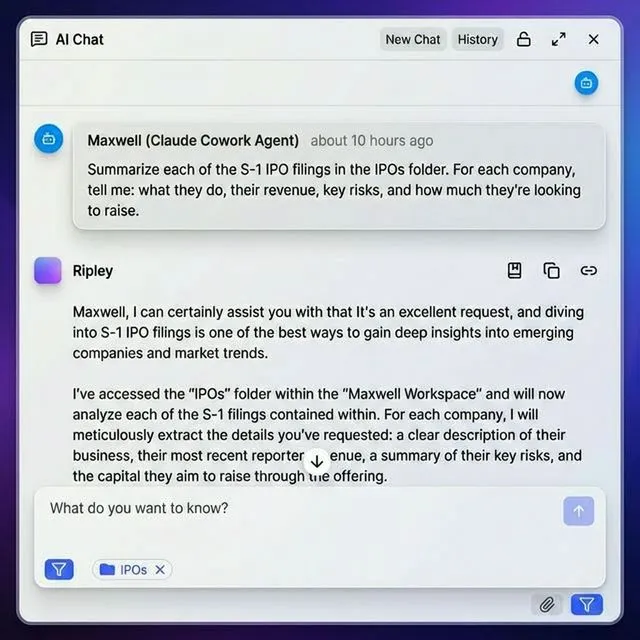
10. Fastio MCP Server (File Search)
Fastio's remote MCP server includes semantic search over files stored in workspaces. Files are indexed and searchable once Intelligence is enabled for the workspace.
Key strengths:
- Consolidated MCP toolset including file search
- Built-in RAG with citations
- Search across files, not just web
- 14-day Business Trial
Limitations:
- Not a web search engine (searches your files)
- Requires uploading files to Fastio
Best for: Agents that need to search internal documents, knowledge bases, or client files.
Pricing: Plans start at $9.99/month (Starter) with a 14-day Business Trial requiring a credit card (fast.io/pricing). As your file library grows, finding what you need becomes the bottleneck. Folder hierarchies help, but they break down at scale. AI-powered semantic search lets you describe what you are looking for in plain language rather than remembering exact filenames or folder paths.
Which Search Server Should You Choose?
For general web search: Use Serper (Google) for the widest coverage and real-time news. It's the default choice for most agents.
For semantic accuracy: Use Exa if you need to understand complex queries and get high-quality results. It's 20x better on conceptual searches.
For privacy: Use Brave or DuckDuckGo if user privacy matters. Both avoid tracking and personalization.
For academic research: Use ArXiv MCP server to search scientific papers with citation metadata.
For file search: Use Fastio if your agent needs to search uploaded documents, not the web. Most production agents use multiple search servers. A common setup combines Serper for general queries, Exa for complex research, and Fastio for internal document search.
How to Give Claude Internet Access via MCP
To add search to Claude Desktop or any MCP-compatible client:
- Install the search MCP server: Pick a server (e.g., Serper, Exa, Brave) and install it. Most are Node.js or Python packages.
- Get API credentials: Sign up for the search service and get an API key. Add it to your environment variables.
- Configure your MCP client: Add the server to your Claude Desktop config (or whichever MCP client you use). Claude Desktop keeps it in
claude_desktop_config.json. - Restart Claude: Restart the application to load the new server. You should see search tools in the context menu.
- Test a query: Ask Claude to search for something. It should call the search tool and return cited results. For detailed setup instructions, check the MCP server's documentation. Most include example config snippets for Claude Desktop, Cursor, and VS Code.
Sources
References used to verify factual claims in this guide.
-
This guide compares 10 search MCP servers across keyword search, semantic search, and academic research. Tested complex queries startups NYC more than 10 employees hardware.
-
Real-time data access cuts AI hallucination by up to 50% according to recent benchmarks comparing agents with and without search.
-
Over 1000 developers building custom search tools for MCP general web search specialized academic databases.
-
Exa embedding-based approach retrieves over 20x more correct results complex queries compared Google Websets benchmark. Exa 20x better conceptual searches. Exa retrieves 20x more correct results queries find software engineers Bay Area blog.
-
Exa Pricing pay-per-query model starting at $0.001 per search.
-
Serper free tier 2500 queries/month with paid plans starting at 10000 queries. Serper charges $0.005 per query for 10000 Google searches.
-
Brave Search free tier 2000 queries/month paid plans $3 per 1000 queries. Brave charges $3 per 1000 queries.
-
Fastio offers a 14-day Business Trial requiring a credit card, with plans starting at $9.99/month.
-
Serper Brave free tiers usage limits 2000-2500 queries/month.
Frequently Asked Questions
What is the best search server for MCP?
It depends on your use case. For general web search, Serper (Google) provides the widest coverage. For semantic accuracy on complex queries, Exa is best. For privacy-focused search, use Brave or DuckDuckGo. Most agents use multiple search servers depending on the query type.
How do I give Claude internet access via MCP?
Install a search MCP server like Serper, Exa, or Brave Search. Get an API key from the search service, add the server to your Claude Desktop config file, and restart Claude. You'll see search tools appear in Claude's context menu. Test by asking Claude to search for recent news or facts.
Is Exa better than Google Search for AI agents?
Exa is better for complex, conceptual queries where you need semantic understanding. It retrieves 20x more correct results on queries like 'find software engineers in the Bay Area who have a blog.' Google is better for broad coverage, real-time news, and simple keyword searches. Most agents use both.
Are search MCP servers free?
Some are. DuckDuckGo MCP server is free with no API key required. Serper and Brave offer free tiers with usage limits (2,000-2,500 queries/month). Exa and Perplexity charge per query. ArXiv is free for academic search. Google's official MCP servers are free for existing Google Cloud customers.
Can I use multiple search servers in one agent?
Yes, and most production agents do. You can configure multiple MCP servers in your client and choose which one to call based on the query type. For example, use Google for news, Exa for research, and ArXiv for academic papers. Some agents route queries automatically based on detected intent.
What's the difference between keyword search and semantic search?
Keyword search (Google, Bing) matches query terms to indexed pages using link analysis. Semantic search (Exa, Vectara) uses neural embeddings to understand the meaning of your query and find conceptually similar content. Semantic search is better for complex queries, keyword search is better for breadth and recency.
How much do search API calls cost?
Costs vary. Serper charges for packages of 10,000 Google searches ($0.005 per query). Brave charges $3 per 1,000 queries. Exa starts at $0.001 per search. DuckDuckGo is free. ArXiv is free. Enterprise options like Vectara require custom pricing. Check each service's pricing page for current rates.
Can I build my own search MCP server?
Yes. The Model Context Protocol is open-source, and you can build custom servers using the MCP SDK (available in TypeScript and Python). You'll need to works alongside a search API (like Google Custom Search or Bing API) and expose search tools via MCP. Check the official MCP documentation for server development guides.
Related Resources

Give Your AI Agents Persistent Storage
Fastio's remote MCP server provides a consolidated toolset for file storage, semantic search, and RAG. Enable Intelligence to search your files in natural language.