Best Knowledge Base Tools for AI Chatbots in 2026
A knowledge base for AI chatbots is a structured repository of documents, FAQs, and data that an LLM-powered chatbot retrieves from to generate accurate, grounded responses. We compare 10 tools across four categories: document stores, vector databases, wiki platforms, and file management systems.

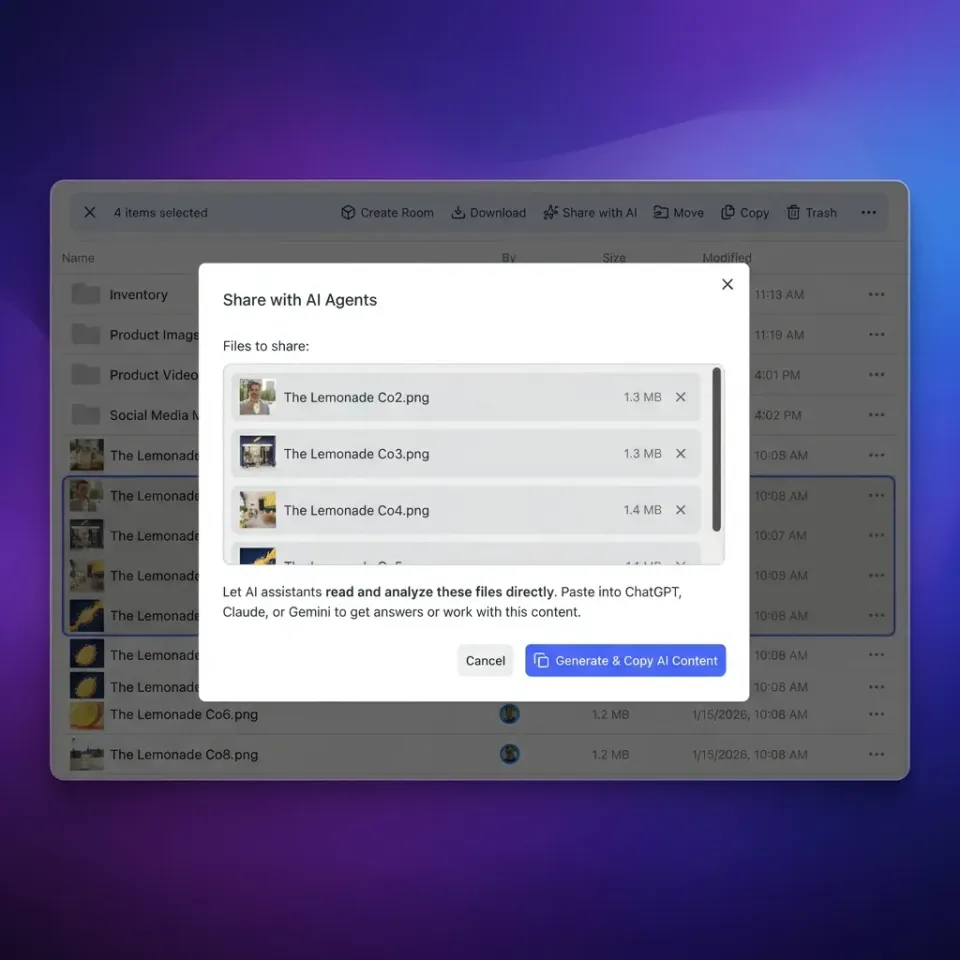
What Is a Knowledge Base for AI Chatbots?
A knowledge base for AI chatbots is a structured repository of documents, FAQs, and data that an LLM-powered chatbot retrieves from to generate accurate, grounded responses. Unlike traditional chatbots that rely on pre-programmed scripts, modern AI chatbots use Retrieval-Augmented Generation (RAG). RAG extends LLMs to specific domains or an organization's internal knowledge base without retraining the model. When a user asks a question, the chatbot searches your knowledge base, finds relevant information, and uses that context to generate its answer.
Why this matters: Chatbots with knowledge bases can resolve the majority of queries without human escalation. They significantly reduce hallucination compared to base LLM responses that lack grounding in your specific data. The knowledge base architecture has three layers:
Storage layer - Where your source documents live (PDFs, DOCX, websites, cloud files)
Indexing layer - Converts content into searchable vectors or structured data
Retrieval layer - Finds relevant content when users ask questions
Most guides focus on the indexing and retrieval layers (vector databases, helpdesk tools) without addressing where source documents live. If your files are scattered across Google Drive, Dropbox, SharePoint, and local folders, even the best vector database can't help.
Helpful references: Fastio Workspaces, Fastio Collaboration, and Fastio AI.
Related guides
- Best PDF Parsing Tools for RAG: Extract Data from Complex DocumentsPDF parsing for RAG involves converting unstructured documents into structured Markdown or JSON while preserving...
- Best Cloud Storage for AI Agents: Top 7 Platforms ComparedCloud storage for AI agents provides persistent file access, version control, and API-driven operations that let...
- 10 Best Storage Solutions for RAG Pipelines in 2026RAG pipelines need two storage layers: document stores for raw files before ingestion, and vector databases for...
- How to Implement Memory Compaction for Long-Running AI AgentsLong-running AI agents lose track of earlier reasoning as conversations grow beyond context window limits. Memory...
- AI Agent Persistent Storage: How to Store Agent Data Between SessionsAI agent persistent storage lets autonomous agents maintain state, remember context, and access files across sessions....
- Best Knowledge Graph Tools for RAG: Enhancing Agent MemoryRAG systems often fail when they only use vector search. Adding a knowledge graph gives AI agents the context to...
More on this subject: Agent Memory and Storage (261 guides)
How We Evaluated These Tools
We evaluated knowledge base tools across six criteria:
Document storage - Can it store and manage source files (PDFs, DOCX, videos)?
RAG integration - Does it provide built-in vector indexing and semantic search?
Chatbot compatibility - Works with which LLMs (GPT-4, Claude, Gemini, local models)?
File type support - What formats can it index (plain text only, or multimedia)?
Developer experience - API access, SDK availability, setup complexity
Pricing model - Per-seat, usage-based, or free tier availability
The tools below are organized by category: Document Stores, Vector Databases, Wiki Platforms, and File Management Systems. Consider how this fits into your broader workflow and what matters most for your team. The right choice depends on your specific requirements: file types, team size, security needs, and how you collaborate with external partners. Testing with a free account is the fast way to know if a tool works for you.
Document Store Platforms
Document stores specialize in managing structured content for internal teams and customer-facing help centers. These platforms typically include built-in editors, version control, and organization features. Consider how this fits into your broader workflow and what matters most for your team. The right choice depends on your specific requirements: file types, team size, security needs, and how you collaborate with external partners. Testing with a free account is the fast way to know if a tool works for you.
Consider how this fits into your broader workflow and what matters most for your team. The right choice depends on your specific requirements: file types, team size, security needs, and how you collaborate with external partners. Testing with a free account is the fast way to know if a tool works for you.
1. Document360
Document360 is a knowledge base platform built for large documentation projects. It supports both customer-facing and internal knowledge bases with version control, content analytics, and multi-language support.
Key strengths:
- Eddy AI search tool for semantic search and chatbot responses
- Supports multiple knowledge bases (internal and external)
- Built-in analytics showing which articles drive the most queries
Limitations:
- Focused on written documentation (limited multimedia support)
- Pricing scales with seats, not usage
Best for: Teams managing technical documentation or product guides with many writers
Pricing: Tiered plans available starting with up to 5 users; see the vendor's pricing page.
2. Notion AI
Notion is a flexible productivity and knowledge management platform. Its AI assistant can search across connected tools, draft content, and summarize information.
Key strengths:
- Highly customizable interface for organizing knowledge
- AI assistant searches across Notion pages and connected integrations
- Real-time collaboration with comments and mentions
Limitations:
- Not purpose-built for chatbots (requires custom RAG setup)
- File storage limits on lower tiers
Best for: Teams already using Notion who want AI-powered search across their workspace
Pricing: AI features available on the Plus plan; see the vendor's pricing page.
3. Confluence
Confluence is Atlassian's enterprise wiki platform. It works alongside Jira, Slack, and other Atlassian tools, making it common in software development teams.
Key strengths:
- Deep integration with Atlassian ecosystem (Jira, Bitbucket)
- Rich permission controls and audit logs
- Spaces for organizing knowledge by team or project
Limitations:
- Complex setup and learning curve
- Expensive for small teams ($6.05/user/month minimum)
- AI features require Atlassian Intelligence add-on
Best for: Enterprise teams already in the Atlassian ecosystem
Pricing: $6.05/user/month (10 user minimum)
Vector Databases for RAG
Vector databases store embeddings (numerical representations of text) to enable semantic search. These are essential for RAG systems but don't store source documents. Consider how this fits into your broader workflow and what matters most for your team. The right choice depends on your specific requirements: file types, team size, security needs, and how you collaborate with external partners. Testing with a free account is the fast way to know if a tool works for you.
Consider how this fits into your broader workflow and what matters most for your team. The right choice depends on your specific requirements: file types, team size, security needs, and how you collaborate with external partners. Testing with a free account is the fast way to know if a tool works for you.
4. Pinecone
Pinecone is a managed vector database optimized for fast similarity search. It's commonly used in RAG pipelines to store and query document embeddings.
Key strengths:
- Fast vector search with low latency
- Managed service (no infrastructure to maintain)
- Hybrid search combining vectors and metadata filters
Limitations:
- Only stores embeddings, not source files (you need separate storage)
- Pricing based on index size and queries
Best for: Developers building custom RAG chatbots who need dedicated vector search
Pricing: Free tier with 100K vectors; paid plans scale with usage (see vendor pricing)
5. Weaviate
Weaviate is an open-source vector database with built-in vectorization modules. It supports multimodal search (text, images, audio) and can run self-hosted or managed.
Key strengths:
- Open-source with self-hosting option
- Multimodal support (text + images)
- Built-in integrations with OpenAI, Cohere, Hugging Face
Limitations:
- Requires DevOps expertise for self-hosting
- Managed cloud option is more expensive than competitors
Best for: Teams who want full control over their vector database and have DevOps resources
Pricing: Free for self-hosted; see the vendor's pricing page for managed cloud plans
6. Qdrant
Qdrant is a vector search engine written in Rust, focused on performance and filtering capabilities. It supports rich metadata filtering alongside vector search.
Key strengths:
- fast (Rust-based performance)
- Advanced filtering on metadata (dates, categories, user IDs)
- Quantization to reduce storage costs
Limitations:
- Smaller ecosystem than Pinecone or Weaviate
- Self-hosted setup requires more technical expertise
Best for: Performance-critical RAG systems with complex filtering needs
Pricing: Free tier with 1GB storage; see the vendor's pricing page for managed cloud plans


Give Your AI Agents Persistent Storage
Fastio provides file storage with built-in RAG. Toggle Intelligence Mode to auto-index your documents, ask questions with citations, and integrate with any LLM via a consolidated MCP toolset.
Helpdesk and Customer Support Platforms
These platforms combine knowledge base management with customer support workflows. They're designed for support teams who want AI chatbots integrated with ticketing systems. Consider how this fits into your broader workflow and what matters most for your team. The right choice depends on your specific requirements: file types, team size, security needs, and how you collaborate with external partners. Testing with a free account is the fast way to know if a tool works for you.
Consider how this fits into your broader workflow and what matters most for your team. The right choice depends on your specific requirements: file types, team size, security needs, and how you collaborate with external partners. Testing with a free account is the fast way to know if a tool works for you.
7. Help Scout
Help Scout combines Docs (a knowledge base builder) with AI Answers (a chatbot that responds using your content). It's designed for small to mid-sized teams.
Key strengths:
- AI Answers chatbot reads your Docs content and generates natural language responses
- Shared inbox for team collaboration on support tickets
- Analytics showing which articles reduce ticket volume
Limitations:
- Focused on customer support workflows (not general knowledge management)
- No multimodal support (text only)
Best for: Support teams handling 1,000-10,000 tickets per month
Pricing: Tiered monthly plans per user; see the vendor's pricing page.
8. Zendesk
Zendesk is an enterprise customer service platform with built-in knowledge base (Guide) and AI chatbot capabilities.
Key strengths:
- Enterprise-grade security and compliance features
- Multilingual support across many languages
- AI-powered article suggestions and chatbot responses
Limitations:
- Higher starting price makes it expensive for small teams
- Complex setup with many add-on features
Best for: Large support organizations with compliance requirements
Pricing: Suite plans billed per agent monthly; see the vendor's pricing page.
File Management Systems with Built-In RAG
These platforms store source documents AND provide AI-powered search and chat. They solve the problem of fragmented file storage across multiple services. Consider how this fits into your broader workflow and what matters most for your team. The right choice depends on your specific requirements: file types, team size, security needs, and how you collaborate with external partners. Testing with a free account is the fast way to know if a tool works for you.
Consider how this fits into your broader workflow and what matters most for your team. The right choice depends on your specific requirements: file types, team size, security needs, and how you collaborate with external partners. Testing with a free account is the fast way to know if a tool works for you.
9. Fastio Intelligence Mode
Fastio is cloud storage built for AI agents and teams. Intelligence Mode auto-indexes workspace files for RAG when enabled, turning any workspace into an AI-powered knowledge base.
Key strengths:
- Toggle Intelligence Mode per workspace (ON for RAG indexing, OFF for pure storage)
- Built-in AI chat with citations and semantic search
- Works with any LLM via MCP tools (Claude, GPT-4, Gemini, LLaMA, local models)
- 14-day Business Trial with workspace collaboration and Intelligence
- Ownership transfer (agents build knowledge bases, transfer to humans)
- URL Import from Google Drive, OneDrive, Box, Dropbox (no local download needed)
Limitations:
- Newer platform (fewer third-party integrations than established players)
Best for: AI teams building chatbots that need persistent file storage + RAG in one system
Pricing: 14-day Business Trial; paid plans start at $9.99/month (Starter) up to $199.99/month (Enterprise). See pricing.
10. Guru
Guru connects sources and identity into one governed intelligence layer. Its Knowledge Agent lets employees ask questions in plain language and get answers with citations.
Key strengths:
- Works inside existing tools (Slack, Teams, Chrome, other AIs through MCP/API)
- Permission-aware search (only shows content users can access)
- Built-in verification workflows to keep knowledge current
Limitations:
- Focused on enterprise internal knowledge (not customer-facing chatbots)
- Pricing not transparent (requires sales contact)
Best for: Large organizations with complex permission structures and multiple knowledge sources
Pricing: Contact sales for quote
Comparison Summary Table
Document Store Platforms:
- Document360: Technical docs, multi-language, and analytics features
- Notion AI: Flexible wiki with custom organization
- Confluence: Enterprise wiki, Atlassian integration ($6.05/user/mo)
Vector Databases:
- Pinecone: Managed vector search with fast queries
- Weaviate: Open-source, multimodal, and self-hosted options
- Qdrant: Rust performance with advanced filtering
Helpdesk Platforms:
- Help Scout: Small team support with an AI chatbot
- Zendesk: Enterprise support and compliance features
File + RAG Systems:
- Fastio: File storage + built-in RAG, 14-day Business Trial (plans from $9.99/mo)
- Guru: Enterprise knowledge layer, permission-aware (Custom pricing)
Consider how this fits into your broader workflow and what matters most for your team. The right choice depends on your specific requirements: file types, team size, security needs, and how you collaborate with external partners. Testing with a free account is the fast way to know if a tool works for you.
Which Tool Should You Choose?
Your choice depends on where your knowledge currently lives and how you plan to use it.
Choose a document store (Document360, Notion, Confluence) if your knowledge is primarily written documentation and you have a dedicated team managing it. These work best when you control the content creation process.
Choose a vector database (Pinecone, Weaviate, Qdrant) if you're building a custom RAG chatbot from scratch and have engineering resources. You'll need to handle document storage separately (S3, Google Cloud Storage) and build the ingestion pipeline yourself.
Choose a helpdesk platform (Help Scout, Zendesk) if your primary goal is customer support automation and you want the chatbot integrated with ticketing workflows. These are expensive but include everything support teams need.
Choose a file management system with RAG (Fastio, Guru) if your knowledge is scattered across multiple file types (PDFs, videos, spreadsheets) and you want storage + AI search in one place. Fastio works well for AI agent workflows with its consolidated MCP toolset and workspace collaboration. Guru fits enterprise teams who need permission-aware search across existing systems.
The key question: Where do your source documents live today? If they're fragmented across Dropbox, Google Drive, and local folders, a vector database alone won't help. You need a storage layer that consolidates files and provides RAG indexing.
Setting Up Your Knowledge Base
Regardless of which tool you choose, follow these steps:
1. Audit your existing knowledge
List where your knowledge currently lives: Google Drive, Notion, Confluence, PDFs on local drives, recorded Zoom calls, Slack threads. The best knowledge base centralizes this scattered information.
2. Choose your source of truth
Decide which platform will be the authoritative source. If you pick Document360, commit to moving documentation there. If you use Fastio, upload files from all sources using URL Import.
3. Structure for retrieval
Organize content logically. Use clear folder hierarchies, descriptive file names, and consistent metadata. RAG systems work best when documents are well-organized and chunked into focused sections.
4. Test with real questions
Before deploying your chatbot, test retrieval quality. Ask questions your users ask and verify the chatbot retrieves the right documents. Adjust chunking strategy and metadata if results are poor.
5. Monitor and iterate
Track which questions get good answers and which fail. Update your knowledge base based on gaps. If users repeatedly ask about a topic not in your knowledge base, add it.
Sources
References used to verify factual claims in this guide.
-
Fastio offers a 14-day Business Trial with paid plans starting at $9.99/month
-
Document360 offers plans for up to 5 users
-
Confluence $6.05/user/month (10 user minimum) Confluence is expensive for small teams at $6.05 per user per month with Atlassian enterprise wiki integration
-
Pinecone free tier includes 100K vectors
-
Weaviate is free for self-hosted deployments
-
Qdrant free tier includes 1GB storage
-
Help Scout monthly subscription plans for support teams
-
Zendesk Suite plans offer tiered agent pricing
-
AWS S3 at $0.023/GB for storage pricing For custom setups expect to pay separately for storage like S3 at $0.023/GB plus vector database hosting and LLM API costs
-
Fastio Intelligence Mode with a consolidated MCP toolset and 14-day Business Trial Fastio MCP server provides a consolidated toolset that works with Claude, GPT-4, Gemini, LLaMA, and local models
-
Compare 10 knowledge base tools across four categories including document stores, vector databases, wiki platforms, and file management systems
-
Chatbot compatibility evaluation considers which LLMs are supported including GPT-4, Claude, Gemini, and local models
-
To minimize hallucination only allow the chatbot to answer questions where it finds relevant documents in the knowledge base Require citations so users can verify sources and set a relevance threshold to respond with I don't know when confidence is low Keep your knowledge base current and remove outdated information to reduce hallucination Use structured prompts that emphasize grounding in retrieved documents only to prevent hallucination
Frequently Asked Questions
What is the best knowledge base for an AI chatbot?
The best knowledge base depends on your use case. For custom RAG chatbots with engineering resources, use Pinecone or Weaviate as your vector database plus S3 for document storage. For teams wanting storage + RAG in one system, Fastio provides built-in Intelligence Mode with a consolidated MCP toolset and a 14-day Business Trial. For enterprise customer support, Help Scout or Zendesk integrate knowledge bases with ticketing workflows.
How do you connect a knowledge base to a chatbot?
Connect a knowledge base using RAG (Retrieval-Augmented Generation). First, index your documents by converting them into embeddings (vectors) and storing them in a vector database like Pinecone or Weaviate. When a user asks a question, convert the question into an embedding, search for similar vectors, retrieve the relevant documents, and pass them as context to your LLM. Frameworks like LangChain and LlamaIndex simplify this integration. Alternatively, use platforms like Fastio that provide built-in RAG via Intelligence Mode.
What documents should be in a chatbot knowledge base?
Include documents that answer common user questions: product documentation, FAQs, how-to guides, policies, troubleshooting steps, API references, and company knowledge. Good knowledge bases also include transcripts from support calls, recorded training videos (with transcriptions), and internal runbooks. The key is coverage: if many of your support tickets ask about password resets, your knowledge base should have detailed password reset instructions. Audit your support history to identify gaps.
Can AI chatbots use video and audio files as knowledge?
Yes, but the files need transcription first. RAG systems can index video and audio by converting speech to text using services like OpenAI Whisper or AssemblyAI. Once transcribed, the text is indexed like any document. Some platforms like Fastio automatically generate transcripts for uploaded videos and make them searchable. For best results, include speaker timestamps so the chatbot can cite specific moments in the recording.
What is the difference between a vector database and a knowledge base?
A vector database stores embeddings (numerical representations) for semantic search, while a knowledge base stores the source documents and content. Vector databases like Pinecone or Weaviate are components of a RAG system, not complete knowledge bases. You still need separate storage for your PDFs, videos, and documents (S3, Google Cloud Storage, or platforms like Fastio). Some platforms combine both layers: Fastio provides file storage and vector indexing when you toggle Intelligence Mode.
How much does a knowledge base for AI chatbots cost?
Costs vary widely depending on the platform type. Document platforms like Document360 offer tiered plans for teams. Vector databases like Pinecone offer free tiers for small projects, with paid plans scaling on usage. Helpdesk platforms like Zendesk charge per agent per month for suite access. File management systems with built-in RAG like Fastio offer a 14-day Business Trial, with paid plans starting at $9.99/month for 250 GB of storage and 100,000 credits/month. For custom setups, expect to pay separately for storage (S3 at $0.023/GB), vector database hosting, and LLM API costs.
Can I use Google Drive or Dropbox as a knowledge base?
Google Drive and Dropbox store files but don't provide RAG indexing or semantic search. You can use them as the storage layer and connect a vector database separately, but this requires engineering work. Platforms like Fastio simplify this by offering URL Import: pull files directly from Google Drive, OneDrive, Box, or Dropbox via OAuth, then toggle Intelligence Mode to auto-index them for RAG. This avoids downloading files locally and re-uploading them.
What LLMs work with knowledge base tools?
Most knowledge base tools support OpenAI models, Anthropic Claude, and Google Gemini through API integrations. Open-source platforms like Weaviate and LangChain work with any LLM including local models (LLaMA, Mistral). Fastio's MCP server provides a consolidated toolset that works with Claude, GPT-4, Gemini, LLaMA, and local models. The key is choosing a platform that doesn't lock you into a single LLM provider.
How do I prevent my AI chatbot from hallucinating?
Hallucination drops significantly when using RAG with a knowledge base compared to base LLM responses. To minimize hallucination further: (1) Only allow the chatbot to answer questions where it finds relevant documents in the knowledge base. (2) Require citations so users can verify sources. (3) Set a relevance threshold and respond 'I don't know' when confidence is low. (4) Keep your knowledge base current and remove outdated information. (5) Use structured prompts that emphasize grounding in retrieved documents only.
Can multiple AI agents share the same knowledge base?
Yes, and this is a common pattern in multi-agent systems. Multiple agents can query the same vector database or knowledge base to ensure consistency. Platforms like Fastio support this with advisory file locks (to coordinate writes when multiple agents update the same document), workspace permissions, and version history. For read-only access, there's no limit to the number of agents querying the same knowledge base simultaneously.
Related Resources

Give Your AI Agents Persistent Storage
Fastio provides file storage with built-in RAG. Toggle Intelligence Mode to auto-index your documents, ask questions with citations, and integrate with any LLM via a consolidated MCP toolset.