Best Data Room Software for Secure Document Sharing
Data room software provides secure, permission-controlled workspaces for sharing confidential documents during M&A, fundraising, due diligence, and other high-stakes transactions. This guide compares the top providers across pricing, security, AI features, and ease of use so you can pick the right platform for your deal.


What Data Room Software Actually Does
Data room software, often called a virtual data room or VDR, gives deal teams a controlled space to share sensitive documents with outside parties. Think of it as a bank vault for files: every viewer is tracked, every download is logged, and access can be revoked at any time.
The most common use cases include M&A due diligence, fundraising, IPO preparation, real estate transactions, and legal document review. In each scenario, multiple parties need to review confidential information without the risk of unauthorized distribution.
The VDR market was valued at roughly $2.4 billion in 2024 and is projected to exceed $4 billion by 2028, according to Coherent Market Insights. Growth is driven by increasing M&A activity, stricter regulatory requirements, and the shift toward AI-powered document analysis inside deal rooms.
Features that separate a real VDR from a generic file-sharing tool include granular permission controls (view-only, no-download, watermarked), structured Q&A modules for deal communication, detailed audit trails, and dynamic watermarking that embeds viewer identity into every page.
Helpful references: Fastio Workspaces, Fastio Collaboration, and Fastio AI.
Related guides
- Best Virtual Data Room Providers for Every Deal TypeChoosing a virtual data room provider depends on what kind of deal you are running. This guide breaks down the top VDR...
- What Is a Data Room? A Plain-English Guide for 2026A data room is a secure space where confidential documents are stored and shared with authorized parties during...
- Open Source Data Room Options for Secure Document SharingThere is no single open source tool that replicates every feature of a commercial virtual data room. But several...
- How to Set Up a Secure Data Room for Confidential TransactionsA secure data room protects confidential documents during M&A deals, fundraising rounds, and legal proceedings. This...
- How to Choose a White Label Data Room for Client-Facing DealsA white label data room lets advisory firms, investment banks, and service providers rebrand a virtual data room with...
- How to Set Up a Private Placement Data RoomA private placement data room is a secure virtual workspace where issuers share private placement memorandums,...
More on this subject: Data Rooms and Due Diligence (53 guides)
How We Evaluated These Platforms
We looked at each data room provider across six criteria:
Security and access controls. Granular permissions (view-only, fence view, encrypted PDF download), dynamic watermarking, two-factor authentication, and IP-based access restrictions.
Audit and compliance. Activity tracking at the document level, exportable audit logs, and any compliance certifications (enterprise security standards, security requirements, privacy requirements).
AI and automation. Document auto-classification, AI-powered redaction, search within documents, and summarization features.
Ease of use. How quickly a non-technical deal team can set up a room, upload documents, and invite reviewers.
Pricing transparency. Whether the vendor publishes pricing, uses per-page or per-user models, and how costs scale with deal size.
Support. Response times, availability of dedicated project managers, and multi-language support for cross-border deals.
Top Data Room Software Compared
1. Datasite
Datasite (formerly Merrill) is the market leader for large-cap M&A and investment banking deals. Its AI document classification claims roughly 90% accuracy for auto-indexing uploads into due diligence categories, and it offers AI-powered redaction across more than 100 PII types.
Best for: Investment banks, PE firms, and large law firms running complex multi-party transactions.
Pricing: Per-page model starting around $0.60/page. Enterprise contracts typically run $25,000 to $100,000+ per year. A 75,000-page deal at per-page rates adds up fast.
Limitations: Expensive for smaller deals. The interface can feel dated compared to newer platforms.
2. Ideals
Ideals targets mid-market M&A with 8-level granular permissions, a secure spreadsheet viewer, and dynamic watermarking. Their support team operates 24/7 in 13 languages with a reported 25-second phone response time.
Best for: Advisory firms, mid-market M&A, and Series A fundraising.
Pricing: Project-based and subscription pricing available; see the vendor's pricing page. A typical Series A fundraise runs $2,000 to $4,000 total.
Limitations: Fewer AI features than Datasite or Intralinks.
3. Intralinks (SS&C)
Intralinks is Datasite's main enterprise competitor, popular for cross-border transactions. Its DocuAI feature handles document summarization, PII detection, and English translation within the data room.
Best for: Cross-border M&A and large enterprise deals requiring multi-language support.
Pricing: Enterprise pricing comparable to Datasite, typically $25,000 to $100,000+ per year.
Limitations: Complex onboarding. Overkill for straightforward deals.
4. Firmex
Firmex focuses on simplicity with easy multi-room setup, drag-and-drop uploads, and strong permission controls. It's a popular choice among corporate development teams that manage multiple concurrent deals.
Best for: Legal teams, corporate development, and private equity firms managing several deals at once.
Pricing: Mid-range with tailored quotes. No public pricing page.
Limitations: Limited AI capabilities compared to Datasite or Intralinks.
5. Fastio
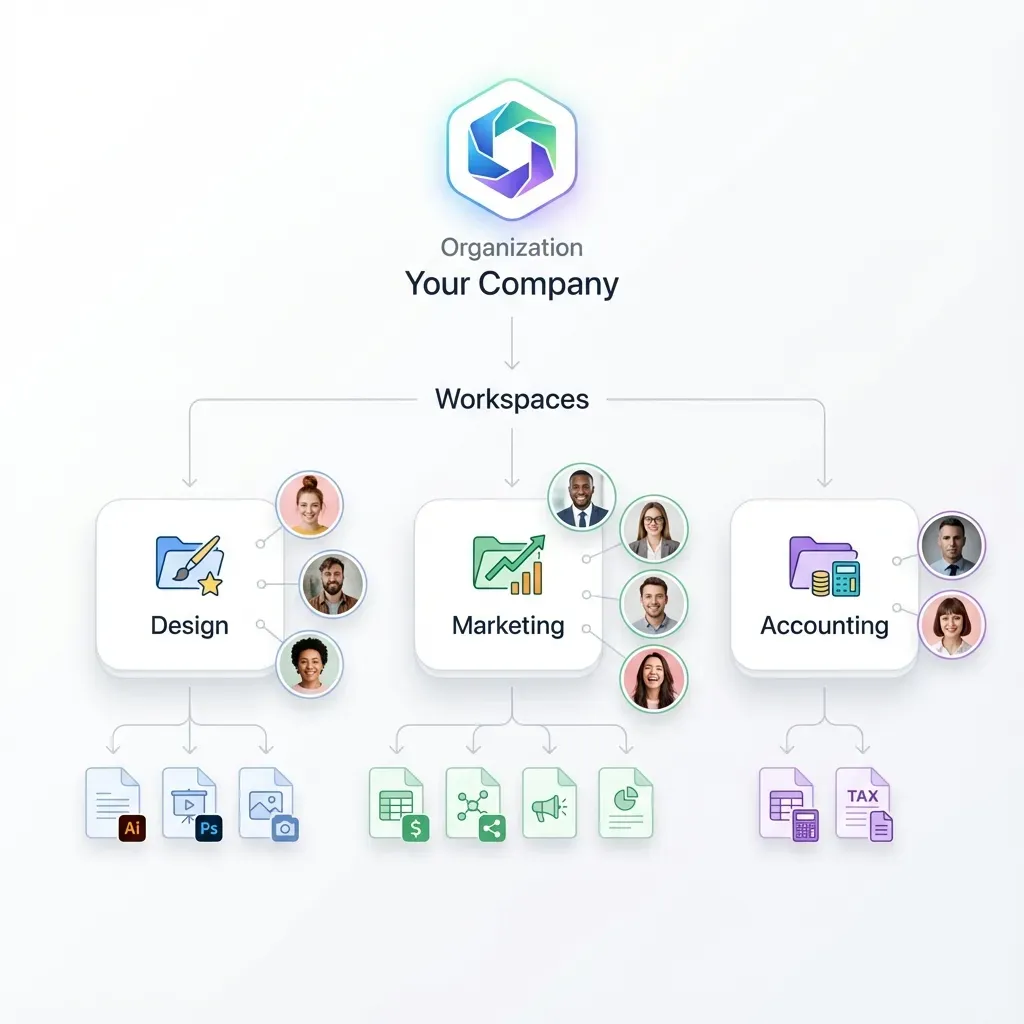
Fastio takes a workspace-first approach to data rooms. Rather than a traditional VDR bolted onto legacy infrastructure, it provides shared workspaces with granular permissions at the organization, workspace, folder, and file level. Audit trails cover every file operation, membership change, and AI interaction.
What sets it apart is built-in intelligence: once Intelligence is enabled for the workspace, uploaded files are automatically indexed for semantic search, summarization, and citation-backed Q&A through its embedded AI agent, Ripley. Deal teams can ask questions about uploaded documents and get answers with page-level citations, which speeds up due diligence review.
Fastio also supports branded content portals with password protection, guest access, and auto-expiring links, which works well for client-facing deal rooms where external parties need controlled access without creating an account. Cloud Import pulls files from Google Drive, Dropbox, OneDrive, and Box with folder structure preserved, which simplifies migration from existing storage.
Best for: Teams that want AI-powered document analysis built into the data room rather than bolted on. Particularly strong for fundraising, client document sharing, and deals where both humans and AI agents need workspace access.
Pricing: Starter $9.99/mo (3 seats, 250 GB), Business $49.99/mo (10 seats, 5 TB), Enterprise $199.99/mo (30 seats, 25 TB); 14-day Business Trial requiring a credit card. See /pricing/.
Limitations: Not purpose-built for investment banking deal flow the way Datasite is.
6. SecureDocs
SecureDocs stands out for simple, flat-rate pricing with unlimited users. No per-page fees, no user caps. It includes built-in NDA tracking.
Best for: Budget-conscious companies running straightforward deals where predictable pricing matters more than advanced features.
Pricing: Flat-rate monthly and annual plans; see the vendor's pricing page.
Limitations: Fewer features than enterprise VDRs. Limited AI capabilities.
7. Papermark
Papermark is a Y Combinator-backed, open-source alternative to DocSend with data room capabilities. The source code is auditable on GitHub, and it offers page-level analytics and custom branding.
Best for: Startups and fundraising teams who want transparency (open source) and page-level engagement analytics on pitch decks and data rooms.
Pricing: Free tier available, with paid plans for additional features.
Limitations: Lighter on enterprise security features. Better suited for fundraising than complex M&A.



Set Up a Secure Deal Room in Minutes
Fastio gives you a workspace with built-in AI, granular permissions, and full audit trails. Start with a 14-day Business Trial. Built for data room software workflows.
Data Room Pricing: What to Expect
Pricing in the VDR market is notoriously opaque. Most enterprise providers require a custom quote, and the final cost often ends up two to ten times higher than the initial estimate once per-page fees, user charges, and overages are factored in.
Here is how the main pricing models break down:
Per-page pricing charges for each page uploaded. Datasite uses this model at roughly $0.60 per page. For a 75,000-page deal, that is $37,500 in page fees alone before adding admin licenses or support.
Per-user pricing charges a monthly fee for each user who accesses the room. Rates start around $15 per user per month for basic tiers, up to $100 to $250 per admin user per month for enterprise features.
Flat monthly pricing gives you a fixed cost regardless of users or pages, an approach offered by platforms like SecureDocs and Digify.
Usage-based pricing ties cost to actual consumption rather than seats or pages. Fastio uses plans instead: each includes seats and storage, with extra storage and bandwidth billed by use, plus a monthly allowance of AI credits. Plans start at $9.99/month, and monthly plans include a Business Trial of up to 14 days (credit card required) to test setup before committing.
For a typical mid-market M&A deal, expect to spend $2,000 to $10,000 total on a VDR. Large-cap transactions with investment bank-grade platforms can run $25,000 or more.
What Makes a Data Room Secure
Security is the reason data rooms exist. A shared Google Drive folder does not cut it when you are sharing acquisition financials or patient records. Here is what to look for:
Granular permissions should go beyond simple read/write. The best VDRs offer view-only access, fence view (prevents copy-paste), encrypted PDF download, and print controls. Fastio provides permission controls at the organization, workspace, folder, and individual file level.
Dynamic watermarking embeds the viewer's name, email, IP address, and timestamp into every page they view. If a document leaks, you can trace it back to the exact viewer and session.
Audit trails should capture every action: who viewed which document, for how long, whether they downloaded or printed it, and from which IP address. Look for exportable logs that satisfy legal hold requirements.
Two-factor authentication and IP-based access restrictions add layers that prevent unauthorized access even if credentials are compromised.
Auto-expiring access ensures that deal participants lose access automatically after a set date, without requiring manual cleanup.
One area where newer platforms like Fastio differ from legacy VDRs: the audit trail covers AI interactions too. When someone asks a question through the built-in AI chat, that query and response are logged alongside traditional file access events.

Which Data Room Should You Choose?
The right data room depends on your deal type, budget, and technical requirements.
For large-cap M&A and investment banking, Datasite and Intralinks remain the standard. Their AI classification and redaction features handle the volume and complexity of billion-dollar transactions, and most institutional buyers expect to see one of these platforms.
For mid-market M&A and advisory work, Ideals and Firmex offer strong permission controls and Q&A modules at a lower price point than the enterprise leaders.
For fundraising and startup deals, Papermark and SecureDocs provide simpler, more affordable options. Papermark's open-source transparency appeals to founders who want to know exactly how their data is handled.
For teams that want built-in AI analysis, Fastio's Intelligence Mode indexes documents automatically for semantic search and Q&A with citations. Instead of exporting files to a separate AI tool, deal teams can ask questions directly inside the workspace. The 14-day Business Trial makes it easy to test before committing.
For budget-conscious teams with simple deals, SecureDocs' flat rate with unlimited users removes pricing anxiety entirely.
Before committing to any platform, run a pilot with your actual deal documents. Upload a sample set, invite a few reviewers, and test the permission controls, search, and audit trail. Most providers offer free trials or demos, and the 30 minutes you spend testing will save hours of frustration during a live transaction.
Sources
References used to verify factual claims in this guide.
-
VDR market valued at roughly $2.4 billion in 2024
-
Projected to reach $4.7 billion by 2028
-
Datasite AI document classification at roughly 90% accuracy
Frequently Asked Questions
What is the best virtual data room software?
It depends on your deal size and budget. Datasite and Intralinks lead for large enterprise M&A. Ideals and Firmex serve mid-market deals well. For teams that want built-in AI document analysis, Fastio offers workspace intelligence with semantic search and citation-backed Q&A. SecureDocs offers strong value with a flat rate for simpler transactions.
How much does data room software cost?
Pricing ranges from open-source tools (like Papermark) and accessible plans like Fastio Starter ($9.99/mo) to $200,000+ per year for enterprise platforms like Datasite and Intralinks. A typical mid-market M&A deal costs $2,000 to $10,000 for the data room. Watch out for per-page pricing models where costs can multiply quickly with large document sets.
What is the highly secure data room?
Datasite and Intralinks offer the most comprehensive security with enterprise security standards, security requirements certification, and enterprise-grade controls. For teams that also want AI activity logging, Fastio's audit trails cover both traditional file access and AI interactions. The highly secure option also depends on your compliance requirements, so check which certifications your deal requires.
Which data room is best for startups?
For fundraising, Papermark (open-source with page-level analytics) and Fastio (with AI-powered document Q&A and a 14-day Business Trial) are strong choices. SecureDocs with its flat-rate pricing is another affordable option. Avoid enterprise platforms like Datasite or Intralinks for startup fundraises since the cost and complexity are unnecessary for a Series A data room.
Do I need a data room for fundraising?
Yes. Sending pitch decks and financials over email or shared Drive links gives you no visibility into who viewed what, no access controls, and no audit trail. A data room lets you track investor engagement at the page level, revoke access instantly, and present a professional, organized document set that signals deal readiness.
Related Resources

Set Up a Secure Deal Room in Minutes
Fastio gives you a workspace with built-in AI, granular permissions, and full audit trails. Start with a 14-day Business Trial. Built for data room software workflows.