Best AI Tools for Sales Teams in 2026
Most AI sales tool roundups list the same CRM add-ons. This guide covers 11 standalone tools organized by where they sit in the sales pipeline: prospecting, outreach, conversation intelligence, forecasting, and proposals. Each entry includes pricing, key strengths, limitations, and which teams benefit most.

How We Evaluated These Tools
AI tools for sales are platforms that use machine learning to automate prospecting, personalize outreach, score leads, forecast revenue, and coach reps through the pipeline. The category has grown well beyond CRM plugins, and the best tools now operate as standalone platforms that plug into whatever CRM you already use.
83% of sales teams using AI reported revenue growth in the past year, compared to 66% of teams without it, according to Salesforce's State of Sales report. Yet one in three field sales teams still aren't using AI at all, per SPOTIO's 2026 survey. That gap is an opportunity.
We evaluated each tool against four criteria:
- Pipeline stage coverage. Does it solve a specific bottleneck, or try to do everything mediocre?
- Time to value. Can a rep start using it this week, or does it need a six-month rollout?
- Pricing clarity. Transparent plans beat "contact sales" black boxes.
- Integration depth. How well it connects to your existing CRM, email, and calendar.
The list below covers 11 tools across five pipeline stages. We intentionally chose standalone tools over CRM add-ons, because that's where the most useful innovation is happening right now.
Prospecting and Lead Enrichment
Finding the right accounts and contacts is the first bottleneck most teams hit. These three tools attack it from different angles: database search, multi-source enrichment, and fully automated outbound.
1. Apollo
Apollo combines a B2B contact database of 210+ million records with built-in email sequencing and a parallel dialer. Reps can filter by job title, company size, tech stack, and buying intent signals, then launch multi-touch campaigns without leaving the platform.
Key strengths:
- Parallel Dialer queues 100+ calls per hour
- Built-in sequencing eliminates the need for a separate outreach tool
- Free tier available with limited credits
Limitations:
- Actual costs often run 2-3x the listed price once credit overages stack up
- Data accuracy varies by region, especially outside North America
Pricing: Free tier available. Paid plans start at $49/user/month (annual), with Professional at $79 and Organization at $119.
Best for: Teams that want prospecting and outreach in one platform.
2. Clay
Clay connects 100+ data providers into a single enrichment engine. Instead of paying for five separate data tools, you run "waterfalls" that check multiple sources for each lead, returning the most accurate email, phone, job title, and company data available.
Key strengths:
- Claygent AI agents research prospects across the web in real time
- Waterfall enrichment pulls from 150+ providers automatically
- MCP server support connects Clay to Salesforce, Gong, and Google Docs for richer context
Limitations:
- Split credit system (Data Credits plus Actions) adds complexity to cost forecasting
- Steep learning curve for non-technical users
Pricing: Free plan with 100 Data Credits. Paid plans from $185/month (Launch) to $495/month (Growth). Enterprise pricing available.
Best for: Revenue ops teams running complex enrichment workflows.
3. Artisan
Artisan takes a different approach entirely: an AI SDR named Ava that handles outbound prospecting end-to-end. Ava finds prospects, writes personalized emails, manages follow-ups, and books meetings on your calendar.
Key strengths:
- Reduces SDR headcount costs for early-stage teams
- Fully autonomous prospecting without manual campaign setup
- Learns from reply patterns and adjusts messaging over time
Limitations:
- Less control over individual messages than manual tools
- Quality of AI-written emails still benefits from human oversight
Best for: Startups and small teams that can't afford a full SDR team.
Outreach and Email Coaching
Getting the data is step one. Writing emails that actually get replies is step two. These tools focus on volume and quality, respectively, and many outbound teams use both.
4. Instantly
Instantly is built for cold email at scale. It supports unlimited email accounts, automatic warmup, and inbox rotation to keep deliverability high even at high volumes. The platform combines sequencing, a B2B lead database, and a lightweight CRM.
Key strengths:
- Unlimited email accounts and warmup across all paid plans
- A/Z testing for subject lines and body copy across multiple variations
- AI Reply Agent handles initial responses automatically
Limitations:
- Lead database quality is inconsistent and requires its own separate subscription
- Deliverability depends heavily on proper domain and DNS configuration
Pricing: Outreach plans start at $47/month (1,000 contacts, 5,000 emails). Lead database is a separate $37.90/month subscription.
Best for: Agencies and outbound-heavy teams sending thousands of cold emails per month.
5. Lavender
Lavender coaches reps on email quality rather than volume. It runs as a Gmail/Outlook sidebar and Chrome extension, scoring every email from 0 to 100 based on length, tone, reading level, and personalization. The scoring model was trained on millions of real sales emails and their actual reply outcomes.
Key strengths:
- Emails scoring 90+ get 3x more replies than those scoring below 50
- Pulls LinkedIn and company context into a sidebar for quick personalization
- AI agent drafts full emails from scratch based on the prospect's profile
Limitations:
- Only useful if reps actually apply the coaching suggestions
- Limited to email. No coverage for LinkedIn messages or phone scripts
Pricing: Free for 5 emails/month. Starter at $29/month, Pro at $49/month, Teams at $69/user/month.
Best for: Teams where reply rate matters more than send volume.
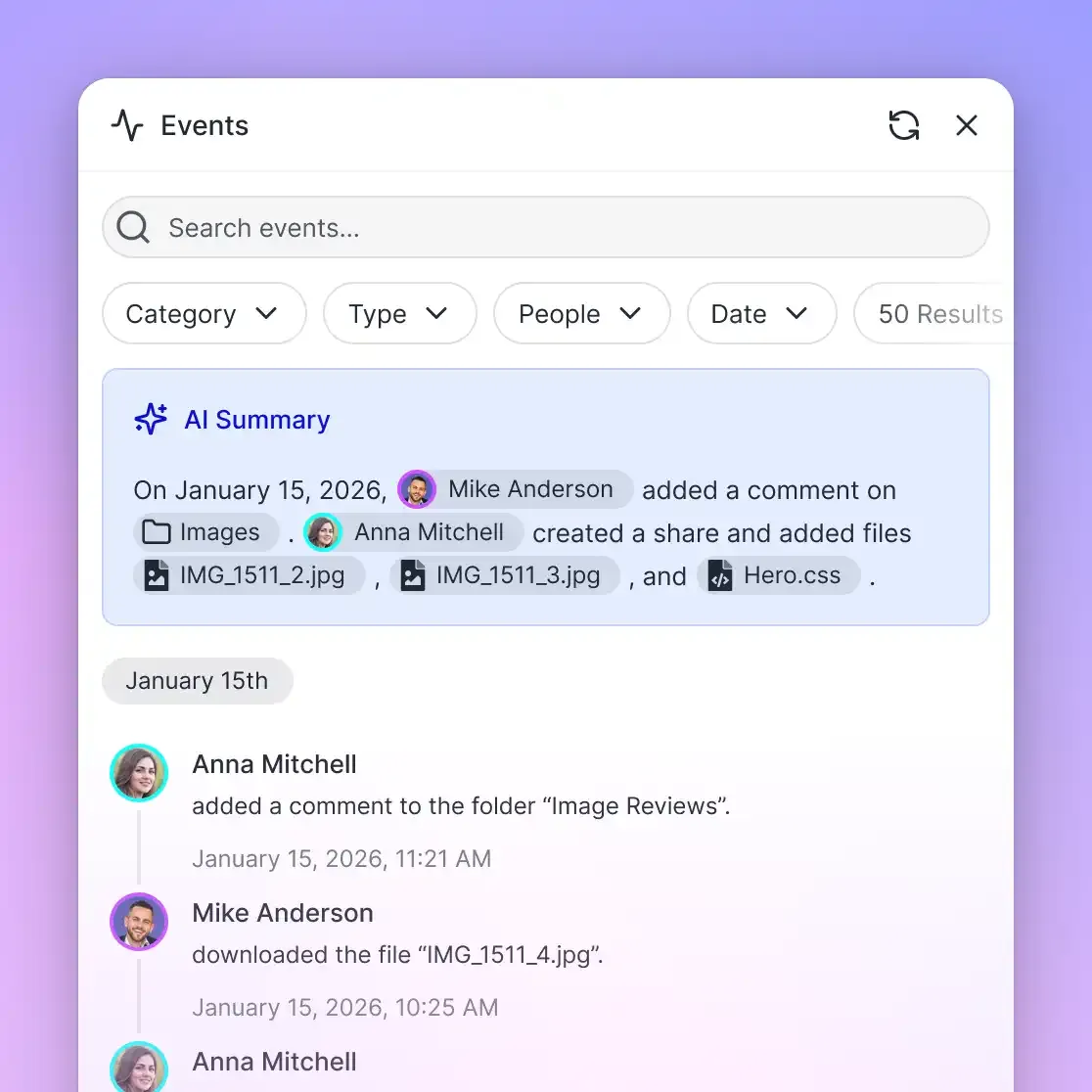


Organize your sales collateral in one searchable workspace
Fast.io gives sales teams 50GB of free storage with AI-powered document search, branded client shares, and automatic metadata extraction from contracts and proposals. No credit card required.
Conversation Intelligence
Once prospects reply and get on calls, conversation intelligence tools record, transcribe, and analyze every interaction. They surface patterns that help managers coach reps and help reps understand what separates winning deals from stalled ones.
6. Gong
Gong processes every sales call through NLP models trained on billions of real interactions. It tracks talk-time ratios, sentiment shifts, competitor mentions, objection patterns, and buying signals. In 2026, Gong cut processing time by 70%, delivering call insights almost immediately after a call ends.
Key strengths:
- Deal Boards show pipeline health based on actual conversation patterns, not rep self-reporting
- Tracks competitor mentions and objection patterns across your entire team
- works alongside every major CRM, dialer, and video conferencing platform
Limitations:
- Enterprise-only pricing with no self-serve option ($5,000/year platform fee plus roughly $1,600/user/year)
- ROI is hard to justify with fewer than 50 users
Best for: Mid-market and enterprise sales organizations with complex, high-value deal cycles.
7. Chorus by ZoomInfo
Chorus combines call recording and AI analysis with ZoomInfo's database of 100M+ contacts. Every call is automatically recorded, transcribed, and searchable. The ZoomInfo integration connects conversation signals directly to buyer contact and company intelligence.
Key strengths:
- Unlimited recording storage for audio and video calls
- ZoomInfo data enriches every conversation with buyer context
- Deal intelligence extracts commitments and next steps from transcripts automatically
Limitations:
- Tightly bundled with ZoomInfo, so you're buying into the full ecosystem
- Pricing starts at $8,000/year for three seats, putting it out of reach for small teams
Best for: Teams already using ZoomInfo that want conversation intelligence without adding another vendor.
Forecasting, Proposals, and Sales Collateral
The back half of the pipeline is where deals close or stall. These four tools cover revenue forecasting, proposal creation, and the document workflows that connect sellers to buyers.
8. Clari
Clari focuses on one question: will you hit your number this quarter? It pulls signals from CRM, email, calendar, and call data to predict revenue outcomes. Clari reports 98% forecast accuracy by week two of each quarter. In April 2026, Clari shipped an MCP server that lets AI tools like Claude and ChatGPT query live pipeline data directly.
Key strengths:
- AI agents predict slipping deals and surface hidden pipeline trends
- Forecast rollups aggregate automatically from rep to CRO level
- Supports both subscription and consumption revenue models
Limitations:
- Pricing is opaque and enterprise-focused
- Requires clean CRM data to deliver accurate forecasts
Best for: Revenue leaders at companies with $10M+ ARR who need reliable quarterly forecasting.
9. Qwilr
Qwilr turns proposals into interactive web pages instead of static PDFs. Sales reps build proposals with embedded videos, pricing calculators, and live chat. Built-in analytics show when prospects open proposals, which sections they spend time on, and when they're ready to sign.
Key strengths:
- Interactive proposals with embedded media and dynamic pricing
- Real-time engagement analytics on every proposal
- CRM integrations with Salesforce and HubSpot
Limitations:
- Less suited for heavily regulated industries that require PDF-only document workflows
- Template customization has a learning curve
Best for: SaaS and services teams where the proposal experience influences close rates.
10. PandaDoc
PandaDoc handles the full document lifecycle: creating, approving, and signing proposals, contracts, and quotes. With 3,000+ verified G2 reviews (86% five-star), it's one of the most battle-tested tools in this category.
Key strengths:
- End-to-end workflow from creation through e-signature in one platform
- Content library lets reps assemble proposals from pre-approved blocks
- CPQ (configure, price, quote) built in for complex pricing scenarios
Limitations:
- Depth of features means longer initial setup than simpler tools
- Per-user pricing adds up for large teams
Best for: Mid-market teams that need structured approval workflows across sales, legal, and finance.
11. Fast.io
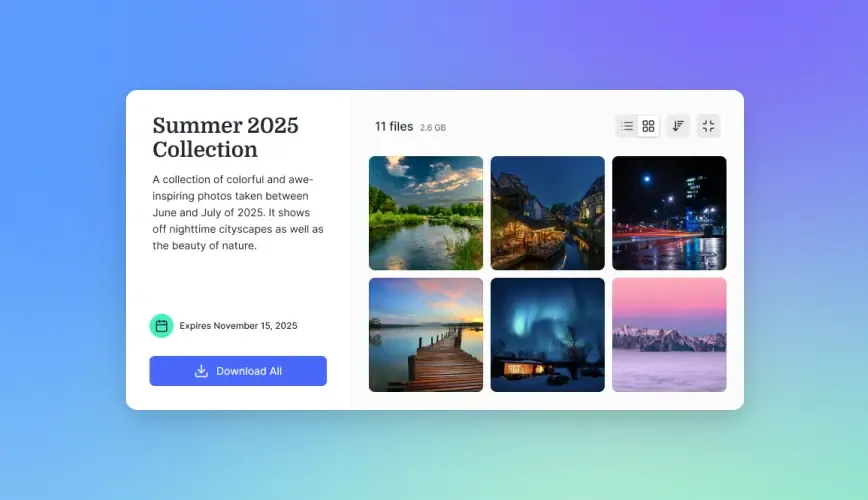
Fast.io is a workspace platform that gives sales teams a shared home for proposals, case studies, contracts, and other collateral. Instead of emailing attachments, reps create branded shares with view tracking and access controls. Metadata Views extract structured data from contracts and proposals automatically, turning documents into a searchable database of deal terms, counterparties, and renewal dates.
Key strengths:
- Branded file shares with analytics show who opened what and when
- Intelligence Mode auto-indexes documents for semantic search and AI-powered Q&A
- Free tier includes 50GB storage, 5 workspaces, and no credit card requirement
Limitations:
- Not a proposal builder. You still need Qwilr or PandaDoc to create proposals
- AI features focus on document intelligence, not deal coaching or revenue forecasting
Best for: Teams that need one source of truth for sales collateral with built-in sharing and document intelligence.
How to Choose Your First AI Sales Tool
The biggest mistake sales teams make with AI tools is buying five at once and using none of them well. Start with the bottleneck that costs you the most revenue.
If your pipeline is thin, start with prospecting. Apollo gives you the database and outreach in one platform. Clay is the better choice if you already have lists but need richer, more accurate data on each lead.
If your pipeline is full but reply rates are low, pair Lavender for email coaching with Instantly for volume. They solve different problems and complement each other well.
If deals stall after the first call, Gong or Chorus help you understand why. Conversation intelligence pays for itself quickly when a single coaching insight prevents an enterprise deal from slipping to next quarter.
If your forecasts are consistently wrong, Clari replaces gut-feel predictions with signal-based models. The price tag is high, but revenue leaders managing $10M+ in pipeline can't afford to guess.
If prospects go dark after receiving proposals, move from PDF attachments to interactive proposals with Qwilr or streamlined approval workflows with PandaDoc. Pair either with Fast.io for a shared collateral workspace your whole team can search and track.
Most of the tools on this list works alongside Salesforce, HubSpot, or both. Pick the one that addresses your most expensive problem, get your team using it consistently for 90 days, and expand from there.
Frequently Asked Questions
What AI tools do top sales teams use?
High-performing sales teams typically run 3-5 AI tools covering different pipeline stages. A common stack includes Apollo or Clay for prospecting, Instantly or Lavender for outreach, Gong for call analysis, and Clari for forecasting. The right combination depends on deal complexity, team size, and where deals most commonly stall.
Can AI replace salespeople?
AI handles repetitive work like data entry, lead scoring, email drafting, and call summarization. It doesn't replace the relationship-building, negotiation, and creative problem-solving that close complex deals. Teams seeing the best results use AI to free up rep time for high-value conversations, not to reduce headcount.
What is the best AI tool for cold outreach?
Instantly is the strongest option for high-volume cold email, supporting unlimited email accounts with built-in warmup and deliverability optimization. For email quality over quantity, Lavender coaches reps on tone, length, and personalization based on real reply data. Many outbound teams run both tools together.
How do sales teams use AI in 2026?
Sales teams use AI across every pipeline stage. AI SDRs like Artisan handle initial prospecting autonomously. Enrichment tools like Clay build detailed lead profiles from 100+ data sources. Email platforms score and optimize outreach. Conversation intelligence analyzes every call for coaching opportunities. Forecasting tools predict quarterly revenue from deal signals. The shift from 2024 to 2026 has been from AI-assisted individual tasks to AI-automated end-to-end workflows.
How much do AI sales tools cost?
Costs range widely by category. Cold email tools like Instantly start at $47/month. Email coaching with Lavender starts at $29/month. Prospecting databases like Apollo run $49-$119/user/month. Enterprise conversation intelligence from Gong costs roughly $1,600/user/year plus a $5,000 platform fee. Many tools offer free tiers, so you can test before committing budget.
Related Resources

Organize your sales collateral in one searchable workspace
Fast.io gives sales teams 50GB of free storage with AI-powered document search, branded client shares, and automatic metadata extraction from contracts and proposals. No credit card required.