10 Best AI Tools for Designers in 2026
Most AI design tool roundups lean heavily on image generators and skip everything else. This guide covers 10 tools across image generation, UI design, graphic design, and design-to-code handoff, with verified pricing and practical trade-offs for each. Whether you're a graphic designer, UX researcher, or someone bridging design and development, you'll find the tools that actually fit your workflow.


How We Picked These Tools
Most AI design tool lists focus on image generators and ignore the rest of the pipeline. We tested tools across five categories to cover the full design workflow: image generation, UI/UX design, graphic design, design-to-code handoff, and asset management.
We evaluated each tool on four criteria:
- Output quality: Does it produce work you'd actually ship, or does every output need heavy cleanup?
- Workflow fit: Can you use it inside your existing stack, or does it create another silo?
- Pricing: What does a solo designer or small team actually pay per month?
- Collaboration: Can you share outputs, collect feedback, and iterate with others?
Here's the full list, organized by where each tool fits in the design pipeline:
- Midjourney: concept art and photorealistic imagery
- Adobe Firefly: AI generation inside Creative Cloud
- Recraft: native vector and SVG output
- Figma (with Make): AI-powered product design
- Google Stitch: free UI prototyping from text prompts
- UX Pilot: wireframes, flows, and usability insights
- Canva: marketing and social design at scale
- Uizard: sketch-to-digital conversion
- v0 by Vercel: design-to-React code generation
- Fastio: design asset management and team collaboration
According to Adobe's State of Create report, 86% of creators now use generative AI in their work. But the designers getting the most value aren't using the flashiest tools. They're using tools that fit their actual pipeline.
Related guides
- How to Bypass GPT Detection: 5 Methods That Actually Work in 2026AI content detectors mislabel 61.3% of non-native English speaker essays as machine-generated, according to research...
- Types of AI Agents: A Practical Guide for DevelopersAI agents range from simple condition-action responders to sophisticated multi-agent systems that plan, learn, and use...
- Best AI Agent Frameworks in 2026: A Production-Ready GuideThe AI agent framework landscape has consolidated around a handful of serious contenders. This guide covers the top...
- Agentic AI vs Generative AI: Key Differences ExplainedGenerative AI creates content from prompts. Agentic AI takes goals, breaks them into steps, uses tools, and delivers...
- How to Check If Text Is AI GeneratedHumans identify AI-generated text at barely above coin-flip accuracy, according to a meta-analysis of six detection...
- 10 Best AI Tools for Web Design in 2026Most professional web designers say AI is essential to their future, but few use it beyond basic tasks like copy...
More on this subject: Agent Frameworks and Patterns (52 guides)
Image Generation and Visual Design
These three tools cover the visual creation side of design, from photorealistic renders to production-ready vectors.
1. Midjourney
Midjourney generates the highest-fidelity images of any AI tool available to designers right now. Version 7, released in early 2026, brought measurably better photorealism with sharper skin textures, more accurate fabric rendering, and improved shadow detail compared to V6.
Key strengths:
- Best-in-class aesthetic quality for concept art, mood boards, and editorial visuals
- Omni Reference keeps characters consistent across multiple generations
- Stealth Mode on Pro and Mega plans keeps your work private
Limitations:
- Midjourney has no free tier. Basic plan starts at $10/month
- Outputs are raster only. You'll need to vectorize separately for print or icon work
Best for: Concept artists, art directors, and marketing teams who need high-quality visuals fast.
Pricing: $10/month (Basic), $30/month (Standard), $60/month (Pro), $120/month (Mega). Annual billing saves 20%.
2. Adobe Firefly
Firefly is Adobe's generative AI engine, built directly into Photoshop, Illustrator, and Adobe Express. The main advantage over standalone tools: you generate assets inside the apps you already use, so there's no export/import step.
Key strengths:
- Generative Fill, Generative Expand, and Text Effects work natively inside Photoshop
- Access to partner models from Google, OpenAI, and Flux alongside Adobe's own
- Firefly Boards let teams organize and edit concepts collaboratively
- Commercially safe training data with IP indemnification on paid plans
Limitations:
- Advanced features consume premium credits that run out fast on lower-tier plans
- Image quality trails Midjourney for photorealistic outputs
Best for: Designers already in Adobe Creative Cloud who want AI without leaving their workflow.
Pricing: Standalone plans start at $9.99/month (Standard). Creative Cloud Single App ($23/month) or All Apps ($60/month) includes Firefly built in.
3. Recraft
Recraft is the only AI tool that generates actual vector files with real paths and anchor points, not rasterized images wrapped in SVG containers. If you need clean SVG output for logos, icons, or brand assets, this tool skips the live-trace step entirely.
Key strengths:
- Native vector output that opens clean in Illustrator
- Bundled background removal, upscaling, inpainting, and mockup generation
- Brand consistency controls for maintaining style across assets
Limitations:
- Free-tier images are public. Private generation starts at $10/month
- SVG output sometimes needs path cleanup before production use
Best for: Brand designers, icon designers, and teams producing high-volume branded content that ships as SVG.
Pricing: Free (50 daily credits, public images), Basic ($10/month), Advanced ($27/month), Pro ($48/month).
UI and Product Design
These tools focus on generating screens, prototypes, and user flows rather than static images.
4. Figma (with Make)
Figma remains the default tool for product and UI design, and its AI features have grown considerably in 2026. Figma Make turns text prompts into multi-screen interactive prototypes that live inside your working design file, not a separate export.
Key strengths:
- Make generates editable frames, layers, and interactions, not flat images
- Make kits and attachments bring your existing components and design tokens into AI generation
- Voice input lets you dictate prompts and review cleaned text before submitting
- Everything stays in Figma's collaborative canvas where your team already works
Limitations:
- Make's output still needs designer polish. It generates good first drafts, not final screens
- AI features are bundled into existing Figma plans with usage limits
Best for: Product design teams who already use Figma and want AI that works inside their existing files.
Pricing: Figma's free tier includes limited AI features. Professional plans start at $15/editor/month.
5. Google Stitch
Google Stitch (formerly Galileo AI) is a free UI prototyping tool from Google Labs powered by Gemini. The March 2026 overhaul turned it from a basic prompt-to-mockup experiment into a legitimate design workspace with an infinite canvas, multi-screen generation, and voice input.
Key strengths:
- Free to use with 350 standard generations per month
- Generates up to five interconnected screens from a single prompt
- Design system import: upload your tokens, and Stitch generates screens that match your constraints
- Exports to Figma and clean HTML/CSS
Limitations:
- Still a Google Labs experiment, so feature stability isn't guaranteed
- Limited to UI generation. No vector, illustration, or brand asset capabilities
Best for: Solo designers and early-stage teams who want free UI exploration without committing to a paid tool.
Pricing: Free (350 standard + 200 experimental generations per month).
6. UX Pilot
UX Pilot focuses on the structural side of design: wireframes, user flows, and usability analysis. Where most AI design tools optimize for visual fidelity, UX Pilot prioritizes flow logic and information architecture.
Key strengths:
- Generates wireframes, UX flows, and predictive heatmaps from text descriptions
- Figma import/export on the Pro plan
- Image-to-design conversion for reverse-engineering existing screenshots
Limitations:
- Credit-based pricing means heavy users burn through allowances quickly
- Free tier is limited to 7 screens total, not per month
Best for: UX designers who need to explore information architecture and user flows before jumping into high-fidelity work.
Pricing: Free (7 screens), Standard ($14/month for 70 screens), Pro ($22/month for ~200 screens).
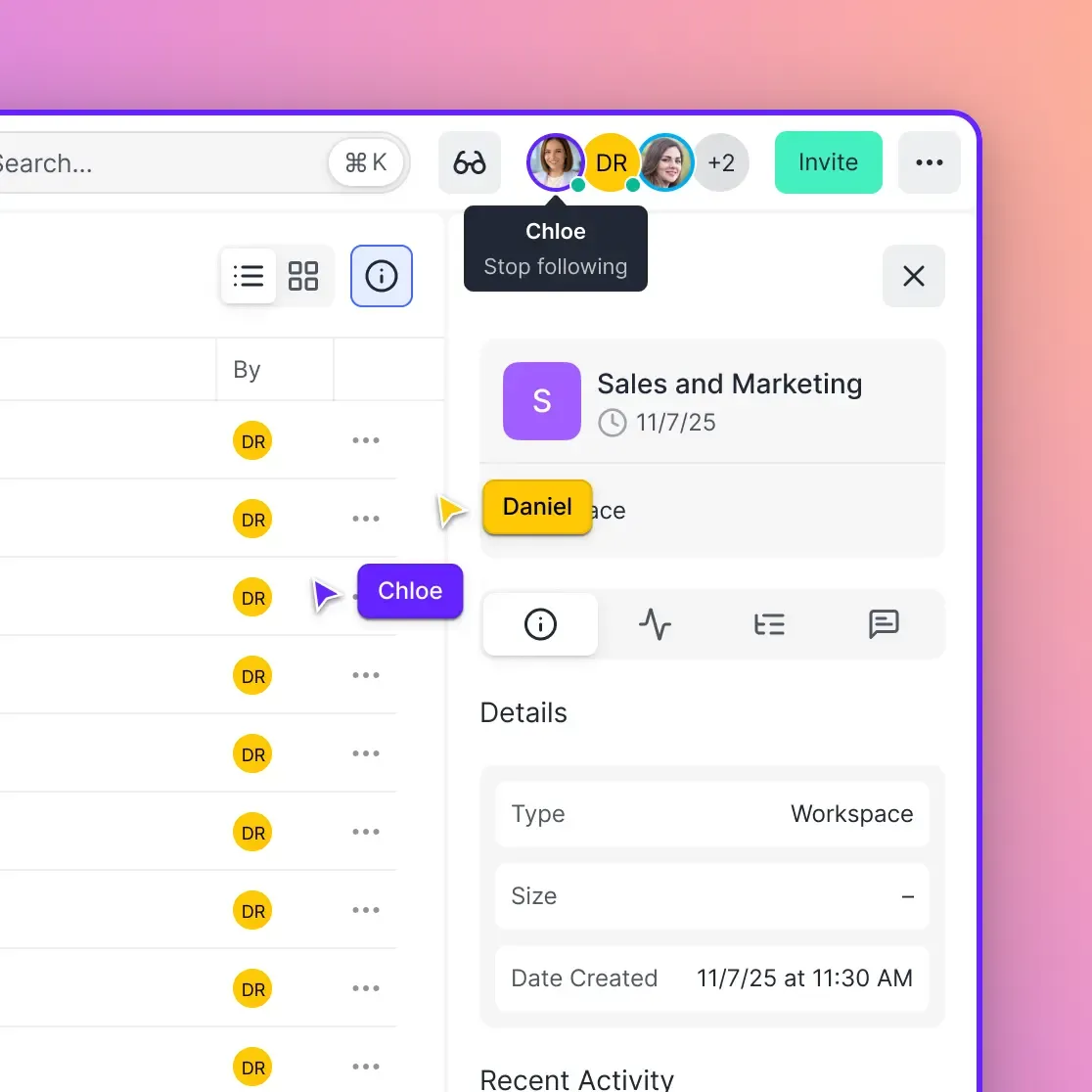


Stop losing design files between handoffs
Fastio gives your design team cloud workspaces with semantic search once Intelligence is enabled, version control, and branded sharing.
Graphic Design and Marketing Assets
These tools are built for volume: social posts, presentations, marketing collateral, and quick turnaround design work.
7. Canva
Canva is the most widely adopted AI design tool in the world, with over 220 million users as of early 2026. Its AI features handle everything from layout suggestions to text-to-image generation inside the platform. If you produce social posts, presentations, or marketing collateral, Canva's template-driven approach gets you from idea to finished asset faster than most alternatives.
Key strengths:
- Massive template library backed by 220+ million users and an active community
- AI-assisted layouts, background removal, Magic Eraser, and text-to-image built in
- Canva AI 2.0 adds natural language editing and persistent memory across sessions
- Integrations with Gmail, Slack, and Zoom for direct distribution
Limitations:
- Pro plan includes only 500 AI credits per month. Complex operations drain them fast
- Less control over fine design details compared to Figma or Adobe tools
Best for: Marketing teams, social media managers, and non-designers who need polished assets without a steep learning curve.
Pricing: Free, Pro ($12.99/month), Business ($20/user/month), Enterprise (custom).
8. Uizard
Uizard converts hand-drawn wireframe sketches into editable digital designs. Photograph a whiteboard sketch, and Uizard produces a clean, editable mockup you can iterate on immediately. It's a niche capability, but for teams that start with pen and paper, it removes a real bottleneck in the early design phase.
Key strengths:
- Sketch-to-digital conversion from photos of hand-drawn wireframes
- Text-to-design generation for quick concept exploration
- Built-in collaboration features for team feedback and iteration
Limitations:
- Conversion quality varies with sketch complexity. Dense layouts often need cleanup
- Limited design system and component library compared to Figma
Best for: Early-stage product teams and workshop facilitators who prototype on paper first.
Pricing: Free tier available with limited projects. Pro plans start at $12/month.
Best Tools for Design-to-Code and Asset Management
The last two tools address what happens after the design work: turning mockups into code and organizing assets for the team.
9. v0 by Vercel
v0 takes text descriptions and Figma designs and converts them into production-ready React components using Next.js, Tailwind CSS, and shadcn/ui. It sits at the boundary between design and development, turning approved mockups into working code without manual translation.
Key strengths:
- Generates clean, production-ready React code, not throwaway prototypes
- Figma import on the Premium plan for direct design-to-code conversion
- Token-based pricing means you pay proportionally to complexity
Limitations:
- Output is React/Next.js only. No support for Vue, Svelte, or other frameworks
- Complex layouts still require developer review and adjustment
Best for: Frontend developers and design-minded engineers who want to skip manual coding of approved UI designs.
Pricing: Free ($5 in monthly credits), Premium ($20/month), Team ($30/user/month).
10. Fastio
Design tools generate assets. The harder problem is what happens next: organizing files, sharing work with clients, managing versions, and collecting feedback. Most teams default to Google Drive or Dropbox for this, but those tools treat design files the same as any other document, with no awareness of what's inside them.
Fastio is a cloud workspace that adds an intelligence layer on top of file storage. Enable Intelligence Mode on a workspace, and uploaded files are automatically indexed for semantic search. You can search design assets by meaning, ask questions about uploaded brand guidelines with cited answers, or have AI compare versions of a deliverable. The platform also supports Metadata Views for structured extraction, turning uploaded design specs, contracts, or feedback documents into a sortable, filterable database without manual data entry.
For teams working with AI agents or automated pipelines, Fastio exposes a remote MCP server with a consolidated MCP toolset, so agents can upload, organize, and hand off design assets alongside human team members.
Key strengths:
- Once Intelligence Mode is enabled, files are auto-indexed for semantic search and AI chat with citations
- Branded sharing with Send, Receive, and Exchange modes for client delivery
- File versioning, granular permissions, and audit trails for design review workflows
- Business Trial: 14-day trial with cloud workspaces, remote MCP access, and AI search
Limitations:
- Not a design tool itself. It manages what you create in other tools, not the creation process
- Intelligence Mode works best with text-heavy documents. Visual file analysis is more limited
Best for: Design teams that need a central workspace for organizing, searching, and sharing design assets across stakeholders and clients.
Pricing: Starter $9.99/mo (3 seats, 250 GB), Business $49.99/mo (10 seats, 5 TB), Enterprise $199.99/mo (30 seats, 25 TB); 14-day Business Trial requiring a credit card.

How to Pick the Right AI Design Stack
No single AI tool covers the entire design pipeline. Most working designers in 2026 combine two or three tools, and the best combination depends on where you spend your time.
If you're a graphic designer focused on static visuals, start with Midjourney or Adobe Firefly for generation, and Canva for layout and delivery.
If you're a UI/UX designer, Figma Make is the natural choice since it works inside the tool you already use. Add Google Stitch for free exploration when you want to test ideas outside your main project, and UX Pilot when you need dedicated wireframing.
If you work in brand design and need vector output, Recraft saves a real step by generating clean SVGs directly. Pair it with Adobe Firefly for raster assets.
If you bridge design and development, v0 handles the Figma-to-React handoff without manual translation.
If you manage design assets across a team, a workspace like Fastio gives you semantic search, version control, and branded sharing in one place, so finished assets don't disappear into a folder hierarchy.
Two practical rules: start with tools that fit inside your existing workflow before adding new ones, and use free tiers to test before committing. Most tools on this list have a free option, and Fastio offers a 14-day Business Trial.
According to Figma's design statistics report, 78% of designers and developers say AI tools boost their work efficiency. But the designers getting the most from these tools aren't chasing the newest release. They picked tools that matched their actual pipeline and invested enough time to build real workflows around them.
Sources
References used to verify factual claims in this guide.
-
86% of creators now use generative AI in their work 78% of designers and developers say AI tools boost their work efficiency
-
Canva has over 220 million users as of early 2026
-
Midjourney V7 produced more photorealistic outputs than V6 in standardized prompt tests
-
Google Stitch offers 350 standard and 200 experimental generations per month free
Frequently Asked Questions
What AI tools do designers actually use in 2026?
Most designers combine two or three tools depending on their discipline. Product designers typically use Figma with Make for UI generation. Graphic designers lean on Midjourney or Adobe Firefly for image creation and Canva for layouts. According to Adobe's State of Create report, 86% of creators now use generative AI in their work. The specific mix depends on your role, but few designers rely on just one AI tool.
Will AI replace graphic designers?
AI tools accelerate specific tasks like generating initial concepts, removing backgrounds, and creating layout variations. They don't replace the judgment calls that make design work: choosing the right visual direction for a brand, understanding user needs, or making typography decisions that support readability. Designers who use AI to handle repetitive production work and focus their time on strategy and craft are more productive, not replaceable.
What is the best AI for UX design?
For UX-specific work, Figma Make handles UI generation inside your existing design files, Google Stitch offers free multi-screen prototyping with up to 350 generations per month, and UX Pilot specializes in wireframes, user flows, and predictive heatmaps. Figma Make is the strongest choice if your team already works in Figma. UX Pilot is better if you need dedicated wireframing and flow analysis before moving to high-fidelity design.
Can AI create design systems?
AI tools can generate individual components and screens that follow your existing design tokens, but they can't architect a complete design system from scratch. Google Stitch lets you import design tokens so generated screens match your constraints. Figma Make uses your component libraries through Make kits. The practical approach is to build your design system foundations manually, then use AI to accelerate production work within those constraints.
How much do AI design tools cost?
Pricing ranges from free to $120/month depending on the tool and plan. Google Stitch and Canva offer usable free tiers. Most individual designers spend $10 to $30 per month on one or two paid tools. Teams typically pay $15 to $60 per user per month for collaborative features. Fastio plans start at $9.99/month with a 14-day Business Trial for design asset management.
Related Resources

Stop losing design files between handoffs
Fastio gives your design team cloud workspaces with semantic search once Intelligence is enabled, version control, and branded sharing.