8 Best AI Tools for Accounting in 2026
Two-thirds of fund accountants still cite manual data entry as their top operational pain point, according to a 2026 Dynamo Software survey. Most tool roundups lump accounting and finance together without workflow-specific guidance. This guide evaluates eight AI accounting tools across four workflows: bookkeeping, expense management, AP automation, and audit.


How we evaluated these tools
Two-thirds of fund accountants cited manual data entry and reconciliation as their top operational pain point in a 2026 Dynamo Software survey of 130 fund administrators. That number aligns with separate industry data showing accountants spend about 40% of their working hours on data entry alone, roughly 16 hours per week.
AI accounting tools have started closing that gap. Unlike generic finance platforms, the tools below handle specific accounting workflows: transaction categorization, receipt extraction, invoice matching, anomaly detection, and reconciliation. Each one was evaluated on four criteria:
- Automation depth: Does the tool assist, or does it run the workflow independently?
- Accuracy: What accuracy rates does the vendor report, and do user reviews confirm them?
- Integration: Does it connect to existing accounting systems like QuickBooks, Xero, or NetSuite?
- Pricing transparency: Is pricing published, or does it require a sales call?
Here is a quick reference for all eight tools:
- Digits: AI-native autonomous bookkeeping ($100/month)
- Booke AI: GPT-4 bookkeeper inside QuickBooks and Xero ($129/month)
- Ramp: expense management with AI transaction coding (free tier)
- Dext: receipt and invoice data extraction ($24/month)
- Vic.ai: enterprise AP automation ($500+/month)
- MindBridge: AI-driven audit analytics and fraud detection (custom pricing)
- DataSnipper: audit evidence automation inside Excel ($50/month)
- Fastio: structured document extraction for accounting workflows (from $9.99/month)
Related guides
- Best Headless Browsers for AI Agents: Top Tools (2026)Finding the best headless browsers for AI agents matters for reliable automation. Old scrapers break on dynamic sites....
- Best Web Browsing Tools for AI Agents (2026)Web browsing tools let AI agents navigate the live web, fill forms, and extract real-time data. Traditional scrapers...
- Best Free AI Agent Tools 2026: Top 12 Platforms ComparedBuilding autonomous agents doesn't have to be expensive. The free AI agent ecosystem now offers professional frameworks...
- Best Pydantic AI Tools for Building Reliable Agents (2026)Building reliable AI agents requires more than just prompts; it demands structured, type-safe data. Pydantic AI tools...
- 12 Best AI Agents for Accounting and Finance in 2026AI agents for accounting have moved past chatbots and copilots. They now run bookkeeping end to end, process invoices,...
- 8 Best AI Agent Cost Optimization Tools in 2026AI agent costs add up fast once you move past prototyping. Tool calls, retries, multi-step reasoning, and storage...
More on this subject: AI Tool Directories and Comparisons (231 guides)
How AI handles the full bookkeeping cycle
Bookkeeping is where most accountants lose the most hours to repetitive work. These two tools take different approaches: Digits replaces the traditional bookkeeping workflow entirely, while Booke AI works inside the accounting software you already use.
A mid-sized e-commerce firm processing 2,000 transactions per month typically spends 15 to 20 hours weekly on manual categorization alone. After deploying an AI bookkeeping tool, that drops to 2 to 3 hours of exception review. The constraint worth noting: AI accuracy depends on clean historical data. If your chart of accounts has inconsistent naming or stale categories, the model trains on noise. Clean up GL account names and merge duplicate categories before onboarding any AI bookkeeper. Most firms see reliable autonomous categorization within 30 days of initial training.

1. Digits
Digits is an AI-native accounting platform built from scratch rather than a legacy tool with AI features added later. Its Autonomous General Ledger categorizes transactions around the clock using custom-trained ML models, handles bank reconciliation, and produces financial statements without human intervention. The platform connects directly to Shopify, Stripe, and PayPal for e-commerce businesses.
What sets Digits apart is its outcome-based pricing for accounting firms. Firms pay only when 95% or more of a client's transactions are fully automated, which aligns incentives: the software earns its fee by proving it works.
Key strengths:
- Runs the full bookkeeping cycle autonomously, from transaction import through financial statement generation
- Outcome-based pricing means firms pay for results, not seat licenses
- Purpose-built AI models trained on accounting data, not a wrapper around generic LLMs
Limitations:
- Newer platform with a smaller integration ecosystem than QuickBooks or Xero
- Currently focused on the US market
Best for: SMBs with 10 to 500 employees that want hands-off bookkeeping.
Pricing: AI Accounting at $100/month. Full-Service (AI plus human accountants) from $350/month. Outcome-based pricing available for firms.
2. Booke AI
Booke AI takes a different approach: instead of replacing your accounting software, it works inside QuickBooks Online and Xero as an AI-powered bookkeeper. It categorizes transactions using GPT-4, matches receipts and invoices, reconciles accounts, and learns from each correction you make. Each client gets an isolated AI brain, so categorization patterns from one business do not bleed into another.
The platform reports 95% autonomous bookkeeping after the AI brain is trained, meaning only 5% of transactions need human review. It also supports multi-language and multi-currency document extraction, which matters for firms with international clients.
Key strengths:
- Works inside existing QBO and Xero workflows without data migration
- Learns from corrections and improves accuracy over time
- Isolated AI brain per client prevents cross-contamination of categorization patterns
Limitations:
- Per-business pricing ($129/month) adds up for firms managing dozens of clients
- Smaller platform with fewer integrations than established players
Best for: Accounting firms that want AI bookkeeping without moving clients off QuickBooks or Xero.
Pricing: $129/month per business. No annual contract required. Firm pricing available on request.
What to look for in AI expense and AP automation
Expense categorization and accounts payable processing are the two highest-volume data entry tasks in most accounting departments. AI tools in this category extract data from receipts and invoices, categorize spending, match purchase orders, and sync coded transactions to the general ledger.
A practical example: a 50-person company processes roughly 800 expense receipts per month. Before AI, a bookkeeper spends 3 to 4 hours per week coding each transaction to the correct GL account, department, and class. With an AI expense tool, receipts flow in via email or mobile app, the system extracts vendor name, amount, date, and tax, then codes the transaction based on learned patterns. The bookkeeper reviews only the 5% flagged as uncertain.
The main constraint is ERP integration depth. A tool that syncs only top-level amounts (not line items or custom fields) creates more reconciliation work downstream. Before committing to any expense AI, map your GL structure and confirm the tool can handle your custom dimensions. Start with one expense category (travel, for instance) and measure the exception rate over 30 days before rolling out company-wide.
3. Ramp
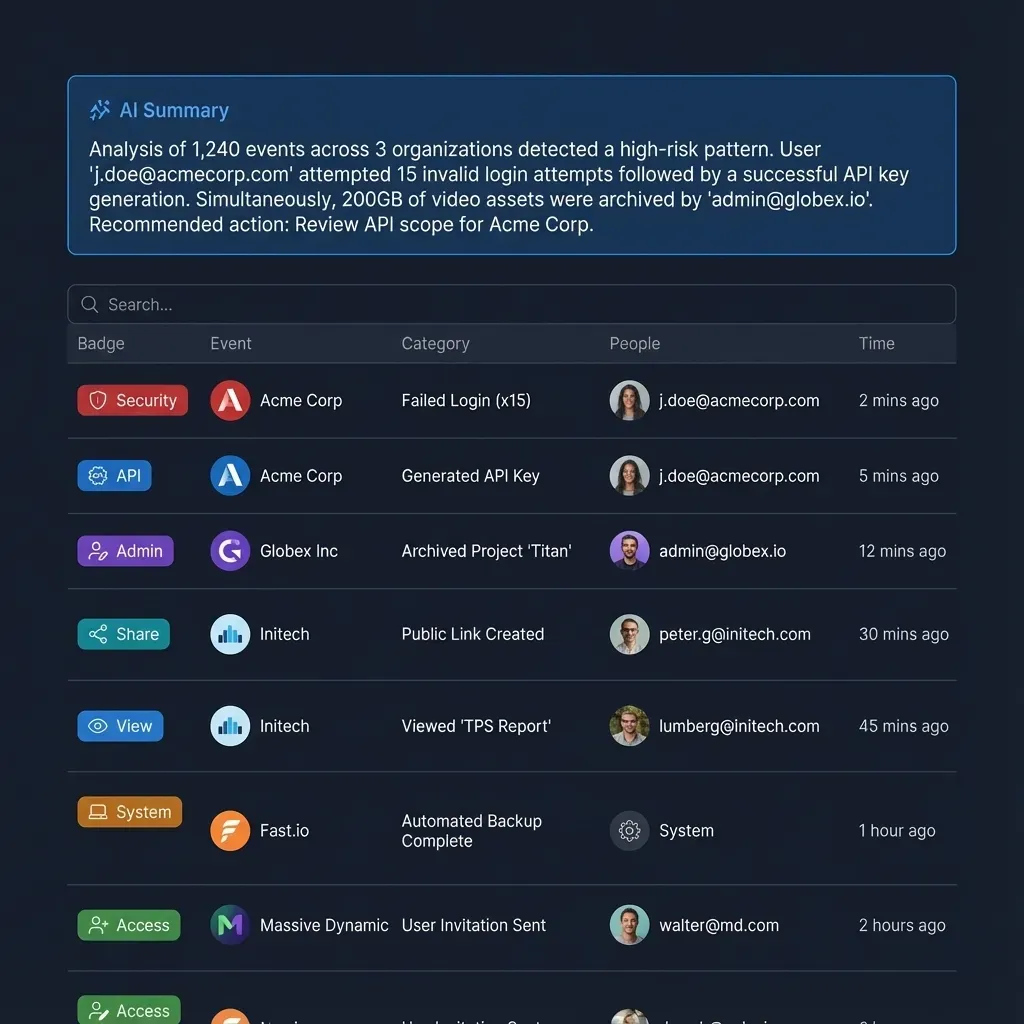
Ramp combines corporate cards, expense management, and AP automation into a single platform with AI-powered transaction coding. The AI auto-codes transactions across GL account, department, class, location, and custom fields, then checks policy compliance before syncing to your ERP. Integrations cover NetSuite, QuickBooks, Xero, and Sage Intacct.
The free tier is genuine, not a 14-day trial. It includes corporate cards, expense management, and basic AP automation at no cost. Paid plans add procurement workflows and advanced reporting. Over 50,000 businesses use the platform.
Key strengths:
- Free tier covers core expense management and corporate cards with no expiration
- AI codes transactions at 98% accuracy on items it marks as ready to sync
- Direct ERP integrations reduce manual reconciliation work
Limitations:
- Most useful when spending flows through Ramp corporate cards
- US-focused with limited international support
Best for: Finance teams that want expense management and AP in one platform without paying for it upfront.
Pricing: Free for core features. Plus at $15/user/month. Enterprise pricing on request.
4. Dext
Dext (formerly Receipt Bank) focuses on one thing: extracting accurate data from receipts and invoices. It reports 99.9% data extraction accuracy on supplier names, dates, amounts, tax, and line items. Users submit documents through a mobile app, email forwarding, or bulk upload, and Dext categorizes and pushes the coded data to QuickBooks, Xero, Sage, or Zoho.
The platform processes over 320 million documents per year across 700,000 businesses and 12,000 accounting firms. A searchable seven-year document vault means every receipt stays retrievable for audits long after the original paper fades.
Key strengths:
- 99.9% claimed accuracy on data extraction from receipts and invoices
- Flexible submission methods (mobile app, email, bulk upload) reduce friction for clients
- Seven-year searchable document vault for audit readiness
Limitations:
- Data capture and coding only, not a full accounting platform
- Requires a separate accounting system for GL, reconciliation, and reporting
Best for: Accounting firms that need fast, accurate receipt data flowing into their existing accounting software.
Pricing: Essentials at $24/month. Advanced at $36/month. Enterprise pricing on request. 14-day free trial.
5. Vic.ai
Vic.ai handles AP automation for mid-sized and enterprise organizations processing high volumes of invoices. The platform ingests invoices, learns your organization's GL coding preferences from historical data, matches purchase orders, flags discrepancies, and routes payments through ACH, check, or virtual card. Vic.ai reports training on over 1 billion invoices across its customer base.
The pricing starts at $500/month, which makes it impractical for small businesses processing a handful of invoices. For organizations handling hundreds or thousands of invoices monthly, the reduction in coding time and error rates typically covers the cost.
Key strengths:
- Learns GL coding patterns specific to your organization and improves over time
- Handles PO matching, anomaly detection, and payment execution in one workflow
- Trained on over 1 billion invoices for broad pattern recognition
Limitations:
- Starts at $500/month, so ROI requires meaningful invoice volume
- Custom contracts only, no self-serve signup
Best for: Organizations processing 50 or more invoices per month that need accurate, auditable AP automation.
Pricing: From $500/month. Custom pricing based on invoice volume.


Extract accounting data from documents without OCR rules
Fastio includes Metadata Views for structured document extraction, cloud workspaces, and a remote MCP server for AI agents with a 14-day Business Trial.
Best AI tools for audit and document analysis
Audit work has traditionally relied on sampling: reviewing a subset of transactions and extrapolating. AI tools in this category analyze full transaction populations, flag anomalies that sampling would miss, and extract structured data from unstructured financial documents.
Consider a year-end audit where the team needs to verify revenue recognition across 12,000 invoices. Traditional sampling might review 300 and extrapolate. An AI audit tool ingests all 12,000, scores each by risk factors (unusual timing, round amounts, new counterparties, mismatched PO references), and surfaces the 150 that warrant human inspection. The auditor spends time on judgment, not on pulling random samples.
The constraint: these tools require clean, structured data feeds. If your ERP exports inconsistent date formats or truncates memo fields, the AI's risk scoring degrades. Run a data quality check on your export files before connecting an audit analytics platform. Most implementations stabilize within one full audit cycle, roughly one quarter for internal audit teams.
6. MindBridge
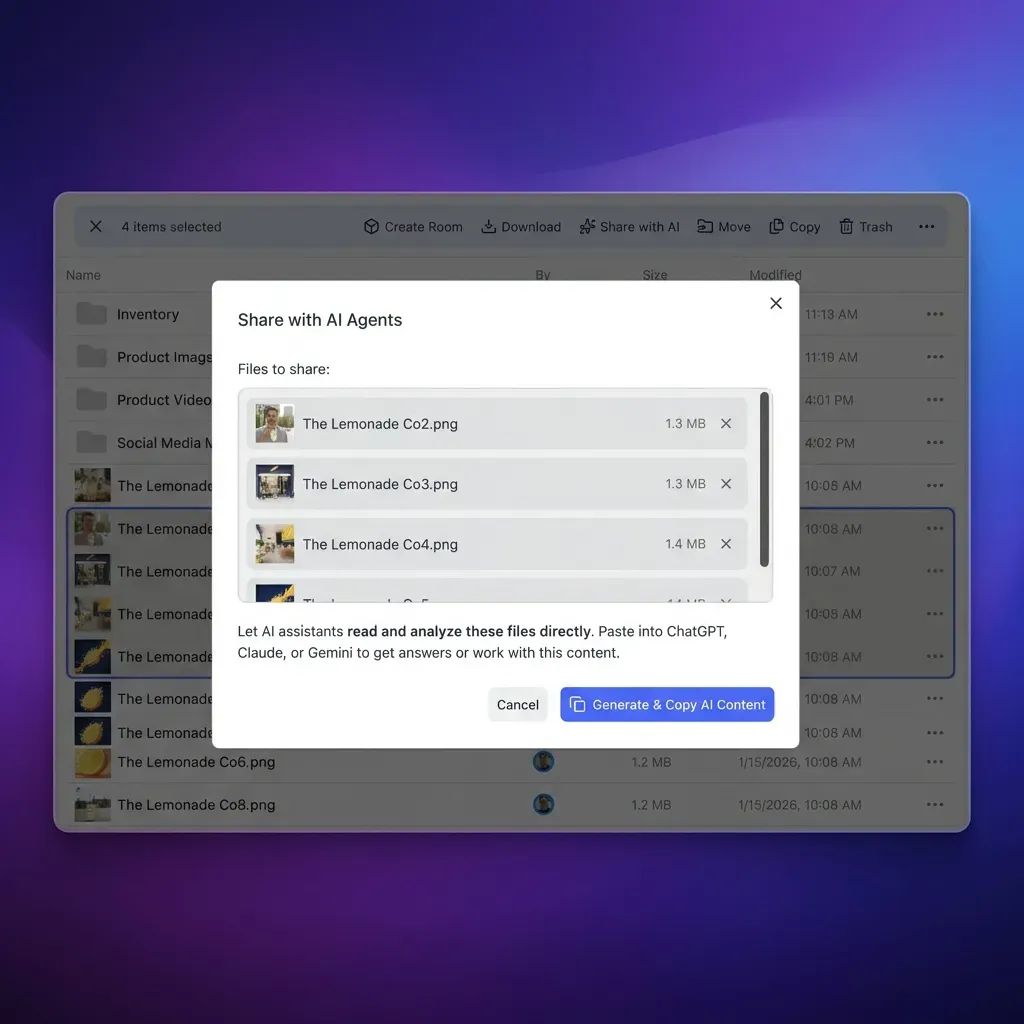
MindBridge is the one of the few tools on this list built specifically for financial risk intelligence and audit analytics. Instead of reviewing a sample of transactions, its ML models analyze the entire population and assign risk scores based on timing, account combinations, historical patterns, and statistical anomalies. When the system flags a transaction, it explains why, giving auditors evidence to act on rather than just an alert.
The platform works alongside SAP and Oracle ERP. It includes out-of-the-box control points for common exceptions, duplicates, and anomalies. MindBridge is enterprise-only with custom pricing, so it fits audit firms and large internal audit teams rather than small practices.
Key strengths:
- Analyzes 100% of transactions instead of relying on sampling
- ML-based risk scoring with explainable flagging for each anomaly
- Built-in control points for common audit tests
Limitations:
- Enterprise-only with no public pricing
- Not designed for daily bookkeeping or expense management
Best for: Audit firms and internal audit teams that need to analyze full transaction populations for fraud, errors, and risk.
Pricing: Custom pricing. Enterprise only.
7. DataSnipper
DataSnipper runs inside Excel, which means auditors adopt it without learning a new interface. Its AI agents handle document matching, form extraction, table extraction from PDFs, test of controls, and substantive testing. Every AI-generated insight links back to the source document, creating a full audit trail that holds up to review.
The platform is used by all four Big 4 firms (Deloitte, EY, KPMG, PwC) and over 600,000 finance professionals. Starting at about $50/month, it is one of the more accessible audit automation tools on the market.
Key strengths:
- Excel-native, so adoption friction is low for audit teams already working in spreadsheets
- Full traceability from every AI output back to source evidence
- Used by Big 4 firms and 600,000+ professionals
Limitations:
- Focused on audit workflows, not daily bookkeeping or AP
- Requires Excel, which ties it to Microsoft's ecosystem
Best for: Audit teams that want AI automation without leaving Excel.
Pricing: Standard from $50/month. Three tiers: Start, Accelerate, Elevate.
8. Fastio
Fastio is not an accounting tool. It is the document infrastructure layer where accounting teams and AI agents store, extract, and hand off financial documents. Metadata Views turns invoices, receipts, and financial statements into a structured, queryable database. You describe the fields you want in plain language (invoice total, due date, vendor name, line items), and the AI extracts values from PDFs, scanned pages, spreadsheets, and handwritten notes without OCR templates or custom rules.
For teams building custom accounting automation, any AI agent can interact with Fastio workspaces through the MCP server using a consolidated MCP toolset for reading, writing, and querying files. Plans start at $9.99/month, and a 14-day Business Trial requiring a credit card lets you evaluate workspaces.
Key strengths:
- Metadata Views extracts structured fields from financial documents using natural language descriptions
- MCP server lets any AI agent (Claude, GPT-4, Gemini, open-source models) read and write workspace files
- 14-day Business Trial with usage-based plans starting at $9.99/month
Limitations:
- Not an accounting tool itself; needs a separate system for bookkeeping, reconciliation, and reporting
- Metadata Views is a document extraction layer, not a GL or ERP
Best for: Teams building custom AI accounting pipelines that need structured data extraction from financial documents and persistent file storage.
Pricing: Starter $9.99/mo (3 seats, 250 GB, 100,000 credits/mo), Business $49.99/mo (10 seats, 5 TB), Enterprise $199.99/mo (30 seats, 25 TB); 14-day Business Trial at fast.io/pricing.
How to match tools to your accounting workflow
Start with the workflow that burns the most hours for your team.
If bookkeeping is the bottleneck, Digits runs the full cycle autonomously for a single entity. Booke AI is the better choice if your firm manages clients across QuickBooks or Xero and wants AI inside the existing platform rather than a replacement.
If expense management and AP eat up your week, Ramp's free tier handles transaction coding and expense management for teams willing to use Ramp cards. Dext is the pick for pure receipt and invoice data extraction that feeds into any accounting system. Vic.ai fits organizations processing enough invoices to justify $500 or more per month.
If audit quality matters most, MindBridge analyzes full transaction populations for enterprise audit teams. DataSnipper brings AI automation into Excel for teams that want audit evidence without a new platform to learn.
If you are building custom automation and need to extract structured data from financial documents, Fastio's Metadata Views handles the document layer so your accounting logic can focus on the numbers. Fastio provides cloud workspaces with remote MCP access, natural-language schema extraction, and a 14-day Business Trial.
No single tool covers every accounting workflow. Most teams will combine two or three: a bookkeeping engine, an expense or AP tool, and a document extraction layer. Start with whichever workflow costs your team the most hours, measure the results, and expand from there.
Sources
References used to verify factual claims in this guide.
-
66% of fund accountants cited manual data entry and reconciliation as their top operational pain point
-
Accountants spend an average of 40% of their working hours on manual data entry
-
Digits announced outcome-based pricing for accounting firms where firms pay only when 95%+ transactions are automated
-
Dext processes over 320 million documents per year across 700,000 businesses and 12,000 firms
-
Ramp reports 98% accuracy on transactions marked as ready to sync
-
DataSnipper is used by Big 4 firms and 600,000+ finance professionals
Frequently Asked Questions
What AI tools can accountants use?
Accountants can use AI tools across four main workflows. For bookkeeping, Digits and Booke AI automate transaction categorization and reconciliation. For expense management, Ramp and Dext handle receipt capture and GL coding. For AP automation, Vic.ai processes invoices and matches purchase orders at scale. For audit, MindBridge and DataSnipper analyze transactions and extract evidence from source documents.
Can AI replace accountants?
AI is replacing specific accounting tasks, not accountants as a role. Tools like Digits can run bookkeeping end to end, and Ramp auto-codes 98% of the transactions it marks as ready to sync. But judgment calls with material financial impact, client relationships, tax strategy, and advisory work still require human expertise. The accountant's role is shifting from data entry toward oversight, exception handling, and strategic decisions.
What is the best AI for bookkeeping?
Digits is the strongest option for businesses that want fully autonomous bookkeeping from a purpose-built platform. Booke AI is better for firms that want AI bookkeeping inside their existing QuickBooks or Xero setup without migrating clients. QuickBooks itself offers embedded AI features, but they assist individual tasks rather than automating the full bookkeeping cycle.
How accurate is AI expense categorization?
Leading AI expense tools report 95% or higher accuracy on transaction categorization after initial training. Ramp reports 98% accuracy on transactions it marks as ready to sync. Dext claims 99.9% accuracy on data extraction from receipts. Accuracy improves over time as the AI learns from corrections, but most tools still flag a small percentage of edge-case transactions for human review.
How much do AI accounting tools cost?
Prices range from free to enterprise-only. Ramp offers a free tier with corporate cards and expense management. Dext starts at $24/month for receipt capture. Digits starts at $100/month for autonomous bookkeeping. Booke AI charges $129/month per business. Vic.ai begins at $500/month for enterprise AP. DataSnipper starts around $50/month. MindBridge uses custom enterprise pricing. Fastio offers plans from $9.99/month with structured document extraction, workspaces, and a 14-day Business Trial requiring a credit card.
Related Resources

Extract accounting data from documents without OCR rules
Fastio includes Metadata Views for structured document extraction, cloud workspaces, and a remote MCP server for AI agents with a 14-day Business Trial.