10 Best AI Photo Editors in 2026, Ranked by Real-World Results
AI photo editors now handle background removal, object erasing, color correction, and generative fill that used to take hours in Photoshop. We tested 10 options across portrait retouching, product photography, and batch processing to find which tools actually deliver. This guide covers pricing, team features, and the specific editing tasks each tool handles best.


How We Evaluated These Editors
Most "best AI photo editor" articles test one feature and call it a day. We evaluated 10 tools across five real editing scenarios: portrait retouching, product photo cleanup, background replacement, batch processing, and generative fill.
Each editor was scored on six criteria:
- Edit quality: Does the output look natural at full resolution, or does it smear details?
- Speed: How long does a typical edit take from upload to export?
- Batch capability: Can it process 50+ images with consistent results?
- Team workflow: Does it support multi-user access, shared assets, or approval flows?
- Pricing transparency: What does a working plan actually cost after free-tier limits?
- Platform access: Desktop, browser, mobile, or API?
Here's the ranked list:
- Adobe Photoshop: best overall for professionals
- Luminar Neo: best for photographers
- Canva: best for non-designers
- Pixelcut: best for ecommerce product photos
- Photoroom: best for mobile product editing
- Topaz Photo AI: best for noise reduction and upscaling
- Aftershoot: best for wedding and event photographers
- Pixlr: best free browser-based editor
- Fotor: best for quick social media edits
- Claid.ai: best for API-driven automation
The broader "ai photo editor" search term pulls 165,000 monthly searches, which tells you how many people are actively looking for these tools. The landscape shifted in 2025 and 2026 as generative AI moved from standalone apps into the editing tools photographers already use.
Related guides
- Best Free AI Image Editors You Can Use Right NowOver 61% of marketers now use AI tools for visual content, but most still pay for editing features that free...
- Best AI Voice Changers in 2026: 10 Tools for Real-Time and Post-ProductionRoughly 9,900 people search for 'ai voice changer' every month in the US, yet most comparison articles lump real-time...
- 8 Best AI Image Extenders in 2026, Ranked by Output QualitySocial media publishing now demands at least 12 distinct aspect ratios across major platforms. AI image extenders solve...
- Best AI Photo Enhancers in 2026: 8 Tools Tested and ComparedVSCO's 2026 Photographers + AI report found that 83% of photographers use AI in their workflow, but only 48% have tried...
- Best Free AI Video Editors for Quick Edits and ClipsFree AI video editors handle the repetitive parts of editing existing footage, from auto-captioning to background...
- Best AI for Creative Writing in 2026: 7 Tools for Fiction, Poetry, and StorytellingAI creative writing has split from business copywriting into its own tool category. Dedicated platforms like Sudowrite...
More on this subject: AI Content and Media Generation (46 guides)
How These AI Photo Editors Compare
A few patterns stand out. Desktop editors (Photoshop, Luminar Neo, Topaz) still produce the highest-quality output because they process files locally at full resolution. Browser and mobile tools (Canva, Pixelcut, Photoroom) trade some quality for speed and accessibility. And specialized tools like Aftershoot and Claid.ai dominate narrow use cases that general editors handle poorly.
What Each AI Photo Editor Does Best
1. Adobe Photoshop
Photoshop added Generative Fill and Generative Expand through Adobe Firefly in 2023, and the AI features have improved with each quarterly update since. The Remove Tool now handles complex backgrounds without leaving artifacts. Neural Filters can change facial expressions, age, and lighting direction in portraits. And the automatic subject selection is accurate enough that most photographers skip manual masking entirely.
The learning curve is still steep. If you already know Photoshop, the AI features slot into your existing workflow naturally. If you don't, you're paying $19.99/month to access tools you could get elsewhere for less.
Key strengths:
- Generative Fill and Expand produce the most natural-looking results of any editor tested
- Neural Filters give fine-grained control over portrait adjustments
- Layer-based editing means AI edits are non-destructive and reversible
- works alongside Lightroom, Bridge, and the full Adobe Creative Cloud
Limitations:
- Generative AI credits are limited, even on paid plans
- No meaningful batch processing without scripting or third-party plugins
- Desktop-only for full features
Best for: Professionals who need precise control over every edit and already work in the Adobe ecosystem.
Pricing: Photography Plan at $19.99/month (includes Lightroom and 25 generative credits). Additional Firefly credits from $9.99/month.
2. Luminar Neo
Luminar Neo positions itself as the AI-first alternative to Lightroom. Every major editing task has an AI-powered version: sky replacement picks the right horizon line automatically, GenErase removes objects without leaving smudges, and the Enhance AI slider applies exposure, contrast, and color corrections in one click based on the image content.
What separates Luminar Neo from browser-based tools is the depth of control. You can accept the AI suggestion and move on, or you can fine-tune every parameter manually. For photographers who edit hundreds of images from a single shoot, that flexibility matters.
Key strengths:
- AI sky replacement is the most convincing we tested, matching lighting and reflections
- GenErase and GenExpand rival Photoshop's generative tools at a lower price
- Standalone or plugin for Lightroom/Photoshop
- One-time purchase option available (no mandatory subscription)
Limitations:
- Performance can lag on older hardware with large RAW files
- Pricing structure changes frequently, making it hard to compare plans
- No mobile or browser version
Best for: Photographers who want deep AI tools without the complexity of Photoshop or the cost of an Adobe subscription.
Pricing: From $11.99/month or $119 for a perpetual desktop license.
3. Canva
Canva's AI photo editing features target people who need to edit images as part of a larger design workflow, not standalone photo editing. Magic Eraser removes objects, Magic Edit replaces elements using text prompts, and the background remover works well enough for social media and presentation graphics.
The real advantage is context. You edit a photo inside the same tool where you build the Instagram post, the pitch deck, or the newsletter graphic. That eliminates the export-import cycle between a dedicated editor and a design tool.
Key strengths:
- AI editing integrated into a full design platform with templates, brand kits, and team sharing
- Magic Edit uses text prompts to replace objects in photos
- Team collaboration with shared folders, brand guidelines, and approval workflows
- Generous free tier for basic editing
Limitations:
- Photo editing tools are shallow compared to Photoshop or Luminar Neo
- AI features are less accurate on complex edits (fine hair, transparent objects)
- Pro plan required for background remover and most AI tools
Best for: Marketing teams and non-designers who need quick photo edits inside a design workflow.
Pricing: Free (limited AI access). Pro at $12.99/month per user. Teams at $14.99/month per user.
4. Pixelcut
Pixelcut grew from a background-removal app into a full product photography suite. The batch editing processes up to 50 images at once with consistent background replacement, shadow addition, and color correction. AI Backgrounds generates realistic scenes (kitchen counter, marble tabletop, outdoor setting) that look convincing enough for marketplace listings.
For ecommerce sellers listing products on Amazon, Etsy, or Shopify, Pixelcut handles the most time-consuming part of product photography: making every image look consistent across a catalog.
Key strengths:
- Batch editing with consistent results across product catalogs
- AI-generated backgrounds tuned for ecommerce (clean white, lifestyle, branded)
- AI shadows add depth without manual editing
- Team seats included on Pro plan (3 seats) with no per-seat surcharge
Limitations:
- Less useful for portrait or landscape photography
- Generation credits limit heavy usage on lower tiers
- Output quality depends on input image resolution
Best for: Ecommerce sellers and product photographers who need consistent, high-volume catalog images.
Pricing: Free (basic features, no watermark). Pro at $10/month (300 daily generations). Pro+ at $30/month. Max at $60/month.
5. Photoroom
Photoroom started as a mobile background remover and evolved into a capable product photo editor. The 2026 update added Virtual Model (display apparel on AI-generated models), AI Relight (adjust lighting direction and color temperature), and batch editing for up to 250 images on the Max plan. The app works well on both iOS and Android, which makes it practical for sellers who photograph products with their phone.
The batch editing is where Photoroom earns its spot on this list. Upload a folder of product shots, apply consistent backgrounds and shadows, and export them all in the format your marketplace requires.
Key strengths:
- Mobile-first design that works well for phone-based product photography
- Virtual Model and AI Ironing features save apparel sellers significant time
- Batch mode processes 50 images (Pro) to 250 images (Max) in one pass
- Background removal accuracy is consistently high across product types
Limitations:
- Desktop browser version is less polished than the mobile app
- AI generation credits run out quickly with heavy usage
- Limited value for non-ecommerce editing tasks
Best for: Small business owners and sellers who photograph products on mobile and need fast, consistent editing.
Pricing: Free (250 exports/month). Pro at $7.50/month (annual). Max and Ultra plans for higher batch limits.
6. Topaz Photo AI
Topaz Photo AI does three things and does them better than any general-purpose editor: noise reduction, sharpening, and upscaling. The Wonder 2 engine combines all three operations in a single pass, analyzing the image to determine which corrections to apply and how aggressively. For photographers working with high-ISO shots, older scans, or images cropped heavily from large-sensor cameras, Topaz produces cleaner results than Lightroom's built-in noise reduction or any browser-based tool.
The tradeoff is scope. Topaz doesn't do background removal, object erasing, or generative fill. It fixes the technical quality of your image, then you move to another tool for creative edits.
Key strengths:
- Wonder 2 engine produces the cleanest noise reduction and sharpening available
- Autopilot mode detects subjects and applies corrections automatically
- Processes RAW files directly without prior conversion
- Works as a standalone app or a plugin for Lightroom and Photoshop
Limitations:
- Narrow feature set, only handles noise, sharpness, and resolution
- Resource-heavy, older hardware will struggle with large files
- Subscription pricing increased in 2025
Best for: Photographers who shoot in challenging conditions (low light, wildlife, sports) and need the best possible technical cleanup.
Pricing: $199/year for Photo AI. $399/year for the bundle (Photo AI, Video AI, Gigapixel AI). Pay-as-you-go from $0.05/image.
7. Aftershoot
Aftershoot solves a problem specific to event photographers: editing hundreds or thousands of images from a single shoot while maintaining a consistent style. The AI learns from your existing edits, building a personal editing profile that it applies to new images. You cull (select keepers), edit (apply exposure, color, and tone corrections), and retouch (skin smoothing, blemish removal) inside one app.
The unlimited processing model is the key differentiator. Most AI editors charge per image or per credit. Aftershoot charges a flat monthly rate regardless of volume, which makes it economical for photographers who deliver 500+ edited images per event.
Key strengths:
- AI learns your personal editing style from your Lightroom catalog
- Flat pricing with unlimited image processing
- Combined culling, editing, and retouching in one workflow
- Works offline after initial setup
Limitations:
- Style learning requires a substantial library of previously edited images to train on
- No generative AI features (no fill, expand, or object replacement)
- Windows and Mac desktop only
Best for: Wedding, event, and portrait photographers who process high volumes and want consistent results.
Pricing: From $9.99/month (culling only). Full editing suite from $25/month. 30-day free trial.
8. Pixlr
Pixlr is the most capable free browser-based photo editor available. The AI Cutout handles background removal, the generative fill replaces selected areas with AI-generated content, and the conversational editor lets you describe edits in plain language. For anyone who needs Photoshop-level tools without installing software or paying a subscription, Pixlr covers the basics.
The Trial limits you to 3 image saves per day with ads, which is enough for occasional editing but not for production work.
Key strengths:
- Full-featured editor runs entirely in the browser
- AI-powered cutout, fill, and face swap included on free tier
- Plus plan at $2.49/month is the cheapest paid option on this list
- No download or installation required
Limitations:
- Output quality is noticeably rougher than desktop editors
- Free tier includes ads and daily save limits
- No batch processing capability
Best for: Budget-conscious users who need occasional photo editing without software installation.
Pricing: Free (3 saves/day, ads). Plus at $2.49/month (80 AI credits). Premium at $7.99/month.
9. Fotor
Fotor occupies the middle ground between Canva's template-driven approach and Pixlr's editing focus. The AI tools handle background removal, object erasing, and photo enhancement. The clothes changer and hairstyle modifier are novelty features, but the core editing tools, exposure correction, color grading, and batch resizing, work reliably for social media content.
Fotor's strength is speed. The interface loads fast, edits process quickly, and you can go from upload to export in under a minute for simple corrections.
Key strengths:
- Fast, simple interface for quick edits
- AI enhancer applies one-click corrections to exposure, color, and sharpness
- Collage and design templates alongside editing tools
- Free tier covers basic editing without watermarks
Limitations:
- AI accuracy trails Canva and Pixlr on complex edits
- Limited control over AI-generated corrections
- No RAW file support
Best for: Social media managers and content creators who need quick, good-enough edits.
Pricing: Free (limited credits). Pro at $8.99/month.
10. Claid.ai
Claid.ai is built for developers and ecommerce platforms that need to process images programmatically. The API handles background removal, color correction, shadow generation, and AI upscaling at scale. You send images through the API, define your editing rules once, and every image gets the same treatment automatically.
This is not a tool for individual photo editing. It's infrastructure for companies that process thousands of product images daily and need consistent output without manual intervention.
Key strengths:
- API-first design integrates into existing ecommerce and content pipelines
- Consistent automated editing at scale (thousands of images per day)
- AI fashion models generate lifestyle shots from flat-lay product photos
- Background generation and shadow addition tuned for marketplace requirements
Limitations:
- No visual editor for manual adjustments
- Pricing starts at $15/month and scales with volume
- Requires developer resources to integrate
Best for: Ecommerce platforms and agencies that need automated, consistent image processing at scale.
Pricing: Essentials at $15/month (500 credits). Custom pricing for enterprise volume.
How to Share and Manage Edited Photos Across Teams
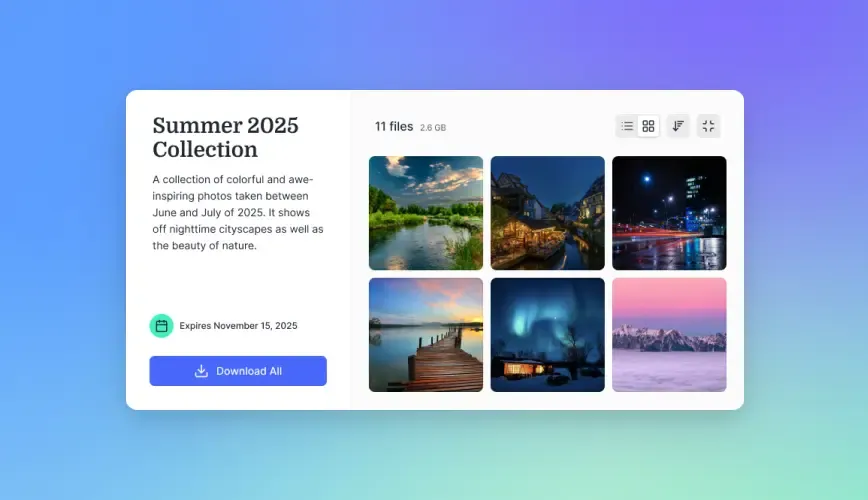
Editing photos is only half the job. The other half is getting those edited images to clients, teammates, or marketplaces without losing quality or creating version confusion.
Most AI photo editors solve the editing problem but ignore the delivery problem. You export files to a local folder, upload them to Google Drive or Dropbox, and hope everyone grabs the right version. For agencies processing product photos for multiple clients, or photographers delivering wedding galleries, that manual handoff creates real friction.
A few approaches that work:
- Cloud storage with versioning: Keep edited files in a workspace that tracks versions automatically. If a client requests changes, you upload the revision without overwriting the original.
- Branded delivery portals: Instead of sending download links that expire, create a persistent share page with your branding. Clients bookmark it and always access the latest versions.
- Batch export to marketplaces: For ecommerce teams, the last mile is uploading edited images to Amazon, Shopify, or Etsy. Some editors (Pixelcut, Photoroom) export directly to marketplaces. For others, you need an intermediate storage layer that your listing tools can pull from.
When your team edits photos across multiple tools, keeping the final assets organized matters more than which editor you use. A photographer might cull in Aftershoot, retouch in Luminar Neo, and deliver through a cloud workspace. The editing is tool-specific, but the storage and delivery layer needs to work across all of them.
Which AI Photo Editor Should You Choose?
The right editor depends on what you're editing and how many images you process.
If you edit photos professionally: Start with Photoshop. The AI features are add-ons to the most capable editing tool available. If Adobe's subscription model bothers you, Luminar Neo offers comparable AI tools with a one-time purchase option.
If you edit product photos for ecommerce: Pixelcut and Photoroom handle batch processing with consistent results. Pixelcut is stronger on desktop, Photoroom is better on mobile. For API-level automation, Claid.ai processes thousands of images without manual intervention.
If you shoot events or weddings: Aftershoot's style-learning AI and unlimited processing make it the clear choice for high-volume editing. Pair it with Topaz Photo AI for images that need technical cleanup before the style pass.
If you need occasional edits without paying: Pixlr gives you the most capable free browser editor. Canva is better if you're editing photos as part of a design workflow rather than standalone.
If you manage a team editing photos: Look for tools with built-in collaboration. Canva and Pixelcut include team seats.
No single editor covers every use case. Most working photographers and creative teams use two or three tools: one for heavy editing, one for batch processing, and a separate platform for organizing and delivering final assets.
Sources
References used to verify factual claims in this guide.
-
165,000 monthly searches on the broader 'ai photo editor' term 6,600 monthly searches on 'best ai photo editor' with keyword difficulty 29
Frequently Asked Questions
What is the best AI photo editor right now?
Adobe Photoshop with Firefly AI produces the highest-quality results for professional editing, with Generative Fill and Neural Filters that outperform other tools on complex edits. For photographers who want AI-first editing without Photoshop's complexity, Luminar Neo is the strongest alternative. For ecommerce product photos specifically, Pixelcut and Photoroom offer better batch processing workflows than either general-purpose editor.
Is there a free AI photo editor?
Pixlr offers the most capable free browser-based editor, with AI cutout, generative fill, and face swap tools available on the free tier (limited to 3 saves per day). Canva's free plan includes basic AI editing within its design platform. Fotor and Photoroom also offer free tiers with limited AI features. For serious editing work, expect to pay between $2.49/month (Pixlr Plus) and $19.99/month (Photoshop).
Can AI replace Photoshop?
Not yet. AI photo editors automate specific tasks like background removal, object erasing, and color correction faster than Photoshop. But Photoshop still handles complex compositing, precise masking, layer-based editing, and fine adjustments that AI tools can't replicate. The more likely path is that AI features get embedded into Photoshop itself, which is already happening with Generative Fill and Neural Filters. For simple edits, AI tools already replace Photoshop. For professional work, they supplement it.
What AI tool removes objects from photos?
Adobe Photoshop's Remove Tool and Generative Fill are the most accurate options for object removal. Luminar Neo's GenErase handles similar tasks for photographers. For free options, Pixlr's AI eraser and Canva's Magic Eraser work well on simple removals. Photoroom and Pixelcut include object removal tuned for product photography backgrounds.
What is the best AI photo editor for product photography?
Pixelcut is the best option for product photo editing at scale, with batch processing, AI backgrounds, and team seats included on the Pro plan. Photoroom is the better choice if you primarily photograph products on a phone. For enterprise-scale automation through an API, Claid.ai processes thousands of product images with consistent results. All three handle background removal, shadow addition, and color correction specifically for ecommerce listings.
How much do AI photo editors cost?
Pricing ranges from free (Pixlr, Canva, Fotor free tiers) to $199/year (Topaz Photo AI). Most mid-range editors cost between $8 and $15 per month. Pixlr Plus at $2.49/month is the cheapest paid option with meaningful AI features. Photoshop at $19.99/month is the most expensive mainstream option. Batch processing tools like Pixelcut ($10-60/month) and Aftershoot ($9.99-59.99/month) price based on volume and feature access rather than per-image credits.