AI Agent Tool State Persistence: Strategies That Actually Work
AI agent tool state persistence saves intermediate tool data across sessions so agents can resume work, recover from failures, and collaborate with humans. This guide covers five persistence strategies, from in-memory buffers to workspace-native storage, with implementation examples and failure modes to avoid.


Why Tool State Persistence Matters for AI Agents
AI agents call tools. They query databases, write files, run searches, and transform data. Each tool call produces state: a cursor position in a paginated API, a partially built report, a list of already-processed records. When that state disappears between sessions, agents repeat work, lose context, or produce inconsistent results.
This problem gets worse as agents handle longer tasks. A research agent that spends 20 minutes gathering sources loses everything if its process crashes without a persistence layer. A coding agent that has indexed a repository starts from scratch on the next invocation. Agents with persistent state complete more complex workflows than stateless ones, because they avoid re-executing completed steps and maintain richer context for decision-making.
Tool state persistence is distinct from conversational memory. Conversational memory tracks what the agent said and heard. Tool state tracks what the agent did: which API pages it fetched, which files it wrote, which transformations it applied. Both matter, but tool state is the piece most teams overlook.
The challenge is picking the right persistence strategy for your workload. In-memory caching works for short tasks. Database-backed checkpointing handles multi-step workflows. Workspace-native storage suits teams where agents and humans need to share outputs. The rest of this guide walks through each approach, when to use it, and what breaks when you pick wrong.

Related guides
- How to Set Up Agentic AI Storage for Persistent Agent MemoryAgentic AI storage provides persistent file and data access that autonomous agents need to complete multi-step tasks...
- How to Implement Agentic RAG: A Complete Technical GuideAgentic RAG is a retrieval-augmented generation pattern where autonomous agents dynamically decide what to retrieve,...
- Fastio vs Amazon S3: Best Storage for AI Agent WorkspacesAmazon S3 provides raw object storage, while Fastio gives AI agents an MCP-ready workspace. S3 requires developers to...
- Fastio API vs Google Cloud Storage for AI Agents: 2026 ComparisonWhen building persistent memory for AI agents, developers often start with a raw object store. While Google Cloud...
- How to Implement Tool Calling with Persistent File State for AI AgentsAI agents that call tools across multiple LLM invocations need durable file state to avoid losing context, repeating...
- Best Cloud Storage for AI Agents: Top 7 Platforms ComparedCloud storage for AI agents provides persistent file access, version control, and API-driven operations that let...
More on this subject: Agent Memory and Storage (250 guides)
What to check before scaling ai agent tool state persistence
Not every agent needs the same persistence approach. A chatbot answering quick questions can get away with in-memory state. An agent running a multi-hour data pipeline needs durable checkpointing. Here are the five main strategies, ordered from simplest to most capable.
1. In-Memory State Buffers
The simplest approach stores tool state in memory during a session. Python dictionaries, JavaScript objects, or framework-provided state containers hold intermediate results. LangGraph, for example, manages short-term memory as part of its graph state, letting you pass tool outputs between nodes without external storage.
When it works: Single-session tasks under 30 minutes. Chatbots, Q&A agents, one-shot data lookups.
When it breaks: Any crash, timeout, or restart wipes everything. Multi-agent systems cannot share in-memory state across processes. You also hit memory limits with large datasets.
2. Database-Backed Checkpointing
Checkpoint each state transition to a database. LangGraph's checkpointer interface supports SQLite, PostgreSQL, and Redis backends. Each checkpoint captures the full agent state: message history, current execution node, tool outputs, and metadata. When the agent resumes, it loads the latest checkpoint and continues.
from langgraph.checkpoint.postgres import PostgresSaver

checkpointer = PostgresSaver(conn_string="postgresql://...")
graph = workflow.compile(checkpointer=checkpointer)

result = graph.invoke(
    {"messages": [user_input]},
    config={"configurable": {"thread_id": "task-42"}}
)
Each invocation with the same thread_id resumes from the last checkpoint automatically.
When it works: Multi-step workflows, agents that need to pause and resume, debugging with time-travel replay.
When it breaks: Schema changes require migration. Large binary outputs (images, PDFs) bloat the database. Sharing checkpointed state with humans requires building a separate UI.
3. File-Based Persistence
Write tool state to files: JSON snapshots, YAML configs, or binary artifacts. This is the approach most data pipeline tools use. The agent writes intermediate results to disk, and subsequent steps read from those files.
When it works: Long-running workflows with large outputs. Agents producing reports, datasets, or media files. Easy to inspect and debug since state is just files on disk.
When it breaks: Local filesystems are not shared. If Agent A writes a file on Machine 1, Agent B on Machine 2 cannot read it. Cloud storage like S3 or GCS adds latency and requires credential management.
4. Key-Value and Document Stores
Redis, DynamoDB, or Firestore give you fast reads and writes with TTL-based expiration. Store tool state as key-value pairs keyed by agent ID and task ID. Redis is popular for its speed, and LangGraph now has a dedicated Redis checkpointer integration.
When it works: High-throughput systems where many agents run concurrently. State that has a natural expiration window.
When it breaks: No built-in file handling. If your agent produces documents, images, or structured artifacts, you need a separate storage layer for those outputs. Running another service also adds operational overhead.
5. Workspace-Native Persistence
This approach stores tool state directly in a shared workspace that both agents and humans can access. Instead of writing to a local database or filesystem, the agent writes outputs to a cloud workspace with built-in versioning, search, and access controls.
Fastio takes this approach. Agents connect via the MCP server or REST API and write tool outputs to workspaces. Those outputs persist across sessions, get versioned automatically, and show up for human teammates through the same workspace UI. Intelligence Mode auto-indexes uploaded files, so agents can query previous outputs using semantic search without maintaining a separate vector database.
When it works: Teams where agents produce artifacts humans need to review. Multi-agent systems that need shared state with conflict prevention via version history. Workflows requiring audit trails of what each agent did and when.
When it breaks: Requires network connectivity. Higher latency than local storage for high-frequency writes. Not ideal for ephemeral scratch data that nobody needs to see.
Implementing Checkpointing Without Losing Data
Checkpointing sounds simple: save state, restore state. In practice, partial saves, concurrent writes, and schema evolution create subtle bugs that are hard to diagnose. Here are the patterns that prevent data loss.
Design Idempotent Tool Calls
If an agent crashes after calling a tool but before checkpointing the result, it will retry the tool call on recovery. This is safe only if the tool call is idempotent, meaning calling it twice produces the same outcome. API writes, database inserts, and file uploads need careful handling.
For non-idempotent operations, log the tool call ID before execution and check for it on retry. If the ID exists in the log, skip the call and use the cached result.
Use Atomic Transactions for Multi-Store State
Agents often maintain state across several stores: conversation history in one database, tool outputs in another, file artifacts in cloud storage. Partial updates create inconsistency. If Redis updates but Postgres fails, the agent has conflicting views of reality.
The safest pattern is event sourcing: write every state change as an append-only event, then derive current state by replaying events. This gives you a single source of truth and makes recovery straightforward.
Version Your State Schema
Agent state structures change as you add new tools or modify existing ones. A checkpointed state from last week might not match this week's schema. Include a version field in every checkpoint and write migration logic for each version transition.
STATE_VERSION = 3

def migrate_state(state: dict) -> dict:
    version = state.get("version", 1)
    if version < 2:
        state["tool_results"] = state.pop("results", {})
    if version < 3:
        state["retry_counts"] = {}
    state["version"] = STATE_VERSION
    return state
Checkpoint at Decision Boundaries
Do not checkpoint after every single tool call. That creates storage bloat and slows execution. Instead, checkpoint at decision boundaries: after completing a subtask, before branching logic, and before any operation that is expensive to repeat. LangGraph handles this by checkpointing at each node transition in its state graph, which strikes a good balance between granularity and overhead.



Give Your Agents Persistent Workspaces
Fastio gives agents generous storage with built-in versioning, semantic search, and advisory file locks. Connect via MCP and start persisting tool state in minutes.
Handling Multi-Agent State Conflicts
When two agents access the same state, conflicts happen. Agent A reads a customer record, Agent B updates it, and Agent A overwrites B's changes with stale data. This is the classic lost-update problem from distributed systems, and it applies directly to multi-agent tool state.
Optimistic Concurrency Control
Attach a version number to every piece of shared state. Before writing, check that the version has not changed since the last read. If it has, re-read and retry. This is how most databases handle concurrent writes, and agents should follow the same pattern.
def update_state(store, key, transform_fn):
    current = store.read(key)
    new_value = transform_fn(current["value"])
    success = store.write(
        key, new_value.
        expected_version=current["version"]
    )
    if not success:
        return update_state(store, key, transform_fn)
    return new_value
The compare-and-swap loop prevents lost updates without holding locks. It works well when contention is low and retries are cheap.
File Locks and Version History for Shared Artifacts
When agents produce shared files like reports, datasets, or configuration, file-level locking coordinates concurrent modification. Fastio provides advisory file leases through its REST API and MCP storage actions (lock-acquire, lock-status, lock-release): an agent acquires a lock before editing, heartbeats it while working, and releases it when done. Other agents receive HTTP 409 and can wait or work on different files until the lock is released. If an agent holder disconnects, the lease expires automatically or can be taken over with write permissions, while automatic version history preserves every revision as a safety net.
Partition State by Agent
The simplest conflict prevention strategy is avoiding shared state entirely. Give each agent its own state partition, whether that is a separate workspace, database schema, or key prefix. Merge outputs at defined synchronization points. This eliminates locking overhead and makes debugging easier since each agent's state is isolated and inspectable.
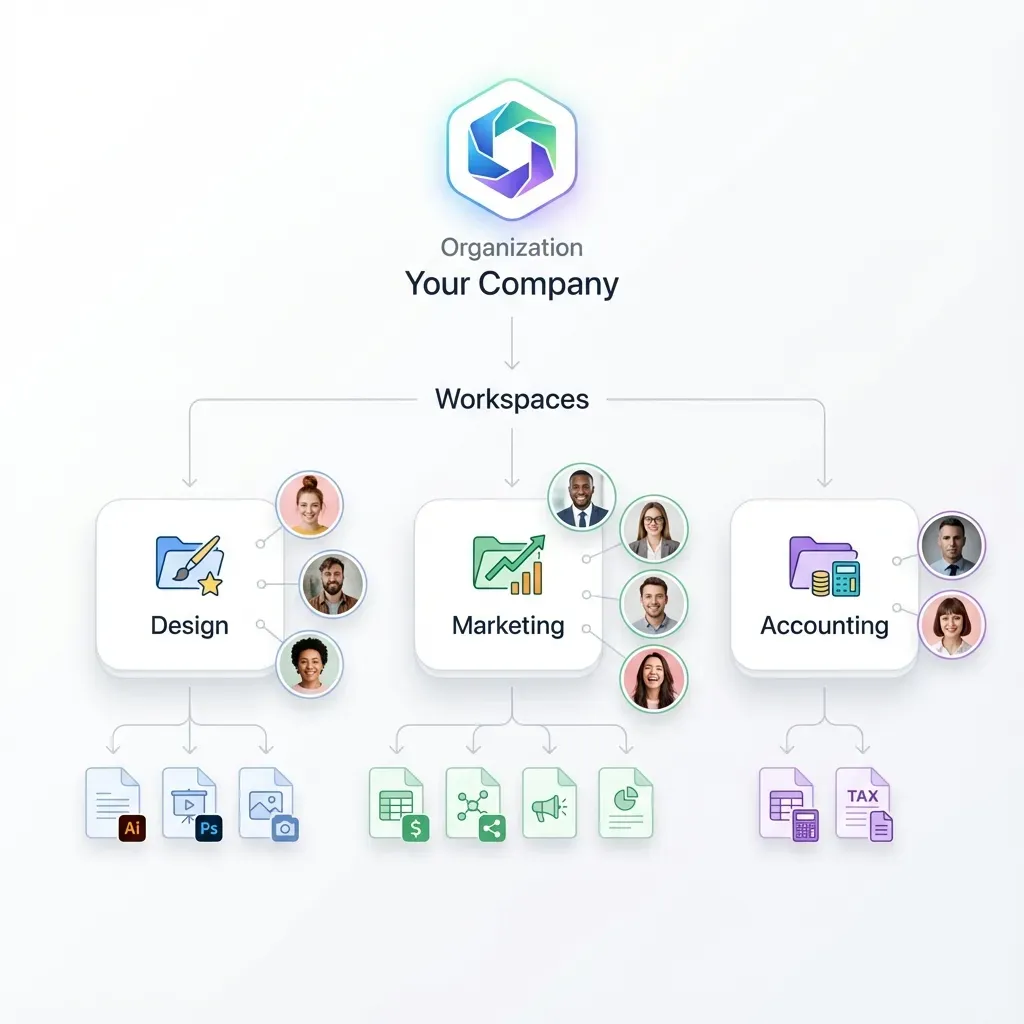
Fastio workspaces support this pattern naturally. Create a workspace per agent for scratch state, and a shared workspace for final outputs. Agents write intermediate results to their own workspace and publish finished artifacts to the shared one. The Business Trial includes workspaces to evaluate team setups.
Workspace-Native Persistence in Practice
Abstract persistence strategies are useful, but seeing them applied to a real workflow makes the tradeoffs concrete. Here is how workspace-native persistence works for a research agent that gathers data across sessions.
The Workflow
A research agent collects competitive intelligence. Each run, it searches for new data, downloads relevant documents, and updates a summary report. The workflow spans days, with the agent running periodically rather than continuously.
Without persistence, each run starts fresh. The agent re-downloads documents it already has, re-analyzes sources it already processed, and produces a summary that may contradict previous versions. With workspace-native persistence, each run picks up from the last.
Setup with Fastio MCP
The agent connects to Fastio via Streamable HTTP at /mcp or legacy SSE at /sse and uses workspace tools to manage state. The MCP skill guide documents a consolidated MCP toolset covering workspace, storage, and AI operations.
On first run, the agent creates a workspace and uploads its initial findings. On subsequent runs, it queries the workspace using Intelligence Mode to check what it has already collected, downloads only new sources, and updates the summary. Each file version is preserved, creating a complete audit trail.
1. Agent connects via MCP
2. Lists existing files in research workspace
3. Queries Intelligence Mode: "What companies have I already analyzed?"
4. Identifies gaps in coverage
5. Fetches new data from external sources
6. Uploads new documents to workspace
7. Updates summary report (previous version auto-saved)
8. Transfers ownership to human analyst when complete
The key difference from database checkpointing: the research outputs are documents, not database rows. Storing PDFs and reports in PostgreSQL is awkward. Storing them in a workspace means humans can browse, search, and download them without a custom UI. Intelligence Mode indexes everything automatically, so the agent queries "what have I already collected about Company X?" using semantic search rather than maintaining its own index.
Ownership Transfer
When the research is complete, the agent transfers workspace ownership to the human analyst. The analyst gets all files, version history, and search capabilities. The agent retains admin access for future updates. This handoff is built into the platform rather than requiring a custom delivery mechanism.
The Business Trial provides a 14-day evaluation with storage and included credits, which covers most research workflows.
Choosing the Right Strategy for Your Agent
The right persistence strategy depends on three factors: how long your agent runs, whether humans need access to intermediate state, and how many agents share state.
Short tasks, single agent: In-memory state buffers. No setup, no operational overhead. Accept that crashes mean restarting from scratch.
Multi-step workflows, single agent: Database checkpointing with LangGraph or a similar framework. Use SQLite for local development, PostgreSQL for production. Add state versioning from day one so you never have to deal with incompatible checkpoints later.
High-throughput, many agents: Redis or DynamoDB for fast key-value access. Pair with a separate file store for binary artifacts. Use TTLs to prevent unbounded state growth.
Agent-human collaboration: Workspace-native persistence with Fastio or similar platforms. Agents write to workspaces humans can see. Built-in versioning, search, and access controls replace custom infrastructure. Connect via the Fastio MCP server or REST API.
Hybrid approach: Most production systems combine strategies. Use in-memory state within a session, checkpoint to a database at decision boundaries, and publish final outputs to a shared workspace. This gives you speed for hot data, durability for workflow state, and accessibility for results.
One pattern worth avoiding: building persistence for agents that run simple, short tasks. The overhead is not worth it for a one-shot Q&A bot. But for any agent that runs longer than a few minutes, produces artifacts others need, or operates alongside other agents, persistence is not optional. The cost of re-executing work and losing context always exceeds the cost of saving state.
Start with the Fastio Business Trial for workspace-native persistence, or explore LangGraph's checkpoint documentation for framework-level checkpointing. Both approaches work together, and many teams use them in combination.
Sources
References used to verify factual claims in this guide.
-
Stateful agents complete significantly more complex workflows than stateless ones
-
LangGraph provides built-in persistence via checkpointers for SQLite, PostgreSQL, and Redis
Frequently Asked Questions
What is tool state persistence for AI agents?
Tool state persistence saves the intermediate data agents produce when calling tools, such as API cursors, partial results, file outputs, and processing logs. It lets agents resume from where they left off after a crash, session timeout, or scheduled pause instead of re-running completed work.
How do you persist AI tool data across sessions?
The most common approaches are database checkpointing (saving state snapshots to SQLite, PostgreSQL, or Redis at each workflow step), file-based persistence (writing intermediate results to disk or cloud storage), and workspace-native persistence (storing outputs in a shared workspace like Fastio where both agents and humans can access them).
What is the difference between agent memory and tool state?
Agent memory tracks conversation history and learned context from interactions. Tool state tracks what the agent did, specifically which tools it called, what results they returned, and what artifacts were produced. Both can be persisted, but tool state is critical for resuming multi-step workflows without repeating completed steps.
Does state persistence improve agent reliability?
Yes. Agents with persistent state can recover from crashes by loading the last checkpoint instead of restarting entirely. They avoid duplicate work, reduce API costs from repeated calls, and maintain consistency across long-running tasks. Stateful agents complete more complex workflows than stateless ones because they build on prior progress rather than starting over.
How does Fastio handle agent tool state persistence?
Fastio provides workspace-native persistence where agents store tool outputs in shared workspaces via MCP or REST API. Files are versioned automatically, indexed by Intelligence Mode for semantic search once enabled, and accessible to human teammates through the same UI. Advisory file locks coordinate multi-agent writes, and ownership transfer lets agents hand completed work to humans.
Related Resources

Give Your Agents Persistent Workspaces
Fastio gives agents generous storage with built-in versioning, semantic search, and advisory file locks. Connect via MCP and start persisting tool state in minutes.