How to Master AI Agent Swarm Orchestration: Best Practices for 2026
AI agent swarm orchestration manages large-scale, emergent agent behaviors in dynamic environments. While single agents can automate tasks, swarms of specialized agents can solve complex problems faster. However, without proper orchestration, these systems are prone to loops, conflicts, and failure. This guide covers the essential patterns, tools, and workspace strategies to build reliable, production-ready agent swarms.

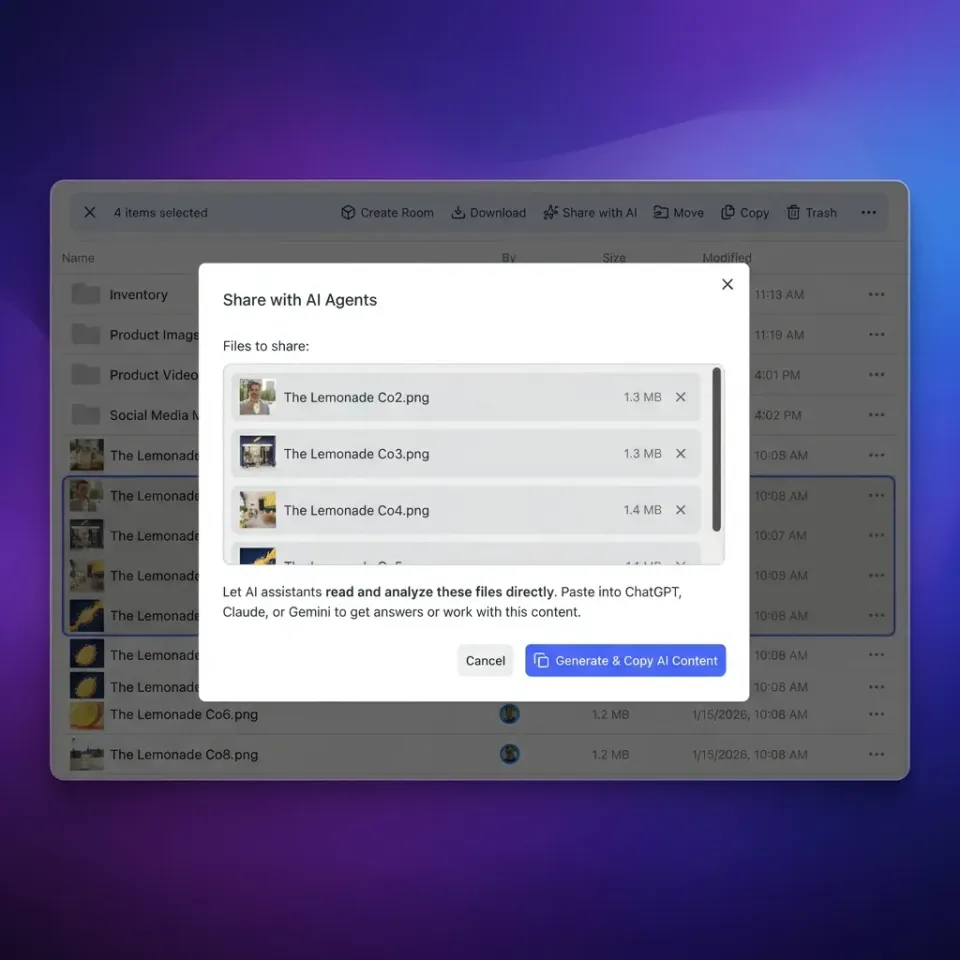
What Is AI Agent Swarm Orchestration?
AI agent swarm orchestration is the strategic coordination of multiple specialized AI agents working together as a unified system to achieve complex objectives. Unlike a single general-purpose model, a swarm distributes tasks across distinct "workers", one for research, one for coding, one for review, allowing for parallel processing and deeper expertise in each sub-task.
Quotable Definition: "AI agent swarm orchestration manages large-scale, emergent agent behaviors in dynamic environments." In a well-orchestrated swarm, agents don't just talk over each other; they follow a structured protocol. A central "orchestrator" or strict communication rules ensure that tasks are handed off cleanly, context is preserved, and the final output matches the user's intent.
Helpful references: Fastio Workspaces, Fastio Collaboration, and Fastio AI.

Related guides
- How to Implement an AI Agent Handoff ProtocolAn agent handoff protocol is the bridge between autonomous AI operations and human oversight. Learn how to design a...
- How to Implement Human-in-the-Loop for AI AgentsHuman-in-the-loop (HITL) for AI agents is a design pattern where autonomous agents escalate decisions, request...
- Best APIs for AI Agent Communication: Top 9 Solutions for 2026Building effective multi-agent systems requires structured message passing and reliable state synchronization. This...
- How to Implement AI Agent Federation: Architectures & GuideAI agent federation enables independent agents to collaborate across distributed systems via standardized protocols....
- Best Tools for CrewAI Agents: Top Picks for 2026CrewAI agents need good tools to be useful. The framework handles coordination, but external integrations let agents...
- How to Build a Multi-Agent Audio Production WorkflowMulti-agent audio workflows chain AI agents for stem generation, mixing, EQ, effects, and mastering. Fastio workspaces...
More on this subject: Multi-Agent Systems (62 guides)
Why Orchestration Matters: Efficiency vs. Chaos
The potential of multi-agent systems is massive. By breaking complex problems into smaller, manageable components, swarms can outperform single models in both speed and accuracy.
According to GitHub, developers using AI assistants completed tasks 55% faster than those who didn't. This efficiency gain is a key driver for adopting agent swarms in enterprise environments.
However, this power comes with complexity. Without strong orchestration, swarms face critical risks:
- Infinite Loops: Agents getting stuck arguing or repeating steps without progress.
- Context Loss: Critical information being dropped during handoffs between agents.
- Resource Spirals: Uncontrolled API calls driving up costs instantly.
- Hallucination Amplification: One agent's error cascading through the entire chain.
Proper orchestration transforms a chaotic group of bots into a reliable workforce. It defines who speaks when, how conflicts are resolved, and where the work actually lives.


Give Your Agent Swarm a Home
Fastio provides the shared workspace, storage, and RAG intelligence your agent swarm needs to collaborate effectively. Built for agent swarm orchestration workflows.
Core Orchestration Patterns
Successful swarms typically follow one of three architectural patterns. Choosing the right one depends on your specific use case.
1. The Hierarchical (Boss/Worker) Pattern
A central "manager" agent breaks down the user request and assigns sub-tasks to specialized worker agents. The workers report back to the manager, who aggregates the results.
- Best for: Complex projects with clear sub-components (e.g., building a software feature).
- Pros: Clear control flow, easy to debug.
- Cons: The manager can become a bottleneck.
2. The Sequential (Chain) Pattern
Agents pass work down a line, like a factory assembly line. Agent A generates an outline, Agent B writes the draft, Agent C edits it.
- Best for: Linear workflows with defined stages (e.g., content publishing).
- Pros: Simple to implement, predictable.
- Cons: Slowest agent defines the total speed; failure at one step halts the chain.
3. The Joint (Mesh) Pattern
Agents communicate peer-to-peer without a central boss. They "bid" on tasks or collaborate dynamically based on the evolving context.
- Best for: Creative brainstorming or highly dynamic problem-solving.
- Pros: Highly flexible and resilient.
- Cons: Hardest to orchestrate; high risk of loops and chatter.
Top Tools for Swarm Orchestration
Several frameworks have emerged to help developers build these systems. Here are the leaders in the space:
- LangGraph: A library for building stateful, multi-actor applications with LLMs. Ideally suited for complex, cyclical workflows where state needs to be persisted.
- CrewAI: A popular framework that orchestrates role-playing autonomous AI agents. It simplifies the process of assigning roles and goals to agents.
- OpenAI Swarm: An experimental framework that explores lightweight, ergonomic patterns for multi-agent orchestration, focusing on handoffs and routines.
- Microsoft AutoGen: A framework that enables the development of LLM applications using multiple agents that can converse with each other to solve tasks.
While these tools handle the logic of orchestration, they often lack a crucial component: the environment where the work happens.
The Missing Piece: Shared Workspaces
Most orchestration frameworks focus on the conversation history but ignore the artifacts. When an agent generates a multiple report, a video file, or a code repository, where does it go?
In a traditional setup, agents struggle to share files. They might try to pass raw text context (hitting token limits) or use ephemeral local storage that disappears when the container restarts.
Fastio provides the persistent layer for agent swarms.
By treating Fastio as the shared hard drive for your swarm, you solve the "artifact problem" instantly:
- Universal Access: All agents in the swarm can read/write to the same shared folder.
- Intelligence Mode: Fastio automatically indexes every file. Agents don't just store files; they can query them using RAG without setting up a vector database.
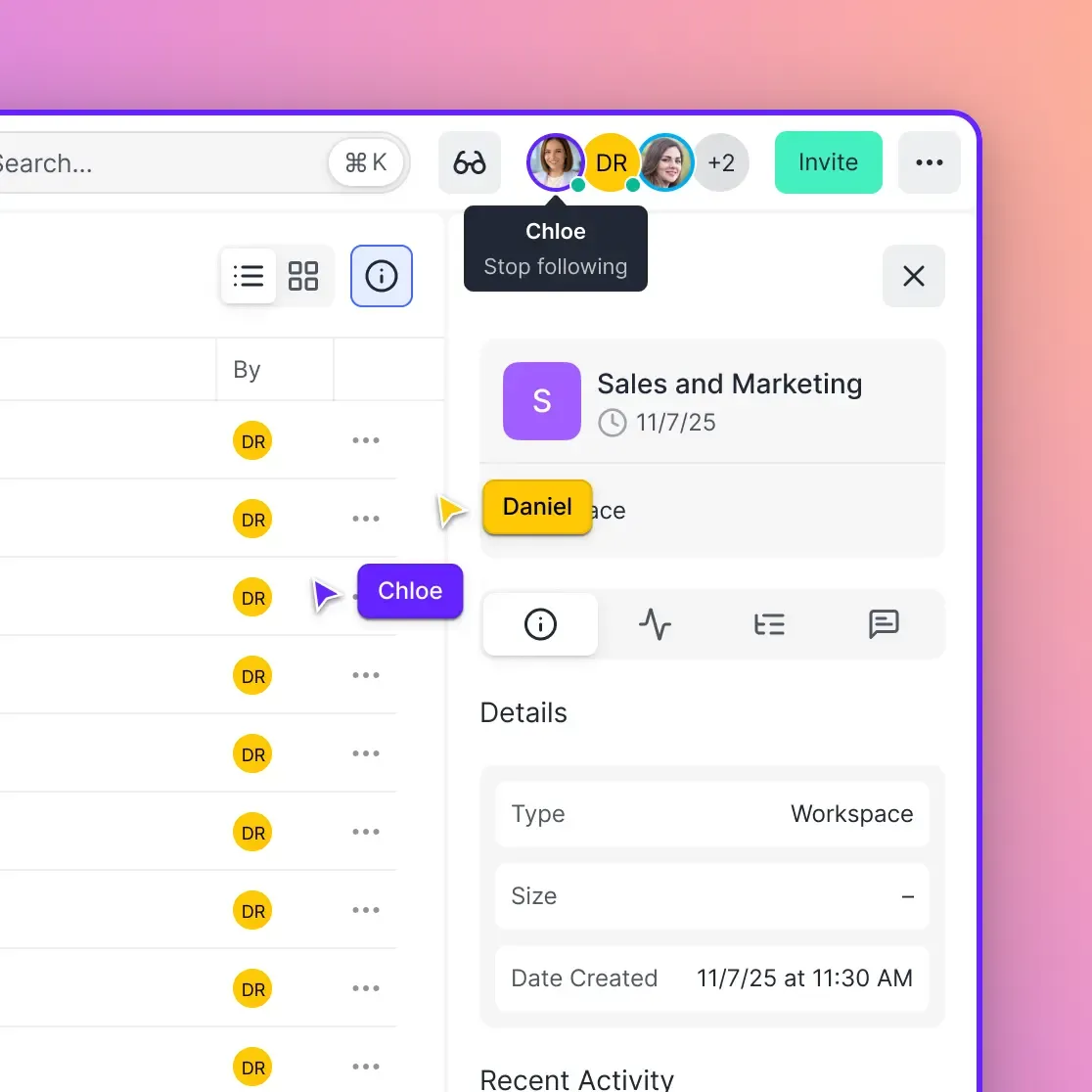
- Human-in-the-Loop: Humans can watch the "output" folder in real-time via the Fastio UI, reviewing or editing files before the next agent takes over.
Best Practices for Production Swarms
To move from a prototype to a production-ready swarm, follow these guidelines:
1. Define Explicit Handoffs
Never assume an agent knows when to stop. Define clear "exit criteria" for each step. Use structured output (JSON) to ensure the next agent receives clean data, not conversational fluff.
2. Implement "Human-on-the-Loop"
For high-stakes decisions, insert a pause. Have the swarm notify a human (via Slack or email) and wait for their review of the output in the Fastio workspace before proceeding to the deployment or publishing phase.
3. Use File Locks for Concurrency
If multiple agents are editing the same document, you risk race conditions. Use a shared storage system that supports locking or versioning to prevent agents from overwriting each other's work.
4. Monitor Cost and Loops
Set hard limits on the number of "turns" or API calls a swarm can make per request. Implement a "supervisor" agent whose only job is to watch for repetitive patterns and kill runaway processes.
Sources
References used to verify factual claims in this guide.
-
Developers using AI assistants completed tasks 55% faster than those who didn't.
Frequently Asked Questions
What is the difference between an AI agent and a swarm?
An AI agent is a single autonomous system capable of performing tasks. A swarm is a network of multiple agents collaborating, often with specialized roles (like researcher, writer, editor) to achieve a larger goal.
Is OpenAI Swarm production-ready?
OpenAI Swarm is currently released as an experimental/educational framework. For production environments, many developers prefer more mature ecosystems like LangGraph or custom orchestrators built on the OpenAI Assistants API.
How do AI agents share files in a swarm?
Agents can share files using a unified cloud storage layer like Fastio. Through Fastio's MCP server, REST API or CLI, agents can read and write files in a shared workspace that is instantly accessible to other agents and human team members.
What is the best pattern for a content creation swarm?
The Sequential (Chain) pattern is usually best for content. A 'Researcher' agent passes notes to a 'Writer' agent, who then passes a draft to an 'Editor' agent. This linear flow ensures quality control at each stage.
Related Resources

Give Your Agent Swarm a Home
Fastio provides the shared workspace, storage, and RAG intelligence your agent swarm needs to collaborate effectively. Built for agent swarm orchestration workflows.