How to Build an AI Agent Supervisor Pattern for Complex Workflows
The AI agent supervisor pattern provides a centralized management layer for coordinating multiple specialized worker agents. This guide explains how the supervisor architecture improves task completion compared to flat agent structures. Learn when to choose a hierarchical supervisor over a decentralized swarm for your agentic workflows.

What is the AI Agent Supervisor Pattern?
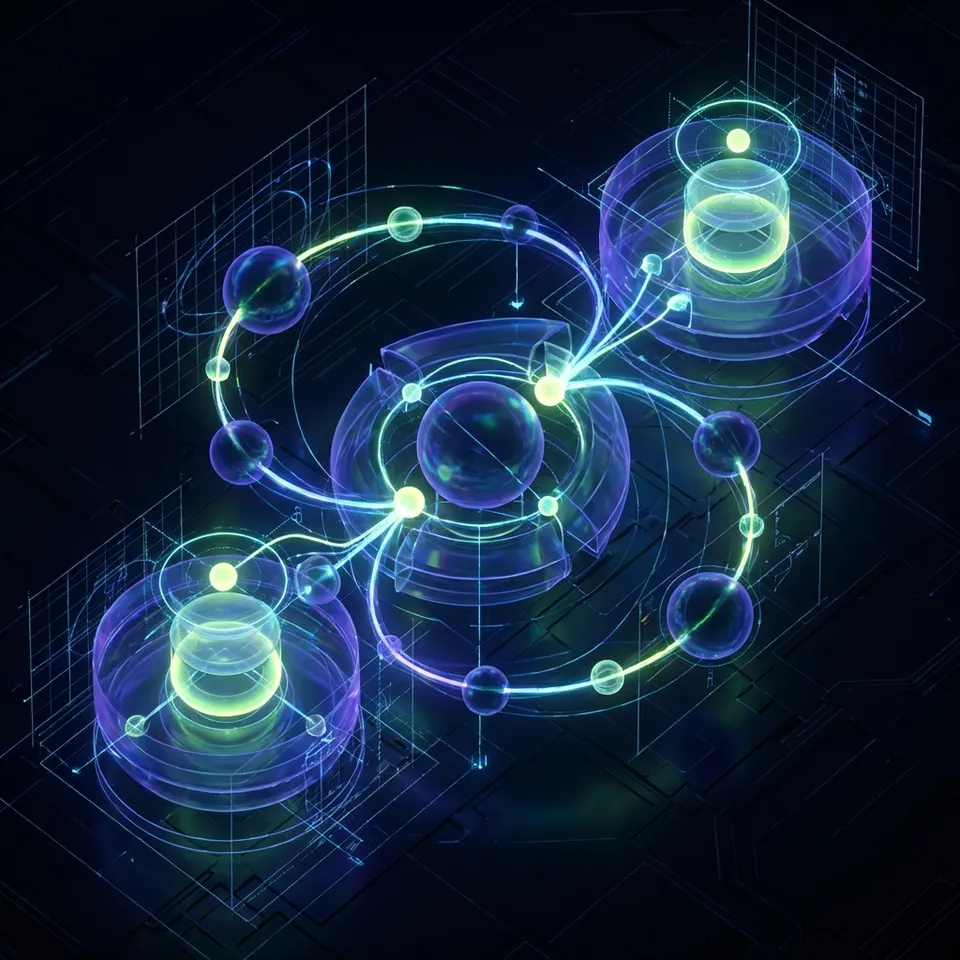
The AI agent supervisor pattern is an architectural design where a central supervisor agent decomposes tasks, assigns them to specialized worker agents, monitors progress, and aggregates results, providing centralized control over a distributed agent system. Think of it as a project manager for AI. Instead of asking one generalist model to handle a complex multi-step workflow, you use a supervisor to manage a team of specialists.
According to internal benchmarks from top framework developers, the supervisor pattern improves task completion rates versus flat agent architectures. By introducing a management layer, you reduce the cognitive load on individual agents and prevent the "hallucination loops" that often occur when an agent tries to do too many different things at once.
In this model, the supervisor is the only agent that communicates directly with the user. It receives the high-level goal, breaks it into logical subtasks, and decides which worker is best suited for each piece of work. This centralized approach ensures that the system stays on track and maintains a consistent state throughout the process.
Helpful references: Fastio Workspaces, Fastio Collaboration, and Fastio AI.
Related guides
- How to Implement the Reflection Pattern for Self-Correcting AgentsThe Reflection pattern lets AI agents review their own work, catch errors, and fix them without human help. By...
- How to Build an Agentic Invoice Processor using Fastio APIAn agentic invoice processor uses Fastio realtime events to detect new files, triggers an LLM to extract data, and...
- Top 10 Slack AI Bot Frameworks for Developers 2026Slack AI bot frameworks offer the components developers need to build chatbots that retrieve data, run actions, and...
- How to Design AI Agent Microservices Architecture PatternsMonolithic AI agents don't scale. Poor architecture kills many AI projects. Microservices split complex agents into...
- Agentic AI Architecture: Components, Patterns, and Design GuideAgentic AI architecture is the layered system design that lets autonomous agents perceive inputs, reason about goals,...
- Agentic AI Design Patterns: Proven Patterns for Building Autonomous SystemsAgentic AI design patterns are reusable architectural templates for building autonomous AI systems that can plan, use...
More on this subject: Agent Frameworks and Patterns (52 guides)
How the Supervisor Workflow Operates
The effectiveness of a supervisor agent depends on a structured execution loop. Unlike a simple linear chain, the supervisor pattern is iterative and reactive.
- Decomposition: The supervisor receives the user query and breaks it into a set of discrete tasks.
- Delegation: The supervisor selects the most appropriate specialized worker for the first task and passes the necessary context.
- Execution: The worker agent performs the task using its specific tools (like searching the web or querying a database).
- Review: The worker returns the result to the supervisor. The supervisor evaluates if the output is sufficient or if it needs correction.
- Aggregation: Once all subtasks are complete, the supervisor synthesizes the findings into a final response for the user.
This "Manager-Worker" relationship provides a safety net. If a worker fails or provides low-quality data, the supervisor can catch the error before it reaches the end user. It can even decide to re-assign the task to a different worker or provide more specific instructions to the original one.
Supervisor vs. Swarm vs. Hierarchical Patterns
Choosing the right agent architecture is a matter of matching the pattern to the complexity of the task. While the supervisor pattern is popular, it is not the only way to organize agents.
The supervisor pattern is the standard for most business applications because it offers the best balance of control and flexibility. A swarm can be faster for creative brainstorming, but it often struggles with "democratic indecision" where agents pass tasks back and forth without finishing them. The supervisor prevents this by acting as the final authority.

Implementing the Pattern with LangGraph and CrewAI
Modern agent frameworks have recognized the power of this pattern and now include it as a first-class feature. LangGraph and CrewAI are the two most prominent examples of this implementation.
In LangGraph, the supervisor is typically implemented as a node in a stateful graph. The graph state acts as the "shared memory" for the entire team. The supervisor node uses a router to decide which edge to follow next. This gives you granular control over the logic, allowing you to define exactly how the supervisor should respond to specific worker outputs.
CrewAI takes a more declarative approach. You can set the process type to hierarchical and assign a manager_llm. CrewAI then handles the task routing and delegation automatically. This is ideal for developers who want to get up and running quickly without manual graph design.
Regardless of the framework, the "boss" agent needs a powerful reasoning model to handle the complex decision-making required for management, while workers can often use smaller, faster models for specific tasks.


Start with ai agent supervisor pattern on Fastio
Fastio gives teams shared workspaces, MCP tools, and searchable file context to run ai agent supervisor pattern workflows with reliable agent and human handoffs.
When the Supervisor Pattern is the Wrong Choice
While the performance boost is significant, the supervisor pattern is not a universal solution. There are specific scenarios where this architecture introduces unnecessary friction.
Latency and Cost: Every time the supervisor makes a decision, it requires an LLM call. In a multi-step workflow, these "management calls" can increase the total token usage and latency. If your task is a simple linear sequence (A -> B -> C), a basic chain is more efficient.
The Supervisor Bottleneck: As you add more workers, the supervisor's context window can become a bottleneck. If the supervisor has to track the detailed history of ten different workers, it may start to lose focus or hallucinate. For large systems, you should move to a hierarchical model where "sub-supervisors" manage small groups of workers.
Single Point of Failure: If the supervisor fails to correctly decompose the initial task, the entire workflow is doomed from the start. Unlike a swarm where agents might course-correct through peer interaction, a supervisor-led system is only as smart as its manager.
Why Every Supervisor Needs an Intelligent Workspace
A supervisor agent is only as effective as the data it can access and the tools it can use. In a distributed agent system, the biggest challenge is maintaining a "source of truth" that every agent can see. This is where Fastio becomes a critical part of the stack.
Fastio provides the persistent storage layer that allows a supervisor to coordinate workers effectively. When a worker agent finishes a report or generates a dataset, it shouldn't just pass a raw string in a context window. It should save the file to a shared Fastio workspace.
With Intelligence Mode enabled, the supervisor can "read" every file uploaded by its workers. It doesn't need to hold everything in its own memory. It can query the workspace using semantic search to find the specific data it needs to aggregate the final response.
Fastio offers a dedicated Business Trial to help developers build these systems:
- generous storage: Enough for thousands of agent-generated artifacts.
- A consolidated MCP toolset: The supervisor can manage files, create shares, and set permissions using standardized Model Context Protocol tools.
- Built-in RAG: No need to manage a separate vector database; Fastio auto-indexes your agents' output.
- Ownership Transfer: Once the supervisor finishes the project, it can transfer the entire workspace to a human client or manager while maintaining its own admin access.

Sources
References used to verify factual claims in this guide.
-
generous storage on the agent plan A consolidated MCP toolset lets the supervisor manage files, create shares, and set permissions using Model Context Protocol
Frequently Asked Questions
What is the supervisor pattern in AI agents?
The supervisor pattern is an architecture where a central AI agent acts as a manager to coordinate specialized worker agents. The supervisor breaks down user requests into subtasks, delegates them to the appropriate workers, and aggregates the results into a final answer. This centralized control improves reliability and task completion rates.
How does a supervisor agent differ from a swarm?
A supervisor agent provides centralized management and a clear hierarchy, where one agent makes all the decisions about delegation. A swarm is a decentralized 'choreography' pattern where agents collaborate as peers and pass tasks between themselves without a central authority. Supervisors are better for structured business workflows, while swarms are better for open-ended exploration.
When should I use a supervisor pattern vs a swarm?
Use the supervisor pattern when your workflow has a defined goal and requires high reliability and oversight. It is ideal for tasks like report generation, data analysis, or multi-step software development. Choose a swarm when the path to the solution is unknown and you need agents to dynamically collaborate and discover the best approach through peer-to-peer interaction.
How do you implement an agent supervisor in LangGraph?
In LangGraph, you implement a supervisor by creating a central node that functions as a router. This node receives the current state, uses an LLM to decide which worker node to call next, and updates the state with the results. You can use the built-in conditional edges to manage the flow between the supervisor and its workers.
Does the supervisor pattern work with any LLM?
Yes, the supervisor pattern is a design concept that works with any capable LLM, including Claude, GPT, and Gemini. However, the supervisor agent usually requires a high-reasoning model to handle complex management tasks, while worker agents can often run on smaller, specialized models.
Related Resources

Start with ai agent supervisor pattern on Fastio
Fastio gives teams shared workspaces, MCP tools, and searchable file context to run ai agent supervisor pattern workflows with reliable agent and human handoffs.