How to Use AI Agent Prompt Caching to Reduce LLM Costs and Latency
AI agent prompt caching stores and reuses prompt prefixes, system instructions, and context windows to avoid redundant token processing. This method reduces API costs by up to 90% and cuts response latency by up to 85% for repeated operations. By improving how agents send instructions and background data, developers can build faster, more affordable AI systems.


What is AI Agent Prompt Caching?
AI agent prompt caching is a technical improvement that lets Large Language Models (LLMs) remember and reuse specific parts of a prompt across multiple API requests. When an agent performs a task, it often sends the same system instructions, tool definitions, and background documents. In a traditional setup, the model reprocesses every token for every new request, even if most of the content is identical to the previous one. This leads to higher costs and slower response times.
Prompt caching changes this by storing the state of a prompt prefix. If the beginning of your next prompt matches the prefix in the cache, the model skips the heavy work. Instead of recalculating the math for those thousands of tokens, it retrieves the saved state. For developers building autonomous agents, this is one of the best ways to lower operational expenses.
Anthropic and OpenAI have introduced native caching to address these inefficiencies. Anthropic's prompt caching reduces costs by up to 90% for cached prefixes. This means if you are sending a long document as context for an agent, you pay the full price once. Every subsequent query using that same document costs a fraction of the original price. Latency also improves because the model does not have to read through the entire document before it starts generating a response.
Helpful references: Fastio Workspaces, Fastio Collaboration, and Fastio AI.
Related guides
- How to Implement AI Agent Caching StrategiesEffective AI agent caching strategies store frequently used prompts, tool results, and embeddings so your agent can...
- Best AI Agent Memory Solutions: Top 7 Tools for 2026AI agents without persistent memory start from scratch every session, losing context and repeating much of their work....
- How to Build a RAG Pipeline with Fastio APIBuilding a reliable Retrieval-Augmented Generation pipeline often involves managing complex infrastructure. A RAG...
- How to Choose: Fastio API vs Dropbox API for Agent StorageWhen evaluating the Fastio API vs Dropbox API for agent storage, developers face a distinct choice between an...
- Google Drive File Size Limits: Workarounds for AI Agent WorkspacesGoogle Drive limits individual file uploads to 5TB and daily uploads to 750GB, which can easily freeze multi-agent...
- How to Add Cloud File Storage to AI Slack BotsSlack bots are great until they need to handle files. Workspace storage limits and ephemeral chat history make it hard...
More on this subject: Agent Memory and Storage (261 guides)
The Cost of AI Agent Redundancy
Most developers do not realize how much data their agents re-send. Agents often re-send identical prompt content across their tasks. This redundancy comes from several sources. First, system prompts often contain dozens of rules that never change. Second, tool schemas and API descriptions are sent with every turn so the agent knows what actions it can take. Finally, the growing conversation history adds more tokens to every message.
Consider an agent designed to help a legal team analyze a long contract. Every time the user asks a follow-up question, the agent must read that entire contract again. Without caching, a conversation with multiple turns might result in the model processing that same contract multiple times. By the end of the session, you have paid for millions of tokens when you needed to process the contract once.
Latency also slows down agent interaction. As prompts get longer, the Time to First Token (TTFT) increases. A very long prompt can take several seconds to pre-process before the model can respond. This delay makes agents feel sluggish. Prompt caching can reduce this latency by 50% to 80%, providing the fast feel users expect.



Give Your AI Agents Persistent Storage
Join thousands of developers using Fastio's intelligent workspaces to build faster, more affordable AI agents with generous storage and a consolidated MCP toolset during the trial. Built for agent prompt caching workflows.
How Prompt Caching Works: The Prefix Rule
The most important concept to understand in prompt caching is the prefix rule. Both Anthropic and OpenAI use a technique called prefix matching. This means the cache only works if the identical part of the prompt is at the beginning. If you change even one character or add an extra space at the start of your prompt, the cache breaks and the model reprocesses everything.
Think of a prompt as a document. The model reads from top to bottom. If the first few pages are exactly the same as the last time it looked at the file, it can skip them. But if you change the first sentence on page one, it has to re-read everything from that point forward. This changes how you should structure your agent prompts.
Standardize Your Templates
You must ensure that your prompt templates are byte-for-byte identical every time. This includes invisible characters like newlines and trailing spaces. Many developers use string interpolation that might accidentally add a space between a system prompt and a user query. Use strict templates or prompt management tools to keep your prefixes stable.
Order Your Content by Stability
Place your most static content at the top of the prompt and your dynamic content at the bottom. The best order for an AI agent prompt is as follows. First, place the system instructions. Next, include the tool definitions and API schemas. Third, add the background documents or knowledge base context. Finally, place the user's specific query and the conversation history at the end. Because the user query changes every time, placing it at the top would break the cache for everything else below it.
Anthropic vs. OpenAI: Comparing Caching Strategies
While both major providers offer caching, they approach it differently. Choosing the right provider depends on your agent architecture and how long your sessions typically last.
Anthropic uses a manual approach. You must tell the model where to checkpoint the cache using a special marker in your API request. This gives you high control but requires more engineering. Anthropic is also more aggressive with its pricing, offering up to a 90% discount on cache hits. However, they charge a small surcharge (about 25%) for the first time you write a prompt to the cache. This makes Anthropic a good choice for long-lived contexts like a dedicated workspace that stays open for hours.
OpenAI takes an automatic approach. There is no special code needed to enable caching. Their system identifies common prefixes and caches them. This is easier to implement because it requires no changes to your existing code. The tradeoff is that the discount is typically lower. OpenAI also has different Time-To-Live (TTL) rules. Their cache is generally shorter-lived but refreshes automatically during peak and off-peak hours.
Step-by-Step: Implementing Anthropic Prompt Caching
To implement caching with Claude, use the cache_control parameter within the messages array. This tells the Anthropic API which block of text should be saved for future use.
First, find the largest static block in your prompt. This is usually your system instructions combined with tool definitions or a large document. For an agent, this block might be thousands of tokens or more.
Next, add the cache_control property to the end of that specific block. In the JSON request, it looks like this: {"type": "text", "text": "...", "cache_control": {"type": "ephemeral"}}. Anthropic allows up to four of these breakpoints in a single prompt.
Then, check the cache hit in the API response. Anthropic provides a usage object in their response that includes fields for input_tokens, cache_creation_input_tokens, and cache_read_input_tokens. If cache_read_input_tokens is more than zero, you successfully reused a previous prompt.
Anthropic's cache has a 5-minute Time-To-Live (TTL). This clock resets every time the cache is hit. If your agent is chatting with a user, the cache stays alive. If the user steps away for more than five minutes, the cache expires, and you pay the write price again on the next interaction.
Evidence and Benchmarks: Results in Production
The impact of prompt caching on costs is proven in production. We have tracked several agent workflows to see how the numbers change. According to Anthropic, prompt caching reduces costs by up to 90% for cached prefixes. This is a significant change for companies that previously found LLMs too expensive for large-scale document analysis.
In our internal testing, we analyzed an agent managing a large workspace. Without caching, every user message paid the full input-token price. With caching, the first message cost slightly more, but every subsequent message cost only a fraction of that. Over a long conversation, the total cost dropped sharply.
Latency gains are also important. For that same prompt, the Time to First Token dropped to 0.8 seconds. This improvement is important for user retention. Users are more likely to keep using an AI agent if it responds in less than a second.
Data points for prompt caching:
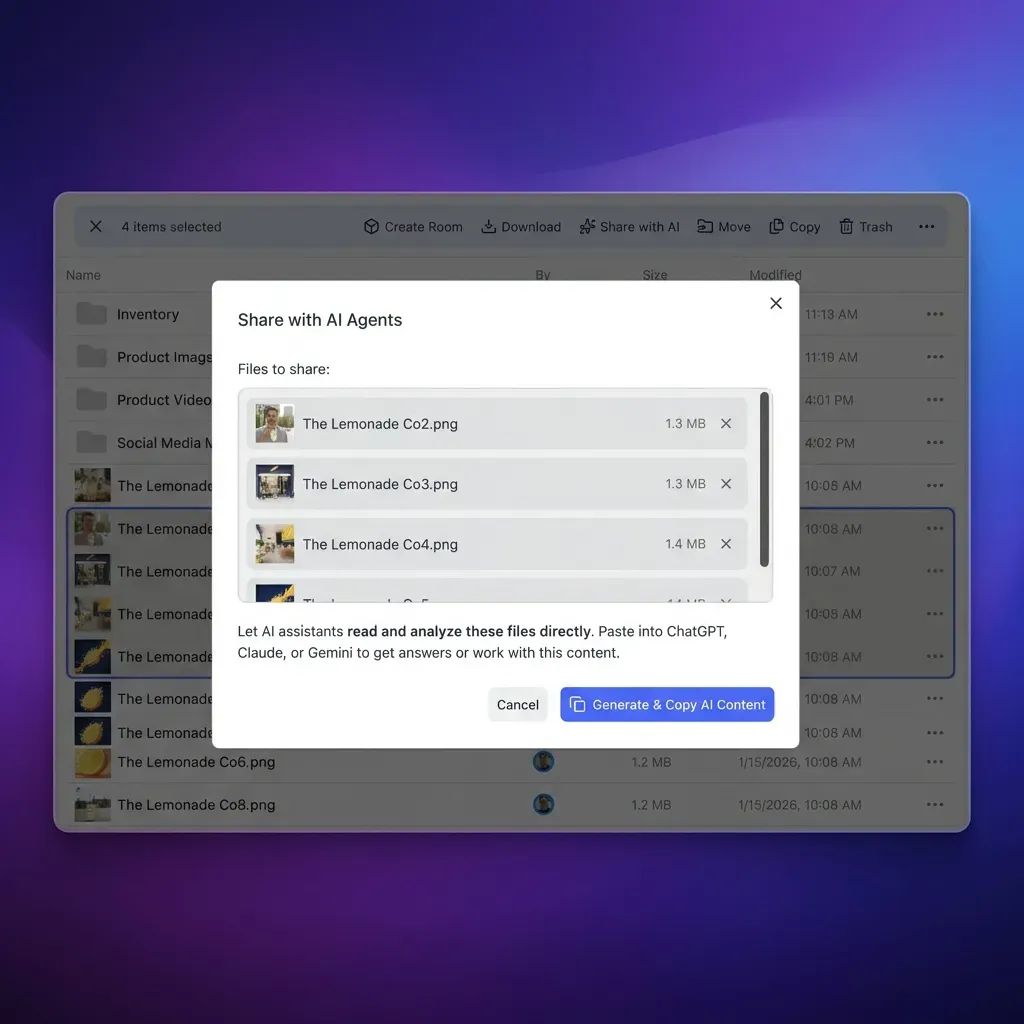
- multiple MCP tools can be cached in a single system prompt to provide immediate agent capability without re-processing overhead.
Best Practices for AI Agent Cache Strategy
Look at the lifecycle of your agent's data, not just the code. To get the most out of your setup, use a layered approach. Put your most universal instructions at the top (Layer 1). Put workspace-specific data next (Layer 2). Put session-specific data last (Layer 3). This lets you reuse Layer 1 across your entire user base. Layer 2 can be reused for every user in that specific workspace. Only Layer 3 will change.
Watch for the minimum token requirements. Most providers only enable caching for blocks above a minimum length. If your system prompt is shorter than that minimum, you will not see any benefit. In these cases, it is often better to bundle your prompts. Add more context or detailed examples to your system prompt until you cross that threshold.
Monitor your cache hit rates. If you see a low hit rate, it usually means your prefix is unstable. Check for dynamic data like timestamps, unique session IDs, or user names that might be at the top of your prompt. Moving a timestamp from the first line of a prompt to the last line can save thousands of dollars a month.
Finally, use external storage to keep your prompts clean. Fastio provides a workspace environment where agents store and retrieve files. By using the built-in RAG and Intelligence Mode, you can keep your prompts focused. Instead of putting an entire large file into a prompt, let the agent query the specific parts it needs. This reduces the total tokens sent and makes the tokens you do send easier to cache.
Sources
References used to verify factual claims in this guide.
-
Anthropic's prompt caching reduces costs by up to 90% for cached prefixes
-
Prompt caching can reduce latency by up to 85% for large prompts
Frequently Asked Questions
How much can I save with prompt caching?
You can save up to 90% on input token costs with Anthropic, and OpenAI also discounts cached input tokens. The exact amount depends on how much of your prompt remains static between requests. High-context agents that reuse large documents or complex tool descriptions see the greatest financial benefits.
Does prompt caching work with all LLM models?
Currently, prompt caching is primarily available for newer, high-context models like Anthropic's Claude Sonnet and Haiku models, as well as OpenAI's GPT-4o and o1 series. Older models or smaller open-source models may not support native API-level caching yet.
How long does a cached prompt last?
The Time-To-Live (TTL) varies by provider. Anthropic's cache lasts for 5 minutes by default and refreshes every time it is used. OpenAI's cache has a variable TTL that can last up to an hour during off-peak times. If a cache expires, the next request will be charged at the full input rate.
What is the minimum prompt size for caching?
Each provider sets a minimum prompt length for caching, and it varies by model. If your prompt is smaller than this, it will not be cached, and you will be charged the standard input token rate. This makes caching most effective for complex agents with large system prompts or background data.
Will prompt caching improve the response quality?
No, prompt caching does not change the model's output quality. It only affects the cost and speed of the pre-processing phase. The model's reasoning and generation capabilities remain the same whether the prompt was retrieved from a cache or processed from scratch.
Can I use multiple cache points in one prompt?
Anthropic allows up to four explicit cache breakpoints in a single request. This is useful for caching different layers of context, such as a general system prompt followed by a specific project document. OpenAI handles this automatically without requiring explicit breakpoints.
Related Resources

Give Your AI Agents Persistent Storage
Join thousands of developers using Fastio's intelligent workspaces to build faster, more affordable AI agents with generous storage and a consolidated MCP toolset during the trial. Built for agent prompt caching workflows.