What Is a Data Room? A Plain-English Guide for 2026
A data room is a secure space where confidential documents are stored and shared with authorized parties during business transactions. This guide covers what data rooms are, how physical rooms evolved into virtual ones, who uses them, and what to look for when choosing a provider.


What Is a Data Room?
A data room is a secure space, physical or virtual, where confidential documents are stored and shared with authorized parties during business transactions like mergers, acquisitions, fundraising, and legal proceedings. The defining feature is control: the data room operator decides who can access which documents, for how long, and what they can do with them.
The concept started with literal rooms. In the 1980s and 1990s, companies running M&A deals would rent conference rooms, fill them with filing cabinets, and invite potential buyers to review paper documents under supervision. Security guards controlled entry. Photocopying was restricted or banned. Analysts flew in from other cities and spent days reading contracts in windowless rooms.
Today, the vast majority of data rooms are virtual. A virtual data room (VDR) is an online platform that replicates the controlled-access model of a physical room but adds encryption, permission controls, audit trails, and remote access. The global VDR market was valued at roughly $3.4 billion in 2025 and is projected to reach over $17 billion by 2034, according to Fortune Business Insights. That growth tracks directly with the volume of M&A activity and the shift toward remote deal-making.
The core idea hasn't changed in four decades: give authorized people access to sensitive information, track everything they do with it, and revoke access when the deal ends.
Related guides
- Best Virtual Data Room Providers for Every Deal TypeChoosing a virtual data room provider depends on what kind of deal you are running. This guide breaks down the top VDR...
- Best Data Room Software for Secure Document SharingData room software provides secure, permission-controlled workspaces for sharing confidential documents during M&A,...
- How to Choose a White Label Data Room for Client-Facing DealsA white label data room lets advisory firms, investment banks, and service providers rebrand a virtual data room with...
- How to Set Up a Private Placement Data RoomA private placement data room is a secure virtual workspace where issuers share private placement memorandums,...
- How to Set Up a Data Room for Renewable Energy ProjectsRenewable energy transactions involve dozens of specialized documents that generic file-sharing tools weren't built to...
- Best Datasite Data Room Alternatives for 2026Datasite dominates enterprise M&A data rooms, but its per-page pricing model and opaque quoting process push many deal...
More on this subject: Data Rooms and Due Diligence (53 guides)
Physical vs. Virtual Data Rooms
Physical data rooms still exist, but they're rare. Here's how the two compare:
Physical data rooms require all parties to travel to one location, usually a law firm's office. Documents are printed and organized in binders. Access is controlled by sign-in sheets and security personnel. Reviewing thousands of pages takes days or weeks, and there's no way to search across documents electronically. If a deal involves parties in multiple countries, the logistics become expensive and slow.
Virtual data rooms host documents online behind encryption and permission controls. Users log in from anywhere, search across documents instantly, and work on their own schedule. The platform logs every action: who opened which file, how long they spent on it, whether they downloaded or printed anything. Administrators can adjust permissions or revoke access in seconds.
Why virtual won
- Speed: Document review that took weeks in a physical room takes days in a VDR
- Cost: No travel, no room rental, no printing. A VDR subscription costs a fraction of a physical room setup
- Scale: A physical room works for a dozen reviewers. A VDR supports hundreds of users across time zones
- Audit trails: Physical rooms rely on sign-in sheets. VDRs log every click, scroll, and download automatically
- Search: Finding a specific clause across 500 contracts takes minutes in a VDR and hours with paper
Over 90% of M&A transactions now use virtual data rooms. Physical rooms show up occasionally in highly sensitive government or defense contexts where air-gapped systems are required.
What Is a Data Room Used For?
Data rooms show up wherever sensitive documents need to be shared under controlled conditions. The common thread is that someone outside the organization needs temporary, tracked access to confidential information.
Mergers and acquisitions
This is the original use case and still the biggest. When a company is being acquired, the buyer's team needs to review financial statements, contracts, intellectual property filings, employee records, and regulatory documents. The seller loads everything into a data room and grants access to each buyer's due diligence team. If multiple buyers are bidding, each gets access to the same documents without seeing who else is looking.
Fundraising
Startups raising venture capital share pitch decks, financial models, cap tables, and legal documents through data rooms. A typical Series A fundraise involves sharing 40 to 80 documents with multiple investor groups simultaneously. The data room lets founders see which investors are actually reviewing materials and which are just kicking tires.
Legal proceedings
Litigation and regulatory investigations generate massive document sets. Law firms use data rooms to organize discovery materials, share evidence with opposing counsel under court orders, and manage privilege reviews. The audit trail proves chain of custody.
Real estate transactions
Commercial real estate deals involve property surveys, environmental reports, lease agreements, and financial records. Data rooms let buyers, sellers, lenders, and inspectors access the documents relevant to their role without exposing the full set to everyone.
Audits and compliance
External auditors reviewing a company's financials need access to invoices, bank statements, and internal controls documentation. A data room keeps everything organized and gives the audit firm exactly the access they need, nothing more.
Board and investor reporting
Public and private companies use data rooms as ongoing repositories for board materials, quarterly reports, and investor updates. The controlled access ensures that material non-public information stays within the authorized group.


Need a Secure Data Room for Your Next Deal?
Fastio gives you encrypted workspaces, granular permissions, full audit trails, and AI-powered document intelligence. Explore plans at /pricing/. Built for data room workflows.
Data Rooms vs. Cloud Storage
Google Drive, Dropbox, and OneDrive are great for everyday collaboration. They're not built for the controlled access that data rooms require. Here's where they differ:
Access control granularity. Cloud storage typically offers view, edit, or comment permissions at the file or folder level. Data rooms add document-level controls including view-only (no download), print restrictions, and the ability to revoke access to specific documents after they've been shared.
Audit trails. Cloud storage records basic activity like file opens and edits. Data rooms track granular behavior: time spent per page, scroll depth, download attempts (approved or blocked), and IP addresses. This level of detail matters when you need to prove who saw what during a deal.
Expiration and lifecycle. Cloud storage is designed for persistent access. Data rooms are designed around transactions with defined start and end dates. When a deal closes, you shut down the room and all access stops.
Dynamic watermarking. Most VDRs can overlay the viewer's name, email, and timestamp on every page they view or print. If a document leaks, you can trace it back to the source. Standard cloud storage doesn't offer this.
Q&A workflows. Data rooms include built-in question-and-answer features where buyers can ask questions about specific documents and sellers can respond within the platform, creating a documented record of all communications.
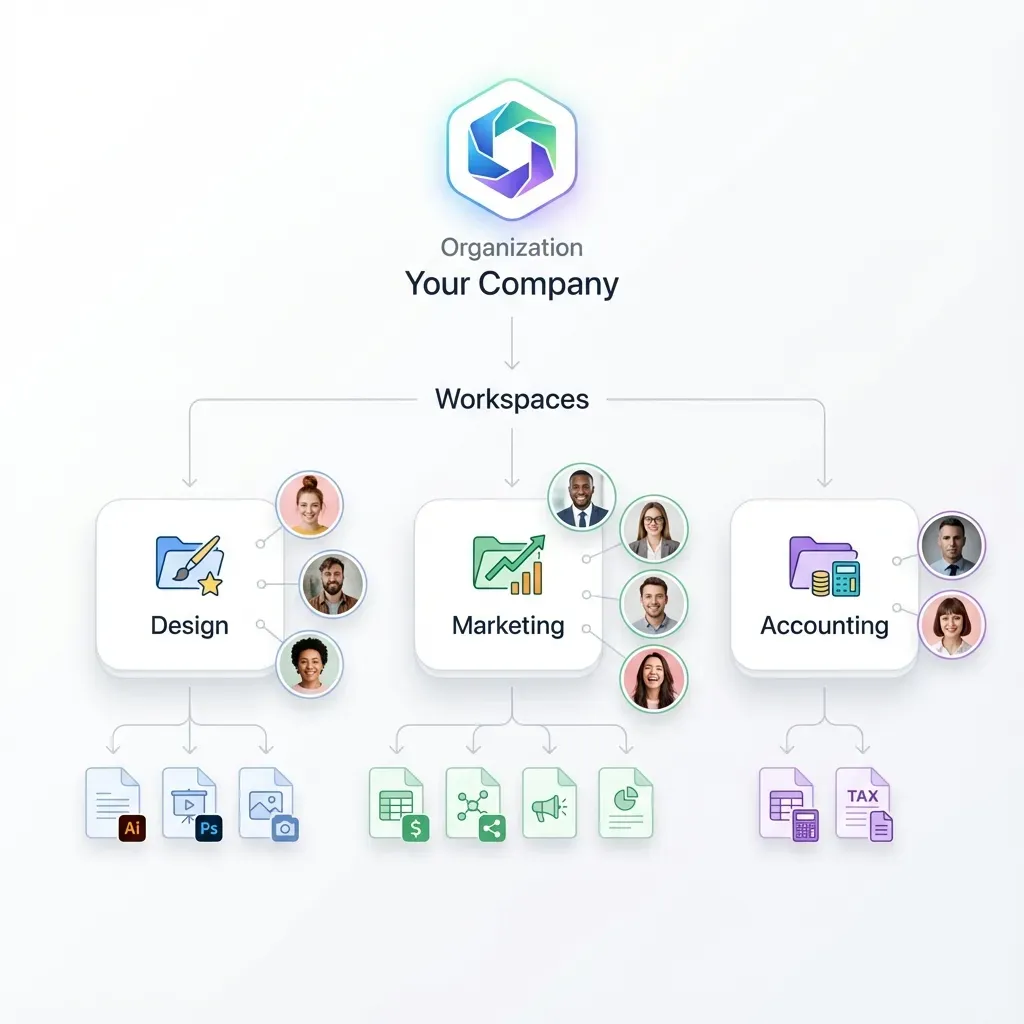
That said, the line is blurring. Platforms like Fastio combine cloud workspace features with data room capabilities: granular permissions at the organization, workspace, folder, and file level, full audit trails, branded shares with guest access and expiration, and password protection. For teams that need both everyday collaboration and deal-ready security, a platform that handles both can be simpler than maintaining separate systems.

Who Uses Data Rooms?
Data rooms aren't limited to Wall Street dealmakers. The users span industries and roles.
Investment bankers and M&A advisors set up data rooms for every deal they run. They organize documents into standardized folder structures, manage access for multiple bidder groups, and monitor engagement to gauge buyer interest.
Corporate development teams on the buy side spend hours inside data rooms reviewing target companies. They're looking for red flags in contracts, gaps in financial reporting, and risks that could affect valuation.
Venture capitalists and private equity firms review data rooms during due diligence for potential investments. They also use data rooms to share portfolio company reports with their own limited partners.
Lawyers are heavy data room users. M&A attorneys manage the sell-side data room. Litigation teams use data rooms for discovery. IP lawyers use them during licensing negotiations. Real estate attorneys use them for closing documents.
Startup founders set up data rooms when fundraising, often for the first time. The data room becomes a living document of the company's legal and financial health that gets updated with each funding round.
Auditors and compliance teams access data rooms to review financial records, internal controls, and regulatory filings. The audit trail in the data room serves double duty as evidence that the review was conducted properly.
Real estate professionals use data rooms for commercial property transactions, managing everything from environmental assessments to tenant lease agreements in a single controlled environment.
How to Choose a Data Room Provider
Not all data rooms are equal. Here's what to evaluate when choosing a provider.
Security fundamentals
Look for AES-256 encryption at rest, TLS 1.3 in transit, and two-factor authentication. These are table stakes. Beyond that, check for granular permission controls (can you restrict access at the individual document level?), dynamic watermarking, and the ability to disable downloads or printing for specific users.
Audit and reporting
Every serious data room tracks document views, but the depth varies. Good providers show time spent per page, failed access attempts, and export activity reports that you can share with legal counsel or regulators. Some platforms offer AI-powered activity summaries that condense weeks of activity into readable digests.
Search and organization
For large deals with thousands of documents, search quality matters. Look for full-text search across PDFs and scanned documents (OCR), saved search filters, and automatic indexing. Some modern platforms like Fastio include Intelligence Mode that auto-indexes documents for semantic search and AI-powered chat, so reviewers can ask questions about the document set and get answers with citations.
User experience
If the platform is difficult to navigate, reviewers will waste time and miss documents. Look for drag-and-drop uploads, bulk operations, inline document previews (no downloading required), and mobile access. The admin interface should make it easy to set up folder structures and manage permissions without calling support.
Pricing model
Data room pricing varies widely. Some providers charge per page, others per user, others per storage volume. Per-page pricing can get expensive fast for document-heavy deals. Per-user pricing penalizes you for involving more reviewers. Fastio offers a 14-day Business Trial (card required) followed by paid plans, which makes it practical to set up a data room without complex procurement cycles.
Integration and workflow
Consider how the data room fits into your existing tools. Can you pull files in from Google Drive, OneDrive, or Dropbox without downloading and re-uploading? Does the platform support webhooks or API access for automated workflows? If your team uses AI agents, check whether the platform offers MCP server access for programmatic document management.
Sources
References used to verify factual claims in this guide.
-
The global VDR market was valued at roughly $3.4 billion in 2025 and is projected to reach over $17 billion by 2034
-
Over 90% of M&A transactions now use virtual data rooms
Frequently Asked Questions
What is a data room used for?
A data room is used to securely store and share confidential documents during business transactions. The most common use cases are M&A due diligence, fundraising, legal proceedings, real estate transactions, audits, and board reporting. Any situation where external parties need temporary, controlled access to sensitive documents is a good fit for a data room.
What is the difference between a data room and cloud storage?
Cloud storage like Google Drive or Dropbox is built for everyday collaboration with basic sharing permissions. Data rooms add transaction-grade security features: granular document-level permissions, detailed audit trails that track time spent per page, dynamic watermarking, Q&A workflows, and the ability to revoke all access when a deal ends. The key difference is accountability. Data rooms create a documented record of exactly who accessed what and when.
Who uses data rooms?
Investment bankers, corporate development teams, venture capitalists, lawyers, startup founders, auditors, and real estate professionals all use data rooms regularly. Anyone involved in a transaction that requires sharing confidential documents with external parties, such as an M&A deal, fundraise, or legal proceeding, is a data room user.
How do you set up a data room?
Start by choosing a provider and creating an account. Then organize your documents into a logical folder structure, typically mirroring the categories that reviewers will need (financials, legal, IP, operations). Upload your documents, set permissions for each user group, and invite participants. Most providers offer templates for common deal types like M&A or fundraising that give you a starting folder structure.
Are data rooms secure?
Yes, reputable data room providers use AES-256 encryption at rest, TLS encryption in transit, two-factor authentication, and granular access controls. They also provide audit trails that log every user action. Security is the core value proposition of a data room. That said, security varies by provider, so evaluate encryption standards, permission granularity, and compliance certifications before committing.
How much does a virtual data room cost?
Pricing varies widely. Some providers charge per page (often $0.40 to $0.80 per page), others per user per month ($100 to $500+), and some use flat monthly rates based on storage or feature tier. Enterprise deals with dedicated VDR providers like Datasite or Intralinks can run $15,000 to $25,000+ per deal. Platforms like Fastio offer plans starting at $9.99/mo with a 14-day Business Trial, making it possible to start without enterprise procurement delays.
Related Resources

Need a Secure Data Room for Your Next Deal?
Fastio gives you encrypted workspaces, granular permissions, full audit trails, and AI-powered document intelligence. Explore plans at /pricing/. Built for data room workflows.