How to Choose a Virtual Data Room for Your Small Law Firm
Small law firms handle the same confidential deal work as large firms but rarely have the budget for enterprise VDR pricing. This guide compares virtual data room options that fit smaller practices, covers what features matter most for legal deal rooms, and walks through setting up a practical VDR using Fastio workspaces.


What Small Firms Actually Need From a VDR
Virtual data rooms started as tools for billion-dollar M&A transactions. The big providers, Intralinks, Datasite, and Firmex, built their platforms around enterprise deal teams with hundreds of users and dedicated project managers. That works when you bill $20,000 a month for a single deal. It does not work when you are a five-person firm closing 15 to 20 transactions a year at lower deal values.
Small law firms need a different set of tradeoffs. The core security requirements stay the same: encrypted storage, granular permissions, audit trails, and controlled sharing. But the delivery model has to change. You need transparent pricing instead of custom quotes. Fast setup instead of a week of onboarding. Self-service administration instead of calling a vendor to add a new user.
The typical small firm deal room scenario looks like this: you are handling a business sale, a real estate transaction, or a private placement. You need a secure space where the buyer's counsel can review documents, your client can upload financials, and everyone can see who accessed what. The deal runs 30 to 90 days. Then you close it down and start the next one.
That pattern, short-duration deals with a handful of users and moderate document volumes, means per-page pricing kills you. So does per-user pricing when you need to invite opposing counsel, clients, accountants, and a title company. The ideal VDR for a small firm charges a flat or predictable rate and lets you invite as many parties as the deal requires.
Helpful references: Fastio Workspaces, Fastio Collaboration, and Fastio AI.
Related guides
- Legal Data Rooms: Secure File Disclosures, Due Diligence, and AuditsA legal data room is a controlled, access-restricted repository used by attorneys and corporate counsel to share...
- How to Choose Secure Client Management Software for Your Law FirmClient management software in a law firm refers to the tools and portals used to securely communicate, exchange...
- Secure Workspace Infrastructure for Law Firm Virtual AssistantsAttorneys deploying a virtual assistant for law firms struggle to protect client confidentiality because consumer-grade...
- Lightweight eDiscovery for Small Law FirmsTraditional ediscovery software for small law firms is often too complex and expensive for boutique practices. This...
- Document Management Software for Small Law Firms: Simple Cloud SolutionsFor solo and boutique practices, managing case files and client records without a dedicated IT department can lead to...
- Law Firm Cloud Backup: Defensible Data Redundancy and Version ProtectionLaw firm cloud backup protects sensitive matter files, discovery archives, and client records against accidental...
More on this subject: Legal Teams (211 guides)
What to check before scaling virtual data room small law firms
The VDR market has dozens of providers, but most target enterprise buyers. Here are the options that make practical sense for firms under 20 attorneys.
SecureDocs offers flat-rate pricing on an annual plan, with options for shorter commitments (see vendor pricing). That includes unlimited users, unlimited documents, and 24/7 support. The tradeoff is simplicity: no AI features, no advanced Q&A workflows, and no e-signatures. For a straightforward deal room where you need secure document storage with access tracking, it handles the job at a price point small firms can absorb. A 14-day free trial lets you test it before committing.
Ideals targets mid-market firms with granular access controls, activity monitoring, and a clean interface. Pricing is not published, so you need to request a quote. The platform handles litigation, M&A, and corporate transactions well, but the sales-driven pricing model makes it harder to budget against.
Firmex has a strong reputation in legal circles for audit trails, customizable permissions, and ease of use. Like Ideals, pricing requires a conversation with sales. Firmex is widely used by firms that handle regular M&A work, but the lack of upfront pricing creates friction for solo practitioners who want to spin up a deal room quickly.
Google Drive or Dropbox technically work for document sharing, but they were not designed for deal room workflows. They lack deal-specific audit trails, cannot enforce view-only access without screenshots, and do not provide the granular permission layers that legal confidentiality requires. Using consumer cloud storage for client transactions is a liability risk that is hard to justify.
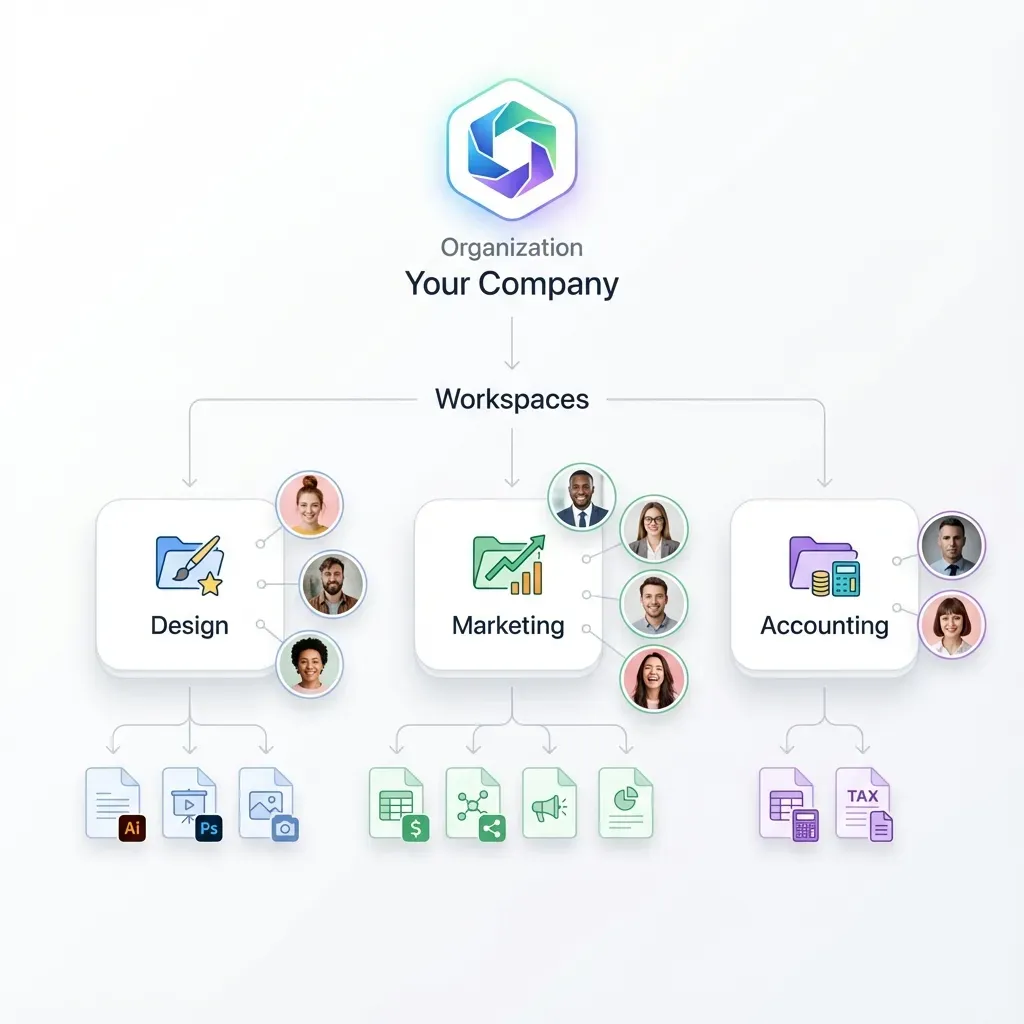
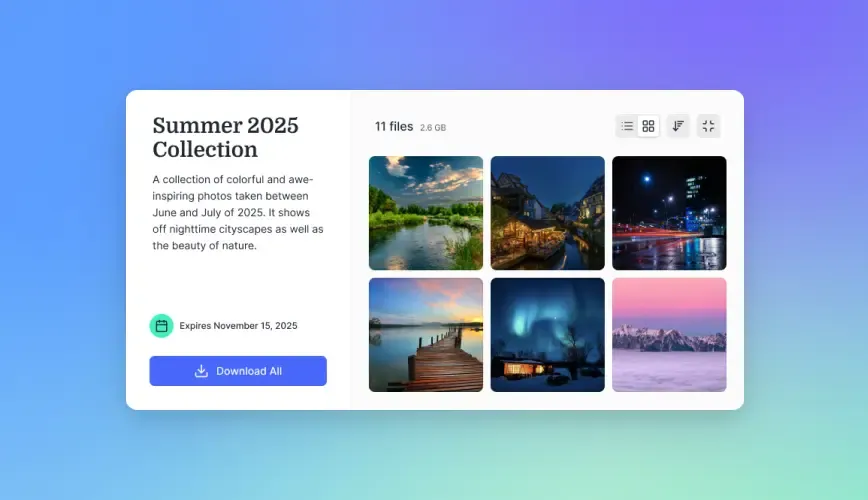
Fastio sits between enterprise VDR providers and generic cloud storage. Plans start with a 14-day Business Trial requiring a credit card, before Starter at $9.99/mo for 250 GB of storage and 3 seats. Each deal gets its own workspace with granular permissions at the folder and file level. Branded shares let you create client-facing portals with password protection and expiration dates. Once Intelligence is enabled for the workspace, semantic search and AI chat index documents with citations. Audit trails log every file access, download, and share interaction.


Set Up Your First Deal Room in 10 Minutes
Fastio provides workspaces with granular permissions, audit logs, and AI-powered document search. Explore plans at /pricing/. Built for small law firm workflows.
Security Features That Matter for Legal Deals
The American Bar Association reported that 29% of law firms experienced a security breach in the last 12 months. For small firms, the consequences hit harder. The average data breach cost for small firms and solo practitioners is around $36,000, enough to wipe out an entire quarter's revenue for a boutique practice. Nearly 40% of clients say they would fire or consider firing a firm after a breach.
When evaluating VDR security for legal work, focus on these specific capabilities.
Granular permissions beyond "view" and "edit." You need control at multiple levels. At the workspace level, opposing counsel sees only their deal room. Within that room, certain folders may be restricted until a specific phase of the transaction. Individual files might need separate access rules for draft versus final versions. Fastio supports permissions at the organization, workspace, folder, and file level, which maps directly to how law firms structure access in deal workflows.
Complete audit trails. Every login, file view, download, search query, and permission change should be logged with timestamps and user identification. This is not just good security practice. In litigation, you may need to demonstrate chain of custody. In regulatory matters, you may need to prove who had access to material non-public information and when. Fastio logs file operations, membership changes, AI activity, and share interactions through its event system.
Controlled sharing with expiration. When the deal closes, access should end. Branded shares with expiration dates and password protection let you give parties exactly the access window they need. Download controls prevent unauthorized copies of sensitive materials. These features separate deal room platforms from generic file sharing.
Two-factor authentication. Any platform handling confidential legal documents should require 2FA. This is baseline security that some cheaper VDR alternatives skip. Fastio supports 2FA for sign-in and sensitive operations like API key management.
One important note: most enterprise VDR providers advertise enterprise security standards and security requirements certifications. Fastio offers the security features listed above but does not currently hold compliance certifications. If your firm's insurance carrier or client agreements mandate certified infrastructure, factor that into your evaluation.

Setting Up a Deal Room on Fastio
Here is a practical walkthrough for creating a deal room that works for a typical small firm transaction.
Create the workspace. Sign up at fast.io/pricing and create a workspace named for the deal: "Johnson Acquisition 2026" or "Pine Street 1031 Exchange." Keep naming consistent across deals so you can find them later. The Starter plan provides 250 GB of storage and 3 seats, handling concurrent deals smoothly. For firms running larger transactions, upgrade to Business or Enterprise.
Build your folder structure. Legal deal rooms follow predictable patterns. Create top-level folders for each document category: Corporate Documents, Financial Statements, Contracts and Agreements, Real Property, Intellectual Property, Regulatory and Compliance, and Closing Documents. Within each, add subfolders as the deal requires. This structure lets you grant access to specific categories without exposing the entire room.
Upload documents. Drag and drop files into the appropriate folders. For large document sets, Fastio supports chunked uploads for files up to 100 GB on the Enterprise plan (25 GB on Starter, 50 GB on Business). If documents already live in Google Drive, OneDrive, Box, or Dropbox, use Cloud Import to pull them in directly without downloading to your local machine first.
Set permissions. Add your client, opposing counsel, and any third parties (accountants, title companies, consultants) with appropriate access levels. Give your client upload access to the Financial Statements folder so they can add documents directly. Give the buyer's counsel read-only access to everything except the Closing Documents folder, which stays locked until you are ready.
Create a branded share. For client-facing access, set up a branded share with your firm's name. Enable password protection and set an expiration date that matches the expected deal timeline. This gives clients a professional experience without needing a platform login.
Enable Intelligence Mode. Once documents are uploaded, enable Intelligence to index everything for semantic search. This lets you search across the entire deal room using natural language: "What are the indemnification caps across all vendor agreements?" or "Find any change of control provisions." Results come back with citations to specific documents and pages. This is particularly useful during due diligence when you are reviewing hundreds of documents across categories.
Monitor activity. Check audit trails regularly. You want to know when opposing counsel accesses the room, which documents they focus on, and whether anyone downloads materials outside the expected workflow. Monitor the realtime activity feed or connect to the WebSocket events feed to get notifications of key events.
VDR vs. Local Storage for Small Firms
Some small firms still run deals using a shared network drive or a folder on the managing partner's laptop. This approach creates real risks that VDRs eliminate.
Access control gaps. Local storage and basic network shares offer limited permission granularity. You can set folder-level read/write permissions, but you cannot track who viewed a specific document, prevent screenshots, or revoke access after a deal closes. With client confidentiality obligations and potential malpractice exposure, this lack of control is a liability.
No audit trail. If a dispute arises about who had access to a document and when, local storage gives you nothing. File modification timestamps can be altered. There is no log of who opened, viewed, or downloaded a file. VDRs maintain complete activity records that hold up to scrutiny.
Disaster vulnerability. A ransomware attack, hardware failure, or office disaster takes your local storage offline. Small firms are increasingly targeted by cyberattacks precisely because they often lack dedicated IT security staff. Cloud-based VDRs maintain redundant copies across data centers, and your deal room stays accessible even if your office does not.
Collaboration friction. Sharing documents from local storage means email attachments, USB drives, or FTP links. Each method creates copies that live outside your control. VDRs centralize documents in one location and control how parties interact with them.
Scaling problems. A shared drive works for one deal with three parties. It breaks down when you are running five deals simultaneously with different access requirements for each. VDRs let you create separate spaces for each matter with independent permissions, which is how legal work actually operates.
The cost argument against VDRs used to hold up when enterprise setups dominated the market. With flat-rate providers like SecureDocs and Fastio offering Starter plans at $9.99/mo with a 14-day Business Trial (card required), the economics have shifted. The cost of a breach, both financial and reputational, makes local storage the more expensive choice for most small firms.
Making Your VDR Work Long-Term
Setting up a deal room is the straightforward part. Making VDRs a sustainable part of your practice requires a few habits.
Template your structure. Create a standard folder template for each deal type your firm handles: M&A, real estate closings, private placements, corporate reorganizations. When a new deal starts, copy the template into a fresh workspace. This saves setup time and ensures consistency across matters.
Archive completed deals. When a deal closes, export a final copy of the audit trail for your records. Remove access for all external parties. Keep the workspace for the retention period your firm's policy requires, then delete it. Do not let old deal rooms accumulate and become security risks.
Train your team. The biggest obstacle to VDR adoption at small firms is not technology. It is workflow habits. Associates and paralegals who are used to emailing attachments need clear guidance on when and how to use the deal room instead. Make it the default, not an alternative.
Use AI search for due diligence. If your VDR supports it, semantic search changes how you handle due diligence reviews. Instead of reading every document linearly, start with targeted queries: "What are the termination provisions across all lease agreements?" or "Are there any outstanding litigation disclosures?" With Intelligence Mode enabled on Fastio, these queries run across your entire document set and return cited answers. This is especially valuable for solo practitioners who cannot delegate first-pass review to associates.
Review your costs quarterly. Track how many deals you ran, how much storage you used, and what you spent. Compare this against the value of having proper audit trails, controlled sharing, and searchable documents. For most small firms doing 15 to 20 deals per year, the per-deal cost of a VDR runs well under $500, a fraction of the risk exposure from handling deals on shared drives.
Small firms that build VDR workflows into their practice find that it becomes a competitive advantage. When a client asks how you protect their confidential documents during a transaction, showing them a branded deal room with audit trails and controlled access is a better answer than "we use Google Drive."
Sources
References used to verify factual claims in this guide.
-
29% of law firms experienced a security breach in the last 12 months
-
Average data breach cost for small firms and solo practitioners is around $36,000 Nearly 40% of clients would fire or consider firing a firm after a breach
-
SecureDocs charges $250 per month flat with unlimited users and documents
Frequently Asked Questions
What is the best virtual data room for a small law firm?
It depends on your deal volume and budget. SecureDocs offers simple flat-rate pricing with unlimited users. Fastio provides a 14-day Business Trial and Starter plans from $9.99/mo with AI-powered search once Intelligence is enabled, pairing document intelligence with deal room features. Firmex and Ideals offer more features but require custom pricing conversations.
How much does a virtual data room cost for a small firm?
Budget VDR options offer flat-rate tiers for providers like SecureDocs. Enterprise providers like Intralinks and Datasite can charge $1,000 or more depending on storage and user counts. Fastio offers Starter at $9.99/mo after a 14-day Business Trial (card required). Per-deal costs for a small firm typically range from $250 to $1,500 depending on deal duration and the provider you choose.
Is a VDR better than local storage for legal documents?
Yes, for transaction-related documents. VDRs provide audit trails, granular permissions, controlled sharing with expiration dates, and disaster recovery that local storage cannot match. The cost difference has narrowed with affordable, usage-based VDR options now available. The liability risk of handling confidential client documents on shared drives or email outweighs the cost of a proper deal room.
Can a solo lawyer use a virtual data room?
Solo practitioners often benefit most from VDRs because they handle all aspects of a deal without support staff. A VDR automates access control, document tracking, and client delivery that a solo lawyer would otherwise manage manually. Fastio's Starter plan at $9.99/mo or the flat-rate pricing on SecureDocs make deal rooms financially accessible for solo practices.
What features should a small firm VDR have?
At minimum, you need granular permissions at the folder and file level, complete audit trails, branded sharing with password protection and expiration dates, two-factor authentication, and support for common document formats. AI-powered search is increasingly valuable for due diligence work. Avoid providers that charge per user, as legal deals require inviting external parties.
How do I set up a deal room for a business acquisition?
Create a workspace dedicated to the deal, build folder categories for corporate documents, financials, contracts, regulatory filings, and closing documents. Upload files, then set permissions for each party. Give the buyer's counsel read-only access, give your client upload access to relevant folders, and create a branded share for professional delivery. Enable AI indexing if available for semantic search during due diligence review.
Related Resources

Set Up Your First Deal Room in 10 Minutes
Fastio provides workspaces with granular permissions, audit logs, and AI-powered document search. Explore plans at /pricing/. Built for small law firm workflows.