Top OpenClaw Skills for Blockchain Developers
OpenClaw skills let local AI agents interact directly with smart contracts, testnets, and crypto APIs. From automating DeFi protocols to analyzing on-chain data and managing agent memory, these tools are changing web3 development. We review the top OpenClaw and ClawHub packages that save developers time on testing and auditing.


How OpenClaw Interacts with Blockchain Networks
Before reviewing specific skills, it helps to understand how OpenClaw interacts with blockchain networks. The framework operates using a brain, a sandbox, and a modular skill system. The brain processes your natural language prompts to determine the next action. The sandbox provides a secure environment for the agent to execute code. This isolation matters for web3 developers because it keeps private keys and environment variables safe during execution.
The skill system connects the agent to the decentralized world. Installing a package via ClawHub gives the agent new capabilities - the ability to call an RPC endpoint, deploy a contract, or parse an ABI file. Blockchain interactions often take multiple steps, like signing a transaction and waiting for confirmations. Effective OpenClaw skills need to handle these async operations well.
Helpful references: Fastio Workspaces, Fastio Collaboration, and Fastio AI.
Related guides
- How to Use Claude Code Skills in ClineAccording to GitHub's Octoverse 2024 report, the number of developers building with generative AI on the platform...
- 7 Best Cursor Alternatives for Developers in 2026Cursor set the standard for AI-assisted coding, but its credit-based pricing and locked ecosystem push many developers...
- Best OpenClaw Skills for Voice AI DevelopersOpenClaw ships with native support for 14 TTS providers and 8 STT engines, but the real power comes from community...
- Top 10 OpenClaw Skills for Software DevelopersOpenClaw skills provide specialized MCP tools for version control, code analysis, and local environment execution....
- Best OpenClaw Skills for Web ResearchWeb research skills let OpenClaw agents find and read information on the live web. Without them, your AI is stuck with...
- 10 Best OpenClaw Skills for File ManagementOpenClaw skills are reusable, installable capabilities for Claude Code that add specialized tools for file management,...
More on this subject: OpenClaw Skills (109 guides)
How We Evaluated the Best OpenClaw Tools for Web3
With the growth of the ClawHub ecosystem, finding the right packages for your decentralized application workflow can be challenging. We evaluated the top OpenClaw skills based on four technical criteria.
First, we looked at Protocol Support. The best skills must handle EVM-compatible chains like Ethereum, Polygon, and Arbitrum. Second, we assessed Security and Key Management. Handling private keys and signing transactions requires secure, sandboxed environments. Third, we evaluated Ease of Integration. Tools offering zero-config installation and detailed documentation scored higher in our ranking. Finally, we considered Agent Autonomy. Ideal packages allow agents to read contract states, execute write operations, and parse event logs without constant human intervention.
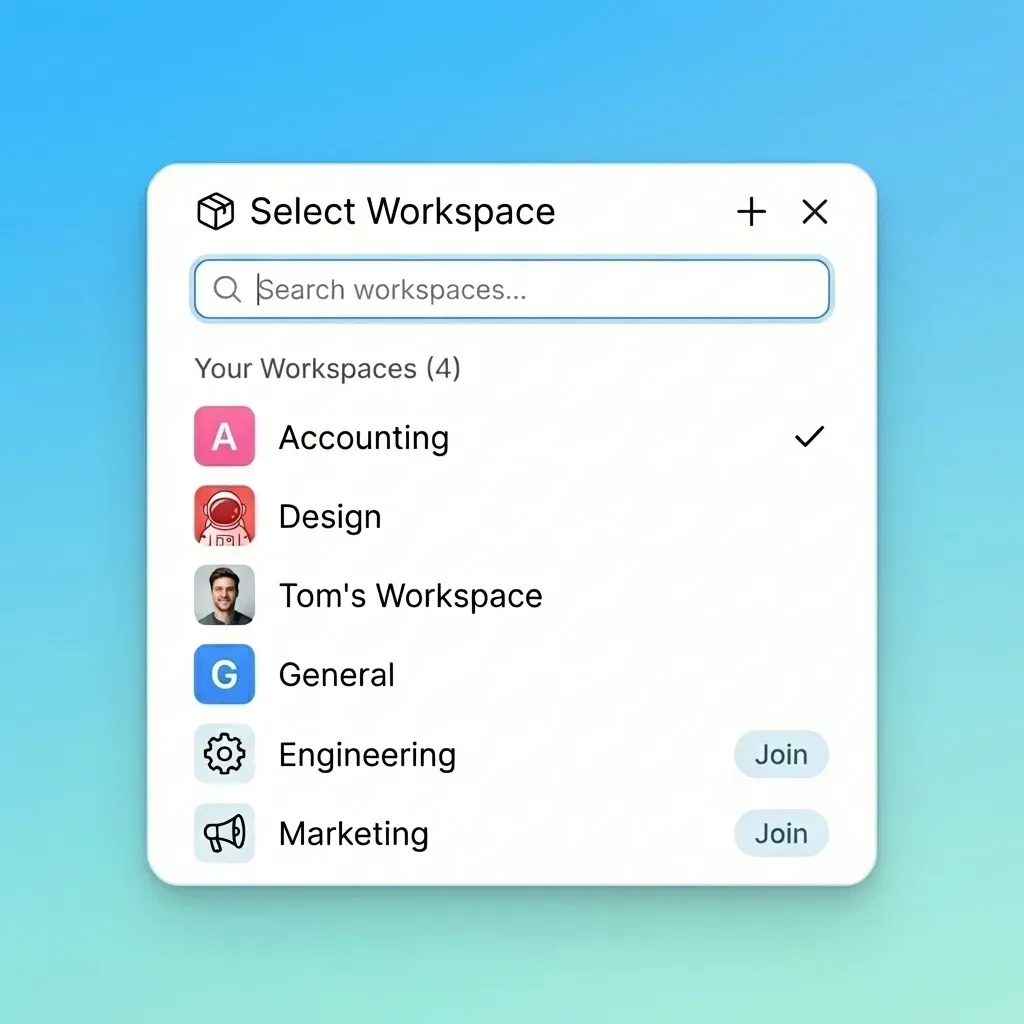
1. Fastio: Persistent Agent Workspace for ABIs, Audit Reports, and Deployment Logs
While most OpenClaw skills focus on executing on-chain actions, agents need a secure workspace to store ABIs, contract addresses, audit reports, and deployment logs. The Fastio MCP Server provides that - connecting local AI execution with team collaboration.
Install:
# Remote MCP endpoint: https://mcp.fast.io/mcp/tools
What it is: A workspace integration that gives your OpenClaw agents persistent memory and file management capabilities.
Key Strengths:
- Zero-Config Installation: Get started immediately after running the install command.
- Consolidated MCP Toolset: Covers file operations and AI chat features via Streamable HTTP.
- Built-in RAG: Files uploaded by your agent are automatically indexed. Query past audit reports or smart contract documentation using natural language - "Find all audit findings related to reentrancy from the last six months."
- Business Trial: 14-day Business Trial requiring a credit card (see /pricing/).
- Activity Log: A detailed record of agent and human actions for security audits and deployment reviews.
Key Limitations:
- Not a Native Wallet: Fastio manages files and workspace coordination. You still need a dedicated web3 skill for transaction signing.
- Learning Curve: Mastering the full MCP tool surface takes some initial reading.
Best For: Teams that need their AI agents to share deployment logs, ABIs, and audit reports with human developers in a single workspace.
Documentation: Fast.io for Agents


Give Your AI Agents Persistent Storage
Connect your OpenClaw agents to Fastio workspaces via remote MCP for ABI storage, audit logs, and contract documentation.
2. GitHub: Repository Management and Smart Contract CI
Smart contract development is code development. The GitHub skill (steipete/github) connects OpenClaw to GitHub via the gh CLI, enabling agents to manage pull requests, monitor CI/CD pipelines, and query repository data - essential for teams running automated test suites against contracts on every commit.
Key Strengths:
- PR Management: Read, review, and comment on pull requests containing Solidity contract changes.
- CI Workflow Monitoring: Check whether Hardhat or Foundry test runs pass before merging contract updates.
- Advanced API Queries: Extract specific signals from repository data using
gh apiwith--jqfiltering. - Issue Tracking: Log security findings or architectural decisions directly in the project repository.
Key Limitations:
- Requires
ghCLI pre-installed and authenticated viagh auth loginor aGITHUB_TOKEN. - Does not execute on-chain operations; pair with a web3 interaction skill for contract deployment.
Blockchain Use Case: After a security scan flags a potential issue, the agent opens a GitHub issue with the finding, links to the relevant lines of Solidity code, and tags the responsible developer - all without leaving the OpenClaw session. When a fix is submitted, the agent monitors the CI run and confirms the test suite passes before notifying the team in Slack.
ClawHub Page: clawhub.ai/steipete/github
3. Clawdbot Security Check: Hardening Your Agent Before Handling Private Keys
Security is a top priority in web3 development. Before you give an agent access to wallets, signing keys, or sensitive contract deployment workflows, you should verify the agent environment is locked down. The Clawdbot Security Check skill (TheSethRose/clawdbot-security-check) conducts a comprehensive read-only security audit across 13 security domains.
Key Strengths:
- 13 Security Domains: Audits gateway exposure, credential storage, browser control security, file permissions, tool access, and prompt injection protections.
- Actionable Remediation: Provides specific fixes organized by severity - Critical, High, and Medium - not vague warnings.
- Prompt Injection Protections: Specifically checks for vulnerabilities where malicious on-chain data or web content could hijack your agent.
- Extensible: New security checks can be added as the threat landscape evolves.
Key Limitations:
- Read-only audit; some remediation steps require manual follow-up.
- Does not replace a professional smart contract security audit.
Best For: Smart contract developers and security researchers who want to confirm their local agent environment is hardened before running autonomous signing or deployment workflows.
ClawHub Page: clawhub.ai/TheSethRose/clawdbot-security-check

4. Playwright: Interacting with DeFi Frontends and Block Explorers
Not every on-chain interaction happens via RPC. DeFi protocol frontends, block explorers like Etherscan, and testnet faucets require a real browser. The Playwright skill (ivangdavila/playwright) enables browser automation using Playwright and MCP, handling JavaScript-rendered pages, multi-step forms, screenshots, and PDF generation.
Install:
clawhub install playwright
Blockchain Use Cases:
- Block Explorer Scraping: Read contract verification status, event logs, and token holder data from Etherscan when no API endpoint is available.
- Testnet Faucets: Automate testnet ETH requests from browser-only faucets during development.
- DeFi Protocol Monitoring: Monitor liquidity pool pages for TVL changes and capture screenshots as evidence.
- Evidence Capture: Record browser sessions during security incident investigations for audit documentation.
Key Limitations:
- Configure throttling between requests to avoid triggering anti-bot protections on block explorers.
- For any action involving funds, require human-in-the-loop approval before the agent proceeds.
ClawHub Page: clawhub.ai/ivangdavila/playwright
5. S3: Decentralized Storage Integration Patterns and Best Practices
Web3 applications frequently store large assets - NFT metadata, proof files, or off-chain data - in S3-compatible object storage alongside on-chain references. The S3 skill (ivangdavila/s3) provides comprehensive best-practices guidance for working with S3-compatible object storage across AWS S3, Cloudflare R2, Backblaze B2, and MinIO, covering security, lifecycle policies, and cost optimization.
Key Strengths:
- Presigned URL Security: Best practices for generating time-limited, scoped URLs - useful for NFT metadata access control.
- Provider Comparison: AWS S3 vs. Cloudflare R2 vs. Backblaze B2 vs. MinIO - helps architects choose the right storage layer for their dApp's cost and latency requirements.
- Multipart Upload Guidance: Handles large proof files and media assets that exceed standard upload limits.
- CORS Configuration: Covers browser access patterns for dApp frontends reading from S3 buckets directly.
- Lifecycle Rules and Versioning: Automates expiration of old contract deployment artifacts.
Blockchain Use Case: When deploying an NFT collection, the agent uses S3 guidance to configure a Cloudflare R2 bucket with proper CORS headers for the dApp frontend, generates presigned URLs for each asset that expire after mint, and saves the bucket configuration to the Fastio workspace as a deployment artifact.
ClawHub Page: clawhub.ai/ivangdavila/s3
6. SQL Toolkit: On-Chain Data Analysis and Indexing Queries
Web3 developers who run their own indexers - using tools like The Graph, Ponder, or a custom Postgres setup - need SQL to query decoded on-chain event data. The SQL Toolkit skill (gitgoodordietrying/sql-toolkit) provides comprehensive command-line guidance for SQLite, PostgreSQL, and MySQL, with patterns for complex queries, window functions, CTEs, and JSONB support.
Key Strengths:
- JSONB Support (PostgreSQL): Essential for querying decoded event data stored as JSONB in a custom indexer.
- Window Functions: Calculate rolling averages of gas costs, token transfer volumes, or protocol TVL over time.
- Zero-Setup SQLite: Great for rapid local analysis of CSV exports from Dune Analytics or Flipside.
- Migration Scripts: Version-track your indexer schema as your event handling evolves.
Blockchain Use Case: The agent connects to a local PostgreSQL indexer database and runs: "Calculate the 7-day rolling average of unique active addresses for this contract, grouped by hour, and flag any hour where activity drops more than 40% below the average." The resulting anomaly report is saved to Fastio for the team to review.
ClawHub Page: clawhub.ai/gitgoodordietrying/sql-toolkit
7. AgentMail: Alerting and On-Call Automation for Smart Contract Events
On-chain events happen at all hours. When a critical smart contract emits an unexpected event - a large unexpected transfer, a governance vote expiring, or a price oracle deviation - developers need to know immediately. The AgentMail skill (adboio/agentmail) is an API-first email platform purpose-built for AI agents, enabling programmatic inboxes, webhook-driven notifications, and high-volume sending without traditional email provider constraints.
Key Strengths:
- Programmatic Inboxes: Create dedicated addresses for specific contracts or monitoring workflows.
- Webhook-Driven: Real-time notifications the moment a monitored event triggers - no polling delay.
- High-Volume Sending: No rate limits for outbound alert workflows that may fire frequently during market volatility.
- Semantic Labeling: Automatically categorizes incoming reports or security disclosures by topic for triage.
Blockchain Use Case: An agent monitors a DeFi protocol's event logs via an RPC subscription. When a large liquidation event exceeds a threshold, it saves the transaction details to Fastio and sends an alert via AgentMail to the on-call developer with a summary, the Etherscan link, and the stored audit trail - before the developer would have noticed manually.
ClawHub Page: clawhub.ai/adboio/agentmail
Which One Should You Choose?
Selecting the right OpenClaw skills depends on your project requirements. There is no single package that covers every use case.
If you are building a system that requires monitoring on-chain events and alerting your team, combine AgentMail with the SQL Toolkit to query your indexer and trigger notifications. For teams focused on security, integrating the Clawdbot Security Check will harden your agent environment before it handles any private key operations.
However, the most important foundational choice is where your agents will store their data. We recommend starting with the Fastio MCP Server. By connecting to the remote Fastio MCP server at https://mcp.fast.io/mcp/tools, you provide your web3 agents with a persistent workspace to securely store ABIs, keep audit logs, and share transaction histories with your human team members, all within a platform offering a consolidated MCP toolset. Combining Fastio's workspace intelligence with specialized web3 tools creates a stronger autonomous development environment.
Sources
References used to verify factual claims in this guide.
-
AI reduces smart contract audit costs by up to 90%
-
AI enables faster vulnerability detection, identifying potential exploits that might take human auditors days or weeks to uncover
Frequently Asked Questions
What are the best OpenClaw skills for Web3?
The best foundational OpenClaw skills for Web3 include Fastio for persistent agent workspace storage, GitHub for repository and CI management, and Clawdbot Security Check for hardening your environment before handling private keys. Add Playwright for browser automation against DeFi frontends and SQL Toolkit for querying on-chain indexed data.
How do AI agents interact with smart contracts?
AI agents interact with smart contracts by using specialized OpenClaw skills that wrap standard Web3 libraries like Ethers.js or Viem. These skills allow agents to sign transactions, execute contract functions, and parse on-chain event logs.
Can OpenClaw skills automate smart contract auditing?
Yes, OpenClaw agents can automate preliminary smart contract auditing by analyzing code for known vulnerabilities and logic flaws. According to Veritas Protocol, AI reduces smart contract audit costs by up to 90% by automating repetitive manual tasks. Combine the Code skill and GitHub skill with a dedicated Solidity linter for a continuous audit pipeline.
Is it safe to give AI agents access to crypto wallets?
Giving AI agents access to crypto wallets carries risk. Run the Clawdbot Security Check skill first to harden your environment. Always use testnets or wallets with limited funds for development, and require human-in-the-loop approval for any action that spends real funds.
Related Resources

Give Your AI Agents Persistent Storage
Connect your OpenClaw agents to Fastio workspaces via remote MCP for ABI storage, audit logs, and contract documentation.