Top 7 OpenClaw Skills for Architects
Architects spend nearly a third of their time on administrative tasks rather than design. By giving OpenClaw agents the right skills, you can automate CAD file management, speed up zoning research, and coordinate project communications. Here are the essential skills to build a helpful architectural AI assistant.

Why Architects Need OpenClaw Agents
Architecture uses more data every year. From gigabyte-sized Revit models to complex zoning codes and endless contractor emails, the administrative load is heavy. OpenClaw gives you a local, secure AI agent framework that runs on your machine and uses "skills" to interact with your real-world tools.
Unlike generic chatbots, an OpenClaw agent with the right skills can actually do work. It can open files, read PDFs, send emails, and organize your project folders. For architects, this means reclaiming hours of design time every week.
We tested the ecosystem to find the most useful skills for architectural workflows. Here are the top skills you should install today.
Helpful references: Fastio Workspaces, Fastio Collaboration, and Fastio AI.
Related guides
- How to Use Claude Code Skills in ClineAccording to GitHub's Octoverse 2024 report, the number of developers building with generative AI on the platform...
- How to Install and Manage Cline Agent SkillsAI coding agents boost code volume by 180%, but shipped code rises by only 30%, showing a critical gap in development...
- Top OpenClaw Skills for AI Floor Plan and Layout GenerationArchitecture firms using AI generative tools report a 73% reduction in design iteration time, but most AI floor plan...
- Best OpenClaw Skills for Web ResearchWeb research skills let OpenClaw agents find and read information on the live web. Without them, your AI is stuck with...
- Top 7 OpenClaw Skills for Growth HackersThese top OpenClaw skills help growth hackers automate experimentation and analytics. They scale campaigns faster. Real...
- How to Automate Infrastructure: Top OpenClaw Skills for Network EngineersNetwork automation used to require writing complex Python scripts or wrestling with Ansible playbooks. Today, OpenClaw...
More on this subject: OpenClaw Skills (109 guides)
1. Fastio - File Storage and Project Archives
Best For: Managing massive CAD, BIM, and visualization files without local storage limits.
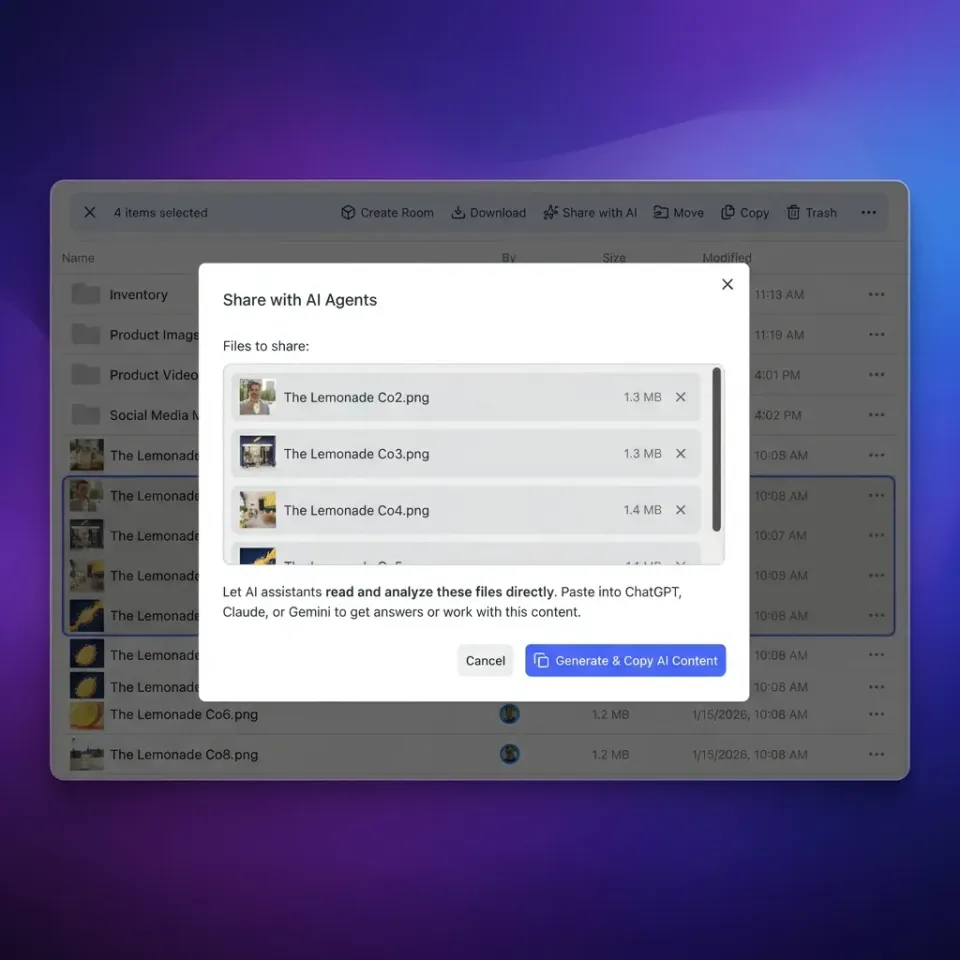
The single biggest problem for AI in architecture is file size. Most LLMs fail on large files, and local agents struggle with limited disk space. Fastio fixes this by giving your agent a dedicated cloud workspace connected to a consolidated MCP toolset.
What it does:
- Stores large project files: Agents can upload and retrieve files as large as 100 GB each on the Enterprise plan (25 GB on Starter, 50 GB on Business), with 250 GB to 25 TB of storage depending on plan.
- Indexes architectural data: Once Intelligence is enabled, it automatically indexes PDFs, specifications, and project docs so your agent can search them by meaning ("Find the structural specs for the cantilever").
- Handles heavy formats: Works with binary files like
.dwg,.rvt, and high-res renders that usually break other tools. - Ownership transfer: Agents can hand off completed project archives to human team members.
Why it matters for architects: You can tell your agent to "Archive all renderings from last week to the 'Client Presentation' folder" or "Find the zoning report in the project drive." It works directly with your existing file structure.
Best For: CAD/BIM file management, project archives, and document search.
MCP Endpoint: https://mcp.fast.io/mcp/tools
Documentation: Fast.io for Agents
Pricing: Starter ($9.99/mo), Business ($49.99/mo), Enterprise ($199.99/mo) with a 14-day Business Trial on monthly plans (requires a credit card; see /pricing/).


Equip Your Architect Agent
Connect OpenClaw agents to Fastio workspaces via remote MCP for CAD and BIM file management. Built for architectural workflows.
2. Agent Browser - Zoning and Code Research
Best For: Automating zoning code checks and material sourcing.
Zoning codes are dense, local, and change often. Agent Browser is a fast Rust-based headless browser CLI that lets your agent navigate municipal websites, download zoning maps, and check requirements in real-time with full browser control.
Key Capabilities:
- Site analysis: Ask your agent to "Find the setback requirements for R-2 zoning in Austin, TX" and it will browse the official city code to retrieve the exact text.
- Material research: Search for suppliers and compile contact lists from manufacturer websites.
- Screenshot capture: Export PDFs of code pages for project documentation.
- Form interaction: Fill and submit permit inquiry forms on municipal portals.
Best For: Zoning research, permit prep, and supplier sourcing.
Install Command: npm install -g agent-browser && agent-browser install
ClawHub Page: clawhub.ai/TheSethRose/agent-browser
Pricing: Free.
3. Filesystem Management - Local Project Organization
Best For: Automating repetitive file organization and data processing on local drives.
Architecture firms often maintain large NAS drives with complex folder structures. The Filesystem Management skill gives your OpenClaw agent advanced local file operations - smart listing, pattern-based search, and batch processing.
Architectural Use Cases:
- Batch renaming: "Rename all drawings in this folder to follow the 'YYMMDD-Project-Sheet' convention."
- Directory analysis: Visualize folder structures and identify large files consuming storage.
- Batch copying: Move deliverables to client folders with dry-run preview before execution.
Best For: Organizing project drives and automating deliverable prep.
Install Command: clawdhub install filesystem
ClawHub Page: clawhub.ai/gtrusler/clawdbot-filesystem
Pricing: Free.
4. Brave Search - Quick Research Without a Browser
Best For: Fast background research on materials, codes, and suppliers.
Brave Search gives OpenClaw agents lightweight web search and content extraction without launching a full browser. For architects, this means faster lookups without the overhead of spinning up Agent Browser for simple queries.
How to use it:
- Code lookups: Search for specific IBC sections, ASHRAE standards, or local amendments.
- Material sourcing: Find manufacturer data sheets and spec sheets for materials under consideration.
- Content extraction: Pull full page content from supplier or code websites in markdown format.
Best For: Quick research queries during design without full browser overhead.
Install Command: npm ci (from skill directory)
ClawHub Page: clawhub.ai/steipete/brave-search
Pricing: Free.
5. AgentMail - Contractor Coordination
Best For: Managing RFIs, submittals, and meeting coordination.
Construction administration involves a flood of emails. AgentMail gives your OpenClaw agent its own email address, letting it act as a project coordinator with programmatic inboxes and real-time webhooks.
Workflow Automation:
- RFI routing: Configure the agent to monitor for emails containing "RFI" and automatically file them in the correct project folder on Fastio.
- Meeting scheduling: Let the agent handle the back-and-forth of finding a time for the weekly site meeting.
- Status updates: It can draft weekly progress emails based on the files added to the project folder that week.
Best For: RFI management, contractor coordination, and project status updates.
Install Command: pip install agentmail python-dotenv
ClawHub Page: clawhub.ai/adboio/agentmail
Pricing: Usage-based.
6. Gog - Google Workspace Integration
Best For: Firms running Gmail, Drive, Calendar, and Sheets for project management.
Many architecture firms use Google Workspace as their backbone. Gog is a Google Workspace CLI skill that gives OpenClaw agents direct access to Gmail, Calendar, Drive, Sheets, and Docs through a unified command-line interface.
Real-world application:
- Search Gmail for contractor threads and summarize open items.
- Pull project schedules from Google Sheets and flag milestone gaps.
- Export specification documents from Google Docs into PDF for submission.
- Search Drive for the latest revision of any drawing set.
Best For: Firms using Google Workspace for project administration.
Install Command: brew install steipete/tap/gogcli
ClawHub Page: clawhub.ai/steipete/gog
Pricing: Free.
7. S3 - Project Archive Storage
Best For: Long-term archiving of completed project files to cloud object storage.
For firms hosting completed project archives on AWS S3, Cloudflare R2, or Backblaze B2, the S3 skill provides instruction-level best practices for access control, versioning, lifecycle policies, and presigned URL generation.
Note: This is an instruction-only skill that teaches your agent the right patterns for S3-compatible storage - useful when combined with Python or shell automation.
- Configure lifecycle rules to automatically transition old renders to cheaper storage tiers.
- Generate presigned URLs for secure client access to project files without exposing buckets.
- Enable versioning on active project buckets before any deletion occurs.
Best For: Studios archiving project files to cloud object storage.
ClawHub Page: clawhub.ai/ivangdavila/s3
Pricing: Free (instruction-only).
Summary of Top Skills
Here is how these skills stack up for architectural workflows:
Which OpenClaw Skills Should You Install First?
If you are new to OpenClaw, start with the Agent Browser skill and connect Fastio via remote MCP.
The Agent Browser skill gives your agent immediate utility for research, while Fastio provides the essential "long-term memory" and storage capacity your agent needs to handle professional project files. Once you are ready, add AgentMail and Gog to start automating complex workflows.
Ready to build your architectural agent? Start by giving your agent a workspace. Connect to Fastio via remote MCP to get scalable storage and a consolidated MCP toolset for file management.
Sources
References used to verify factual claims in this guide.
-
Architectural firms typically maintain approximately 34% overhead time for administrative tasks
-
Automated MEP BIM checks reduce rework costs by 40%
Frequently Asked Questions
Can OpenClaw agents edit Revit files directly?
No, OpenClaw agents cannot currently open the Revit GUI to edit models directly. However, they can manage Revit files (move, rename, version, share) using Fastio via remote MCP, and they can use the Filesystem Management skill to batch-organize local project folders.
Is OpenClaw secure for client projects?
Yes, because OpenClaw runs locally on your machine, your data doesn't leave your control unless you specifically connect a cloud workspace like Fastio. When using Fastio, files are encrypted in transit and at rest, with strong security controls suitable for professional practice.
How do I connect OpenClaw to Fastio?
Connect OpenClaw to Fastio's remote MCP server at https://mcp.fast.io/mcp/tools; your config can send an API key as a Bearer header. This connects your agent directly to a consolidated MCP toolset for file management and persistent storage.
Related Resources

Equip Your Architect Agent
Connect OpenClaw agents to Fastio workspaces via remote MCP for CAD and BIM file management. Built for architectural workflows.