Top OpenClaw Integrations for Machine Learning Teams
Machine learning integrations in OpenClaw connect agents directly to model registries, training clusters, and evaluation tools. OpenClaw MLOps tools help teams build automated workflows. This guide ranks the top integrations based on OpenClaw compatibility, ML features, ease of setup, and pricing. You will find options for model sharing, experiment tracking, and persistent storage.

How We Evaluated These OpenClaw Integrations
We selected integrations based on several factors important to machine learning teams using OpenClaw. First, compatibility with OpenClaw via ClawHub skills or MCP servers tops the list. Second, specific ML capabilities like model versioning, experiment tracking, and dataset management matter most. Third, setup ease counts for quick agent deployment. We also considered pricing, community support, and production scalability. Each tool appears in ClawHub or supports MCP for smooth OpenClaw use.
Helpful references: Fastio Workspaces, Fastio Collaboration, and Fastio AI.

Related guides
- Devin AI Local: Running Devin Agents on Your MachineAccording to the official Devin Desktop documentation, the Devin Local agent framework achieves up to 30% greater token...
- Top Integrations for Microsoft Copilot StudioMicrosoft Copilot Studio lets businesses build custom AI agents, but its real power comes from connecting to external...
- How to Automate Finance Reporting with OpenClaw IntegrationsManual financial reporting is slow and error-prone. OpenClaw integrations for finance simplify reporting and...
- Top OpenClaw Integrations for Remote TeamsOpenClaw integrations for remote teams allow autonomous agents to operate directly within shared Slack channels, Notion...
- Top 8 OpenClaw Integrations for Creative AgenciesCreative agencies choose OpenClaw integrations to speed up client handoffs and file deliveries. These tools handle...
- Top 8 OpenClaw Integrations for Voice Agents and Conversational AIClawHub lists 46 speech and transcription skills for OpenClaw, but no existing guide ranks them by what matters most:...
More on this subject: OpenClaw Workflows and Integrations (69 guides)
Comparing Real ClawHub Skills for ML Teams
Use this table to compare key aspects at a glance.
1. Fastio - ML Artifact Storage and Team Collaboration
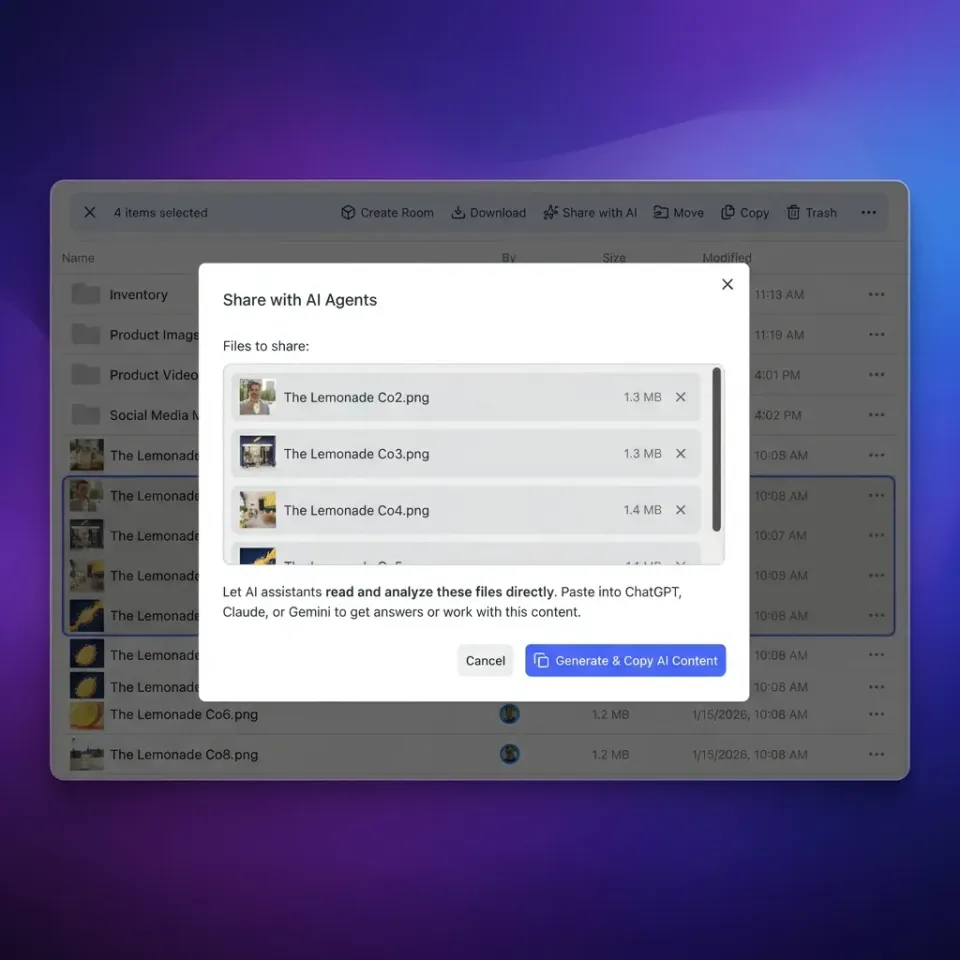
Fastio provides a consolidated MCP toolset via remote MCP for OpenClaw ML agents. Store datasets, trained models, evaluation results, and experiment artifacts in intelligent workspaces with built-in RAG once Intelligence is enabled. Connect directly at https://mcp.fast.io/mcp/tools.
Key strengths:
- Consolidated toolset covering upload, download, search, share, RAG chat, and file locking.
- 14-day Business Trial with usage-based credits.
- Intelligence Mode indexes artifacts semantically: query "find the best checkpoint from the March run" in natural language.
- Advisory file locks and version history help coordinate writes when multiple agents access shared model directories.
- Ownership transfer hands off complete workspaces (including datasets) to clients or collaborators.
Limitations:
- Focused on storage and collaboration - pair with SQL Toolkit or GitHub for training pipeline management.
- Usage-based credits apply across plans.
Best for ML artifact persistence, dataset sharing, and team-wide model access.
Pricing: 14-day Business Trial; Starter from $9.99/mo.
Documentation: fast.io/storage-for-agents/



Power Your ML Agents with OpenClaw Integrations
Equip your agents with persistent workspaces and a consolidated MCP toolset. Build, store, and collaborate on ML artifacts seamlessly.
2. SQL Toolkit - Query Datasets and Experiment Logs
SQL Toolkit gives OpenClaw agents direct database access for SQLite, PostgreSQL, and MySQL without an ORM. ML teams use it to query evaluation result tables, log experiment metrics to a local SQLite database, and run complex aggregations over training run histories.
Key strengths:
- Supports schema design, JOINs, CTEs, window functions, and index optimization.
- Migration scripting keeps experiment databases versioned alongside model code.
- Query performance analysis surfaces slow queries in large evaluation datasets.
Limitations:
- Instructional skill - requires your own database instance and credentials.
- No visual dashboard; output is raw query results.
Best for teams tracking experiment metrics in SQL databases rather than proprietary platforms.
Pricing: Free (MIT-0).
ClawHub Page: clawhub.ai/gitgoodordietrying/sql-toolkit
3. S3 - Large Dataset and Model Artifact Storage
The S3 ClawHub skill provides OpenClaw agents with guidance on S3-compatible object storage patterns essential for ML: multipart uploads for large model checkpoints, lifecycle rules for archiving old training runs, presigned URLs for sharing evaluation datasets securely, and cost optimization across AWS S3, Cloudflare R2, Backblaze B2, and MinIO.
Key strengths:
- Multipart upload patterns for multi-gigabyte model checkpoints.
- Lifecycle rules automate archival of completed experiment runs.
- Presigned URL generation for time-limited access to datasets shared with collaborators.
- Provider comparison helps teams optimize storage costs at scale.
Limitations:
- Instructional skill - requires your own S3-compatible provider and credentials.
- Does not execute operations; agents use it as a reference for correct API patterns.
Best for teams managing large-scale dataset or checkpoint storage outside Fastio.
Pricing: Free skill (MIT-0); storage costs vary by provider.
ClawHub Page: clawhub.ai/ivangdavila/s3
4. GitHub - Model Versioning and CI/CD for Training Pipelines
The GitHub ClawHub skill uses the gh CLI to give OpenClaw agents access to pull requests, CI workflow runs, issues, and advanced API queries. ML teams use it to version training scripts, monitor automated training CI jobs, and summarize experiment-related PRs.
Key strengths:
- Monitor CI run status for automated training or evaluation pipelines.
- List open issues and PRs for experiment tracking and reproducibility discussions.
- Advanced
gh apiqueries with JSON filtering for custom pipeline integrations.
Limitations:
- Requires
ghCLI installed and authenticated. Granting agents write access to model repos needs careful scoping.
Best for pipeline engineers versioning training scripts and automation tools.
Pricing: Free skill (MIT-0); requires GitHub account.
ClawHub Page: clawhub.ai/steipete/github
5. Docker Essentials - Reproducible Training Environments
Docker Essentials gives OpenClaw agents the commands and workflows needed to manage containers for ML training: building images with specific CUDA versions, running GPU-enabled containers, inspecting logs from training jobs, and using Docker Compose for multi-service setups (e.g., training + inference + monitoring).
Key strengths:
- Container lifecycle management: run, stop, restart, and remove training jobs.
- Debugging workflows: exec into running containers, stream logs, check resource stats.
- Docker Compose patterns for multi-container ML stacks.
Limitations:
- Requires Docker CLI installed on the host. Instruction-only skill - agents use it as a reference.
Best for teams building reproducible training environments and multi-container ML stacks.
Pricing: Free (MIT-0).
ClawHub Page: clawhub.ai/skills/docker-essentials
6. Playwright - Scrape Benchmarks and Research Papers
Playwright gives OpenClaw agents a full browser automation framework for navigating JavaScript-rendered pages. ML teams use it to scrape benchmark leaderboards, extract evaluation results from research sites, automate form submissions to hosted model APIs, and capture screenshots of results dashboards.
Key strengths:
- Handles dynamic single-page apps that static scrapers cannot parse.
- Extracts structured data from rendered tables and charts on benchmark sites.
- Supports trace and log inspection for debugging complex multi-step data extraction.
Limitations:
- Requires Node.js and npx. Resource-intensive for continuous scraping at scale.
Best for one-time or scheduled benchmark data collection and research paper extraction.
Pricing: Free (MIT-0).
ClawHub Page: clawhub.ai/ivangdavila/playwright
7. API Gateway - Connect OpenClaw to 100+ ML SaaS Platforms
API Gateway is a passthrough proxy that gives OpenClaw agents OAuth-managed access to over 100 SaaS platforms including Google Workspace, GitHub, Notion, Slack, Airtable, and HubSpot. ML teams use it to push experiment summaries to Notion, trigger Slack alerts on training completion, or log results to Airtable - all without building custom OAuth integrations.
Key strengths:
- Manages OAuth connections for 100+ services behind a single
MATON_API_KEY. - Supports all HTTP methods (GET, POST, PUT, PATCH, DELETE) for full API access.
- Multiple connection support allows one agent to interact with several services in a single workflow.
Limitations:
- Requires a Maton API key. Connection management adds a third-party dependency.
Best for teams needing to push ML results to a variety of SaaS platforms without custom OAuth code.
Pricing: Free skill (MIT-0); Maton service pricing applies.
ClawHub Page: clawhub.ai/byungkyu/api-gateway
Which OpenClaw Integration Fits Your ML Team?
Start with Fastio for artifact storage and team access - it covers the persistent memory most ML agents lack out of the box. Add SQL Toolkit to query experiment metrics, and GitHub to version training scripts and monitor CI pipelines. Teams managing large checkpoints or datasets benefit from the S3 skill for lifecycle and delivery patterns. Docker Essentials keeps training environments reproducible. Playwright handles benchmark scraping. API Gateway connects agents to any downstream SaaS tool without custom OAuth work.
Consider your primary bottleneck first. Most ML teams start with storage (Fastio) and version control (GitHub), then layer in the rest based on workflow needs.
Frequently Asked Questions
What ClawHub skills are available for machine learning teams?
Real ClawHub skills for ML teams include Fastio (artifact storage and RAG), SQL Toolkit (querying experiment databases), S3 (large model/dataset storage), GitHub (pipeline versioning and CI monitoring), Docker Essentials (reproducible training environments), Playwright (benchmark scraping), and API Gateway (connecting to 100+ SaaS platforms).
How do OpenClaw agents store ML artifacts persistently?
Connect to Fastio via remote MCP at https://mcp.fast.io/mcp/tools. The 14-day Business Trial provides usage-based credits. Agents can upload checkpoints, datasets, and evaluation results, then search them semantically once Intelligence is enabled.
Can OpenClaw agents query experiment databases?
Yes, using the SQL Toolkit skill (`clawhub install gitgoodordietrying/sql-toolkit`). It supports SQLite, PostgreSQL, and MySQL - no ORM required. Teams use it to query training run logs, compare metrics across experiments, and generate migration scripts.
How do agents manage Docker containers for training jobs?
The Docker Essentials skill provides agents with container lifecycle commands, debugging workflows (exec, logs, stats), and Docker Compose patterns for multi-service ML stacks. Install via `clawhub install skills/docker-essentials`.
How does Fastio integrate with OpenClaw for ML workflows?
Connect OpenClaw to Fastio at https://mcp.fast.io/mcp/tools. Agents gain a consolidated MCP toolset covering file upload/download, semantic search via Intelligence Mode once enabled, advisory file locks for concurrent writes, version history, activity feeds, and workspace ownership transfer for handing off datasets to collaborators.
Related Resources

Power Your ML Agents with OpenClaw Integrations
Equip your agents with persistent workspaces and a consolidated MCP toolset. Build, store, and collaborate on ML artifacts seamlessly.