How to Set Up a Secure Document Portal for Your Title Company
Title companies handle some of the most sensitive documents in any real estate transaction, from wire instructions to closing disclosures. A secure document portal replaces email and FTP with controlled access, audit trails, and branded client experiences that reduce fraud risk and close deals faster.


Why Title Companies Need a Dedicated Document Portal
A title company document portal is a secure platform where title and escrow companies share closing documents, title commitments, and wire instructions with buyers, sellers, lenders, and real estate agents.
Most title companies still rely on email to send closing documents. That creates real problems. The FBI's Internet Crime Complaint Center reported that real estate fraud caused more than $275 million in losses across over 12,000 victims in 2025 alone. Business email compromise is the primary attack vector, and title companies sit at the center of every wire transfer.
Beyond fraud risk, email creates operational headaches. Documents get buried in inboxes, version confusion leads to signing errors, and there is no reliable way to confirm who accessed what. When a closing falls apart, reconstructing the paper trail from scattered email threads wastes hours that title officers do not have.
A document portal solves these problems by giving every transaction participant a single place to access current documents, with permissions controlling who sees what and an audit log recording every action.
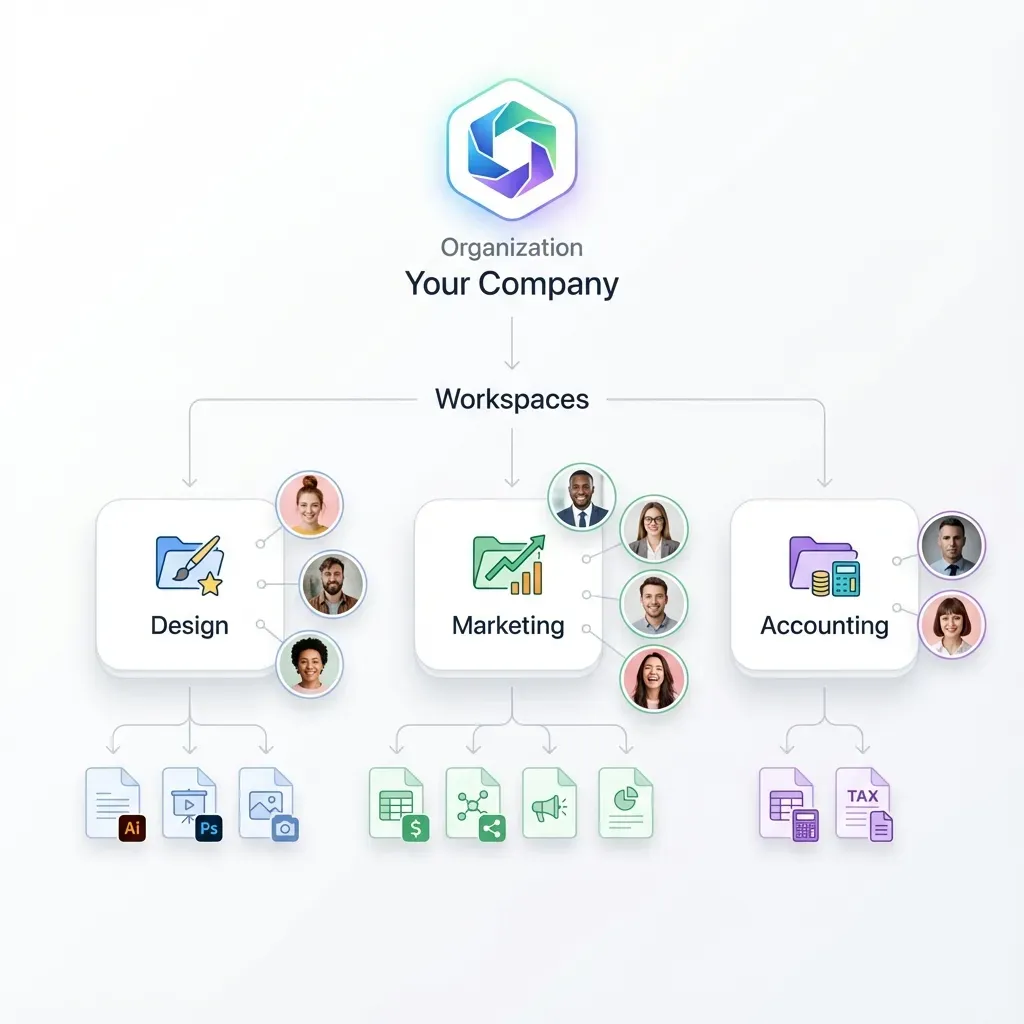
Helpful references: Fastio Workspaces, Fastio Collaboration, and Fastio AI.
Related guides
- Real Estate Document Management Guide for AgentsReal estate document management is the systematic organization, storage, and sharing of property transaction documents...
- How to Set Up a Real Estate Data Room for Due DiligenceCommercial real estate transactions generate hundreds of documents that multiple parties need to review under tight...
- How to Set Up a Real Estate Client Portal for Document SharingA real estate client portal is a secure, branded online workspace where agents share transaction documents,...
- 8 Best Real Estate Transaction Coordinator Software Tools for Document ManagementGuide to real estate transaction coordinator software: Transaction coordinators juggle 40+ documents per deal across a...
- How to Run Commercial Property Due Diligence with a Secure Data RoomCommercial property due diligence involves reviewing 50 to 100+ documents across financial, legal, environmental, and...
- How to Create and Share Real Estate 3D Tours That Actually Drive ShowingsA real estate 3D tour is an interactive, navigable digital model of a property that lets prospective buyers explore...
More on this subject: Real Estate (21 guides)
Documents Every Title Company Portal Should Manage
A well-structured title company portal organizes the full document lifecycle for each transaction. Here are the core document types it should handle:
- Title commitment and preliminary title report
- Closing disclosure (CD) for buyer and seller
- Deed and transfer documents
- Wire instructions with verified sender identity
- Survey and plat maps
- Title insurance policies
- Recording confirmations from the county recorder
- Payoff statements from existing lenders
- Government-issued IDs for identity verification
- Power of attorney documents when applicable
Each document type has different sensitivity levels. Wire instructions demand the highest security since they contain bank routing numbers that attackers target directly. Recording confirmations and surveys are less sensitive but still need controlled distribution. Your portal should let you set permissions at the document level, not just the folder level, so a buyer's agent can access the closing disclosure without seeing the seller's payoff statement.
Organizing documents by transaction rather than by client or date makes retrieval straightforward. When an underwriter calls about a specific closing, your staff should find every related document in one place within seconds.
How Document Portals Prevent Wire Fraud
Wire fraud in real estate follows a predictable pattern. An attacker compromises or spoofs an email address belonging to the title company, lender, or agent. They send modified wire instructions to the buyer, who transfers funds to the attacker's account. By the time anyone notices, the money is gone.
Research from Pinpoint Field Services found that roughly 70% of title companies examined had either no email spoofing protection or had DMARC configured to monitor without blocking. That means most title companies are one convincing email away from a wire fraud incident.
A document portal breaks this attack chain in several ways:
Wire instructions never travel through email. Instead of attaching a PDF to an email, you upload wire instructions to the portal. The buyer accesses them through an authenticated link. There is no email to intercept or spoof.
Access requires authentication. Portal users verify their identity before viewing documents. Password protection, auto-expiring access links, and guest access controls prevent unauthorized viewing.
Every access is logged. When someone views or downloads wire instructions, the portal records who, when, and from what IP address. If something goes wrong, you have a complete audit trail for your errors and omissions insurer.
Watermarking and download controls. Some portals let you apply visible watermarks to sensitive documents and restrict downloads entirely, limiting access to view-only mode.
These layers do not make fraud impossible, but they eliminate the easiest attack path and create a documented chain of custody that protects your company in disputes.


Protect Your Closings with a Secure Document Portal
Set up a branded client portal for your title company with granular permissions, audit trails, and AI-powered document search on a 14-day Business Trial. Built for title company workflows.
Choosing the Right Portal Platform
Title companies have several options for document portals, each with different tradeoffs.
Industry-specific platforms like Qualia, CloseSimple, and ClosingLock are built for title and escrow workflows. Qualia offers a full production suite with integrated closing portals. ClosingLock focuses specifically on wire fraud prevention with secure document delivery. CloseSimple provides client-facing portals with transaction tracking. These tools works alongside title production software and understand industry-specific workflows.
The downside is cost and lock-in. Industry platforms charge per-closing or monthly fees that add up quickly for high-volume shops. Switching platforms means migrating years of transaction history.
General-purpose secure sharing platforms like Fastio, ShareFile, and Egnyte offer document portals without title-specific features. The advantage is flexibility. Fastio, for example, provides branded content portals with granular permissions, audit trails, and an embedded AI assistant called Ripley that can answer questions about uploaded documents. You set your own folder structure, permission model, and branding rather than working within a title-specific template.
Fastio offers a 14-day Business Trial, card required (see /pricing/), which makes it practical to test a portal workflow before committing budget. The platform supports guest access without requiring clients to create accounts, auto-expiring access links for time-limited sharing, and password-protected portals with custom logos and colors.
DIY approaches using Google Drive, Dropbox, or OneDrive shared folders are common but risky. Consumer cloud storage was not designed for regulated document exchange. You get basic sharing but no audit trails, no branded experience, no document-level permissions, and no protection against accidental sharing with the wrong party.
The right choice depends on your volume and workflow. A five-person shop closing 30 transactions a month has different needs than a multi-state operation processing thousands.
Setting Up a Title Company Portal Step by Step
Here is a practical setup process you can follow regardless of which platform you choose.
1. Define Your Folder Structure
Create a template that mirrors your closing workflow. A common structure looks like this:
- Pre-Closing: title commitment, preliminary report, survey, payoff demands
- Closing Documents: closing disclosure, deed, settlement statement, wire instructions
- Post-Closing: recording confirmations, final title policy, disbursement ledger
Duplicate this template for each new transaction. Consistent structure means your staff never has to guess where to upload a document, and clients always know where to look.
2. Set Permission Levels
Not every party needs access to every document. Map out who sees what:
- Buyers: closing disclosure (buyer side), deed, wire instructions, final policy
- Sellers: closing disclosure (seller side), payoff confirmation, net proceeds worksheet
- Lender: full document set minus seller financials
- Real estate agents: closing disclosure for their client, commission disbursement
- Underwriter: title commitment, exception documents, endorsements
On platforms with folder-level and file-level permissions like Fastio, you can set this once in your template and inherit it for new transactions.
3. Configure Branding and Client Experience
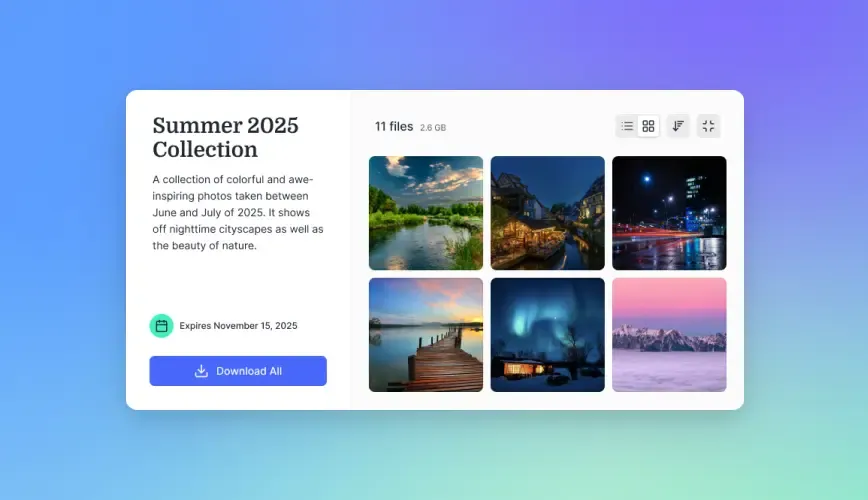
Your portal is a client touchpoint. Add your company logo, brand colors, and a professional background image. First impressions matter, especially when you are asking clients to trust your portal with sensitive financial documents instead of the email they are used.
4. Establish Document Naming Conventions
Standardize file names so documents are immediately identifiable. A pattern like [Transaction ID] - [Document Type] - [Date] works well. For example: 2026-0419-Smith - Closing Disclosure - 2026-04-19.pdf. This prevents the "Final_v2_REAL_FINAL.pdf" problem that plagues email-based workflows.
5. Train Your Team and Clients
The biggest barrier to portal adoption is habit. Your closers are used to attaching documents to emails. Your clients have never logged into a portal before. Create a one-page guide for clients explaining how to access their documents, and build portal uploads into your closers' daily workflow until it becomes automatic.

Measuring Portal Success and Common Pitfalls
After launching your portal, track a few metrics to confirm it is working.
Client adoption rate tells you whether clients actually use the portal instead of calling to request documents by email. Aim for 70% or higher within the first quarter. If adoption is low, the problem is usually the client onboarding experience, not the technology. Make the access link prominent in your initial communication, and include clear instructions.
Document access time measures how quickly clients view critical documents after you upload them. Faster access means fewer follow-up calls and fewer closing delays. Portal analytics, available on platforms like Fastio, show you exactly when each document was first opened.
Support ticket volume should decrease as clients self-serve through the portal instead of calling your office. Track calls related to "where is my document" and "can you resend that" before and after portal launch.
Pitfalls to Avoid
Treating the portal as a dump folder. Upload documents in a logical structure with clear names. A portal full of cryptically named files is no better than a cluttered email thread.
Forgetting post-closing documents. Many companies use the portal actively during closing but forget to upload recording confirmations and final policies afterward. Complete the document set so clients have a permanent record.
Skipping the audit trail review. Your portal's audit log is only valuable if someone checks it. Review access logs periodically, especially for wire instruction views. Unusual access patterns, like a document being viewed from an unfamiliar location, deserve investigation.
Ignoring mobile access. Buyers and sellers review documents on their phones. Test your portal on mobile devices and make sure documents render correctly without requiring a desktop.
When agents and AI assistants can build and populate portals programmatically, the setup process gets even faster. Once Intelligence is enabled for the workspace, files are indexed and searchable, so clients can ask Ripley questions like "What is my closing date?" or "What is the title commitment exception on the easement?" and get answers with citations to the source document.
Sources
References used to verify factual claims in this guide.
-
Real estate fraud caused more than $275 million in losses across over 12,000 victims in 2025
-
Roughly 70% of title companies had either no email spoofing protection or had DMARC configured to monitor without blocking
Frequently Asked Questions
How do title companies share closing documents?
Most title companies still share closing documents through email attachments, though this exposes wire instructions and financial documents to interception. Secure document portals provide a safer alternative by hosting documents behind authenticated access links with audit trails, eliminating the need to send sensitive files through email.
What is the best portal for title companies?
It depends on your needs. Industry-specific platforms like Qualia and ClosingLock works alongside title production software and include wire fraud prevention features. General-purpose platforms like Fastio offer more flexibility with branded portals, granular permissions, and AI-powered document search at lower cost. Small shops may start with a general platform and graduate to industry-specific tools as volume grows.
How do you prevent wire fraud in real estate closings?
The most effective prevention is removing wire instructions from email entirely. Use a secure portal where buyers access wire details through authenticated links. Verify wire changes by phone using a known number, not one from an email. Enable email authentication (DMARC with enforcement) on your domain, and train staff to recognize business email compromise attempts.
What documents are included in a title closing package?
A complete title closing package typically includes the title commitment, preliminary title report, closing disclosure for buyer and seller, deed, settlement statement, wire instructions, survey or plat map, title insurance policy, payoff statements, and recording confirmations. Some transactions also require powers of attorney, trust documents, or entity resolutions.
Do clients need an account to access a title company document portal?
Not necessarily. Many platforms, including Fastio, support guest access through password-protected links that expire after a set period. Clients click a link, enter a password, and view their documents without creating an account. This lowers the barrier to adoption while still maintaining access controls and audit logging.
How long should title companies retain closing documents in a portal?
Retention requirements vary by state, but most title companies retain closing documents for at least seven years. Some states require longer retention for title insurance policies. A cloud-based portal with sufficient storage makes long-term retention practical without consuming physical office space or local server capacity.
Related Resources

Protect Your Closings with a Secure Document Portal
Set up a branded client portal for your title company with granular permissions, audit trails, and AI-powered document search on a 14-day Business Trial. Built for title company workflows.