How to Set Up Supply Chain File Collaboration in Manufacturing
Supply chain file collaboration in manufacturing involves sharing documents with suppliers, vendors, and teams to speed up procurement and meet compliance standards. Poor file handling causes delays and errors, with more than 75% of enterprise supply chains facing multiple disruptions. This guide covers setup steps, tools, and workflows to create reliable systems.


What Is Supply Chain File Collaboration in Manufacturing?
Supply chain file collaboration in manufacturing is the process of sharing technical drawings, specs, quality reports, and contracts with suppliers and partners through a central platform. It replaces email chains and FTP servers with secure, version-controlled access.
This matters because manufacturing relies on precise documentation. A single version mismatch can halt production lines or cause defects. Platforms track changes, set permissions, and log access to keep everyone aligned.
For example, an auto parts maker shares CAD files with a supplier. The platform shows edit history and version status, avoiding rework.
Helpful references: Fastio Workspaces, Fastio Collaboration, and Fastio AI.
Related guides
- How to Manage BOM Files in Manufacturing: Best PracticesManaging BOM files in manufacturing keeps bills of materials organized for accurate procurement and assembly. Errors...
- How to Build Supplier Portals for Manufacturing File ExchangeManufacturing supplier portals let companies securely share CAD drawings, BOMs, quality docs, and specs for...
- How to Share Production Workflow Files in ManufacturingProduction workflow file sharing in manufacturing gives planners, operators, and inspectors the latest CAD drawings,...
- How to Collaborate on Industrial Design Files for Manufacturing TeamsIndustrial design file collaboration manufacturing bridges creative ideation and manufacturable prototypes through...
- How to Compare Manufacturing DFM Collaboration ToolsManufacturing DFM collaboration tools enable design and production teams to share CAD files, add targeted feedback, and...
- How to Set Up Shop Floor Document Sharing for Manufacturing EfficiencyPaper-based work instructions slow down production lines, cause version confusion, and make it hard to track who read...
More on this subject: Manufacturing (15 guides)
Common Challenges in Manufacturing Supply Chain Docs
Most manufacturers still use email for vendor file reviews. Attachments get lost, versions confuse teams, and security risks grow with each forward.
FTP sites lack real-time updates and mobile access. Suppliers struggle to find files amid cluttered folders.
According to Gartner, more than 75% of enterprise supply chains will experience three or more disruptions by 2025. File mishandling contributes to these issues by slowing reviews and introducing errors.
Pick one vendor relationship and one document type to start. Share a sample CAD file or BOM through the new system, confirm the supplier can view and comment, and check that the access log captures their activity. This takes an afternoon and surfaces permission gaps before you're managing dozens of vendors.



Simplify Your Manufacturing Supply Chain Files
Set up secure collaboration portals with unlimited vendors and full audit trails. 14-day Business Trial available. Built for supply chain file collaboration manufacturing workflows.
Step-by-Step: Setting Up a Supply Chain Collaboration Portal
Here's how to get a supply chain collaboration portal running for a manufacturing environment. Four steps covers the core setup: platform selection, file organization, roles and notifications, and end-to-end testing before rollout.
1. Select a platform with granular permissions and vendor-friendly features. Prioritize tools that offer unlimited guest access without per-user costs, branded portals for professional appearance, and organization-owned files. Granular permissions at folder and file levels allow precise control. Suppliers get view-only access to their specs. while internal teams can edit. Fastio provides guest access integration, and full audit trails for compliance and traceability.
Evaluate platforms for mobile access. Field engineers often review files on shop floors. Test preview support for CAD files (.STEP.DWG), PDFs. and Excel BOMs to avoid download friction.
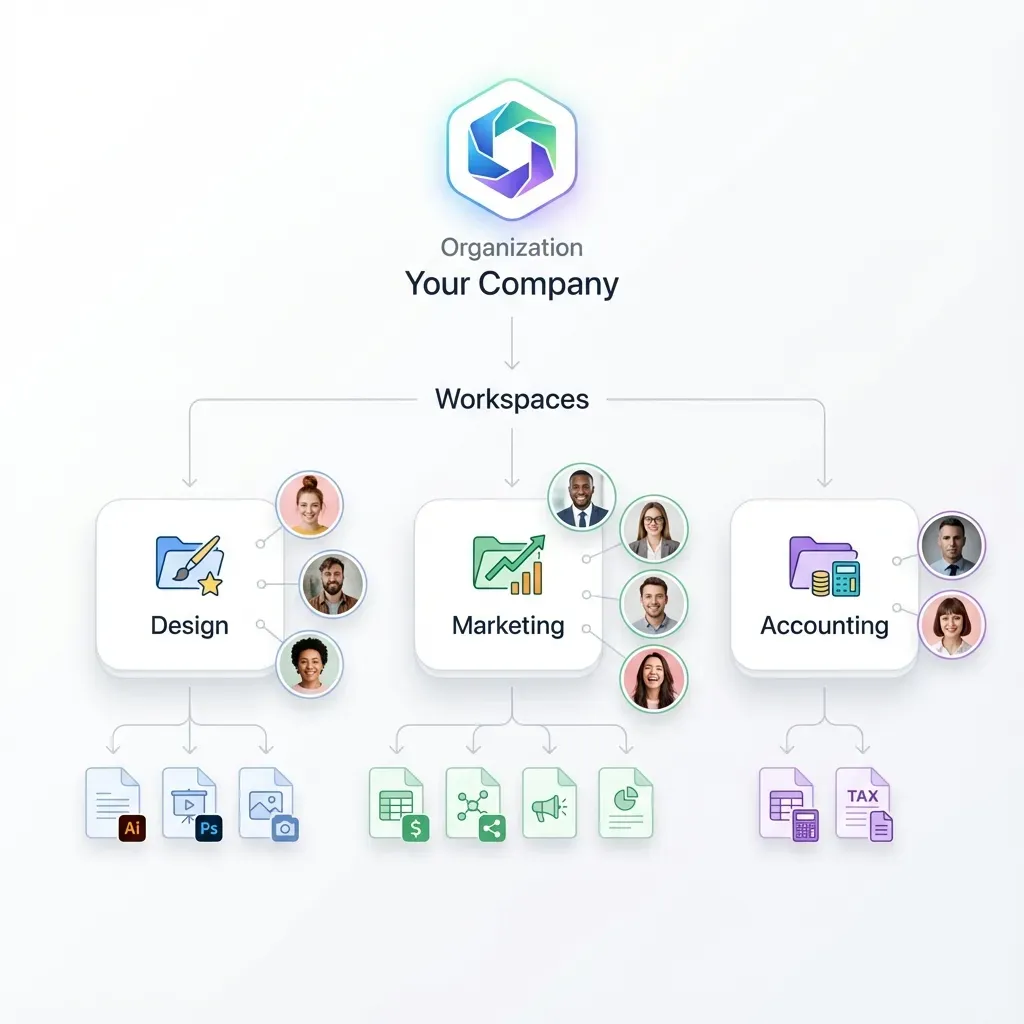
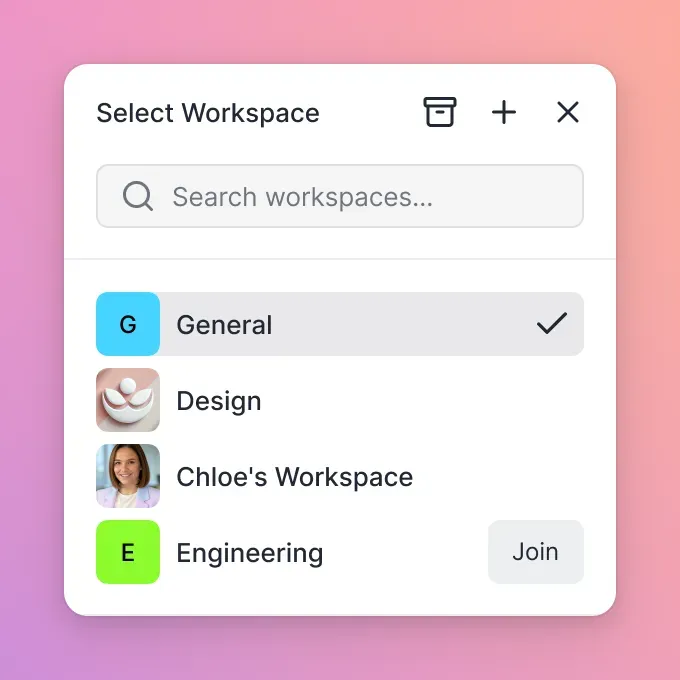
2. Organize files hierarchically by supplier tier, project phase, and document type. Create dedicated workspaces for each major vendor or product line to isolate data. Within workspaces, structure folders as: /specs/raw-materials, /quality-reports/incoming-inspection. /releases/final-spec, /BOM/current-revision. Use tags like "urgent" or "Q1-2026" for quick filtering. Set automatic retention rules to archive old versions after review.
This organization mirrors PLM systems. It eases adoption and reduces search time.
3. Configure workflows, roles, and notifications. Define role-based access: "viewer" for suppliers who only need specs, "commenter" for suppliers who give feedback on reports, "editor" for quality engineers. "admin" for procurement leads. Enable real-time notifications for uploads. comments, @mentions, and status updates. Coordinate handoffs where files move to a release folder after sign-off.
Integrate via the realtime activity feed or WebSocket events feed to notify ERP systems of document updates. This triggers purchase orders or production schedules as teams release revisions.
4. Test end-to-end access, workflows, and reporting. Share a sample CAD file and BOM with test vendor accounts. Verify login via branded portal, permission enforcement (no unauthorized downloads), comment functionality, and mobile preview. Review audit logs for timestamps, IP addresses, actions (view/download/comment), and export for compliance records. Run a mock review cycle: upload → notify → comment → approve → activity feed update.
Iterate based on vendor feedback, then roll out to production. Initial setup is a one-time effort. Ongoing maintenance is minimal.
Platforms like Fastio reduce review cycles from days to hours. This helps avoid supply disruptions with faster procurement and quality checks.
Works alongside Existing Tools
Link to ERP systems or PLM software via APIs. Platforms like Fastio provide a realtime activity feed and WebSocket events feed for updates on file events.
Best Practices for Vendor File Review in Manufacturing
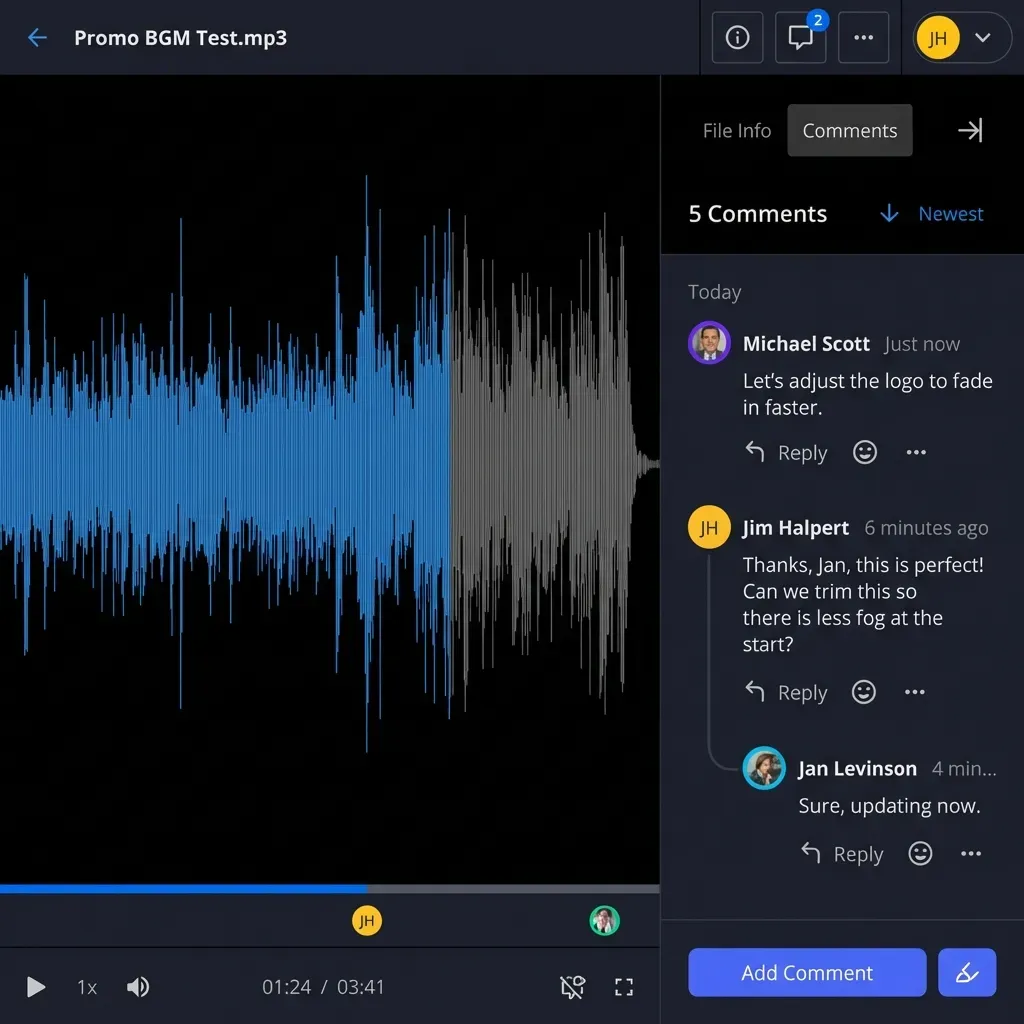
Pin comments directly to the file: to the CAD revision, the specific test data point, the BOM line item. Feedback attached to the exact thing being questioned cuts the back-and-forth significantly. A supplier who can see the pinned note on the drawing doesn't need to ask which dimension you're talking about. Enable automatic versioning and review files before suppliers see them. Suppliers should only ever see the latest released version. With clear folder permissions, drafts with unresolved issues never reach the shop floor. "Which version?" is a question that shouldn't need to be asked. Run monthly log reviews. Platform activity logs capture views, downloads, edits, and comments with IP data and timestamps. Export to CSV for ISO audits or regulatory submissions. This is the kind of thing that's easy to set up and easy to skip until an audit happens. Browser-based preview for large files matters more than it sounds. 3D models, simulations, and high-res scans that require a download add friction for remote vendors and floor engineers checking specs on a tablet. Platforms that stream previews in-browser remove that barrier. A concrete example: an electronics manufacturer shares PCB designs. A vendor comments on the trace width on layer 3. The engineer updates revision v1.2. The BOM is updated. Production runs without needing a scrap cycle. That's the workflow working as intended. High-volume vendors with custom EDI setups may need API-level integration. Start with Fastio's WebSocket events feed or activity polling, measure what that covers, and only build custom integrations where the gap is real. Validate all of this in a pilot with one vendor line. Measure baseline cycle time and error rate before and after. Then roll out broader once you know what's actually improving.
Top Tools for Manufacturing Supply Chain File Collaboration
Compare options based on security, ease of use, and vendor support.
Fastio suits manufacturing, with organization-owned files and generous per-plan seat costs for vendors.
Before rolling out to all vendors, export the audit log from your pilot and compare it against your access policy. If a supplier downloaded a file they should only have been able to view, that's a permission misconfiguration you want to catch in a controlled test, not during a live quality review.
Agentic Automation for Supply Chain File Reviews
Automate routine checks with AI agents. They scan incoming specs for compliance, flag issues, and notify approvers.
Fastio supports agent workspaces where AI tools join human teams. Use activity polling or the WebSocket events feed to monitor uploads.
For example, an agent verifies part dimensions against standards and routes for human sign-off. This covers gaps in traditional tools.
Start the agent on a single document type, such as incoming inspection reports, before broadening its scope. Confirm it correctly flags issues, routes notifications, and that a human reviewer can verify or adjust its output. Manufacturing review processes have real consequences if an agent passes a non-conforming spec.
Benefits of Digital Supply Chain File Collaboration
The gains from centralizing supply chain file collaboration show up in a few places. Version mismatches are the most direct source of defects from document handling. When every supplier pulls specs from a single source of truth with version gates, the "built from the wrong drawing" failure mode goes away. That's a production halt that doesn't happen. Email-based review cycles routinely take 3-5 days for feedback that takes 10 minutes to give. Real-time comments and notifications cut that to hours. Quality teams can approve on mobile from the floor. Procurement issues POs faster because the updated doc triggers an event on the feed. Audit logs that capture every view, download, and edit with timestamp and user data are what ISO audits and supplier scorecards actually require. Having that data available without having to reconstruct it from email threads reduces compliance overhead significantly. The cost case is straightforward: less scrap from version confusion, shorter lead times from faster review cycles, and fewer rework incidents. The exact numbers depend on volume and current baseline, but the categories of savings are consistent across manufacturers who've made this shift. Fastio covers this with guest access on branded portals, full audit trails, organization-owned files, and event-based ERP sync via REST API and feeds.
Integrating with Manufacturing ERP and PLM Systems
File collaboration platforms work alongside ERP and PLM to eliminate silos.
Real-time event feeds trigger ERP updates on file events. For example, completed quality report uploads can auto-populate inventory data in SAP or Oracle.
API connections sync CAD files with PLM tools like Siemens Teamcenter or PTC Windchill. Comments from reviews flow back as change requests.
Fastio's WebSocket feed and REST API make this straightforward. No custom code needed for basic integrations.
Example: Supplier submits STEP file. Platform notifies engineer. Review complete. Event listener updates PLM with new revision. ERP schedules production run.
Field teams benefit from mobile access to integrated files. They check specs on factory floors without VPNs.
Start with simple event polling or WebSocket setups and test end-to-end before adding more complexity. A working event-to-ERP flow is genuinely useful on its own. Full API integration can come later once you know where the actual gaps are.
Security and Compliance for Vendor File Sharing
The security requirements for vendor file sharing in manufacturing are specific. Suppliers should see their own documents and nothing else. Folder-level permissions handle this: a supplier for Component A has no visibility into Component B's specifications, and certainly not into competitor pricing or internal BOM costs. Encryption at rest and in transit is table stakes. Granular permissions and scoped API keys keep access management tied to your security policies, which matters for offboarding when a vendor relationship ends. Audit logs should be reviewed regularly, not just exported for audits. Monthly log reviews catch anomalies before they become compliance issues. An unexpected download from an offboarded vendor email is the kind of thing a log review surfaces. For high-risk shares, layer in password protection, link expiration, and domain restrictions. A spec sheet shared to a specific supplier domain can't be forwarded outside it. Fastio handles all of this with guest access on branded portals. Branded portals with your logo and domain add a layer of professionalism that also helps vendors confirm they're in the right place.
Sources
References used to verify factual claims in this guide.
-
More than 75% of enterprise supply chains will experience three or more disruptions by 2025
Frequently Asked Questions
What are the best supply chain file tools for manufacturing?
Top choices include Fastio for branded portals and audit logs. ShareFile for compliance workflows, and Box for integrations. Pick based on file sizes and vendor count.
How to ensure secure vendor collaboration in manufacturing?
Use password-protected links, expiration dates, and domain restrictions. Enable audit logs to track access. Granular permissions prevent over-sharing.
What file types are common in manufacturing supply chains?
CAD files (.DWG.STEP), PDFs for specs, Excel for BOMs, and images for quality checks. Platforms need strong previews for these formats.
How does digital collaboration reduce supply chain errors?
Centralized access eliminates version confusion. Real-time comments speed feedback. Studies show structured digital workflows cut errors in document handling.
Can AI agents handle manufacturing vendor reviews?
Yes, agents on platforms like Fastio can index files once Intelligence is enabled, check compliance, and notify teams via MCP tools and WebSocket events.
Related Resources

Simplify Your Manufacturing Supply Chain Files
Set up secure collaboration portals with unlimited vendors and full audit trails. 14-day Business Trial available. Built for supply chain file collaboration manufacturing workflows.