Best Social Media Metadata Extraction API Tools for 2026
Social media metadata extraction tools pull structured data from posts, profiles, and shared links across platforms like X, Instagram, TikTok, and LinkedIn. This guide compares seven tools across three extraction approaches, with pricing, rate limits, and data quality tradeoffs for each.


What Social Media Metadata Extraction Actually Involves
Social media metadata extraction means pulling structured fields from posts and profiles: titles, descriptions, Open Graph tags, author info, engagement metrics, timestamps, media URLs, and entity annotations. The output is machine-readable data you can feed into analytics pipelines, content monitoring systems, or AI training workflows.
Three distinct approaches exist, and most teams end up combining at least two of them:
- Official platform APIs (X API v2, Meta Graph API, YouTube Data API) return the richest metadata per request but impose strict rate limits and authentication requirements.
- Open Graph and meta tag scraping extracts the
og:title,og:description,og:image, and Twitter Card tags that 70.6% of websites include according to W3Techs. This works for any URL shared on social media, though it only captures what the page author chose to expose. - Headless browser extraction renders JavaScript-heavy pages and captures dynamically loaded content that HTTP-only scrapers miss. It's slower and more resource-intensive, but it's the only reliable method for platforms that render content client-side.
The right tool depends on which platforms you need, how much data you're pulling, and whether you need real-time access or batch processing.

Related guides
- How to Extract File Metadata with PowerShell on WindowsPowerShell ships with every Windows 10 and 11 machine, making it the fastest way to read file metadata without...
- How to Extract File Metadata with Python LibrariesPython has more than ten mature libraries for reading metadata from files, each specialized for different formats. This...
- How to Edit and Extract XMP Metadata from Any FileXMP (Extensible Metadata Platform) is the ISO standard for embedding structured metadata in files like PDFs, images,...
- How to Extract File Metadata with C# and .NET LibrariesC# has several mature libraries for reading metadata from files, each targeting different formats. This guide compares...
- How to Extract File Metadata with JavaScript and Node.jsJavaScript and Node.js metadata extraction libraries let developers read embedded file properties like EXIF tags, ID3...
- How to Extract Metadata from Jupyter Notebooks (ipynb Files)Jupyter notebooks store structured metadata at the file, cell, and output levels inside their JSON-based .ipynb format....
More on this subject: Agent File and Document Workflows (325 guides)
How We Evaluated These Tools
We compared tools across six criteria that matter for production metadata extraction:
Platform coverage. Does the tool handle X, Instagram, TikTok, YouTube, LinkedIn, and Reddit from a single integration, or do you need separate setups?
Metadata depth. Some tools return only basic fields (title, description, image). Others extract engagement metrics, entity annotations, context tags, geolocation, and media URLs.
Rate limits and throughput. Official APIs cap requests per 15-minute window. Scraping APIs vary from a few hundred to unlimited concurrent requests. The gap between "works in development" and "works at scale" is usually rate limits.
Pricing model. Pay-per-request, monthly subscriptions with compute units, and pay-per-result models all exist. The cheapest option at 1,000 requests per month may not be cheapest at 1 million.
Data normalization. Cross-platform analysis is painful when every API returns a different JSON structure. Tools that normalize output across platforms save significant downstream work.
Reliability. Social platforms actively block scrapers. Success rates under real conditions (not just marketing claims) matter more than feature lists.
7 Best Social Media Metadata Extraction Tools
1. Bright Data
Bright Data is built for high-volume extraction across major social platforms. It is strongest when you need managed proxy infrastructure, browser rendering, and enterprise controls rather than a single lightweight endpoint.
Platforms: X, Instagram, TikTok, Facebook, YouTube, LinkedIn, Reddit, Pinterest
Key strengths:
- Automated CAPTCHA solving and proxy rotation across residential, datacenter, and mobile IPs
- Pre-built datasets for social media that skip the scraping step entirely
- Geolocation targeting for region-specific content extraction
Limitations:
- Pricing depends heavily on data type, volume, and whether you use datasets, scraping APIs, or proxy infrastructure
- Complex workloads need testing before you can forecast monthly cost confidently
Best for: Enterprise teams pulling millions of records monthly across multiple platforms.
2. Apify
Apify runs a marketplace of 26,000+ pre-built scrapers ("Actors") covering every major social platform. Many social media Actors use pay-per-result pricing, which means you pay for data returned rather than only for requests sent.
Platforms: Instagram, Facebook, TikTok, X, YouTube, Reddit, LinkedIn, Threads
Key strengths:
- Platform-specific Actors optimized for each social network's structure
- Export to JSON, CSV, or push directly to webhooks and databases
- Free tier with $5 in monthly credits for testing
Limitations:
- Actors are community-maintained and can break when platforms change their frontend
- Compute unit pricing gets confusing when running multiple Actors at scale
Best for: Teams that need platform-specific extraction without building custom scrapers.
3. OpenGraph.io
OpenGraph.io specializes in extracting Open Graph tags, Twitter Cards, and structured metadata from any URL. It's the simplest option when your primary need is link preview data rather than full post metadata.
Platforms: Any URL (platform-agnostic Open Graph extraction)
Key strengths:
- Sub-500ms average response time with high availability
- JavaScript rendering for dynamic pages that don't serve OG tags in initial HTML
- Over 1 billion site previews processed, with a free tier of 100 requests per month
Limitations:
- Only extracts Open Graph and meta tag data, not engagement metrics or author profiles
- No direct social platform API integration
Best for: Developers building link preview features or monitoring how content appears when shared on social media.
4. Data365
Data365 provides a unified API that normalizes social media data across platforms into a consistent JSON schema. This eliminates the parsing work that comes with using native APIs, where every platform returns a different structure.
Platforms: Instagram, TikTok, YouTube, X, Reddit, LinkedIn
Key strengths:
- 20+ data types including posts, comments, profiles, reactions, and discussions
- Cross-platform data normalization into a single consistent schema
- Real-time data delivery from publicly available content
Limitations:
- Smaller platform selection than Bright Data or Apify
- Less documentation available compared to more established competitors
Best for: Analytics teams running cross-platform comparisons who don't want to write per-platform parsers.
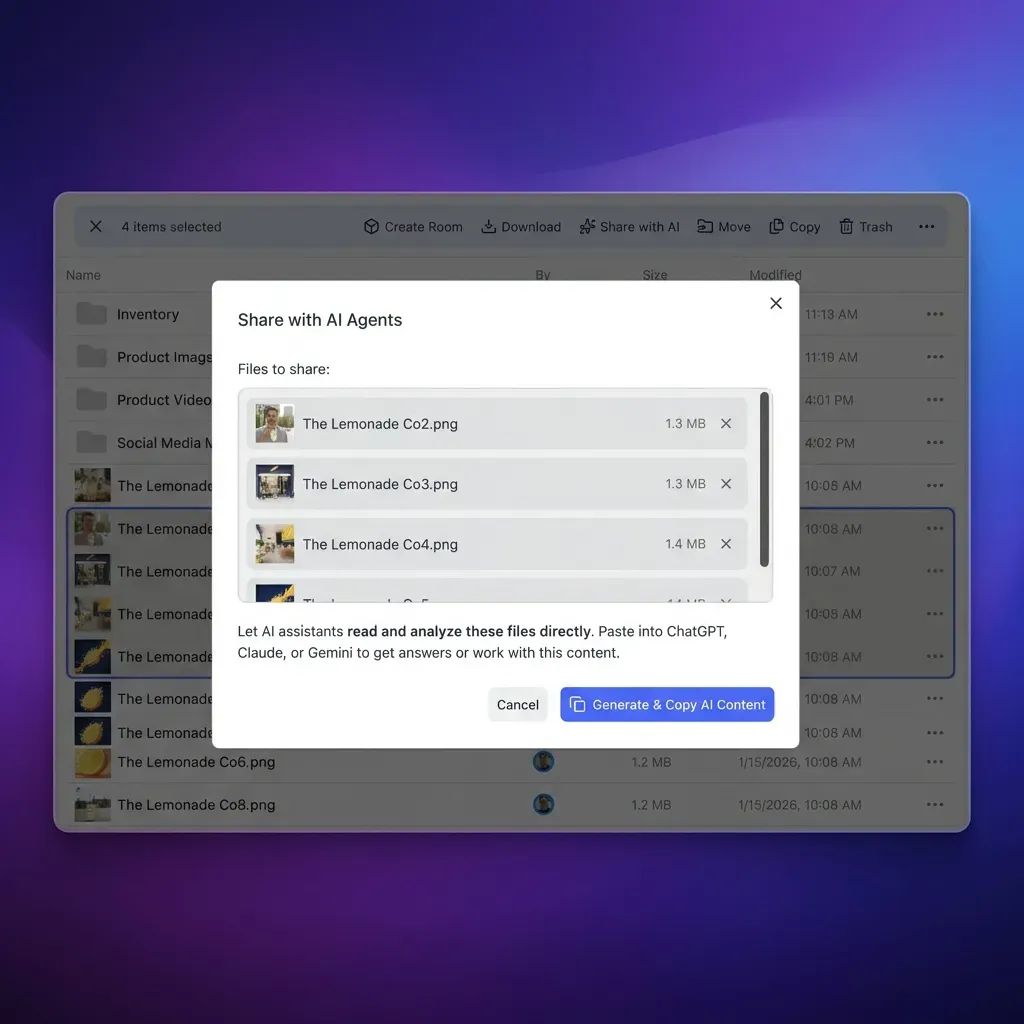


Turn Extracted Social Media Data into Queryable Records
Upload metadata exports to Fastio and use Metadata Views to build sortable, filterable databases from your extraction output. Start with generous storage.
More Tools Worth Considering
5. EnsembleData
EnsembleData has been operating since 2020, serving influencer marketing platforms and social listening companies. Its unit-based pricing scales from small projects to bulk extraction.
Platforms: TikTok, Instagram, YouTube, X, Reddit, Threads, Twitch
Key strengths:
- Real-time extraction of publicly available data without fake accounts
- Unit-based pricing that scales by endpoint and daily volume
- Platinum tier provides up to 50,000 data units per day for bulk workloads
Limitations:
- No Facebook coverage
- Unit costs vary from 1 to 10+ per endpoint, making budget forecasting harder for mixed workloads
Best for: Influencer marketing platforms and social listening tools that need consistent, high-volume data from creator-heavy platforms.
6. ScrapingBee
ScrapingBee is a general-purpose web scraping API that handles social media pages well thanks to built-in JavaScript rendering and proxy rotation. It sits between free scraping libraries and enterprise-grade managed extraction platforms.
Platforms: Multi-platform via general web scraping (TikTok, YouTube, Instagram, Facebook, X, Pinterest)
Key strengths:
- Automatic proxy rotation and CAPTCHA handling
- JavaScript rendering included on all plans
- Simple REST API that returns raw HTML for custom parsing
Limitations:
- Returns raw HTML rather than structured social media data; you write the parsing logic
- No pre-built social media data models or normalization layer
Best for: Developers who want low-level control over extraction and already have parsing pipelines built.
7. PhantomBuster
PhantomBuster takes a no-code approach with pre-built automations called "Phantoms" for specific social media tasks: scraping LinkedIn profiles, extracting Instagram followers, or pulling X engagement data.
Platforms: LinkedIn, X, Instagram, Facebook, TikTok
Key strengths:
- No-code interface with pre-configured extraction workflows
- Detailed documentation on platform-specific rate limits to avoid account suspension
- Cloud execution with scheduling built in
Limitations:
- Daily execution limits on lower-tier plans
- Phantoms are task-specific, so complex extraction workflows may need chaining multiple automations together
Best for: Marketing teams and non-developers who need social media data without writing code.
Official APIs vs Scraping: Choosing Your Approach
The seven tools above use different underlying approaches, and understanding the tradeoffs helps you pick the right one for your use case.
Official platform APIs give you the cleanest data. The X API v2, for example, can return fields and expansions such as author_id, created_at, context_annotations, entities, public_metrics, referenced_tweets, conversation_id, geo, and lang when your access tier permits them. Meta's Graph API and YouTube's Data API offer similar depth. The tradeoff is strict rate limiting, authentication overhead, and platform-by-platform integration work.
Open Graph scraping works with any URL and doesn't require API keys. Since 70.6% of websites include OG tags (per W3Techs, April 2026), you can extract title, description, image, and site name from most shared links with a simple HTTP request. Tools like OpenGraph.io add JavaScript rendering for pages that build OG tags client-side. The limitation is that you only get what the page author chose to expose in meta tags.
Headless browser extraction (used internally by tools like Bright Data and ScrapingBee) renders the full page in a browser engine, then extracts data from the rendered DOM. This catches dynamically loaded content, infinite scroll data, and JavaScript-rendered metadata that HTTP scrapers miss. It is usually slower and more expensive per request, but it is the only reliable method for some platforms.
Most production systems combine at least two approaches. Use official APIs where available for their data depth and reliability, fall back to OG scraping for link preview metadata, and reserve headless extraction for platforms that actively block simpler methods.
Storing and Querying Extracted Metadata
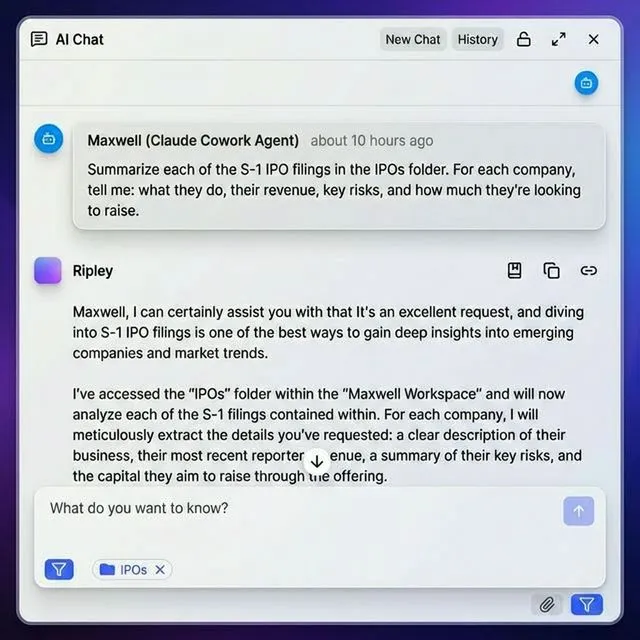
Extracting metadata is half the problem. The other half is storing it in a format where your team can actually search, filter, and act on it. Most extraction pipelines dump JSON into a database or data lake, then require custom queries or dashboards to make the data useful.
An alternative approach is using a workspace platform that can turn extracted data into queryable records automatically. Fastio's Metadata Views do exactly this: describe the fields you want in plain language, and AI designs a typed schema with field types like Text, Integer, Boolean, URL, and Date & Time. The system matches files in your workspace and populates a sortable, filterable spreadsheet without templates or manual data entry.
For social media metadata workflows, the process looks like this:
- Run your extraction tool to pull metadata from posts and profiles
- Export the results as JSON or CSV files
- Upload those files to a Fastio workspace (the MCP server handles this programmatically for agent workflows)
- Create a Metadata View that extracts the fields you care about: author names, post dates, engagement metrics, platform identifiers
- Query, sort, and filter the extracted data through the grid interface, or let agents query results via MCP
This approach works particularly well when you're combining data from multiple extraction tools. Instead of normalizing JSON schemas yourself, you let the extraction layer handle it. Metadata Views support PDFs, spreadsheets, and structured text files, so regardless of how your extraction tool exports data, the output becomes queryable.
Fastio offers a 14-day Business Trial (card required; see /pricing/), which covers a meaningful volume of extraction output for teams getting started with cross-platform metadata analysis.
Sources
References used to verify factual claims in this guide.
-
Open Graph is used by 70.6% of all websites
-
Apify marketplace includes 26,000+ pre-built web scraping and automation tools
-
OpenGraph.io has processed over 1 billion site previews with 99.9% uptime and sub-500ms response times
Frequently Asked Questions
How do you extract metadata from social media posts?
Three main approaches exist. Official platform APIs (X API v2, Meta Graph API) return the richest metadata but have rate limits. Open Graph scraping pulls meta tags from any shared URL using a simple HTTP request. Headless browser extraction renders JavaScript-heavy pages to capture dynamically loaded content. Most production systems combine at least two of these methods.
What API tools extract social media data?
Bright Data, Apify, Data365, EnsembleData, and ScrapingBee all offer API-based social media data extraction. Bright Data is strongest for high-volume managed extraction. Apify provides 26,000+ pre-built scrapers with pay-per-result pricing. Data365 normalizes data across platforms into a consistent JSON schema. For Open Graph metadata specifically, OpenGraph.io provides a focused extraction API.
How do you scrape Open Graph metadata?
Send an HTTP GET request to the target URL and parse the HTML for meta tags with the og: prefix. Libraries like open-graph-scraper (Node.js) handle this in a few lines of code. For pages that build OG tags with JavaScript, use a service with rendering support like OpenGraph.io, or run a headless browser with Puppeteer or Playwright to render the page first.
Can you extract metadata from Instagram posts?
Yes, but not through simple HTTP scraping. Instagram renders content with JavaScript, so you need either Meta's official Graph API (requires app review and business account access), a third-party extraction API like Apify or EnsembleData, or a headless browser setup. Check each provider's current pricing and platform coverage before relying on it for production extraction.
What metadata fields can you extract from a tweet on X?
The X API v2 can return many fields and expansions when your access tier permits them: text, author_id, created_at, context_annotations, entities (hashtags, mentions, URLs), public_metrics (likes, reposts, replies), conversation_id, geo, lang, referenced_tweets, reply_settings, and source. Some fields, such as non_public_metrics, require elevated access.
Are social media scraping tools legal?
It depends on the platform, the data, your jurisdiction, and how you use the results. Official APIs are the safest route because they align with platform terms. Scraping public pages can still create contractual, privacy, or compliance risk, especially at scale. Review each platform's terms of service and your local data protection regulations before starting production extraction.
Related Resources

Turn Extracted Social Media Data into Queryable Records
Upload metadata exports to Fastio and use Metadata Views to build sortable, filterable databases from your extraction output. Start with generous storage.