How to Set Up Shop Floor Document Sharing for Manufacturing Efficiency
Paper-based work instructions slow down production lines, cause version confusion, and make it hard to track who read what. This guide walks through how to set up digital document sharing on your shop floor so operators always have the right files at their workstations, even in areas with spotty connectivity.


Why Paper Documents Cost You Production Time
Every minute an operator spends looking for the right revision of a work instruction is a minute the line isn't running. In facilities that still rely on paper binders or printed SOPs at workstations, the problem compounds: outdated revisions circulate, engineering change orders take days to reach the floor, and there's no way to confirm whether operators actually reviewed the latest version.
According to L2L's 2025 manufacturing downtime report, facilities lose an average of 30 hours of production per month to downtime, with six in ten manufacturing leaders saying disruptions cost their businesses more than $250,000 annually. While not all of that traces back to documentation, a significant portion of unplanned stoppages involve operators working from wrong specs, missing quality alerts, or waiting for supervisors to locate the correct procedure.
The gap between engineering and the shop floor is where documents get lost. A quality engineer updates an inspection checklist in their office. That update needs to reach three shifts across two buildings. With paper, the update sits in a printer queue, gets filed in the wrong binder, or arrives after the first shift already ran parts to the old spec.
An Aegis Software webinar poll found that 65% of manufacturers still use a hybrid mix of paper and digital systems, with another 21% relying entirely on paper. Only a fraction have gone fully paperless. That hybrid state is where the worst problems live, because nobody is sure which system has the current version.
Digital document sharing closes that gap by making the current revision instantly available at every workstation. But setting it up for a factory environment requires thinking through problems that office-focused tools weren't designed for: harsh conditions, shared terminals, limited Wi-Fi, and operators who need to get in and out of a document in seconds.
Helpful references: Fastio Workspaces, Fastio Collaboration, and Fastio AI.
Related guides
- How to Share CNC Files Securely in ManufacturingSharing CNC files in manufacturing requires speed and security. Old files crash machines, causing costly downtime....
- How to Securely Share Manufacturing Simulation DataManufacturing simulation data sharing lets engineers send large CFD, FEA, and process simulation results to teams or...
- How to Share Production Workflow Files in ManufacturingProduction workflow file sharing in manufacturing gives planners, operators, and inspectors the latest CAD drawings,...
- How to Set Up Supply Chain File Collaboration in ManufacturingSupply chain file collaboration in manufacturing involves sharing documents with suppliers, vendors, and teams to speed...
- How to Build Supplier Portals for Manufacturing File ExchangeManufacturing supplier portals let companies securely share CAD drawings, BOMs, quality docs, and specs for...
- How to Share 3D Models with Manufacturing SuppliersSharing 3D models with manufacturing suppliers calls for secure systems that handle large files and reviews. Email and...
More on this subject: Manufacturing (15 guides)
What Documents Need to Be on the Shop Floor
Before choosing a platform, map out exactly which documents your operators need access to and how often those documents change. This inventory shapes every decision downstream, from folder structure to access controls.
Work instructions and SOPs are the core. These are the step-by-step procedures operators follow for each job, cell, or machine. They change whenever engineering modifies a process, and they need to reach the floor fast.
Quality documents include inspection checklists, control plans, first-article inspection forms, and nonconformance procedures. These often need to be filled out during production, not just read.
Safety data sheets (SDS) are legally required to be accessible wherever hazardous materials are used. OSHA mandates that SDS documents be available during each work shift to employees in their work area.
Engineering drawings and CAD exports give operators the dimensional specs they need. These are often large PDF files that need to render on a tablet or screen.
Training records and certifications track which operators are qualified to run which processes. When an operator moves to a new cell, supervisors need to verify their training status quickly.
Maintenance procedures and troubleshooting guides help operators handle basic issues without waiting for a maintenance tech. Reducing that wait time directly reduces downtime.
Group these documents by cell or work center, not by department. An operator at a CNC lathe doesn't care that their work instruction came from manufacturing engineering while their quality checklist came from the QA group. They need everything for their current job in one place.
Choosing the Right Platform for Factory Environments
Office collaboration tools like Google Drive or SharePoint were built for knowledge workers at desks with reliable internet. Factory environments break their assumptions in several ways.
Connectivity is unreliable. Metal walls, heavy machinery, and RF interference from welding equipment create dead zones. A platform that requires constant connectivity will fail operators in exactly the areas where they need documents most.
Devices are shared. Operators don't each have a personal laptop. They use shared tablets mounted at workstations, kiosk PCs, or large-format displays. The login experience needs to be fast, possibly using badge readers or PIN codes instead of email/password flows.
Access must be simple. An operator running a press brake at rate doesn't have time to navigate five levels of folders. Documents need to surface based on the current work order, cell, or machine.
Here's how common approaches compare:
Network file shares (SMB/NFS) are the simplest option. Mount a shared drive on each workstation PC and organize folders by cell. The upside is zero learning curve. The downside is no version control, no access logging, and no way to push notifications when documents change.
Document management systems (DMS) like MasterControl, Arena, or Documentum provide full revision control, approval workflows, and audit trails. They're built for regulated industries. The tradeoff is cost and complexity, as these systems often require dedicated IT support and significant configuration.
Manufacturing execution systems (MES) from vendors like Siemens Teamcenter or Plex embed work instructions directly into the production workflow. The right instruction appears automatically when an operator starts a job. But MES implementations are large, expensive projects that can take months to deploy.
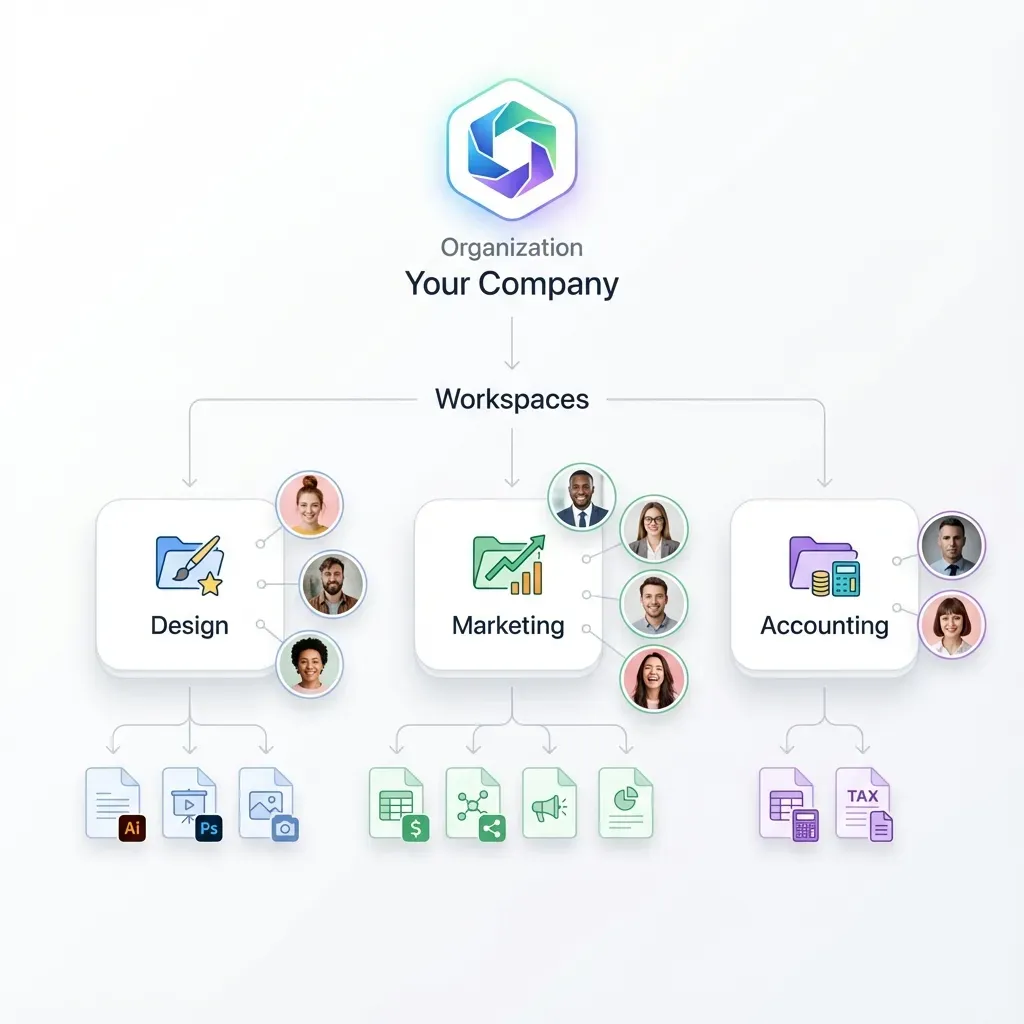
Cloud workspace platforms offer a middle ground. Fastio, for example, provides shared workspaces with granular permissions, file versioning, and audit trails without requiring a full MES deployment. Operators can access documents through a browser on any device, and the platform handles version control automatically. The built-in Intelligence feature can index uploaded documents for semantic search, so an operator can search by describing a problem rather than knowing the exact filename.
For small to mid-size manufacturers who need version control and access logging but can't justify a six-figure DMS or MES deployment, a cloud workspace platform is often the practical starting point.


Get your shop floor documents organized
Fastio gives you shared workspaces with version control, granular permissions, and audit trails. Set up folders by work center, control who can edit, and let operators access the latest revision from any browser. Start a 14-day Business Trial (card required; see /pricing/). Built for shop floor document sharing manufacturing workflows.
Setting Up Your Document Structure
The folder structure determines whether operators find documents in three seconds or three minutes. Get this wrong and people will work around the system, which means printing documents and taping them to machines, which puts you right back where you started.
Organize by Work Center, Not Department
Create a top-level folder for each production area or cell. Inside each folder, group documents by type:
/CNC-Cell-01/Work-Instructions//CNC-Cell-01/Quality-Docs//CNC-Cell-01/Safety//CNC-Cell-01/Setup-Sheets/
This mirrors how operators think. They're at a specific workstation doing a specific job. They don't know or care which department authored the document.
Name Files for Humans
Use consistent naming that operators can scan quickly:
WI-4210-Bore-Finishing-Rev-C.pdf(work instruction, part number, operation, revision)QC-4210-First-Article-Inspection.pdf(quality checklist for the same part)SDS-Coolant-TrimSol-EP.pdf(safety data sheet for the coolant used in that cell)
Avoid cryptic document numbers that only make sense to the engineering team. If operators can't identify the right file by its name, they'll open the wrong one or skip the system entirely.
Control Revisions
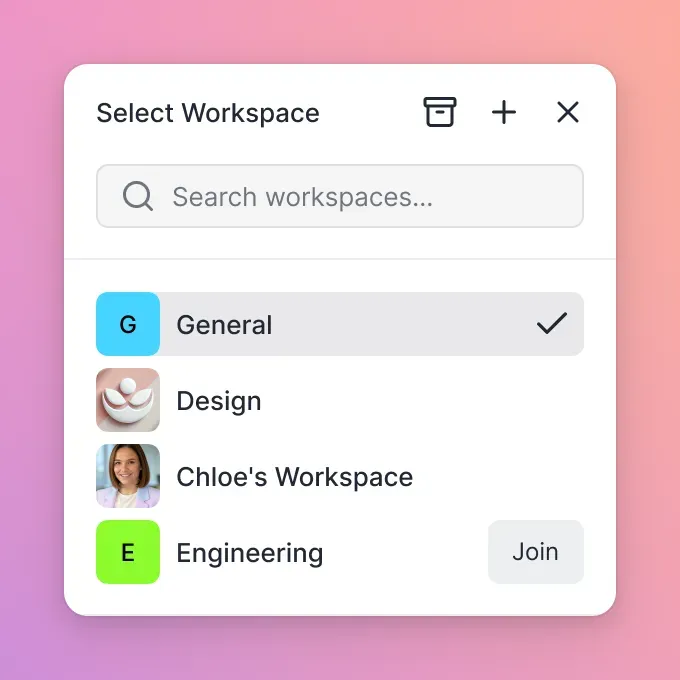
Every platform handles versioning differently, but the principle is the same: operators should always see the current revision without having to check. Archive old revisions rather than deleting them, since you'll need them for audits. Some platforms, including Fastio, handle this automatically by maintaining version history while always showing the latest upload.
Set Permissions by Role
Not everyone needs the same access. A practical permission model for the shop floor:
- Operators get read access to their cell's documents. No edit, no delete.
- Team leads get read access to all cells. They can upload updated documents to their area.
- Quality engineers get read/write across all quality documents. They can approve revisions.
- Manufacturing engineering gets full access to work instructions. They're responsible for maintaining current revisions.
Granular permissions prevent accidental edits and give you an audit trail of who accessed what. If a quality escape happens, you can trace whether the operator had access to the correct revision at the time of the incident.
Deploying to the Shop Floor
Getting the technology onto the factory floor is where many digital document initiatives stall. The documents are organized, the platform is configured, but the last mile, putting working access points at each workstation, is harder than it looks in a manufacturing environment.
Hardware Choices
Mounted tablets (iPad or Android) work well for individual workstations. Use rugged cases rated for industrial environments and mount them at eye level on articulating arms. Budget $500-800 per station including the mount and case.
Kiosk PCs with large displays (22-27 inches) are better for cells where operators need to view detailed drawings. A basic industrial PC with a sealed keyboard and mouse can run for years in a factory setting. These run $1,200-2,000 per station but handle engineering drawings and multi-page SOPs more comfortably than a tablet.
Large-format displays (40+ inches) mounted where a team can reference them work for visual work instructions in assembly areas. These are view-only and best suited for high-level process flows or quality alerts that the whole cell needs to see.
Network Considerations
Run a dedicated Wi-Fi network for shop floor devices, separate from the office network. Industrial access points from vendors like Cisco Meraki or Aruba are designed for environments with metal structures and electromagnetic interference.
For areas where Wi-Fi is unreliable, consider hardwired Ethernet connections to kiosk PCs. It's more expensive to install but eliminates connectivity as a failure mode.
If you're using a cloud platform, test document load times from each workstation location before going live. A work instruction that takes 15 seconds to open won't get used. If latency is a problem, look for platforms that support local caching so documents load from the device after the first download.
Authentication That Works for Operators
Standard username/password login is too slow for a production environment where operators clock in and immediately need access. Consider these alternatives:
- Badge-tap login using RFID readers connected to workstation PCs
- PIN codes tied to employee numbers
- Shared device profiles with cell-level access (less secure but faster)
- Biometric options if your facility already uses them for time clocks
The goal is getting an operator from power-on to the right document in under 10 seconds. Any friction beyond that and they'll find workarounds.
Rollout Strategy
Don't deploy to the entire factory at once. Start with one production area, preferably one that's already struggling with document issues. Run paper and digital in parallel for two weeks. Gather feedback from operators and team leads. Fix the problems they surface, because they will find problems you didn't anticipate. Then expand to the next area.
This phased approach also builds internal advocates. When operators in Cell 1 tell operators in Cell 2 that the new system actually works, adoption in Cell 2 goes much smoother than a top-down mandate.
Measuring the Impact
The business case for digital shop floor document sharing is straightforward, but you need to measure it to justify continued investment and catch problems early.
Metrics That Matter
Document retrieval time is the most direct measure. Time how long it takes operators to find the correct work instruction before and after deployment. In paper-heavy environments, this often runs 5-10 minutes per search. Digital access should bring it under 30 seconds.
Revision lag measures the time between an engineering change order being approved and the updated document being available at the workstation. Paper processes can take days. Digital distribution should be near-instant.
First-pass yield often improves when operators consistently use the correct, current work instruction. Track FPY by cell before and after deployment to quantify the quality impact.
Audit compliance gets easier when you have digital access logs. Count the hours your quality team spends preparing for audits before and after the switch. Platforms with built-in audit trails, like the activity logging in Fastio, can generate access reports automatically rather than requiring manual log compilation.
Training effectiveness can be measured by tracking how quickly new operators reach full productivity. LightGuide Systems reports that digital work instructions can reduce training time by up to 50%, though your specific results will depend on the complexity of your operations and the quality of your documentation.
Common Problems to Watch
For Low adoption usually means the system is too slow or too complicated. Watch usage metrics by workstation. If a particular cell isn't accessing documents digitally, visit and ask why. The answer is usually a practical issue: the tablet is mounted in an awkward spot, the Wi-Fi drops in that corner, or the folder structure doesn't match how they work.
Stale documents happen when engineering updates documents in their own system but forgets to push the new revision to the shop floor platform. Build the upload step into your engineering change order process so it's not an afterthought.
Over-complication is the opposite problem. Don't require operators to check out documents, add digital signatures, and confirm reading before they can view a work instruction. Every additional step reduces adoption. Save the formal acknowledgment workflows for safety-critical procedures and regulatory requirements.
The best measure of success is simple: when you walk the floor, are operators looking at screens or flipping through binders? If the binders are gone and nobody is complaining, the system is working.

Sources
References used to verify factual claims in this guide.
-
Facilities lose an average of 30 hours of production per month to downtime, with six in ten leaders saying disruptions cost more than $250,000 annually
-
65% of manufacturers use a hybrid mix of paper and digital, 21% use paper-based approaches
-
Digital work instructions can reduce training time by up to 50%
Frequently Asked Questions
How do you share documents on the shop floor?
Set up shared workstations with tablets or kiosk PCs connected to a cloud workspace or document management system. Organize files by work center and part number so operators can find what they need quickly. Use a platform with version control to ensure everyone always sees the current revision.
What is the best way to access manufacturing files on the factory floor?
Mount rugged tablets or industrial PCs at each workstation, connected to a dedicated Wi-Fi network. Use a document platform that supports browser-based access so you don't need to install specialized software on every device. For areas with poor connectivity, choose a platform with local caching so documents load from the device after the first download.
How do digital work instructions improve manufacturing efficiency?
Digital work instructions eliminate the time operators spend searching for paper documents, ensure everyone works from the current revision, and create automatic access logs for quality audits. LightGuide Systems reports that digital work instructions can reduce training time by up to 50% and improve productivity, depending on the complexity of your operations.
What features should shop floor document sharing software have?
The essentials are version control, granular permissions by role, audit trails for compliance, fast search, and browser-based access that works on shared devices. For factory environments specifically, look for offline caching, simple authentication options like badge or PIN login, and the ability to organize documents by work center rather than department.
How much does it cost to digitize shop floor documents?
Hardware costs range from $500-800 per station for mounted tablets to $1,200-2,000 for industrial kiosk PCs. Software costs vary widely. Network file shares are essentially free but lack version control. Cloud workspace platforms like Fastio offer a 14-day Business Trial and paid plans starting at $9.99/mo. Full document management systems can run $50,000-200,000 depending on scope. Start small with one cell to prove the concept before committing to a factory-wide rollout.
Related Resources

Get your shop floor documents organized
Fastio gives you shared workspaces with version control, granular permissions, and audit trails. Set up folders by work center, control who can edit, and let operators access the latest revision from any browser. Start a 14-day Business Trial (card required; see /pricing/). Built for shop floor document sharing manufacturing workflows.