Best ShareVault Alternatives for Flat-Rate Data Rooms in 2026
ShareVault is a solid virtual data room for life sciences and IP licensing, but its opaque pricing and dated interface push many deal teams to look elsewhere. This guide compares five ShareVault alternatives on pricing transparency, AI capabilities, and ease of use so you can find the right fit for your next transaction.

Why Teams Switch From ShareVault
ShareVault has carved out a niche in life sciences, IP licensing, and biotech partnering deals. The platform offers solid security features like dynamic watermarking, remote document revocation, and page-level view tracking. For a straightforward licensing deal with a handful of parties, it gets the job done.
But deal teams hit friction points that compound over time.
Opaque, usage-based pricing. ShareVault offers three tiers (Express, Pro, Enterprise) but does not publish specific pricing on its website. The cost is based on data usage in gigabytes and project duration, which means your final bill depends on how much data you upload and how long you keep the room open. For life sciences due diligence, where document sets commonly reach 5,000 to 50,000 pages, this unpredictability becomes a budgeting headache. Several reviewers on G2 and Capterra note the pricing structure feels "unpredictable" compared to flat-rate alternatives.
Aging interface. ShareVault's UI has drawn consistent criticism. G2 and Capterra reviewers describe the interface as "old and basic," with tedious manual tagging for uploaded files. ShareVault has acknowledged this gap and announced a redesigned experience in ShareVault 4.0, but as of early 2026 that release is still in beta. Teams running time-sensitive deals cannot wait for a UI refresh.
Limited AI capabilities. While ShareVault has added some AI features like auto-tagging, reviewers report occasional misclassification of files. The platform lacks semantic search, citation-backed Q&A, or built-in document summarization. For deal teams drowning in thousands of pages of clinical data or patent filings, manual review remains the default.
Integration gaps. ShareVault Pro adds integrations with Box, Dropbox, Google Drive, OneDrive, and DocuSign, but the base Express tier does not include these. If you need to pull documents from cloud storage into your data room, you are either paying for Pro or doing manual uploads.
The switching cost for a data room is real. Expect two to four weeks to migrate documents and retrain users. But if your current provider charges unpredictable fees quarter after quarter, the math on switching usually works within a few months.
Helpful references: Fastio Workspaces, Fastio Collaboration, and Fastio AI.
Related guides
- Best iDeals Virtual Data Room Alternatives for 2026iDeals is one of the most popular virtual data rooms for M&A and due diligence, but it is not the only option. This...
- Intralinks Data Room: Features, Pricing, and Alternatives for 2026Intralinks is one of the oldest virtual data room platforms, now owned by SS&C Technologies. It has facilitated over...
- How to Integrate AI into Virtual Data RoomsAI agents in virtual data rooms search documents and automate tasks securely. Unlike traditional VDRs with separate Q&A...
- How to Build a Biotech Data Room for Due DiligenceA biotech data room is a secure virtual workspace where life sciences companies share proprietary research, clinical...
- How to Build an Agentic Virtual Data Room for Due DiligenceAgentic virtual data rooms use AI agents for automated due diligence, handling document review and secure sharing. Skip...
- How to Manage Virtual Data Room Ownership TransferVirtual data room ownership transfer hands control of sensitive deal documents from one party to another after due...
More on this subject: Data Rooms and Due Diligence (53 guides)
Side-by-Side Comparison of ShareVault Alternatives
Here is how five strong alternatives compare to ShareVault across the factors that matter most for deal teams: pricing, AI features, security, and user experience.
Pricing Model
- Firmex: Per-project or annual subscription, quote-based. Known for mid-market affordability. Unlimited data room subscription option available.
- Ansarada: Storage-tiered plans starting at 250 MB. Free preparation phase before the deal goes live, so you only pay once the room is active.
- Datasite: Custom quotes, enterprise-tier. Per-page pricing averages around $0.60 per page for large deals, which can exceed $30,000 for a 50,000-page transaction.
- Intralinks: Per-user or enterprise pricing, not published transparently. Typically the most expensive option on this list.
- Fastio: Usage-based credits starting at $9.99/month with a 14-day Business Trial (credit card required).
AI and Search
- Firmex: Full-text search across documents. No AI document analysis or summarization.
- Ansarada: AI deal prediction, bulk redaction, and readiness scoring. Strong analytics but AI is focused on deal management rather than document Q&A.
- Datasite: AI document classification, intelligent redaction, and AI-powered analytics. Built for high-volume enterprise workflows.
- Intralinks: AI-powered redaction and automated indexing. Mature but primarily focused on document processing rather than search.
- Fastio: Intelligence Mode with semantic search, RAG-powered chat with page-level citations, metadata extraction, and auto-summarization.
Security
- Firmex: AES-256 encryption. Well-regarded security for mid-market.
- Ansarada: In-region data centers for compliance-sensitive industries.
- Datasite: Enterprise-grade with complex compliance workflows.
- Intralinks: ISO 27701. First VDR with ISO 27701 certification. IRM (Information Rights Management) controls documents post-download.
- Fastio: 2FA, scoped API access, granular permissions (org, workspace, share, folder, file level), audit trails.
Best For
- Firmex: Mid-market firms wanting predictable pricing and fast room setup.
- Ansarada: Teams that value deal analytics, clean UI, and pre-deal preparation tools.
- Datasite: Large-cap M&A with massive document volumes and complex multi-party workflows.
- Intralinks: Enterprise cross-border transactions where post-download document control matters.
- Fastio: Teams wanting AI-first document intelligence, ongoing collaboration beyond a single deal, and flat plans with seats included.


Set Up an AI-Powered Data Room
Set up a data room with granular permissions, branded shares, and built-in document intelligence once enabled. Built for due diligence.
Firmex: Best for Mid-Market Predictability
Firmex processes over 20,000 new data rooms annually and has become the go-to choice for mid-market M&A, legal due diligence, and compliance projects. The platform's biggest selling point compared to ShareVault is pricing transparency.
Where Firmex beats ShareVault. Firmex offers both per-project and unlimited annual subscription pricing, which means you can budget for the year without worrying about data usage surprises. The interface is cleaner and more intuitive than ShareVault's, with drag-and-drop uploads, automatic indexing, and a Q&A module included in standard plans. Setup is fast. Most teams have a room running within a day.
Where Firmex falls short. AI capabilities are limited to full-text search. There is no semantic search, no document summarization, and no AI-powered Q&A. If you are managing thousands of clinical trial documents and need to quickly find answers across them, Firmex will not help you avoid reading every page manually. The platform also lacks a free tier, so evaluation requires a sales conversation.
Pricing. Quote-based, but generally considered affordable for mid-market deals. The unlimited subscription option is particularly attractive for firms running multiple concurrent transactions.
Best for: Law firms and advisory shops handling 5 to 20 deals per year who want predictable costs and a quick learning curve.
Ansarada: Best for Deal Analytics and Clean UX
Ansarada started as a data room provider and evolved into a deal management platform. The company is publicly traded on the ASX and serves clients across M&A, capital raises, audits, and board governance.
Where Ansarada beats ShareVault. The user experience gap is significant. Ansarada's interface is modern, with AI-powered features woven into the deal workflow. The platform scores deal readiness, predicts likely outcomes based on buyer engagement patterns, and offers bulk AI redaction for sensitive documents. The free preparation phase is unique: you can set up your room, organize documents, and invite team members before the deal goes live, and you only start paying once you activate the room for external parties.
Where Ansarada falls short. Storage-tiered pricing can get expensive for document-heavy deals. The entry plan starts at 250 MB, which will not last long in a life sciences transaction with thousands of pages of regulatory filings. Higher tiers add cost quickly. The platform is also more focused on deal management than ongoing document collaboration, so it may feel like overkill for teams that just need secure file sharing.
Pricing. Storage-tiered plans. Free preparation phase before activation. Specific pricing is quote-based.
Best for: M&A advisors and corporate development teams who want deal intelligence, not just document storage.
Datasite and Intralinks: Enterprise Heavyweights
These two platforms dominate the enterprise end of the VDR market. If you are running billion-dollar cross-border transactions, you have likely encountered both.
Datasite
Datasite (formerly Merrill DatasiteOne) is built for high-volume dealmaking. The platform handles AI document classification, intelligent redaction, and analytics designed for large document sets. Its "View As" feature lets administrators preview exactly how different user groups see the data room, which is useful for complex multi-party deals with layered permissions.
The trade-off is cost. Datasite uses custom enterprise pricing, and for deals with tens of thousands of pages, costs can escalate well past $30,000. The platform is purpose-built for large transactions, so smaller deals may not justify the overhead.
Best for: Large-cap M&A, private equity portfolio companies, and complex restructuring deals.
Intralinks
Intralinks, owned by SS&C Technologies, was one of the first virtual data rooms on the market. The platform's defining feature is IRM (Information Rights Management), which lets you control documents even after they have been downloaded. You can revoke access, prevent printing, and track how recipients interact with files outside the data room.
Intralinks carries enterprise-tier pricing and a steeper learning curve than newer platforms. The interface reflects its age, though SS&C has invested in modernization. The Q&A management system is strong, with routing rules that direct questions to the right subject matter experts.
Best for: Cross-border enterprise M&A where post-download document control is a requirement.
Both platforms are overkill for most mid-market deals. If you are running a $50M biotech licensing transaction, you are paying enterprise prices for features designed for $5B mergers.
Fastio: AI-First Workspace Alternative
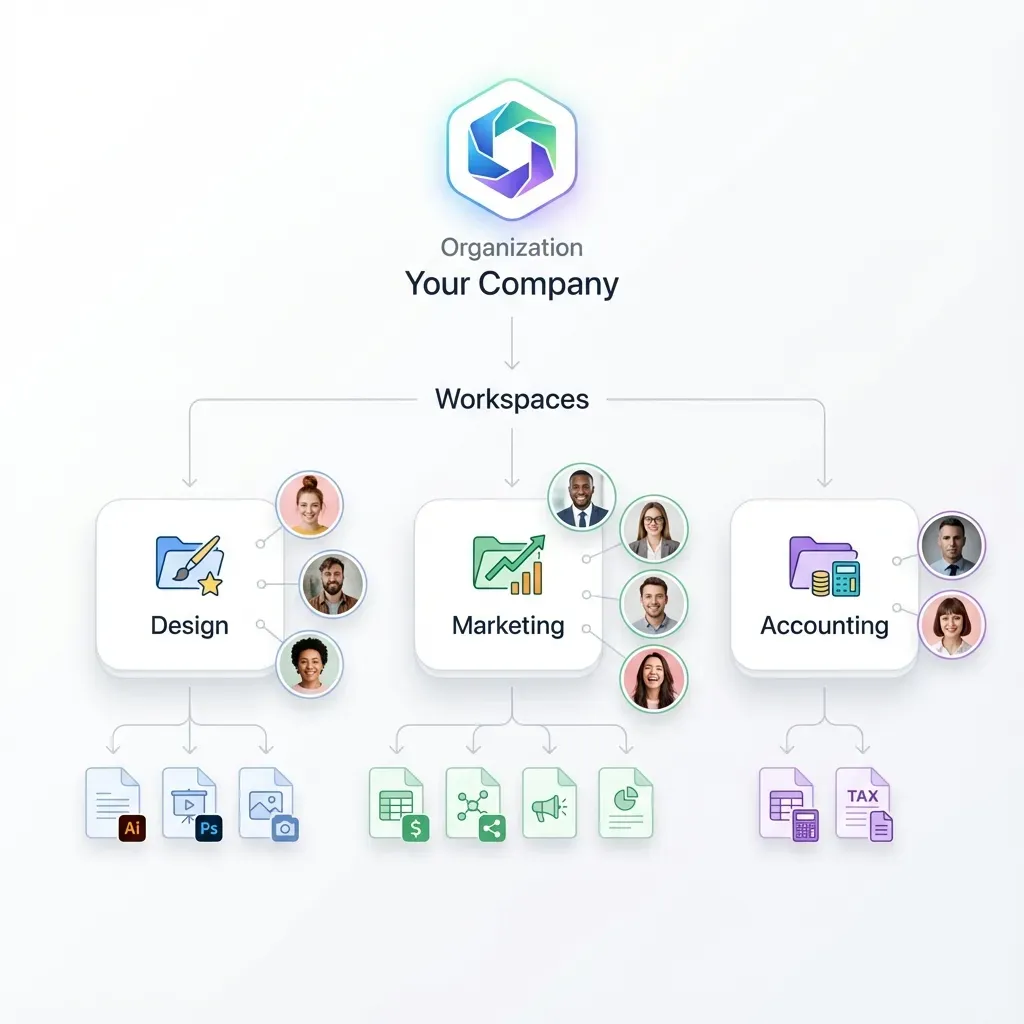
Fastio takes a different approach to the data room problem. Instead of building a traditional VDR and bolting on AI features later, Fastio built intelligence into the workspace from the start. Every file uploaded is automatically indexed for semantic search, summarization, and citation-backed Q&A when Intelligence Mode is enabled.
Where Fastio beats ShareVault. The pricing model is the most obvious difference. Fastio offers a 14-day Business Trial (credit card required; see pricing) with paid plans starting at $9.99/mo. That allows teams to evaluate data room workspaces and AI-powered searches across documents without enterprise lock-in. ShareVault does not offer transparent self-serve pricing.
The AI capabilities go deeper than search. Fastio's Ripley AI can answer questions about your documents with page-level citations, extract structured metadata from filings and contracts, and summarize folders of related documents. For a life sciences team reviewing thousands of pages of clinical trial data, this means asking "What adverse events were reported in the Phase 2 trials?" and getting an answer with citations to specific pages, rather than reading every document manually.
Content Portals let you create branded, password-protected spaces for external parties. Clients access shared documents through a custom-branded portal with your logo and colors, and Ripley AI is available inside the portal to help them find what they need. Auto-expiring access links handle time-limited sharing without manual cleanup.
Granular permissions operate at the org, workspace, share, folder, and file level. Audit trails track file operations, memberships, comments, AI activity, and permission changes. The permission model is comparable in depth to enterprise VDRs, though Fastio does not currently hold formal compliance certifications.
Where Fastio differs from traditional VDRs. Fastio is a workspace platform, not a purpose-built deal room. It lacks some VDR-specific features like IRM post-download controls, per-page view duration tracking, and built-in Q&A routing workflows between buyers and sellers. If your deal process requires these specific capabilities, a traditional VDR like Intralinks or Datasite will serve you better.
Fastio also supports Cloud Import from Google Drive, Dropbox, OneDrive, and Box, so migrating documents from your current setup does not require manual re-uploading.
Pricing. Starter plan at $9.99/month (3 seats, 250 GB, 100,000 credits/mo) scaling up to Enterprise at $199.99/month (30 seats, 25 TB). A 14-day Business Trial (credit card required) lets you evaluate the platform before choosing a plan (see /pricing/).
Best for: Teams that want AI-powered document intelligence for due diligence, ongoing client portals beyond a single deal, and usage-based pricing.

How to Choose the Right ShareVault Alternative
The right alternative depends on what is driving your switch. Here is a framework for matching your priorities to the best option.
If unpredictable pricing is your main frustration, look at Firmex or Fastio. Firmex offers annual subscriptions that cap your costs regardless of data volume. Fastio's 14-day Business Trial lets you evaluate workspaces and AI capabilities before committing to a paid tier, and usage-based credits provide transparency.
If you need better AI and search, Fastio and Ansarada lead the field. Fastio's Intelligence Mode provides semantic search, citation-backed Q&A, and document summarization out of the box. Ansarada focuses AI on deal management with readiness scoring and outcome prediction.
If you need compliance certifications, stick with the established VDR providers. Firmex, Ansarada, Datasite, and Intralinks all hold formal security certifications; confirm each vendor's current list against your requirements. Fastio offers strong security features (2FA, granular permissions, audit trails) but does not currently hold formal certifications.
If you are running enterprise-scale deals, Datasite and Intralinks remain the safe choices. Their platforms are designed for transactions with hundreds of parties and tens of thousands of documents. The premium pricing reflects genuine capability for complex deal structures.
If you want ongoing collaboration beyond the deal, Fastio is the strongest option. Traditional VDRs are designed for finite transactions. You open a room, run the deal, and close it. Fastio workspaces persist, so your document intelligence, permissions, and client portals carry forward into post-deal integration, ongoing compliance, or the next transaction.
Before committing, run a parallel evaluation. Set up your shortlisted options with a subset of your actual deal documents. Time how long it takes to organize, search, and share. The platform that feels fast during setup will feel fast during the deal, and speed matters when a buyer is waiting for answers.
Sources
References used to verify factual claims in this guide.
-
ShareVault offers a 7-day free trial with unlimited usage and 24/7 support
-
ShareVault pricing is based on data usage (GB) and project duration
-
Firmex opens over 20,000 new data rooms annually
-
ShareVault announced a redesigned user experience in ShareVault 4.0
Frequently Asked Questions
What is a good alternative to ShareVault?
The best alternative depends on your priorities. Firmex is a strong choice for mid-market teams wanting predictable pricing. Ansarada offers superior deal analytics and a modern interface. Fastio provides AI-powered document intelligence starting at $9.99/month with a 14-day Business Trial. For enterprise-scale transactions, Datasite and Intralinks remain the industry standard.
How much does ShareVault cost?
ShareVault does not publish specific pricing. The company offers three tiers (Express, Pro, Enterprise) with costs based on data usage in gigabytes and project duration. You need to request a custom quote. This usage-based model means costs can vary depending on document volume and deal timeline, which is a common complaint among users who prefer flat-rate pricing.
Is ShareVault good for life sciences?
ShareVault has strong life sciences credentials, with 24/7 support from a team experienced in biotech and clinical processes. The Enterprise tier includes 21 CFR Part 11 validation for FDA-regulated workflows. However, the platform's AI capabilities for searching and analyzing large clinical document sets lag behind newer alternatives like Fastio, which offers semantic search with page-level citations.
Does ShareVault offer a free trial?
ShareVault offers a 7-day free trial with unlimited usage and 24/7 support. This is shorter than some competitors. Fastio offers a 14-day Business Trial (credit card required; see /pricing/) with full access to workspaces and AI intelligence.
What are the main drawbacks of ShareVault?
Common complaints include opaque pricing that makes budgeting difficult, an outdated user interface with manual file tagging requirements, limited AI capabilities compared to newer platforms, and integration restrictions on the base Express plan. ShareVault has acknowledged the UI concerns and is developing ShareVault 4.0, but that release is still in beta as of early 2026.
Can I migrate documents from ShareVault to another data room?
Yes, but plan for two to four weeks of migration and user retraining. Most VDR providers offer migration assistance. Fastio supports Cloud Import from Google Drive, Dropbox, OneDrive, and Box, which simplifies the process if your documents are accessible through any of those services. Export your ShareVault documents first, upload to a cloud storage service, then use Cloud Import to pull them into Fastio with folder structure preserved.
Related Resources

Set Up an AI-Powered Data Room
Set up a data room with granular permissions, branded shares, and built-in document intelligence once enabled. Built for due diligence.