Sharing Large PDF Archives for AI Document Summarization
Share large PDF archives so AI agents can summarize thousands of pages fast. IDC says 90% of company knowledge is stuck in PDFs. This guide covers prepping files for AI, fixing slow indexing, and workflows to make data searchable. Shared workspaces for agents and humans let you find what you need in PDF collections and save time on documents.

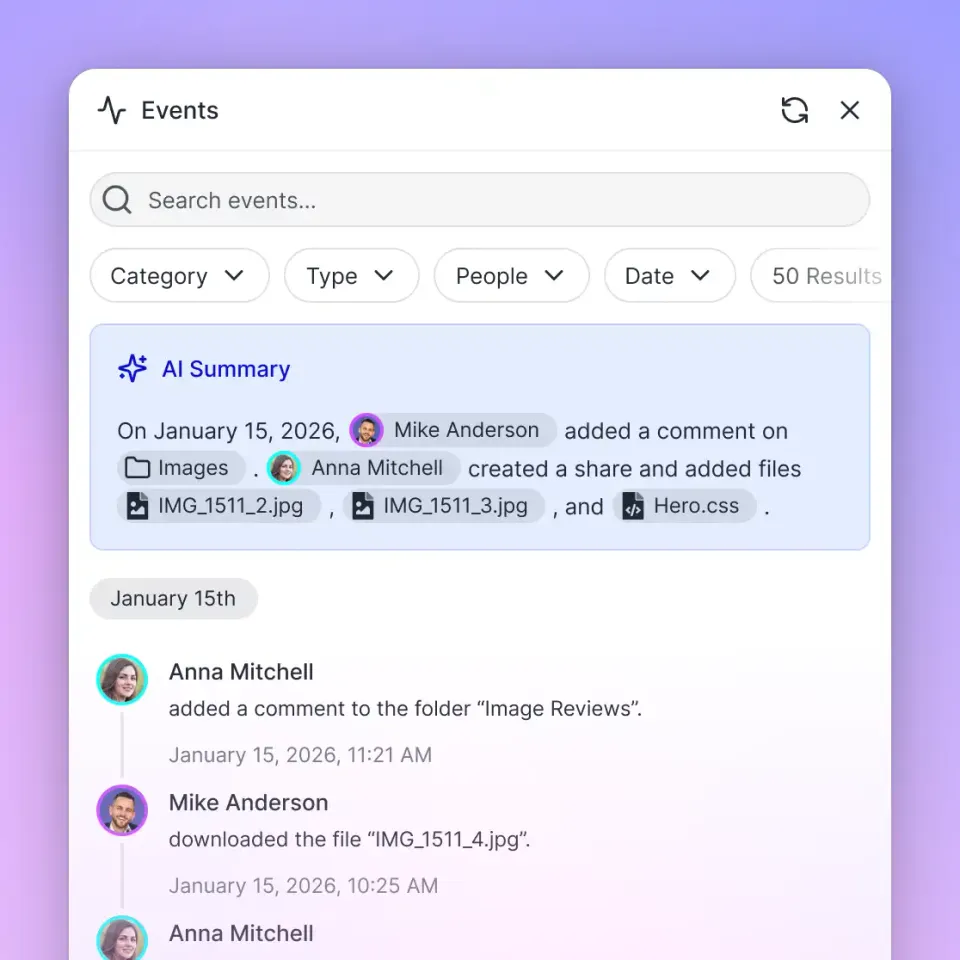
What to check before scaling large PDF archives for automated AI document summarization
Standard file sharing works for people, not AI agents. Drop a large PDF archive in cloud storage, and agents read every file for one fact. Slow and expensive. Wastes tokens too.
Most agents can't hold an entire archive in context. They give shallow summaries and miss facts.
According to IDC, 90 percent of enterprise knowledge stays trapped in PDF archives that are hard to search. Teams lose out on AI here. It's not the model, it's the data setup. Agents need indexed workspaces for quick searches by meaning, not folder links. Otherwise, they spend more time hunting than analyzing. That's why many AI setups don't pay off.
Helpful references: Fastio Workspaces, Fastio Collaboration, and Fastio AI.
Related guides
- How to Share Large Files Internationally Without DelaysInternational file sharing is the transfer of digital files across geographic borders, accounting for network latency,...
- How to Share Searchable Document Folders for Clients and TeamsDiscover the best way to share searchable document folders using semantic search and AI indexing. Compare platforms...
- How to Share Legal Documents Securely: A Complete GuideLegal document sharing requires balancing accessibility with strict confidentiality requirements. Law firms handling...
- How to Share Large Files on Discord (Without Hitting the Size Limit)Discord's file upload limit is 10MB for free users, 50MB for Nitro Basic, and 500MB for full Nitro subscribers. For...
- How to Share Files with China: Working Around the Great FirewallFile sharing with China requires services that aren't blocked by the Great Firewall, as most Western platforms like...
- How to Share Large Files: 6 Methods ComparedThe top file sharing method depends on three factors: file size, whether recipients need ongoing access, and how often...
More on this subject: File Sharing (155 guides)
Solving the Indexing Bottleneck
Slow indexing stalls document summarization. Most tools make you wait while files process before agents start. Thousands of PDFs? Delays kill workflows.
Fast neural indexing maps files right away. Agents search by concepts, not exact words: hits across pages instantly.
In practice, agents summarize 500-page PDFs in under a minute. Google Gemini 1.5 Pro benchmarks show long-context models handle 2 million tokens, but need fast data. Pre-indexed workspaces shift focus to analysis, not searching.

Setting Up an Agent-Ready Workspace
Share PDF archives for AI summarization in a space where agents and humans collaborate. Start with a workspace handling files plus agent tools. It serves as the hub for shared data.
Upload archives to an intelligent workspace: it indexes automatically. Pull from Google Drive, OneDrive, or Box via URL Import. No local downloads; server-side transfer skips slow uploads and duplicates.
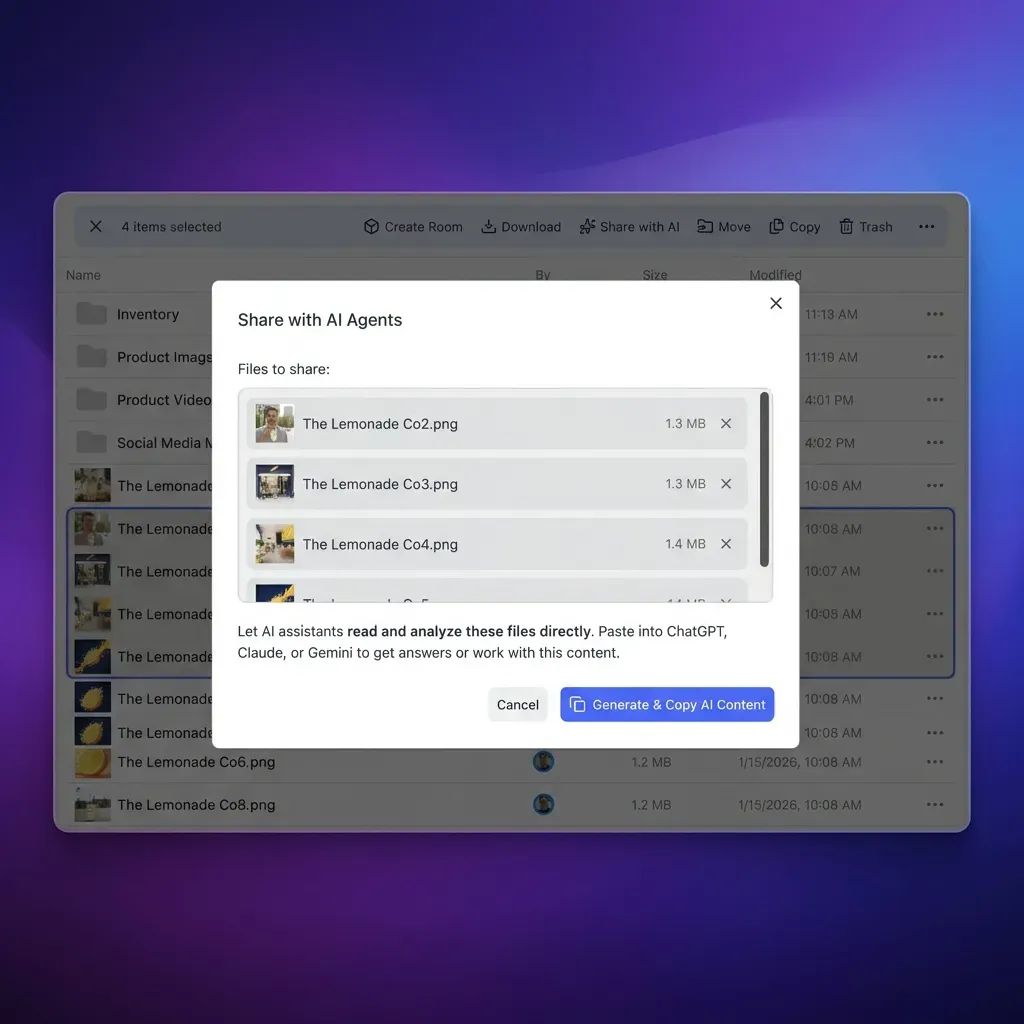
Connect agents like Claude, GPT-4, or Gemini. They get a consolidated MCP toolset to read, search, and summarize. Agents join document workflows fully, no constant human hand-holding.


Automate Large PDF Summarization on Fastio
Set up an agent-ready workspace with a consolidated MCP toolset and intelligent search once enabled, built for PDF summarization.
Step-by-Step Workflow for Archive Summarization
Here's a workflow for accurate, fast summarization of archives.
Organize PDFs into folders. Neural indexing works on mess, but structure aids permissions and agent focus: by year, project, department.
Use URL Import for archives. Server handles transfers; no browser babysitting or slow uploads. OAuth to storage, select folders.
Enable Intelligence Mode. Triggers neural indexing for meaning-based search. Background process; agents start near-instantly. Vectors enable quick pulls.
Instruct agent clearly: "Find indemnity clauses across archive, summarize each." Specific prompts target key data.
Review outputs. Built-in RAG gives citations: click to source PDF page/paragraph. Easy human checks.
Real-World Use Cases: Legal, Financial, and Research
PDF archives with AI agents change info handling. Law firms scan thousands for discovery. Spot conflicting clauses or missing signatures fast, not weeks of reading. More cases, quicker client answers.
Finance teams parse 10-Ks, filings. Agent compares risk sections across firms, flags trends for investments. Speed edges out in fast markets.
Researchers summarize paper archives on new topics. Agent pulls main methods, state of field, gaps. Automates reviews; focus on experiments.
Best Practices for Large-Scale AI Summarization
Thousands of pages demand accuracy, security. Have agents summarize docs individually first, then master summary. Catches details, audit-ready.
Security first: encryption, granular workspace permissions, private control, and audit logs.
Costs rise with volume. Semantic search in persistent workspaces reads only relevant bits. Cuts token use up to 80%.
Scaling for Enterprise-Level Archives
Big archives need speed under load. Platforms must handle multiple agents/humans simultaneously. Advisory file locks let agents signal active writes, while automatic version history and granular permissions keep data consistent.
Store summaries beside sources. Builds searchable metadata layers. Workspace evolves into growing knowledge base.
Humans still key: review processes ensure accuracy, goal fit. Agent + expert combo manages large PDFs best.

A Better Way to Manage Archives
Basic storage won't cut it. AI-readiness defines archive value now. Indexed PDFs for agents turn drudgery to assets. Workspaces outpace old servers.
Intelligent workspaces mean efficient work. Knowledge bases answer questions, find trends, generate summaries. Less folder hunting, more decisions. As AI grows, this is table stakes for teams.
Sources
References used to verify factual claims in this guide.
-
AI agents can summarize a 500-page PDF in under a minute.
-
IDC estimates that 90 percent of enterprise knowledge is trapped in PDF archives.
-
Meaning-based search can cut token usage by up to 80 percent.
-
Long-context models can handle up to 2 million tokens.
-
Fastio provides a consolidated MCP toolset to support agent-native workflows.
Frequently Asked Questions
How can I summarize thousands of PDFs at once?
Use MCP/neural indexing workspaces. Import docs; agents semantic-search the archive for collective or per-file summaries.
What is the best tool for AI document summarization?
Tools with long-context models, persistent storage, and neural indexing shine. MCP support like Fastio lets agents query archives directly without re-uploading.
Is it safe to share sensitive archives with AI agents?
Yes, with permissions, encryption, logs. Limit agent folders; no public model training. Secure protocols matter.
Can AI agents find information in the middle of a 500-page PDF?
Yes, long-context models and RAG pinpoint anywhere. Neural indexing locates precisely, boosting accuracy on details.
How fast can an AI summarize a large archive?
Under a minute for 500-page PDF with fast indexing. Thousands of files? Way faster than humans. Handles unread data volumes.
Related Resources

Automate Large PDF Summarization on Fastio
Set up an agent-ready workspace with a consolidated MCP toolset and intelligent search once enabled, built for PDF summarization.