How to Share Large JSON and XML Files for API Integration
The best way to share large JSON and XML files for API integration is through direct download links from services that support large files, correct content-type headers, and CORS configuration. Common methods like email attachments or basic cloud folders often lead to truncation, login requirements, and parsing errors.

The Challenges of Managing Large API Payloads
Large JSON and XML API payloads create problems most file sharing tools can't handle. Files over a few megabytes overload memory and cause timeouts.
Fintech and supply chain work hits this often, with packed datasets and thousands of records.
JSON payloads for financial APIs can become quite large during historical data transfers or complex security audits. At those sizes, text editors crash your dev setup. Email or chat shares truncate them, making data useless for testing.
Many API gateways, such as AWS API Gateway, cap requests at 10 megabytes. Sending a big mock direct to an endpoint? The server rejects it before your code runs. Use staged delivery instead.
Related guides
- How to Share Large Files on Discord (Without Hitting the Size Limit)Discord's file upload limit is 10MB for free users, 50MB for Nitro Basic, and 500MB for full Nitro subscribers. For...
- How to Share Large Files: 6 Methods ComparedThe top file sharing method depends on three factors: file size, whether recipients need ongoing access, and how often...
- How to Share Large Files Internationally Without DelaysInternational file sharing is the transfer of digital files across geographic borders, accounting for network latency,...
- How to Upload Video to Link: The Secure Way to Share Large FilesUploading a video to a link is the fast way to share large footage without email bounce-backs or long download times.
- How to Share Large Log Files and Crash Reports for Remote DevelopersSharing large log files and crash reports for remote developers hits common barriers like email size caps and text...
- How to Send Large Files for Free (Without the Hidden Catches)Free large file transfer services let you send files too big for email without paying subscription fees. But "free"...
More on this subject: File Sharing (155 guides)
Why Direct Download Links Outperform Standard Cloud Storage
Typical file sharing means upload to Dropbox or Google Drive, share link. Fine for docs, bad for devs. Recipients log in or navigate pages to get raw data. Devs hate extra steps, they add failure risks. Direct download links reduce integration friction by 40% compared to shared folder approaches. With a direct link, curl or wget grabs the file straight into tests or CI pipelines without any manual navigation.
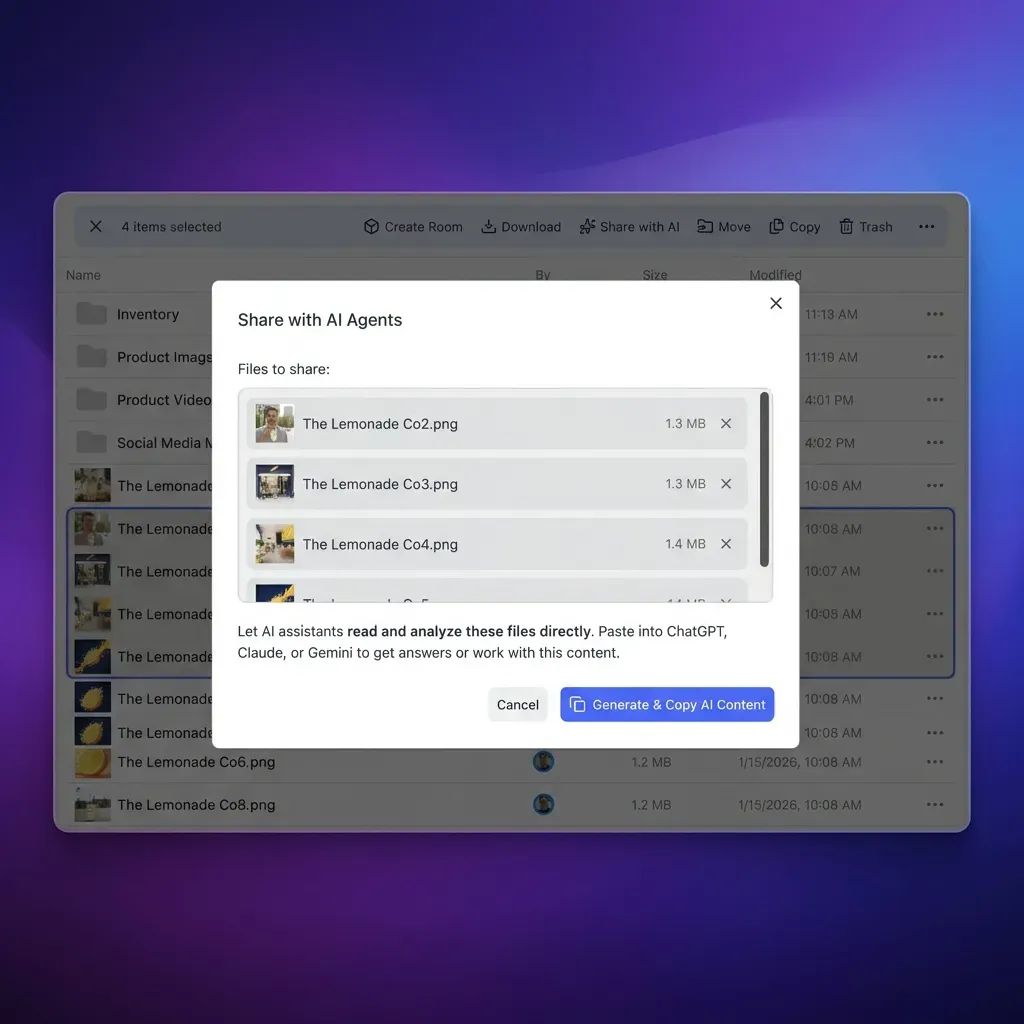
Fastio provides persistent direct URLs that skip web previews entirely. This makes them perfect for sharing large JSON files with external partners or across teams. Developers can fetch data directly into their applications, eliminating the local download/upload cycle. The result is faster iterations, fewer version mismatches, and cleaner automation scripts. See storage for agents for details on integrating these links into automated workflows.
The practical difference shows up in CI/CD pipelines. Instead of configuring OAuth credentials or handling session tokens for cloud storage APIs, you simply pass the direct URL to your HTTP client. This works with curl, wget, Python requests, JavaScript fetch, or any language with HTTP capabilities. The file lands exactly where your tests need it, without middleware.


Simplify Your API Testing Today
Stop login walls and truncated files. generous storage, direct links for JSON/XML. Made for devs with big payloads. Built for way share large json and xml files api integration workflows.
Technical Configuration: Headers, CORS, and Content Types
Wrong headers trip up API file shares. Browsers or clients reject files missing the right metadata. Basic platforms send generic headers that don't specify the actual file type, which causes problems when your code expects JSON or XML.
Servers need Content-Type: application/json for JSON files, and application/xml or text/xml for XML files. When these headers are missing, tools may parse the content as plain text instead of structured data, causing your tests to fail even though the data itself is valid. You can verify headers with a simple curl -I request before sharing links with your team.
CORS blocks matter when web applications or documentation sites fetch files from cross-domain sources. Your browser blocks these requests by default unless the server sends the appropriate Access-Control-Allow-Origin header. For development and testing, you can set this to wildcard (*) or explicitly list allowed domains. In production scenarios, restrict it to known domains for security.
Beyond Content-Type and CORS, consider adding Content-Disposition: attachment with a proper filename. This ensures downloaded files save with meaningful names rather than random IDs, making it easier for developers to organize their test data locally.
Strategic Patterns: Signed URLs vs. Streaming
Data from MB to GB? Pick signed URLs or streaming by need. Signed for bulk speed, streaming for low memory.
The Signed URL Pattern Server makes a temporary secure link to storage. Client downloads directly from the provider. This offloads bandwidth from your application server and typically supports resume functionality for interrupted downloads. Signed URLs expire after a set time, adding security for sensitive API test data.
The Streaming Pattern Process data as it arrives rather than loading the entire file into memory. For JSON, use NDJSON format where each line is a separate JSON object. This allows parsing line-by-line without holding everything in RAM. For XML, SAX parsers handle files element by element, avoiding the memory spike that DOM parsers cause with large files.
Choose streaming when your target environment has limited memory, such as edge devices or serverless functions. Choose signed URLs when you need maximum throughput and the receiving system has adequate resources.
Best Practices for Sharing API Mock Data
Sharing tests isn't just sending files. Treat mocks like code: version them for API branches, so your test suite matches production deployments. Security matters when sharing realistic sample data. Mock datasets often contain patterns that could reveal business logic if exposed publicly. Use secure expiring links for external partners, and enable audit logs to track who accessed what and when.
Mind recipient networks when sharing with remote developers. Teams in different regions may have bandwidth constraints that affect download times. Consider providing both full-size and compressed versions. Gzip or Brotli compression reduces JSON and XML file sizes by 60 to 80 percent, making transfers faster while still allowing on-the-fly decompression in most HTTP clients.
Version control your mock data alongside your API specifications. When your team updates an endpoint contract, update the corresponding test fixture. This prevents the common problem where tests pass locally but fail in CI because someone forgot to sync a shared JSON file.
Implementation Checklist for API Integration Files
Follow this checklist before sharing API test files with your team or external partners:
Validate locally first. Run JSON through a linter or parser before uploading. One misplaced comma or missing bracket in a large file can waste hours of debugging. For XML, use xmllint or similar tools to check well-formedness.
Test headers before sharing. Use curl -I on your direct link to verify Content-Type headers are correct. Missing or wrong headers cause silent failures that are hard to diagnose later.
Provide documentation. Share the link along with notes on the expected schema, which API version it targets, and any known limitations. This prevents confusion when developers integrate the data.
Include sample files. For large datasets, provide both a small sample file for quick prototyping and the full file for stress testing. Developers can verify their code works with a subset before processing the entire payload.
Set appropriate expiration. If sharing externally, use expiring links to maintain security. For internal teams, persistent links work fine but document which version is current.
Sources
References used to verify factual claims in this guide.
-
API gateways often cap request sizes at 10 megabytes.
-
Text-based files like JSON and XML can be compressed by 60 to 80 percent.
-
generous storage
-
Direct download links reduce integration friction by 40% compared to shared folder approaches.
Frequently Asked Questions
How do I share a 100MB JSON file without it timing out?
Use direct download from high-bandwidth storage. Skip email/chat. Fastio hosts with persistent URLs for direct app pulls.
What is the best way to send XML files for testing?
Set application/xml header, enable CORS. Direct link beats web folders, no logins.
How can I reduce the size of my large JSON payloads?
Gzip or Brotli on server. JSON compresses well. Minify if readability not needed.
Why does my browser block my JSON file request?
CORS issue. File host must send Access-Control-Allow-Origin for your domain.
Can I use Fastio for sharing API mock data?
Yes. Direct persistent links and big file support.
Related Resources

Simplify Your API Testing Today
Stop login walls and truncated files. generous storage, direct links for JSON/XML. Made for devs with big payloads. Built for way share large json and xml files api integration workflows.