How to Send High Resolution Photos Without Losing Quality
Sending high resolution photos without quality loss requires using file sharing methods that don't compress images. Email and messaging apps typically reduce file sizes, often compressing professional photos from 25-100MB down to under 1MB.


Why Do Photos Lose Quality When Shared?
Most communication tools compress images to reduce bandwidth and storage costs. When you attach a photo to an email, the email provider often resizes it automatically. iMessage compresses photos. WhatsApp is even more aggressive, sometimes reducing large RAW files to tiny sizes. Professional photographers working with files ranging from 25MB to over 100MB per image cannot afford this quality loss. Wedding photos, product shots, architectural images, and design assets need every pixel preserved. The compression happens silently. You hit send, your recipient downloads what looks like the same file, but the detail is gone. Print the compressed version and you'll see soft edges, color banding, and lost shadow detail that wasn't visible on screen.
Helpful references: Fastio Workspaces, Fastio Collaboration, and Fastio AI.
Related guides
- How to Deliver Wedding Photos to ClientsWedding photo delivery is the final step in your client experience, and it matters more than most photographers...
- How to Share Files Without CompressionSharing files without compression means transferring data in its original format and quality, avoiding the lossy...
- How to Send Video Without Losing QualitySending video without losing quality means transferring video files in their original format without compression that...
- How to Send 4K Video Files Without Losing Quality4K video files range from 3GB for a short clip to over 100GB per hour of professional footage. Most transfer methods...
- How to Send MOV Files Without Losing QualityMOV files from modern cameras and phones routinely exceed email attachment limits, forcing video professionals to find...
- How to Send Large Video Files Without Losing QualityMost file sharing methods struggle with video. Email attachments cap out at 25MB. Consumer tools compress your footage...
More on this subject: File Sharing (155 guides)
5 Methods to Send High-Res Photos Without Compression
Here are the most reliable ways to share full resolution images:
1. Cloud Storage with Original Quality Settings Services like Google Photos (with "Original Quality" enabled), Dropbox, and Fastio store files without compression. Upload your images, generate a share link, and recipients download the exact file you uploaded.
2. Professional Client Galleries Built specifically for photographers delivering to clients. Galleries maintain original resolution while adding features like proofing, selection, and download tracking.
3. File Transfer Services WeTransfer, Filemail, and similar services transfer files without altering them. Most have free tiers for occasional use, though files may expire after a set period.
4. Send as Document (Not Photo) In messaging apps like WhatsApp or Telegram, choose "Document" or "File" instead of "Photo" when sharing. This bypasses the image compression pipeline and sends the original file.
5. Direct Transfer Methods AirDrop between Apple devices, USB drives, and external hard drives transfer files without any server-side processing. Good for local handoffs but impractical for remote delivery.


Share Large Files on Fastio
Fastio stores and delivers images without compression. Create organized workspaces, share with clients, and keep files accessible as long as you need them.
Batch Sharing for Professional Photographers
Most guides focus on sending a single photo. Professional workflows look different. A wedding photographer might need to deliver hundreds of edited images. A product photographer might send dozens of shots per product across multiple product lines. Batch sharing requirements include:
- Organized delivery: Group images by category, shoot date, or client project
- Download options: Let clients download individual images or entire sets
- Access control: Share different selections with different people (client vs. retoucher)
- Persistent storage: Files stay available for re-download, not expiring after 7 days
Cloud workspaces handle this better than one-off transfer tools. Create a workspace per client or project, upload organized folders, and share specific sections with the right people. Files stay accessible until you remove them.
Delivering Photos to Clients Without Technical Friction
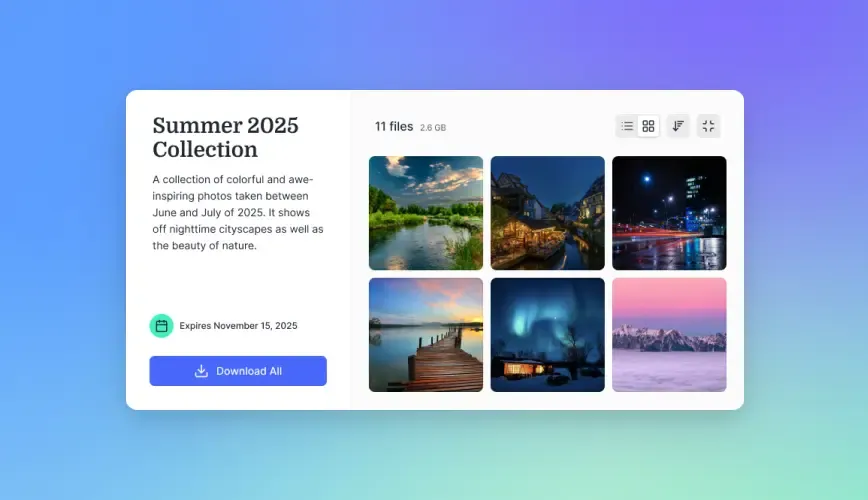
Your clients shouldn't need to create accounts, install software, or figure out FTP credentials. If downloading your photos feels like work, that reflects on you. Branded client portals fix this. Upload photos to a workspace, add your logo and colors, and send one link. Clients click, browse, and download. No login required unless you want one. For sensitive work like pre-release product photography or confidential corporate shoots, add password protection or set expiration dates. You can also disable downloads entirely if clients only need to review and approve, not keep the files. Setting up a branded portal takes a few minutes and looks more polished than email attachments.
Comparing Photo Sharing Methods
Each method has tradeoffs. Here's how they compare for professional use:
Email Attachments
- Compression: Yes (typically under 1MB per image)
- File size limit: 10-25MB total per message
- Best for: Quick previews, not final delivery
Messaging Apps (Standard)
- Compression: Yes (significant quality loss)
- Best for: Casual sharing, not professional work
Messaging Apps (Send as Document)
- Compression: No
- File size limit: Varies by app (Telegram allows up to 2GB)
- Best for: Single files when you remember to use document mode
Cloud Storage
- Compression: No (with correct settings)
- Organization: Folder structure preserved
- Best for: Ongoing client relationships, repeat deliveries
File Transfer Services
- Compression: No
- Expiration: Files often deleted after 7-30 days
- Best for: One-time deliveries, large single transfers
Client Gallery Platforms
- Compression: No
- Features: Proofing, selection, download tracking
- Best for: Photographers with high-volume client delivery
How to Send Full Resolution Photos from iPhone
iPhone cameras produce files up to 75MB when shooting in ProRAW format. Standard HEIC photos are smaller but still lose detail through iMessage compression. To send full resolution photos from your iPhone:
AirDrop works for nearby recipients with Apple devices. Open Photos, select images, tap Share, and choose the recipient's device. Files transfer at original quality with no server involved.
Cloud services work for remote delivery. The Apple Photos app can sync with iCloud at original quality if you enable "Download and Keep Originals" in Settings. For non-Apple recipients, upload to Dropbox, Google Photos, or another cloud service and share the link.
Files app workaround: Move photos to the Files app, then share from there using any method. This treats images as documents rather than photos, bypassing compression in many apps.
Shortcuts automation: Build a Shortcut that saves selected photos to a cloud folder and generates a share link. Run it from the share sheet when you need to send originals fast.
Sources
References used to verify factual claims in this guide.
-
professional photographers working with files ranging from 25MB to over 100MB per image
-
iPhone cameras produce files up to 75MB when shooting in ProRAW format
-
WeTransfer handle files up to 2GB on free tiers
Frequently Asked Questions
How do I send photos without losing quality?
Use cloud storage services that preserve original file quality, send images as documents instead of photos in messaging apps, or use dedicated file transfer services. Avoid standard email attachments and the default photo sharing mode in apps like WhatsApp and iMessage, which compress images automatically.
Does email compress photos?
Yes. Most email providers compress image attachments to reduce server load and bandwidth. Even when the original file technically attaches, many email clients resize images during viewing or forwarding. For full resolution delivery, upload to cloud storage and share a download link instead of attaching directly.
What is the best way to send large photo files?
Cloud storage with sharing links works best for large photo files. Services like Fastio, Dropbox, and Google Photos (with Original Quality enabled) store files without compression and let you share organized folders. For one-time transfers, file transfer services like WeTransfer handle files up to 2GB on free tiers.
How do I send full resolution photos from iPhone?
Use AirDrop for nearby Apple devices, upload to a cloud service and share the link for remote recipients, or send photos through the Files app as documents rather than using the Photos share sheet. The standard iMessage photo sharing compresses images.
Why are my photos blurry when I send them?
Photos appear blurry after sending because the delivery method compressed them. Email, iMessage, WhatsApp, and most messaging platforms reduce image resolution to save bandwidth. The original file on your device is fine. To preserve quality, use cloud storage links or send files as documents instead of photos.
Related Resources

Share Large Files on Fastio
Fastio stores and delivers images without compression. Create organized workspaces, share with clients, and keep files accessible as long as you need them.