How to Build a Secure Document Management System That Actually Works
A secure document management system organizes, stores, and controls access to business documents with encryption, audit trails, and granular permissions. This guide covers the core features you need, how to evaluate platforms, and practical steps to set one up without overcomplicating things.


What a Secure Document Management System Actually Is
A secure document management system is a platform for organizing, storing, versioning, and controlling access to documents with built-in encryption and audit capabilities. That definition sounds clean, but it glosses over why teams struggle with document security in the first place.
The core problem is scattered files. Documents live in email attachments, local drives, shared folders, and messaging apps. Each location has different access controls (or none at all), different versioning behavior, and no unified audit trail. When a compliance officer asks who accessed a contract last Tuesday, nobody can answer quickly.
According to Gartner research cited by M-Files, professionals spend an average of 18 minutes searching for a single document. That time cost compounds when you factor in the security risk: every minute spent hunting through unsecured folders is a minute where sensitive files sit in the wrong place with the wrong permissions.
A proper secure DMS solves both problems at once. It centralizes documents in one system where every file has clear ownership, versioned history, permission controls, and a searchable audit log. The goal is not just "keeping hackers out." It is making sure the right people can find and use documents quickly while keeping everyone else out.
Helpful references: Fastio Workspaces, Fastio Collaboration, and Fastio AI.
Related guides
- How to Set Up a Compliance Document Portal That Passes AuditsA compliance document portal centralizes the collection, organization, and auditing of regulatory and policy documents....
- How to Set Up Secure File Sharing for Your BusinessSecure file sharing for business is the practice of transferring sensitive documents between team members, clients, and...
- How to Choose a Secure File Sharing PlatformPicking a secure file sharing platform means understanding what "secure" actually requires for your team. This guide...
- How End-to-End Encrypted File Sharing Works (and When You Actually Need It)End-to-end encrypted file sharing ensures that only the sender and recipient can read a file, with the service provider...
- How to Set Up Secure RAG Document Storage for AI AgentsSecure RAG document storage keeps original files, vector embeddings, and retrieval safe for AI agents in production....
- How to Share Documents Securely Without Risking a Data BreachSecure document sharing is the practice of transmitting sensitive files using encryption, access controls, and audit...
More on this subject: Security and Access Control (32 guides)
Five Features Every Secure DMS Needs
Not every document management system takes security seriously. Some bolt on encryption as an afterthought. Others skip audit logging entirely. Here are the five features that separate a genuinely secure system from one that just markets itself as secure.
Encryption at Rest and in Transit
Your documents should be encrypted using AES-256 when stored and protected by TLS when moving between devices and servers. This is table stakes. If a platform does not offer both, move on. Encryption at rest means that even if someone gains physical access to the storage hardware, the files are unreadable without the decryption keys.
Granular Access Controls
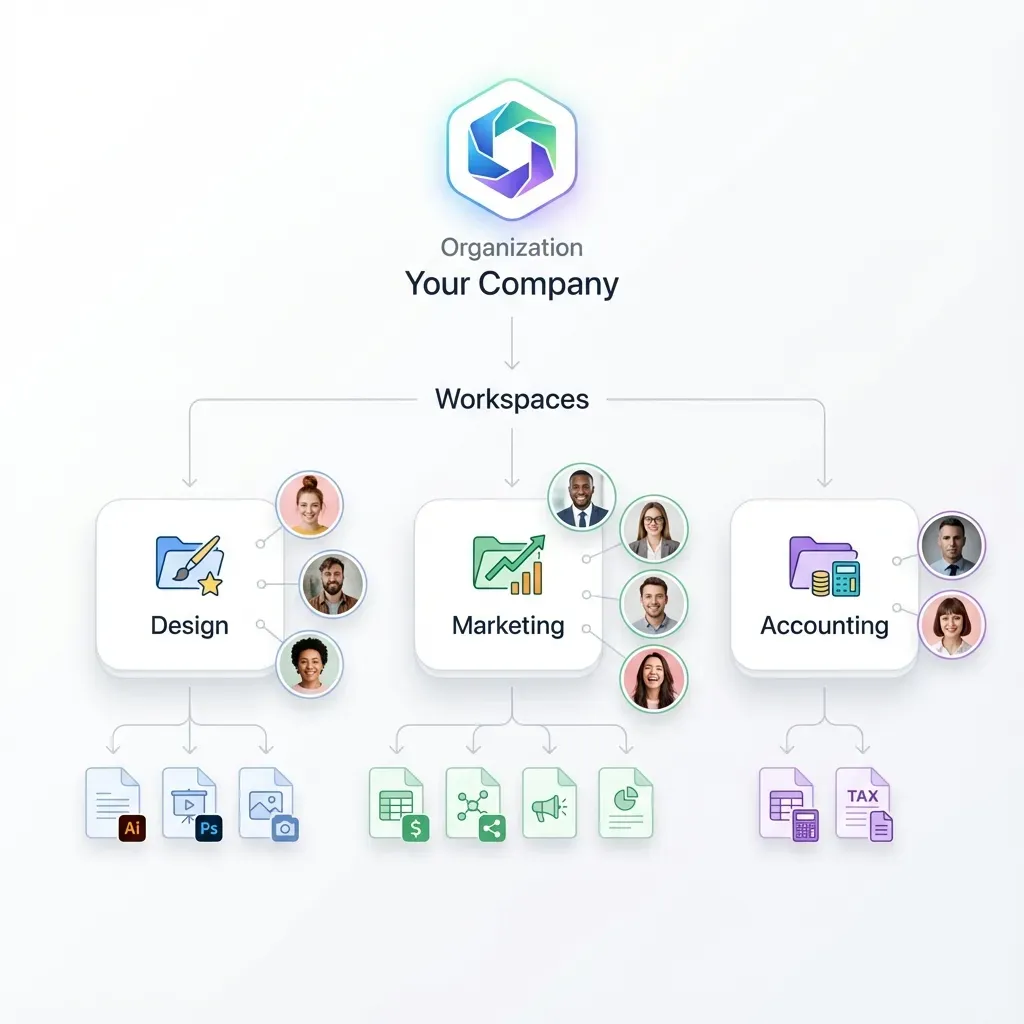
Role-based access is a starting point, but it is not enough on its own. You need permissions at multiple levels: organization, workspace, folder, and individual file. A junior team member should be able to view project documents without being able to download the financial appendix. The principle of least privilege matters here. Grant only the access each person needs to do their work.
Comprehensive Audit Trails
Every action on every document should be logged: who viewed it, who edited it, who downloaded it, and when. These logs need to be tamper-resistant and searchable. During an audit or investigation, you should not have to comb through raw server logs. The system should let you filter by user, date range, document, and action type.
Version Control with Rollback
Accidental overwrites destroy more documents than hackers do. A secure DMS keeps a full version history for every file. If someone saves over a contract with the wrong draft, you roll back to the previous version in seconds. Version control also supports compliance by proving exactly what a document contained at any point in time.
Search That Works at Scale
Security becomes a bottleneck when people cannot find what they need through legitimate channels. If searching the DMS is slow or unreliable, users will start emailing files to each other or saving copies to their desktops, which defeats the whole purpose. Fast, accurate search, including full-text and metadata search, keeps documents inside the secure system where they belong.
How to Evaluate Secure Document Management Platforms
The market has dozens of DMS options, from legacy enterprise systems like OpenText and Documentum to modern cloud platforms. Picking the right one depends on your team size, compliance requirements, and how you actually work with documents day to day.
Legacy DMS vs. Modern Cloud Platforms
Traditional DMS platforms were built for IT departments managing on-premise servers. They offer deep customization but require significant infrastructure and dedicated administrators. For teams under 500 people, the overhead usually is not worth it.
Modern cloud platforms handle infrastructure for you. The tradeoff is less customization, but faster setup and lower maintenance. For most organizations, cloud-based systems with strong encryption and access controls provide better security outcomes because updates and patches happen automatically.
Questions to Ask During Evaluation
Before committing to a platform, get clear answers to these questions:
- Where is data stored, and in which regions? This matters for privacy requirements and data residency requirements.
- How are encryption keys managed? Look for platforms that separate key management from data storage.
- What does the audit log actually capture? Some systems only log edits, not views or downloads.
- Can you set permissions at the file level, or only at the folder level?
- How does the platform handle file versioning? Some systems overwrite previous versions after a set number.
- What happens to your data if you leave the platform? Export capabilities matter.
Pricing Models to Watch For
Per-seat pricing punishes growing teams. A team of 50 paying standard per-seat fees spends $9,000 a year before adding storage costs. Usage-based models can be more predictable if your team generates lots of documents but not everyone needs daily access.
Some platforms offer free tiers for small teams or specific use cases. Fastio instead offers a trial of up to 14 days on monthly plans (credit card required), which works well for teams evaluating whether a cloud workspace fits their workflow before scaling up.


Keep your documents secure without slowing your team down
Fastio gives you encrypted workspaces with granular permissions, audit trails, and AI-powered search once Intelligence is enabled for the workspace.
Setting Up Document Security Step by Step
Getting a secure DMS running is not just installing software. The system is only as strong as the policies and structures you build around it.
Step 1: Audit Your Current Documents
Before migrating anything, map where your documents currently live. Check shared drives, cloud storage accounts, email attachments, and desktop folders. Identify which documents contain sensitive information: financial records, contracts, personal data, intellectual property. This audit tells you what needs the highest level of protection and what can use standard access controls.
Step 2: Define Your Folder and Workspace Structure
Organize documents by function, not by department politics. A clean structure might look like this:
- Contracts: client agreements, vendor contracts, NDAs
- Financial: invoices, budgets, tax documents
- HR: employee records, policies, onboarding materials
- Projects: organized by project name with consistent subfolder structure
- Legal: litigation documents, compliance records, regulatory filings
Each top-level category gets its own workspace or folder with distinct permission sets. Projects can have more open access while HR and financial documents stay restricted.
Step 3: Configure Permissions Before Adding Files
Set up your permission structure before migrating documents. Start restrictive and loosen access as needed, not the other way around. Define roles that match your organization: admins who manage the system, editors who create and modify documents, and viewers who need read-only access.
Platforms with granular permissions like Fastio let you control access at the organization, workspace, folder, and file level. This means an external auditor can access financial documents in a specific shared folder without seeing anything else in your workspace.
Step 4: Migrate in Phases
Do not dump everything into the new system at once. Start with one department or document category. Migrate contracts first, verify that permissions work correctly, confirm that version history transferred cleanly, and then move to the next category. Phased migration catches permission mistakes before they affect sensitive documents.
Step 5: Train Your Team on Search and Access
The highly secure system fails if people do not use it. Show your team how to search for documents, request access when they need it, and use version history instead of saving copies. A 30-minute walkthrough prevents months of workaround habits that undermine security.
Common Security Gaps and How to Close Them
Even well-configured systems develop security gaps over time. Here are the ones that catch most organizations off guard.
Stale Permissions
When someone leaves or changes roles, their document access often stays unchanged. A quarterly permission review prevents former contractors from retaining access to active project files. Automate this where possible. If your DMS works alongside your identity provider, deprovisioning a user account should automatically revoke document access.
Uncontrolled External Sharing
Email attachments are the biggest leak vector in most organizations. Every time someone emails a document instead of sharing a controlled link, a copy exists outside your DMS with zero audit trail. Fix this by making controlled sharing easier than email. Branded share links with download tracking, password protection, and expiration dates remove the temptation to "just attach it."
Fastio's Send, Receive, and Exchange shares are purpose-built for this. A Send share gives external recipients access to specific files with download controls and activity tracking. A Receive share lets clients or vendors upload documents directly into your workspace. Both keep files inside the system where audit trails stay intact.
Missing Retention Policies
Documents accumulate. Without retention policies, your DMS becomes a digital hoarder. Old drafts, expired contracts, and outdated policies sit alongside current documents, creating confusion and increasing the surface area for accidental exposure. Define how long each document type should be retained and automate deletion or archival when that period ends.
No Monitoring or Alerts
Audit logs only help if someone reads them. Set up alerts for unusual activity: bulk downloads, access from unfamiliar locations, permission changes on sensitive folders. Organizations that actively monitor document activity reduce compliance violations by roughly 30% compared to those that only review logs during annual audits.

Making Documents Findable and Secure at the Same Time
Security and findability are usually treated as competing priorities. Lock documents down too tightly and nobody can find what they need. Make everything searchable and you risk exposing sensitive files to the wrong people. The solution is not choosing between the two. It is building a system where search respects permissions.
A properly configured DMS shows search results only for documents the searcher has permission to access. This means you can enable full-text search across your entire document library without worrying that an intern's search for "budget" will surface the CEO's compensation plan.
Modern platforms take this further with semantic search, which finds documents based on meaning rather than exact keyword matches. Searching for "vendor agreement renewal" should surface contracts that use different terminology like "supplier extension" or "third-party renewal terms." This is especially valuable for compliance teams who need to find every document related to a specific topic across years of files.
Fastio indexes workspace files once Intelligence is enabled for the workspace for semantic search and AI-powered chat. Once enabled, you can ask questions like "What are the payment terms in our Acme Corp contract?" and get an answer with citations pointing to the specific document and page. The search layer respects workspace permissions, so each user only sees results from documents they can access.
For teams using AI agents or automated workflows, this same intelligence layer is accessible through the Fastio API and MCP server. An agent can search, retrieve, and analyze documents within its permitted workspaces without bypassing any access controls. The audit trail captures agent activity the same way it captures human activity, so compliance teams get full visibility regardless of who or what accessed a document.
Sources
References used to verify factual claims in this guide.
-
Professionals spend an average of 18 minutes searching for a single document
-
Organizations that actively monitor document activity reduce compliance violations by roughly 30%
Frequently Asked Questions
What is a secure document management system?
A secure document management system is a platform that centralizes document storage, versioning, and access control with built-in encryption and audit capabilities. It ensures that only authorized users can view, edit, or share documents while maintaining a complete log of all document activity for compliance and security purposes.
What is the highly secure document management software?
The highly secure DMS depends on your specific requirements. For enterprise on-premise deployments, platforms like OpenText and M-Files offer deep customization. For cloud-based teams, look for AES-256 encryption, granular permissions at the file level, comprehensive audit trails, and two-factor authentication. Fastio provides these security features with a workspace model that supports both human and automated access with full audit logging.
How do you manage documents securely?
Start by centralizing all documents in a single system with encryption and access controls. Define a clear folder structure, set permissions before adding files, and enforce the principle of least privilege. Use controlled sharing links instead of email attachments, enable audit logging, and conduct quarterly permission reviews to remove stale access. Train your team to use the system's search and sharing features instead of workarounds.
What features should a secure DMS have?
At minimum: AES-256 encryption at rest and TLS in transit, granular role-based access controls at the folder and file level, comprehensive audit trails that log views and downloads (not just edits), full version history with rollback, two-factor authentication, and fast full-text search. Advanced features like semantic search, AI-powered document chat, and branded external sharing add significant value for teams handling sensitive documents at scale.
How much does a secure document management system cost?
Pricing varies widely. Legacy enterprise DMS platforms can cost $20-50 per user per month with additional infrastructure fees. Modern cloud platforms range from free tiers for small teams to $10-30 per user per month. Plans with seats included, like Fastio's, start at $9.99/mo for the Starter plan, with a 14-day Business Trial on monthly billing (credit card required; see /pricing/).
Related Resources

Keep your documents secure without slowing your team down
Fastio gives you encrypted workspaces with granular permissions, audit trails, and AI-powered search once Intelligence is enabled for the workspace.