How to Build a Sales Enablement Platform That Actually Gets Used
Most sales enablement platforms collect dust. Reps ignore them because content is hard to find, the interface adds friction to their workflow, and nobody tracks whether the materials actually help close deals. This guide covers what a sales enablement platform should do, why adoption fails, and how a workspace-first approach can replace bloated enterprise suites with something your team will use every day.


What a Sales Enablement Platform Actually Does
A sales enablement platform is a centralized workspace where marketing and sales teams organize, share, and track content used throughout the buyer journey. That includes pitch decks, case studies, one-pagers, demo videos, pricing sheets, competitive battle cards, and anything else a rep needs during a conversation with a prospect.
The core job is simple: make sure the right content reaches the right rep at the right moment, and then tell you whether it worked.
That sounds straightforward, but most organizations get it wrong. According to research from SiriusDecisions (now Forrester), roughly 65% of sales content goes completely unused because reps cannot find what they need when they need it. Content gets created, uploaded to a shared drive or wiki, and then forgotten.
A functional sales enablement platform solves this with five core capabilities:
- Content organization with tagging, search, and folder structures that match how reps think about deals, not how marketing organizes campaigns
- Content delivery through branded portals, email links, or direct shares that look professional to buyers
- Usage tracking that shows which pieces of content get opened, forwarded, and viewed by prospects
- Version control so reps always send the latest approved materials instead of an outdated PDF from their desktop
- Analytics connecting content usage to deal outcomes, revealing which assets actually influence closed-won revenue
The difference between a sales enablement platform and a shared Google Drive folder is that last point. A folder stores files. A platform tells you which files matter.
Helpful references: Fastio Workspaces, Fastio Collaboration, and Fastio AI.
Related guides
- How to Set Up a Content Marketing Platform for Your TeamA content marketing platform is an integrated workspace where teams create, store, collaborate on, and distribute...
- How to Build a Content Production Workflow That ScalesMost content workflow guides stay abstract. This one walks through the actual steps to build a repeatable production...
- How to Choose File Storage for Martech StacksMartech stack file storage puts assets in one place across marketing tools. Marketing teams handle dozens of platforms...
- How to Set Up an AI Marketing Team Intelligence WorkspaceAI marketing team intelligence workspaces combine semantic search and agent collaboration for files. Marketing teams...
- How to Manage the Full Content Lifecycle from Creation to RetirementGuide to content lifecycle management: Most content teams are good at publishing. Where things fall apart is everything...
- How to Manage Cross-Channel Campaign FilesCross-channel campaign file management keeps assets consistent across email, social media, web, and print. Teams often...
More on this subject: Creative and Marketing Teams (27 guides)
Why Most Sales Enablement Platforms Fail
The sales enablement software market has consolidated fast. Seismic acquired Highspot in early 2026 for a combined valuation near $6 billion. Showpad merged with Bigtincan in late 2025. Gartner published its first Magic Quadrant for Revenue Enablement Platforms in November 2025, a signal that the category has matured.
And yet adoption remains terrible.
Highspot's own 2025 State of Sales Enablement report found that 75% of sales leaders logged into their enablement platform fewer than five times in the previous three months. Sixteen percent had not logged in at all. The tools exist. People just do not use them.
Three patterns explain why:
The content discovery problem
Enterprise enablement suites store content in hierarchical libraries with metadata, tags, and AI-powered recommendations. In theory, reps search for what they need and the platform surfaces the best match. In practice, reps have 30 seconds between calls and will not learn a new search interface. They message a colleague on Slack, dig through their email for the last version they sent, or skip the content entirely.
The findability problem is not about better search algorithms. It is about where the content lives relative to the rep's actual workflow. If the enablement platform is a separate destination they have to visit, most will not bother.
The "system of record" trap
Many enablement platforms try to become systems of record, housing training materials, coaching scorecards, call recordings, onboarding checklists, and content all in one place. This creates a sprawling application that does many things adequately and nothing brilliantly. Reps already have a CRM for pipeline data, a communication tool for messaging, and a calendar for meetings. Adding another monolithic platform creates tool fatigue. A Salesforce survey found that 70% of sellers feel overwhelmed by the number of tools they use daily.
The measurement gap
Only 35% of organizations have established clear metrics for their enablement programs, according to multiple industry surveys. Without measurement, enablement becomes a cost center that marketing funds and sales ignores. When budget cuts arrive, the platform is first on the chopping block because nobody can prove it contributed to revenue.
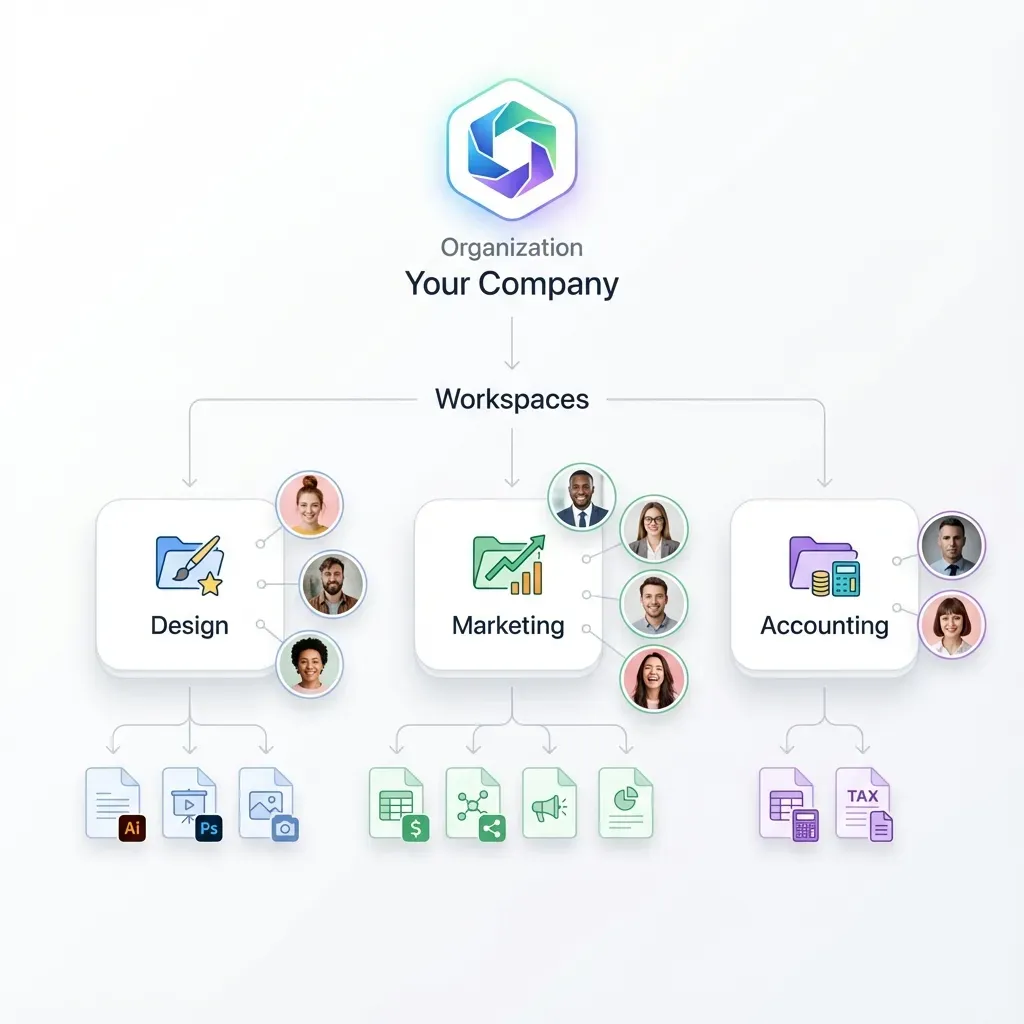
CRM vs. Sales Enablement: They Solve Different Problems
A common question from teams evaluating their sales stack: do we need a separate enablement platform, or can our CRM handle it?
The short answer is that they solve different problems. A CRM is a system of record. It tracks contacts, companies, deals, activities, and pipeline stages. It tells you where a deal stands and what happened. Salesforce, HubSpot, and Pipedrive are built for this.
A sales enablement platform is a system of execution. It equips reps with the content, context, and workflows they need to move deals forward. It tells you how to sell, not just what you sold.
Here is where they diverge in practice:
- Content management: CRMs store links to documents. Enablement platforms manage the documents themselves, with versioning, approval workflows, and usage analytics.
- Buyer engagement: CRMs log that a rep sent an email. Enablement platforms show whether the prospect opened the attached deck, which slides they viewed, and how long they spent on the pricing page.
- Onboarding and training: CRMs have no training functionality. Enablement platforms (the enterprise ones, at least) include coaching modules, certifications, and skill assessments.
- Content-to-revenue attribution: CRMs track revenue by deal. Enablement platforms attribute revenue to specific content assets, answering "which case study is most correlated with closed-won deals in the mid-market segment?"
Most growing sales teams need both. The CRM is the foundation. Enablement layers on top. The question is how heavyweight that enablement layer needs to be.


Give your sales team a content workspace they'll actually use
Fastio workspaces organize your sales content, deliver it through branded portals, and index everything for AI-powered search. Built for sales enablement platform workflows.
What to Look for in a Sales Enablement Solution
Not every team needs an enterprise sales enablement suite. The right solution depends on your team size, sales cycle complexity, and existing tool stack. Here is what matters at each level.
For teams under 20 reps
Small sales teams do not need AI-powered coaching or CRM-integrated content recommendations. They need three things: a single place to find approved content, a professional way to share it with buyers, and basic visibility into whether prospects engage with it.
At this stage, a well-organized workspace with branded sharing links often outperforms a dedicated enablement platform. The content library is small enough that search is not the bottleneck. What matters is that materials look polished when they reach the buyer and that someone can see whether a prospect downloaded the proposal.
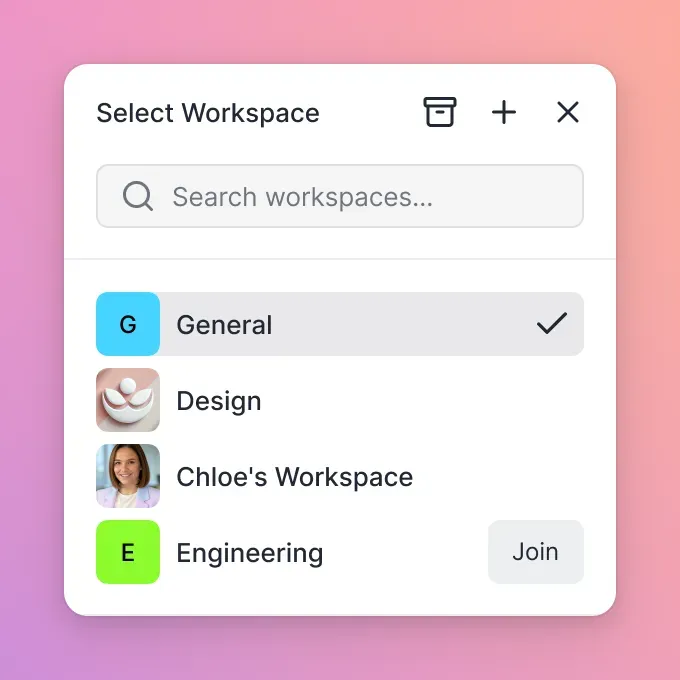
Fastio works well here. Workspaces organize content by deal stage, product line, or customer segment. Branded shares let reps send materials through a professional portal instead of attaching files to emails. And because Fastio includes granular permissions at the folder and file level, marketing can control which materials are approved for external sharing while reps access everything they need.
For teams of 20-100 reps
Mid-size teams start running into content sprawl. Multiple products, verticals, and buyer personas mean hundreds of assets. Reps cannot find what they need through browsing alone.
At this level, you need search that works, content tagging, and some form of analytics. You also need version control so that a rep in Austin is not sending a pricing sheet from last quarter while the team in Boston has the updated version.
Platforms like Showpad, Guru, and Dock focus on this segment. They provide content management, buyer engagement tracking, and lighter-weight analytics without the implementation overhead of Seismic.
Fastio's Intelligence feature adds semantic search across all indexed files in a workspace. Reps can ask natural-language questions like "latest case study for healthcare vertical" and get results with citations pointing to the source file. This replaces the manual tagging that most mid-size teams never maintain.
For enterprise teams (100+ reps)
Large organizations with complex sales cycles, multiple product lines, and global teams need the full stack: content management, training and coaching, conversation intelligence, and deep CRM integration. Seismic (now including Highspot), Allego, and Mindtickle compete here. Expect six-figure annual contracts and multi-month implementations.
The tradeoff is capability versus adoption. Enterprise platforms do everything, but their complexity is exactly what drives the 75% non-usage rate. Some enterprise teams are solving this by using a heavyweight platform for analytics and governance while giving reps a simpler workspace for day-to-day content access and sharing.
The Workspace-First Approach to Sales Enablement
The gap in most sales enablement guides is that they assume you need a dedicated enablement platform. For many teams, what you actually need is a workspace that handles content organization and branded delivery well enough that reps use it without thinking.
Here is what a workspace-first approach looks like in practice.
Organize content by how reps use it
Forget marketing's campaign taxonomy. Structure your workspace around deal stages and buyer personas. A folder structure like this works for most B2B teams:
- Discovery: industry overviews, pain point summaries, qualifying question guides
- Evaluation: product demos, feature comparison sheets, technical documentation
- Decision: case studies, ROI calculators, pricing sheets, security questionnaires
- Post-sale: onboarding guides, training materials, renewal playbooks
Within each stage, subdivide by vertical or persona if your team sells into multiple segments. Keep it flat. Two levels of nesting maximum. If a rep has to click through four folders to find a case study, they will message Slack instead.
Deliver content through branded portals, not email attachments
Email attachments are where sales content goes to die. The prospect downloads it, renames it "deck_final_v3_FINAL.pdf," and it vanishes into their Downloads folder. You have no idea whether they read it, shared it with their committee, or deleted it immediately.
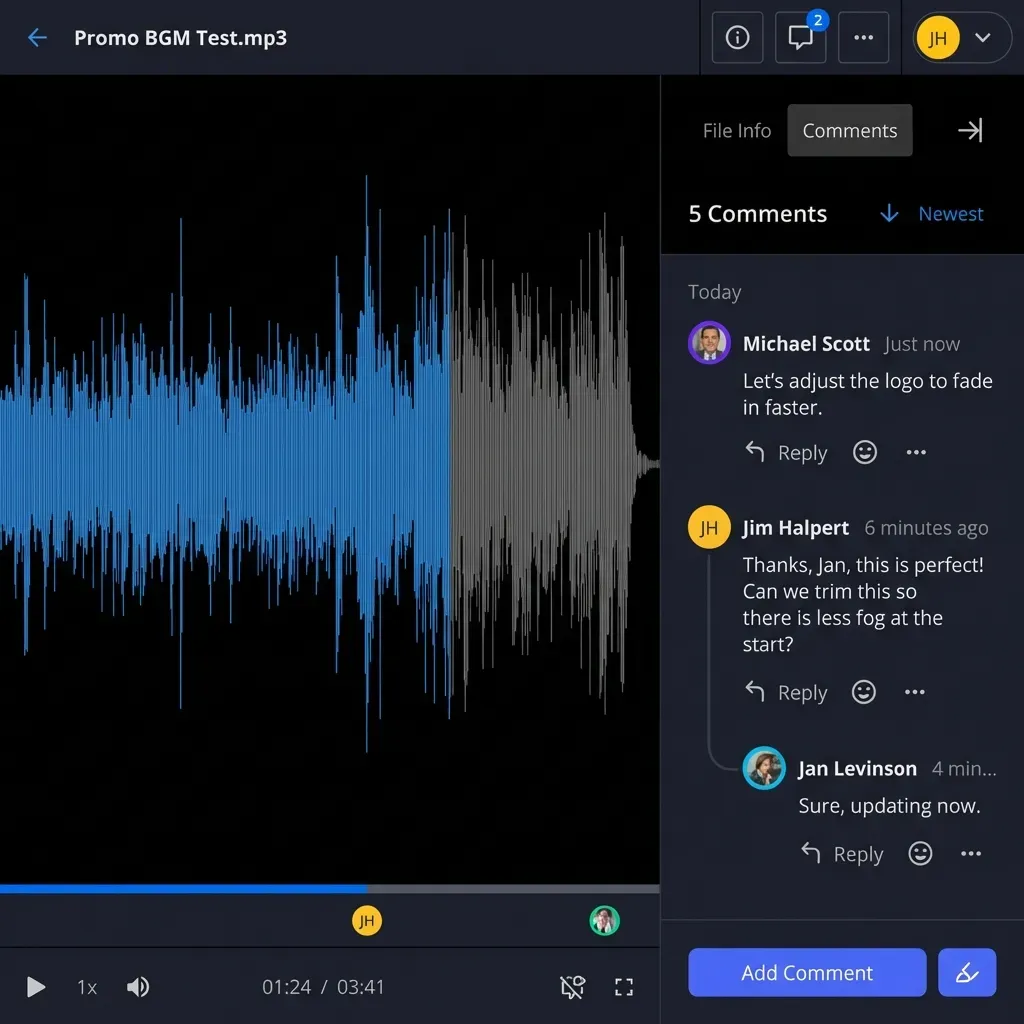
Branded share links solve this. Fastio's Send shares create a professional portal with your company's branding where prospects access materials. You can see when they open it, which files they view, and whether they download anything. Exchange shares go further, letting prospects upload documents back to you (signed contracts, procurement forms, technical requirements) through the same portal.
This is not unique to Fastio. Dock, Aligned, and several other tools offer digital sales rooms. The advantage of using your existing workspace is that there is no separate system to maintain. The same workspace where marketing uploads approved content is where reps create buyer-facing shares.
Track engagement without a separate analytics platform
Audit trails in Fastio capture every file view, download, and share interaction. You will not get the content-to-revenue attribution that an enterprise enablement suite provides, but you will know which materials prospects actually engage with. That alone is more insight than most teams have.
For teams that need deeper analytics, the audit data can feed into your existing BI tools. The point is that you are not starting from zero. Basic engagement data from your workspace covers 80% of what a mid-size team needs to measure.
Let AI handle the findability problem
The strongest argument for a workspace-first approach is that Intelligence Mode in Fastio auto-indexes every file for semantic search and AI chat. Reps do not need to learn a search interface or rely on someone tagging content correctly. They ask a question in plain English and get answers grounded in the actual files, with citations pointing to the source.
This sidesteps the entire content discovery problem that plagues traditional enablement platforms. There is no metadata to maintain, no taxonomy to enforce, and no training required. Upload the content, enable Intelligence, and reps can find what they need through conversation.
Measuring Whether Your Sales Enablement Actually Works
You cannot improve what you do not measure, and most sales teams measure enablement poorly or not at all. Here are the metrics that matter, grouped by what they tell you.
Content effectiveness metrics
- Content usage rate: What percentage of your sales content library gets used in any given quarter? If the number is below 50%, you have a findability problem, a relevance problem, or both.
- Content-to-meeting conversion: When a rep shares a specific asset, does it correlate with the prospect agreeing to a next meeting? Track this over time to identify your highest-performing materials.
- Time to first share: How long after uploading does a new piece of content get shared externally for the first time? If marketing publishes a case study and it sits untouched for three weeks, either reps do not know about it or it does not match what they need.
Rep productivity metrics
- Time spent searching for content: Survey your team or shadow a few calls. If reps spend more than five minutes looking for materials before a meeting, your system is failing.
- Ramp time for new hires: How long does it take a new rep to close their first deal? Organizations with mature enablement programs cut ramp time by 40-50%, according to industry benchmarks.
- Quota attainment distribution: Are more reps hitting quota after enablement improvements? Look at the distribution, not just the average. A good enablement program lifts the middle of the pack, not just the top performers.
Business outcome metrics
- Win rate: The headline number. Organizations with a dedicated enablement function report win rates roughly 49% higher on forecasted deals, per Highspot's annual research.
- Average deal size: Does better content and buyer engagement correlate with larger deals? It should, especially if your enablement materials include ROI calculators and value-selling frameworks.
- Sales cycle length: Faster access to the right content at the right stage should compress the sales cycle. Track median cycle length before and after enablement changes.
Start with content usage rate and win rate. If those two numbers are moving in the right direction, the details will follow. If they are not, you have a clear signal that something in your enablement approach needs to change.
Sources
References used to verify factual claims in this guide.
-
65% of sales content goes unused because reps can't find it
-
75% of sales leaders logged into their enablement platform fewer than 5 times in the last 3 months
-
70% of sellers feel overwhelmed by the number of tools they use
-
Only 35% of organizations have established clear metrics for enablement programs
-
Organizations with enablement achieve 49% higher win rates on forecasted deals
-
Mature enablement programs cut ramp time by 40-50%
Frequently Asked Questions
What is a sales enablement platform?
A sales enablement platform is a centralized workspace where marketing and sales teams organize, share, and track content used throughout the buyer journey. It helps reps find the right materials at the right time and gives leadership visibility into which content actually influences deals. Core capabilities include content management, branded delivery, version control, usage analytics, and content-to-revenue attribution.
What is the difference between CRM and sales enablement?
A CRM is a system of record that tracks contacts, deals, pipeline stages, and communication history. A sales enablement platform is a system of execution that equips reps with content, training, and workflows to move deals forward. CRMs tell you what happened in your pipeline. Enablement platforms help reps perform better during the sales process. Most growing teams use both, with the CRM as the foundation and enablement layered on top.
How do you measure sales enablement success?
Focus on three categories. Content effectiveness: track usage rates, content-to-meeting conversion, and time to first share. Rep productivity: measure ramp time for new hires, time spent searching for content, and quota attainment distribution. Business outcomes: monitor win rate, average deal size, and sales cycle length. Start with content usage rate and win rate as your headline metrics.
What should a sales enablement platform include?
At minimum, a sales enablement platform should include content organization with search and tagging, branded content delivery to buyers, version control for approved materials, usage analytics showing prospect engagement, and basic reporting on which content correlates with closed deals. Larger teams may also need training and coaching modules, CRM integration, and AI-powered content recommendations.
Do small sales teams need a dedicated sales enablement platform?
Not necessarily. Teams under 20 reps often get more value from a well-organized workspace with branded sharing capabilities than from a dedicated enterprise platform. The content library is small enough that sophisticated search is not the primary bottleneck. What matters most is that materials look professional when they reach buyers and that someone can track whether prospects engage with them.
Related Resources

Give your sales team a content workspace they'll actually use
Fastio workspaces organize your sales content, deliver it through branded portals, and index everything for AI-powered search. Built for sales enablement platform workflows.