How to Set Up a Real Estate Data Room for Due Diligence
Commercial real estate transactions generate hundreds of documents that multiple parties need to review under tight deadlines. This guide walks through setting up a data room specifically for CRE due diligence, from folder structure and document checklists to permission management and deal closeout.


Why Real Estate Deals Need a Dedicated Data Room
A real estate data room is a secure virtual workspace where buyers, sellers, and advisors share confidential property documents during due diligence for commercial transactions or fund formation. It replaces the old approach of shipping bankers boxes to a conference room or emailing zip files back and forth.
The average commercial real estate transaction involves 200 or more documents. Title reports, environmental assessments, rent rolls, CAM reconciliations, building condition reports, zoning letters, estoppel certificates, service contracts, insurance policies, and financials all need to be reviewed by buyer's counsel, lenders, environmental consultants, and sometimes multiple bidders simultaneously.
Due diligence periods typically run 30 to 90 days for most commercial deals. Complex portfolio transactions or fund formations can stretch to six months. During that window, every day spent hunting for a missing document or re-requesting access is a day closer to the deadline.
Generic cloud storage like Google Drive or Dropbox technically holds files. But these platforms were not designed for deal workflows. They lack deal-specific audit trails showing exactly who viewed which document and when. They cannot enforce granular view-only access that prevents unauthorized downloads. And they do not provide the structured permission layers that confidential transactions require. Using consumer file storage for a $20 million acquisition is a risk most deal teams cannot justify.
A purpose-built data room gives you controlled access, activity tracking, structured organization, and a clean audit trail that survives closing.
Helpful references: Fastio Workspaces, Fastio Collaboration, and Fastio AI.
Related guides
- How to Run Commercial Property Due Diligence with a Secure Data RoomCommercial property due diligence involves reviewing 50 to 100+ documents across financial, legal, environmental, and...
- Real Estate Document Management Guide for AgentsReal estate document management is the systematic organization, storage, and sharing of property transaction documents...
- How to Set Up a Secure Document Portal for Your Title CompanyTitle companies handle some of the most sensitive documents in any real estate transaction, from wire instructions to...
- How to Set Up a Real Estate Client Portal for Document SharingA real estate client portal is a secure, branded online workspace where agents share transaction documents,...
- 8 Best Real Estate Transaction Coordinator Software Tools for Document ManagementGuide to real estate transaction coordinator software: Transaction coordinators juggle 40+ documents per deal across a...
- How to Create and Share Real Estate 3D Tours That Actually Drive ShowingsA real estate 3D tour is an interactive, navigable digital model of a property that lets prospective buyers explore...
More on this subject: Real Estate (21 guides)
Folder Structure for CRE Due Diligence
The biggest mistake in setting up a real estate data room is uploading everything into a flat list and letting reviewers figure it out. Buyers' counsel and their consultants expect a logical structure that mirrors standard CRE due diligence categories. A clear folder hierarchy reduces questions, speeds review, and signals professionalism.
Here is a folder template that covers most commercial property transactions. Adjust it based on deal type, whether that is a single-asset sale, portfolio acquisition, or fund formation.
1. Property Overview
- Executive summary and investment memo
- Property photos and site plans
- Marketing materials and offering memorandum
- Maps and aerial imagery
2. Title and Survey
- Preliminary title report or title commitment
- ALTA/NSPS land title survey
- Recorded easements and encumbrances
- Title exception documents
- Covenants, conditions, and restrictions (CC&Rs)
3. Environmental
- Phase I Environmental Site Assessment
- Phase II ESA (if triggered by Phase I findings)
- Remediation reports and no-further-action letters
- Asbestos, lead paint, and mold reports
- Underground storage tank documentation
- Environmental permits and compliance records
4. Physical Condition
- Property Condition Assessment (PCA)
- Roof inspection report and warranty
- MEP systems assessment (mechanical, electrical, plumbing)
- Elevator inspection certificates
- Fire and life safety inspection reports
- ADA compliance evaluation
- Capital expenditure history and 5-year plan
5. Leases and Tenants
- Executed lease agreements and all amendments
- Rent roll (current month)
- Tenant estoppel certificates
- Subordination, non-disturbance, and attornment agreements (SNDAs)
- Tenant correspondence
- Arrears and collection history
- Security deposit ledger
6. Financial
- Trailing 3-year operating statements (T-3)
- Current year budget and actuals
- CAM reconciliation statements (3 years)
- Real estate tax bills and assessments
- Utility bills (12 months)
- Insurance policies and claims history
- Capital improvement invoices
7. Legal and Compliance
- Purchase and sale agreement (PSA)
- Entity formation documents
- Zoning verification letter
- Certificates of occupancy
- Building permits (open and closed)
- Code violation history
- Litigation files (pending and threatened)
8. Contracts and Vendors
- Property management agreement
- Service contracts (HVAC, janitorial, landscaping, security, pest control)
- Equipment leases
- Parking agreements
- Signage agreements
9. Loan Documents (if applicable)
- Existing mortgage and loan documents
- Loan modification agreements
- Payoff statements
- Assignment and assumption agreements
Number your top-level folders so they sort in a predictable order. Within each folder, use a consistent naming convention: date, document type, and property name. For example: 2026-03-15_Phase-I-ESA_123-Main-St.pdf. This makes documents scannable without opening them.
Document Checklist by Deal Phase
Not every document needs to be in the data room on day one. Loading everything at once overwhelms reviewers and buries critical items. Instead, stage your uploads around the three phases of CRE due diligence.
Pre-LOI (Letter of Intent) Phase
Before a buyer signs the LOI, they need enough information to underwrite the deal and decide whether to commit. Upload these first:
- Offering memorandum or investment summary
- Current rent roll
- Trailing 3-year operating statements
- Property photos and site plan
- Phase I ESA executive summary (not the full report yet)
- Preliminary title report
This gives the buyer's team enough to model returns and flag obvious deal-breakers without drowning them in detail.
Post-PSA / Active Due Diligence Phase
Once the purchase and sale agreement is executed and the due diligence clock starts, upload the full document set:
- Complete Phase I ESA (and Phase II if applicable)
- Property Condition Assessment
- ALTA/NSPS survey
- All executed leases and amendments
- Tenant estoppel certificates
- CAM reconciliations
- Zoning verification letter
- Certificates of occupancy
- Full insurance policy and claims history
- All service contracts
- Existing loan documents
The goal is to have the core diligence package ready within the first week of the due diligence period. Late document delivery is one of the most common causes of extension requests and deal delays.
Pre-Closing Phase
In the final weeks before closing, add:
- Updated title commitment
- Closing prorations and adjustments
- Transfer documents and deeds
- Tenant notification letters
- Updated rent roll and arrears report
- Final loan payoff or assumption documents
Track which documents are still outstanding using a simple checklist within the data room. Assign responsibility for each missing item so nothing falls through the cracks during the final push.



Organize Your Next Real Estate Deal in One Workspace
Set up a secure data room with granular permissions, branded shares, and AI-powered document search. Built for real estate data room workflows.
Setting Up Permissions and Access Controls
CRE due diligence involves multiple parties with different access needs. The seller's broker, buyer's counsel, lender's underwriting team, environmental consultants, and property inspectors all need access to different document subsets at different times. Getting permissions wrong creates either security gaps or workflow bottlenecks.
Layer your access by role. Start with the broadest categories:
- Seller team gets full read-write access to upload and organize documents
- Buyer team gets read access to the full data room, with download permissions on most documents
- Lender gets read access to financial, title, environmental, and physical condition folders only
- Consultants (environmental, engineering, appraisal) get read access to their specific folder plus the property overview
- Co-investors or limited partners may get access to a curated subset: financials, investment memo, and legal summaries
Restrict downloads where it matters. Some documents, like draft PSAs or internal valuations, should be view-only during active negotiations. Environmental reports with remediation cost estimates are another common candidate for view-only access. Allow downloads on final versions and standard reference documents.
Control timing. In a competitive bid process, you may want to restrict access to certain folders until a bidder reaches a specific round. Financial models and capital improvement plans are often held back until the second round. Set these up as separate folders with permissions that you activate when the bidder qualifies.
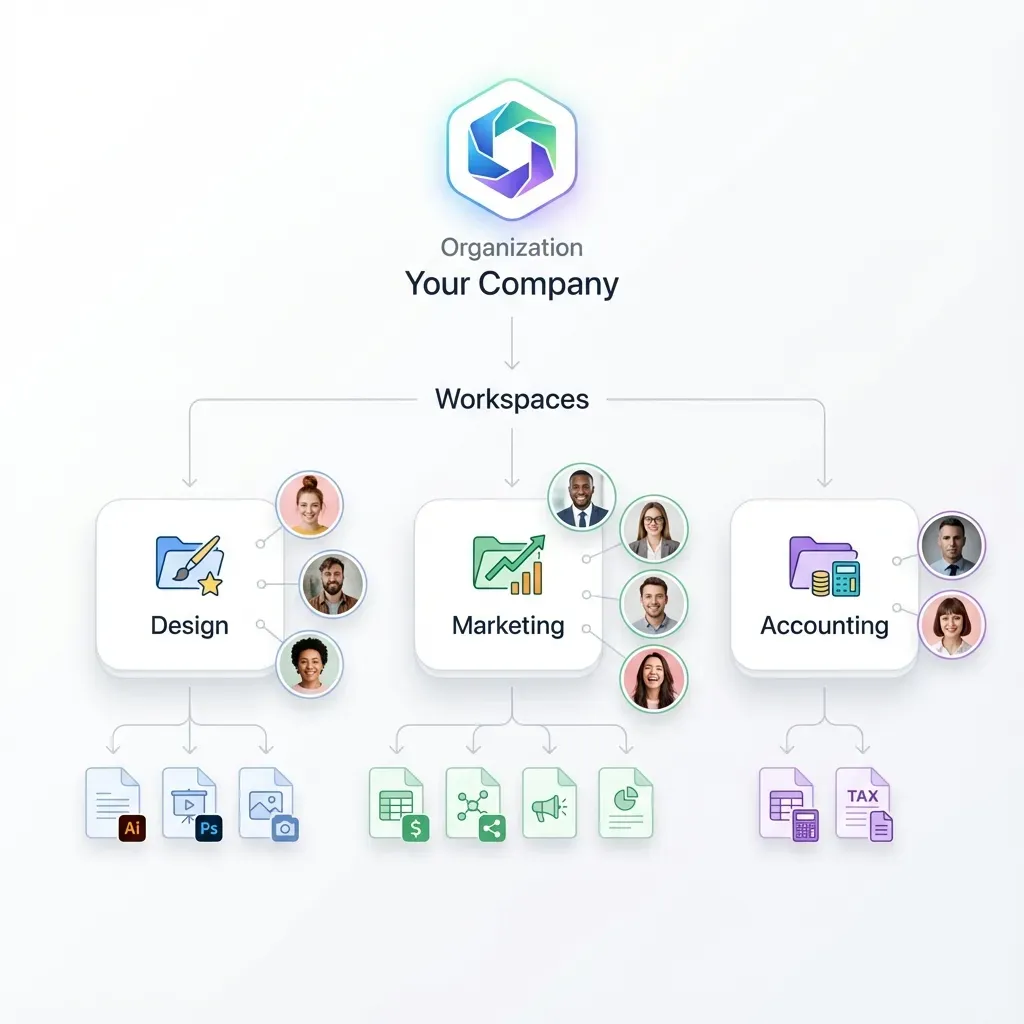
Fastio supports permissions at the organization, workspace, folder, and file level, which maps directly to this layered approach. Each deal gets its own workspace. Within that workspace, folders mirror the due diligence structure, and permissions cascade from workspace to folder to file. Branded shares let you create separate access points for each party, with password protection and expiration dates that automatically revoke access when the due diligence period ends.
Audit trail basics. Every data room should log who accessed what and when. During a transaction dispute or post-closing claim, you need to demonstrate that a specific party had access to specific disclosures on a specific date. This is not optional. It is a basic requirement for any professional deal room, and most generic cloud storage tools do not provide this level of detail. Fastio logs file operations, membership changes, and share interactions through its event system, creating the audit record your legal team needs.

Comparing Data Room Options for Real Estate Transactions
The data room market splits into three tiers for real estate work. Your choice depends on deal volume, budget, and how much you value features beyond basic secure storage.
Enterprise VDR providers like Datasite (formerly Merrill), Intralinks, and Firmex dominate large institutional transactions. These platforms offer advanced Q&A workflows, watermarking, redaction, and dedicated project management support. The tradeoff is pricing: most require custom quotes, annual commitments, and per-page or per-user charges that add up fast. If you are a REIT running 50 acquisitions a year, the cost is justified. If you are a regional brokerage closing 5 to 10 deals annually, enterprise VDR pricing is hard to absorb.
Mid-market VDR tools like SecureDocs, DealRoom, and Digify offer more transparent pricing. SecureDocs charges a flat annual rate with unlimited users and documents, which works well for firms that need predictable costs. DealRoom focuses specifically on M&A workflows and includes built-in pipeline tracking alongside the data room. These platforms handle standard due diligence workflows competently, though they typically lack AI features for document analysis or search.
Workspace platforms like Fastio sit between VDR specialists and generic cloud storage. Plans start at $9.99/mo for Starter with 250 GB of storage, supporting org-owned workspaces and branded shares. For a typical single-asset commercial deal with 200 to 400 documents, 250 GB is typically sufficient. Granular permissions at the workspace, folder, and file level give you the access control layers that due diligence demands. Intelligence Mode adds semantic search and AI-powered document chat over indexed files, letting buyers search for specific clauses or financial figures across hundreds of documents instead of opening them one by one.
The practical question is what you actually need. If your transactions require advanced watermarking, per-page billing for large document sets, or dedicated VDR project managers, the enterprise providers have those capabilities. If you need secure, organized document sharing with good access controls and a readable audit trail, and you want AI-powered search on top, a workspace platform handles the job at a fraction of the cost.
For fund formation data rooms that stay open longer, compare the total cost over 6 to 12 months. Pricing where occasional reviewers join as guests rather than paid seats often costs less when you have a large number of occasional reviewers, which is typical in LP fundraising.
Managing the Data Room Through Closing and Beyond
Setting up the data room is the first step. Running it well through the entire due diligence period and closing is where most teams drop the ball.
Assign a data room administrator. This should be one person on the seller side, usually a paralegal, associate, or transaction coordinator, who owns the data room. They handle uploads, organize new documents, manage access requests, and track outstanding items. Having a single point of contact prevents duplicate uploads, inconsistent naming, and unanswered access requests.
Establish a document request workflow. Buyers will request documents that are not in the data room yet. Instead of handling these through scattered emails, create a standard process. A dedicated folder called "Document Requests" with a tracking log works. The buyer's team submits requests with descriptions and deadlines. The admin logs each request, assigns it to the right person on the seller side, and tracks completion. This prevents the common scenario where a document request gets lost in someone's inbox and surfaces as an emergency two days before closing.
Monitor access patterns. Data room analytics tell you more than just who logged in. If a buyer's environmental consultant has not accessed the Phase I ESA folder five days into due diligence, that is a flag. Either they have not started their review or they are having access issues. If a bidder in a competitive process is not accessing financial documents, they may be losing interest. Activity patterns give the seller's team early signals about deal momentum.
Version control matters. During active negotiations, documents get revised. Lease amendments arrive, financial statements get restated, title exceptions get resolved. Never replace a document in place. Upload the new version alongside the original with a clear version indicator in the filename. This preserves the audit trail and prevents disputes about which version a party reviewed.
Post-closing archival. After the deal closes, do not immediately delete the data room. Reps and warranties typically survive closing by 12 to 18 months, and some environmental and tax indemnities last longer. Archive the data room in its closing-day state. If a post-closing claim arises, you need to show exactly what was disclosed during due diligence. Keep the archived room accessible to the deal team but revoke access for external parties. Most platforms let you change a workspace or share to read-only and set long-dated expiration periods for archival purposes.
Close out external access. When due diligence ends, whether the deal closes or falls through, revoke all external party access promptly. This is not just good practice. It is a confidentiality obligation. Bidders who did not win the deal should not have ongoing access to proprietary financial and tenant data. Shares with built-in expiration dates handle this automatically, but verify that all access points have been properly shut down.
Sources
References used to verify factual claims in this guide.
-
average commercial real estate transaction involves 200 or more documents
-
due diligence periods typically run 30 to 90 days for most commercial deals
-
proptech funding hit $16.7 billion in 2025 with 67.9% year-over-year increase
Frequently Asked Questions
What documents go in a real estate data room?
A real estate data room typically includes title reports, ALTA surveys, Phase I environmental assessments, property condition assessments, executed leases and amendments, rent rolls, tenant estoppel certificates, trailing 3-year operating statements, CAM reconciliations, zoning verification letters, certificates of occupancy, insurance policies, service contracts, and loan documents. The exact list varies by deal type, but most commercial transactions require 200 or more documents organized across 8 to 10 major categories.
How do you set up a data room for commercial real estate?
Start by creating a workspace dedicated to the specific deal. Build a folder structure that mirrors standard CRE due diligence categories, covering title, environmental, physical condition, leases, financials, legal, and contracts. Upload documents in phases starting with the materials buyers need to underwrite the deal. Set up permissions so each party, whether buyer, lender, or consultant, only sees the folders relevant to their role. Assign a data room administrator to manage uploads, track document requests, and monitor access.
What is the best virtual data room for real estate?
The best option depends on your deal volume and budget. Enterprise VDR providers like Datasite and Intralinks suit institutional investors running large portfolios. SecureDocs offers flat-rate pricing that works for firms with moderate deal flow. Fastio provides workspace-based data rooms starting at $9.99/mo (250 GB on Starter) with a 14-day Business Trial, granular permissions, audit trails, and AI-powered search over indexed documents. For most small to mid-size CRE firms, a platform that combines secure sharing with transparent pricing and semantic search delivers the best value.
How long does real estate due diligence take?
Residential due diligence typically runs 14 to 30 days. Commercial transactions usually take 30 to 90 days, depending on property complexity, number of tenants, and environmental considerations. Portfolio acquisitions and fund formations can extend to 6 months. The timeline starts when the buyer and seller execute the purchase and sale agreement and make the required deposits.
How many people typically need data room access during a CRE deal?
A standard single-asset commercial transaction might involve 10 to 25 users across the buyer's team, seller's team, lender, legal counsel on both sides, environmental consultants, property inspectors, and title company. Portfolio deals and fund formations can require access for 50 or more users. Choose a platform that does not charge per user, or the access costs alone will add significant overhead.
Should I use a virtual data room or just share files through email?
Email works for simple exchanges but breaks down quickly in CRE due diligence. You cannot track who opened attachments, control forwarding, enforce view-only access, or maintain a clean audit trail. When 15 or more parties need access to 200+ documents over a 60-day period, email creates version confusion, security gaps, and no defensible record of disclosure. A data room solves all of these problems and creates the documentation you may need if a post-closing dispute arises.
Related Resources

Organize Your Next Real Estate Deal in One Workspace
Set up a secure data room with granular permissions, branded shares, and AI-powered document search. Built for real estate data room workflows.