How to Share Production Workflow Files in Manufacturing
Production workflow file sharing in manufacturing gives planners, operators, and inspectors the latest CAD drawings, BOMs, schedules, and quality reports. Traditional methods like email or USB drives lead to version errors and delays. Modern cloud platforms provide real-time updates, mobile viewing, and secure external sharing. This guide covers challenges, best practices, tools, and setup steps to improve workflows and reduce production risks.


What Is Production Workflow File Sharing in Manufacturing?
Production workflow file sharing is how CAD models, bill of materials (BOMs), production schedules, and inspection reports get from the people who create them to the people who need them — engineers, operators, supervisors, and vendors. Common file types include DWG and STEP for CAD, Excel for BOMs, PDFs for schedules, and high-res photos or videos for quality inspection records.
The stakes are concrete. An outdated BOM can halt a production line or cause scrap on a completed run. Cloud sharing replaces emailed ZIPs and physical binders with a central workspace where changes update in place and everyone accesses the same version.
In a typical machine shop workflow: engineers upload revised toolpaths, operators on the floor get notified and view drawings on tablets, and vendors access specs through a controlled link. No phone calls, no waiting for someone to forward the right file.
See also: Fastio Workspaces, Fastio Collaboration.
In a precision machining environment, assigning a single engineer as the file owner for each job traveler, with a documented fallback to the shift supervisor when that engineer is unavailable, eliminated the most common source of floor delays: operators waiting on who to call when drawings were unclear. Track the number of production holds caused by document version issues per week as your baseline before rollout, then compare after the first 30 days.
Related guides
- How to Set Up Supply Chain File Collaboration in ManufacturingSupply chain file collaboration in manufacturing involves sharing documents with suppliers, vendors, and teams to speed...
- How to Share CNC Files Securely in ManufacturingSharing CNC files in manufacturing requires speed and security. Old files crash machines, causing costly downtime....
- How to Manage BOM Files in Manufacturing: Best PracticesManaging BOM files in manufacturing keeps bills of materials organized for accurate procurement and assembly. Errors...
- How to Collaborate on Industrial Design Files for Manufacturing TeamsIndustrial design file collaboration manufacturing bridges creative ideation and manufacturable prototypes through...
- How to Securely Share Manufacturing Simulation DataManufacturing simulation data sharing lets engineers send large CFD, FEA, and process simulation results to teams or...
- How to Build Supplier Portals for Manufacturing File ExchangeManufacturing supplier portals let companies securely share CAD drawings, BOMs, quality docs, and specs for...
More on this subject: Manufacturing (15 guides)
Key challenges in traditional manufacturing file sharing
Email, network drives, and USB drives are still common in manufacturing because they're familiar, not because they work well. The failure modes are predictable.
Version control breaks down when engineers send revisions and operators miss them, or when someone pulls a file from a shared drive without realizing a newer version exists. Poor file distribution contributes to the communication breakdowns that generate scrap and delays across U.S. manufacturing facilities.
File size is a recurring problem. CAD files regularly exceed several GB. Email servers reject large attachments. FTP setups require IT involvement for every external transfer. Neither scales well.
Shop floor access is limited with legacy tools. Supervisors need to view drawings on a tablet between workstations, not carry a laptop to a terminal. Printed versions go stale within hours of a revision.
Vendor risk is real. Sending specs over email with no expiry means a supplier may be working from a version you sent three months ago. And when something goes wrong, there's often no audit trail to reconstruct what happened.
Version errors are more common when files are shared as email attachments because recipients often work from a cached copy rather than the latest upload. A single source of truth in a shared workspace — with auto-notification on revision — removes that problem at the point of distribution rather than relying on operators to check for updates manually.
Mobile Access Gaps
Legacy tools lack mobile CAD previews. Teams carry laptops in plants. Tablets or phones work better for quick checks.
Automation Shortfalls
Manual emails delay. Operators wait instead of auto-alerts on changes.
Best practices for production file sharing
Centralize by production stage. Folders mapped to Design, Planning, Assembly, and QC mean any team member can navigate without asking where something lives.
Enforce versioning from day one. Timestamps, auto-saves, and notifications on revision prevent the "v2_final_final.doc" situation that causes scrap when someone grabs the wrong file.
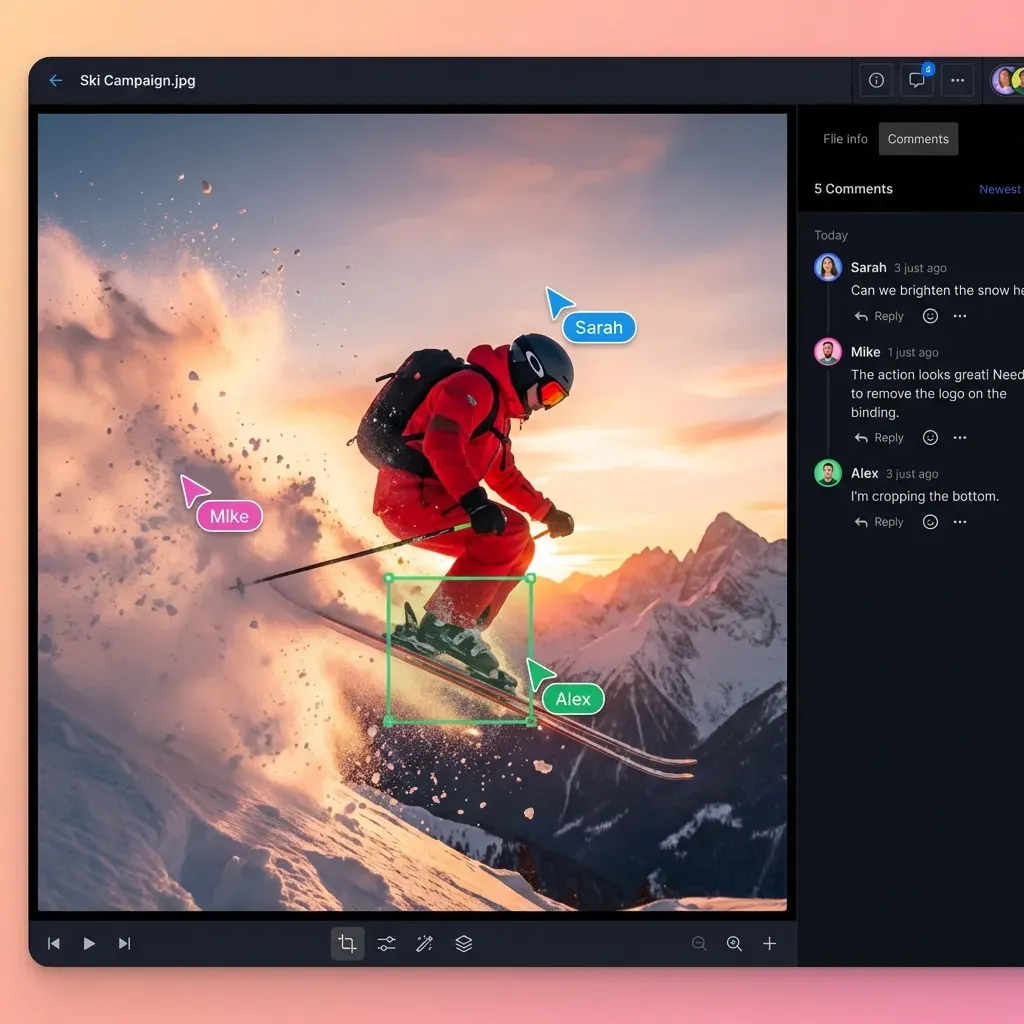
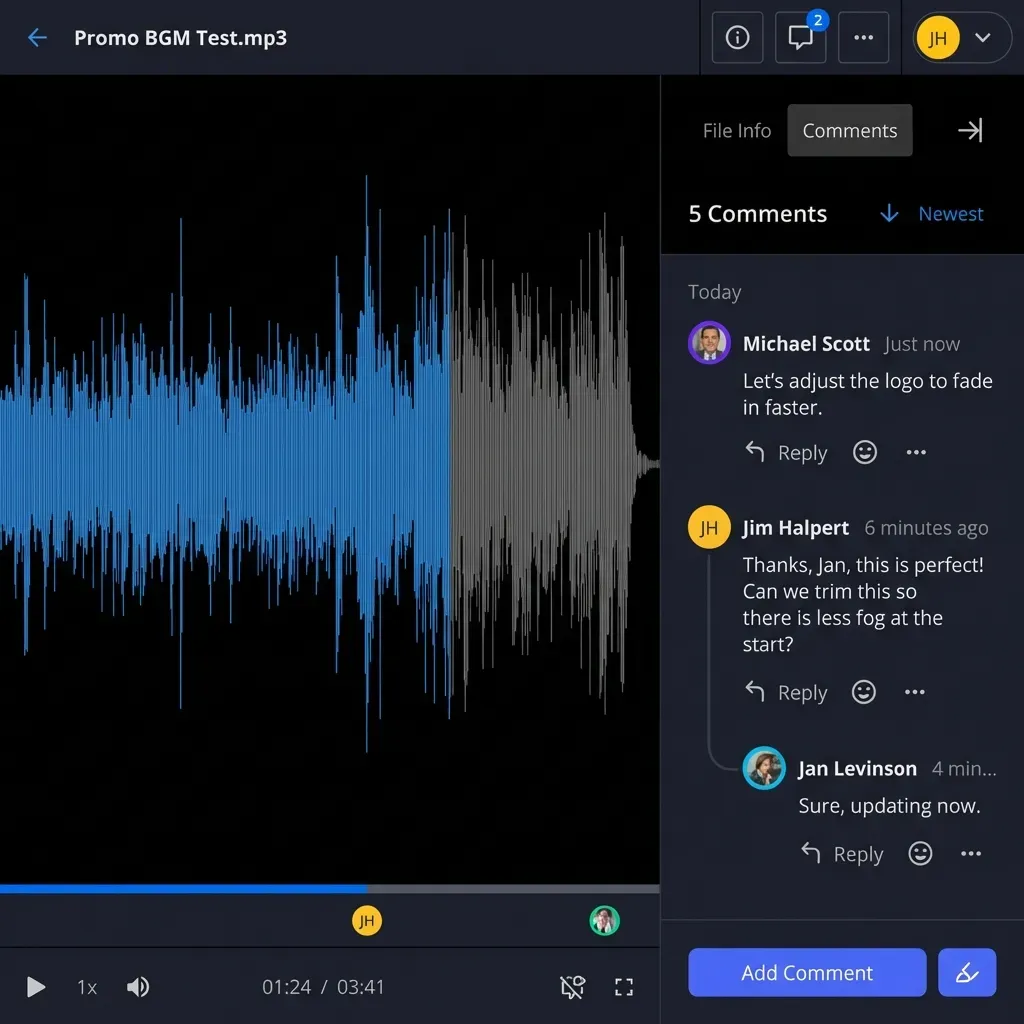
Enable real-time collaboration with presence indicators so supervisors can see who's currently viewing a schedule or drawing. Anchored comments replace most back-and-forth calls.
Require mobile-compatible previews. Browser-based viewing of CAD, PDFs, and images on tablets requires no additional apps and works on most devices already on the floor.
Use password-protected, view-only links for vendor access. Specs expire when the PO cycle ends, not whenever a supplier gets around to deleting them.
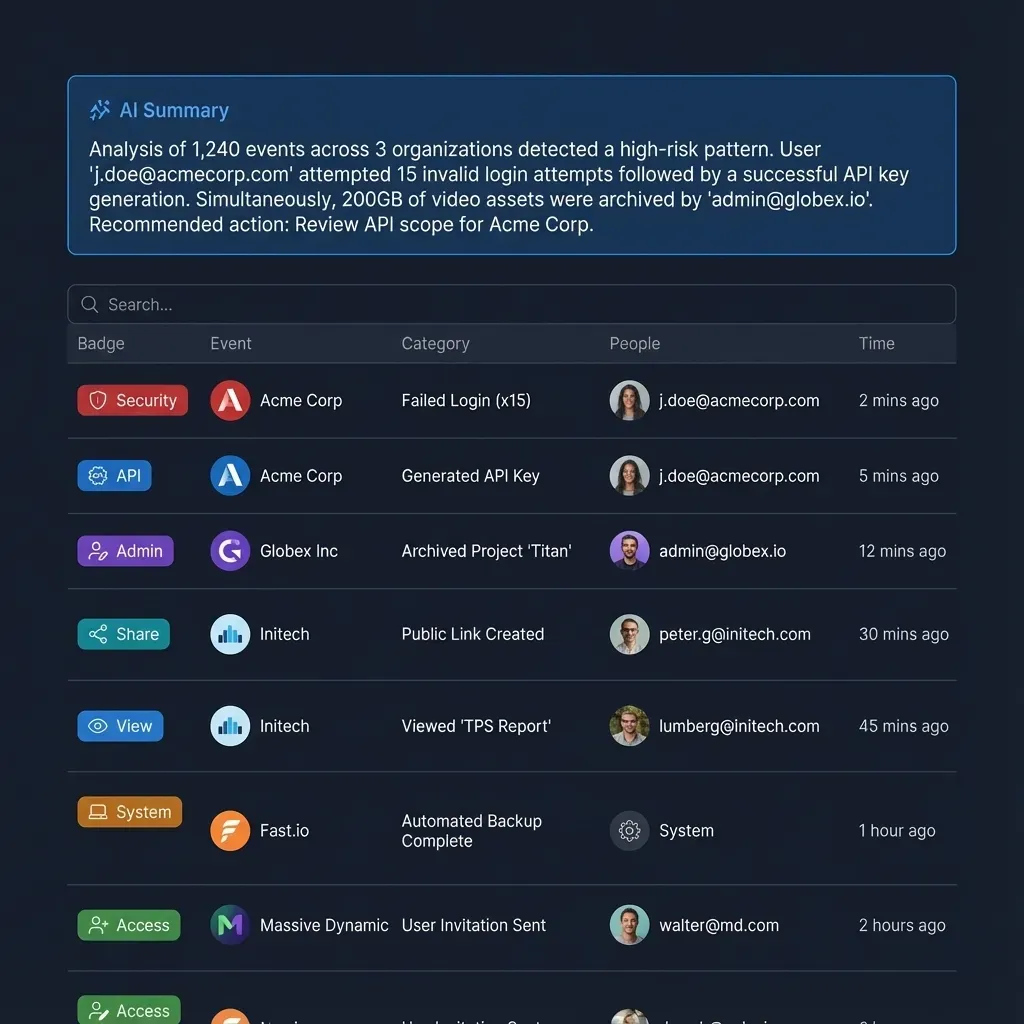
Turn on activity logging. Every file view and download is timestamped and attributable. Useful for compliance audits and for resolving disputes about what a vendor was given access to.
Connect to ERP through the events feed. Document change events can trigger downstream steps in production planning systems without manual intervention.
Pilot on one line before expanding. Two weeks on a single line gives you the before-and-after data needed to justify a broader rollout.
Run the new sharing workflow on a single production line for two weeks before expanding. Measure document retrieval time (target under 60 seconds from notification to file open on a tablet) and count how many production holds in that period were caused by outdated or missing documents, then compare against your two-week baseline. This gives supervisors concrete before-and-after data to bring to a broader rollout discussion.


Organize Your Production File Sharing
Workspaces for manufacturing teams. Seats included, secure vendors, real-time collab. Guests on shares do not take a seat. Built for manufacturing production workflows.
How modern platforms support manufacturing workflows
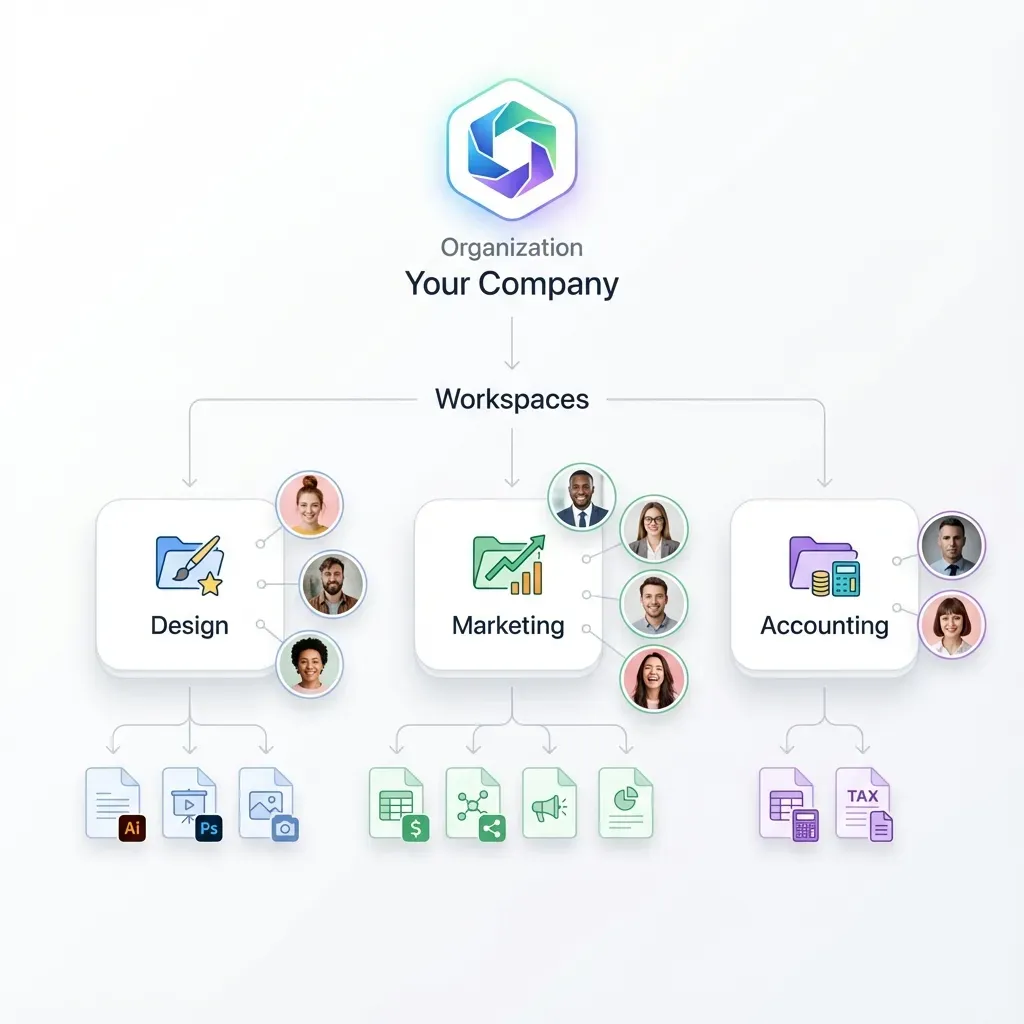
Fastio is organized around dedicated workspaces per production line or project. Files are organization-owned, so access doesn't depend on any individual account staying active.
Universal previews render CAD, PDFs, and images in the browser without plugins, so supervisors can view STEP files on tablets without needing engineering software installed. Real-time presence shows who's currently in a file. Follow mode syncs views for handoffs between shifts.
Vendor shares expire and are password-protected. Access logs track every view and download. Intelligence Mode indexes files for natural language search — useful for finding the latest version of a specific BOM without navigating nested folders.
Guests on shares do not take a seat, so adding vendors, contractors, or auditors as guests doesn't use up your plan's seats.
One assembly plant moved STEP files and updated BOMs into a shared workspace with automatic notifications on revision. Floor supervisors on tablets could view drawings in under a minute without calling engineering. The key constraint is that STEP and DWG previews require the platform to generate proxy views on upload — verify preview generation is working correctly on a few representative files before rolling out to the full floor. Teams that track the ratio of inbound "where's the latest drawing?" messages before and after deployment have a direct measure of how much time the system saves.
Step-by-step setup for workflow collaboration
Step 1: Create one workspace per production stage (Design, Planning, Assembly, QC). Assign engineers as editors and operators as viewers.
Step 2: Upload CAD files and BOMs. Proxy views generate automatically for browser previews.
Step 3: Set folder-level permissions. Operators see assembly folders only. Engineers keep edit access to design folders. Avoid giving operators edit rights to engineering folders — read-only with download is sufficient and prevents accidental overwrites.
Step 4: Create vendor share links with domain restrictions and expiry dates.
Step 5: Use anchored comments to mark specific areas on drawings rather than leaving general notes.
Step 6: Review activity logs weekly during the first month to catch permission gaps or access issues before they cause production problems.
Step 7: Train in short sessions by role. Pilot on one line first and document any access issues before expanding.
Quick troubleshooting: slow previews usually indicate a network issue on the device, not a platform problem. Access denied errors almost always point to a role assignment that needs to be updated.
When setting up step 3 permissions, avoid giving operators edit access to engineering folders — read-only with download rights is sufficient for floor use, and it prevents accidental overwrites that would require an engineer to restore a previous version. Teams that complete a full setup dry-run on one line and document any access issues in a short handoff note cut setup time on every subsequent line to under an hour.
Mobile and automation for production documents
Browser-based previews work offline and sync when connectivity returns, which matters on plant floors where Wi-Fi coverage is inconsistent. Cached versions mean a supervisor can pull up a drawing during a line inspection without waiting for a full reload.
The events feed, over WebSocket or long-poll, lets middleware pass document changes to ERP systems or notification channels. A revision to a production schedule can trigger an alert to the shift supervisor without anyone manually forwarding it. For larger teams, group notifications by role keep the right people informed without spamming everyone.
A metal fabrication plant using alerts driven by the events feed found foremen received drawing updates within seconds of an engineering revision going live. Previously, the same notification took a phone call and up to 30 minutes. The constraint to manage in poor-connectivity areas is that mobile previews rely on cached versions; test file caching behavior on the specific tablets and Wi-Fi setup used on your floor before deploying broadly. Record which drawing revisions triggered production holds in the month before and after rollout to measure impact directly.
Vendor and supply chain integration
Vendors need access to specs and drawings without visibility into the broader workspace. Branded portals with per-vendor folders and expiring links handle this cleanly. Disabling downloads is worth considering on drawings that contain proprietary process information.
Tracking engagement on shared documents is useful for supply chain management: a vendor who hasn't opened the latest revision of a critical BOM is a risk worth flagging before a build date. Auto-notifications on folder updates keep suppliers current without requiring a manual email for every revision.
A contract manufacturer sharing spec sheets with three active vendors used per-vendor folders with view-only, password-protected links set to expire at the end of each purchase order cycle. When one vendor accidentally received the wrong revision, the audit log showed exactly when they accessed the file and which version, which resolved the dispute in a single email. The constraint to set early: establish a clear policy on whether vendors can download or view-only — download rights speed up access for legitimate use but make it harder to revoke access to sensitive IP once a link has been used.
Measuring success
Three metrics worth tracking from day one: document retrieval time (how long from notification to file open on a floor device), production holds caused by document version issues, and scrap incidents tied to working from outdated specs.
Industry benchmarks suggest paperless workflows improve efficiency by around 35% and real-time document access reduces downtime by roughly 25%, per Manufacturing.net and Deloitte data. Those figures are directionally useful, but your own baseline will be more persuasive internally than an industry average. Pull two weeks of current data on holds and retrieval times before rollout so you have something concrete to compare against.
Use your first 30 days of activity logs to set realistic targets: if retrieval time averages 90 seconds now, target 30 seconds after full rollout rather than applying an arbitrary benchmark from a different industry. The key constraint when measuring scrap rates tied to document errors is that operators need to consistently log the root cause — build that into your existing non-conformance process before launch so the data is usable. Teams that tie these metrics to a quarterly operations review get faster budget approval for expanding storage and training to additional shifts.

Sources
References used to verify factual claims in this guide.
-
Paperless workflows boost efficiency 35%
-
Real-time access reduces downtime 25%
Frequently Asked Questions
What is production file sharing in manufacturing?
Sharing CAD files, BOMs, schedules, QC reports securely. Real-time access avoids errors.
What are the best workflow tools for manufacturing production?
Cloud platforms with workspaces, collab, CAD previews, mobile, logs. Fastio offers organization files, external shares.
How does file sharing reduce manufacturing downtime?
Instant updates, alerts. No wait for emails.
What file types are common in manufacturing workflows?
CAD (DWG, STEP), BOM Excel, PDFs, images, NC codes. Need good previews.
How to share large production files securely?
Cloud workspaces with links: passwords, expire, view-only. Log downloads.
Can mobile devices handle manufacturing docs?
Yes, responsive previews. Works on phones.
How to handle vendor file sharing?
Branded links with controls. Track access.
What metrics show file sharing success?
Access time, error rates, downtime reduction.
Related Resources

Organize Your Production File Sharing
Workspaces for manufacturing teams. Seats included, secure vendors, real-time collab. Guests on shares do not take a seat. Built for manufacturing production workflows.