How to Set Up a Patent Data Room for IP Transactions
A patent data room is a secure virtual workspace for sharing patent portfolios, claim charts, prosecution histories, and licensing terms during IP transactions. This guide walks through the documents you need, how to organize them by patent family, and how to run due diligence without losing control of sensitive IP.

What a Patent Data Room Actually Contains
Most data room guides treat patents like any other corporate document. Drop them in a folder called "Intellectual Property" and move on. That works fine for a startup fundraise where you have three patents and a handful of trademarks. It falls apart the moment you're dealing with a portfolio sale, a licensing negotiation, or an M&A transaction where the IP is the core asset.
A patent data room is a secure virtual workspace purpose-built for sharing patent portfolios, claim charts, prosecution histories, and licensing terms during IP transactions. Unlike a general due diligence data room, the folder structure needs to mirror how patent attorneys and licensing professionals actually think about IP assets.
The global intellectual property licensing market was valued at roughly $340 billion in 2024 and is projected to reach $580 billion by 2033, according to Data Horizon Research. That growth is driving more patent transactions, which means more data rooms that need to handle patent-specific documents correctly.
A typical patent portfolio sale involves hundreds or thousands of documents per patent family. Each granted patent comes with a prosecution history (also called a file wrapper), which is the complete paper trail of communications between the applicant and the patent office. Add in continuation applications, foreign counterparts, claim charts, and licensing agreements, and you're looking at a complex document set that generic folder templates can't handle.
Helpful references: Fastio Workspaces, Fastio Collaboration, and Fastio AI.
Related guides
- How to Set Up a Data Room for Private Credit TransactionsA data room for private credit is a secure virtual workspace where direct lenders and borrowers share loan...
- How to Set Up a Data Room for Renewable Energy ProjectsRenewable energy transactions involve dozens of specialized documents that generic file-sharing tools weren't built to...
- How to Set Up AI Agent Due Diligence Data RoomsDue diligence data rooms with AI agents automate document reviews in secure VDRs. Manual DD takes weeks. AI agents...
- How to Set Up a Pharmaceutical Data Room for Licensing and M&A DealsA pharmaceutical data room is a secure virtual workspace used during drug licensing deals, pharma M&A, and partnership...
- How to Set Up a Private Equity Virtual Data RoomPrivate equity virtual data rooms protect deal documents during fundraising, buyouts, and exits. This guide covers...
- Best Virtual Data Room Providers for Every Deal TypeChoosing a virtual data room provider depends on what kind of deal you are running. This guide breaks down the top VDR...
More on this subject: Data Rooms and Due Diligence (53 guides)
Essential Documents for a Patent Data Room
Here's what buyers, licensees, and their counsel expect to find when they open a patent data room. Missing any of these creates follow-up requests that slow down the deal.
Patent grants and certificates
- Issued patent documents for each jurisdiction (USPTO, EPO, JPO, CNIPA, KIPO)
- Patent numbers, issue dates, and current status
- Maintenance fee receipts and next payment deadlines
Prosecution histories (file wrappers)
- Office actions from the patent examiner
- Applicant responses and claim amendments
- Interview summaries and examiner search reports
- Restriction requirements and election responses
- Notices of allowance
The prosecution history matters because it reveals the arguments the applicant made to get the patent granted. During claim construction, courts look at what the applicant said during prosecution to interpret the scope of the claims. Buyers need this to assess how broadly or narrowly the patent can be enforced.
Continuation and family documents
- Continuation applications, continuations-in-part (CIPs), and divisionals
- Priority claims and benefit chains
- PCT international applications and national phase entries
- Foreign counterpart filings and their status
Claim charts and infringement analyses
- Element-by-element claim charts mapping claims to products or standards
- Non-infringement opinions
- Freedom-to-operate analyses
- Prior art search reports
Licensing and encumbrances
- Existing license agreements (exclusive and non-exclusive)
- Cross-license arrangements
- Security interests or liens on the patents
- Assignment records and chain of title documentation
- Covenant-not-to-sue agreements
Litigation history
- Past and pending patent litigation filings
- Inter partes review (IPR) petitions and decisions
- Settlement agreements
- Injunction orders
Financial data
- Historical royalty revenue by patent or portfolio
- Maintenance cost projections
- Licensing pipeline and pending negotiations
- Valuation reports or broker opinions of value
How to Organize Patent Documents by Family
The biggest mistake in patent data rooms is organizing by document type instead of by patent family. When a buyer's attorney is evaluating a specific patent, they want to see everything related to that patent in one place, not scattered across seven different folders.
Here's a folder structure that works for portfolio transactions:
01_Portfolio_Overview/
  Patent_Schedule.xlsx
  Portfolio_Summary.pdf
  Maintenance_Fee_Calendar.xlsx
  Claim_Chart_Index.pdf

02_Patent_Families/
  Family_001_[Short_Description]/
    Granted_Patents/
    Prosecution_History/
    Continuations_Divisionals/
    Foreign_Counterparts/
    Claim_Charts/
    Licensing/
  Family_002_[Short_Description]/
    ...

03_Licensing_Agreements/
  Active_Licenses/
  Expired_Licenses/
  Revenue_Reports/

04_Litigation/
  Active_Cases/
  Resolved_Cases/
  IPR_Proceedings/

05_Financial/
  Royalty_Revenue/
  Maintenance_Costs/
  Valuation_Reports/

06_Chain_of_Title/
  Assignment_Records/
  Security_Interests/
  Employment_Agreements/

07_Technical_Documentation/
  Inventor_Declarations/
  Technical_Specifications/
  Standard_Essential_Patent_Declarations/
Number your top-level folders with zero-padded prefixes (01_, 02_) so they sort consistently across every platform and viewer. Inside each patent family folder, use the patent number or application number as a prefix for individual files.
For large portfolios with 50 or more patent families, add a master spreadsheet in the Portfolio Overview folder that maps each patent to its family folder, current status, jurisdiction, expiration date, and any existing encumbrances. This index becomes the single most referenced document in the data room.


Organize Your Patent Portfolio for Due Diligence
Set up a secure data room with granular permissions, full-text search across prosecution histories, and audit trails that track every reviewer action. Start 14-day trial. Built for patent data room workflows.
Running Patent Due Diligence in a Data Room
Patent due diligence is more specialized than general corporate due diligence. The reviewers are patent attorneys, licensing professionals, and technical experts who need specific access patterns.
Set up role-based access carefully. Not everyone needs to see everything. Outside counsel evaluating claim scope doesn't need financial data. The buyer's business team reviewing royalty revenue doesn't need prosecution histories. Create permission groups that match the review teams:
- Legal review team: full access to prosecution histories, litigation, and chain of title
- Technical review team: access to patent grants, claim charts, and technical documentation
- Financial review team: access to licensing agreements, royalty data, and valuations
- Executive team: access to portfolio overview and summary documents
Use a Q&A workflow instead of email. Patent due diligence generates detailed technical questions. When those questions and answers live inside the data room, you maintain a complete record. When they happen over email, you lose context and create version control problems.
Platforms like Fastio support Q&A through comment threads anchored to specific documents, so questions stay linked to the files they reference. This matters when a buyer asks about a specific office action response or claim amendment. The answer should live next to the document, not buried in an email thread.
Track reviewer activity. Knowing which documents have been viewed, how long reviewers spend on them, and which sections haven't been opened tells you where the deal stands. If the buyer's patent counsel hasn't opened the prosecution histories after two weeks, either they're behind schedule or they're losing interest.
Prepare for the most common questions in advance. Patent buyers consistently ask the same categories of questions:
- What is the remaining term for each patent?
- Are there any pending reexamination or IPR proceedings?
- Who are the named inventors, and do you have clean assignment chains?
- Are there any existing licenses that would survive the transaction?
- What maintenance fees are due in the next 12 months?
Draft answers to these before opening the data room. Fast turnaround on Q&A responses signals deal readiness and keeps the transaction moving.
Choosing a Platform for Patent Data Rooms
The traditional virtual data room providers (Intralinks, Datasite, Merrill) charge per-page or per-user fees that add up quickly with patent portfolios. A single patent family can generate hundreds of pages of prosecution history, and you may have dozens of families in a portfolio sale.
Here's what to evaluate when picking a platform for patent-specific transactions:
Document handling. Patent documents come in varied formats. USPTO file wrappers are typically PDFs, but you'll also deal with Excel spreadsheets for patent schedules, Word documents for claim charts, and sometimes proprietary formats from patent management systems. The platform needs to handle previews for all of these without requiring downloads.
Search capability. When a reviewer needs to find every mention of a specific claim limitation across prosecution histories, they need full-text search that works across PDFs. Optical character recognition matters here because older file wrapper documents from the USPTO are often scanned images, not searchable text.
Permission granularity. You need folder-level and document-level permissions, not just user-level access. Different review teams need different access, and you may need to restrict access to specific patent families during a staged disclosure process.
Audit trails. Patent transactions often involve confidentiality obligations. You need a record of who accessed what, when, and for how long. This protects both sides if there's a dispute about what was disclosed.
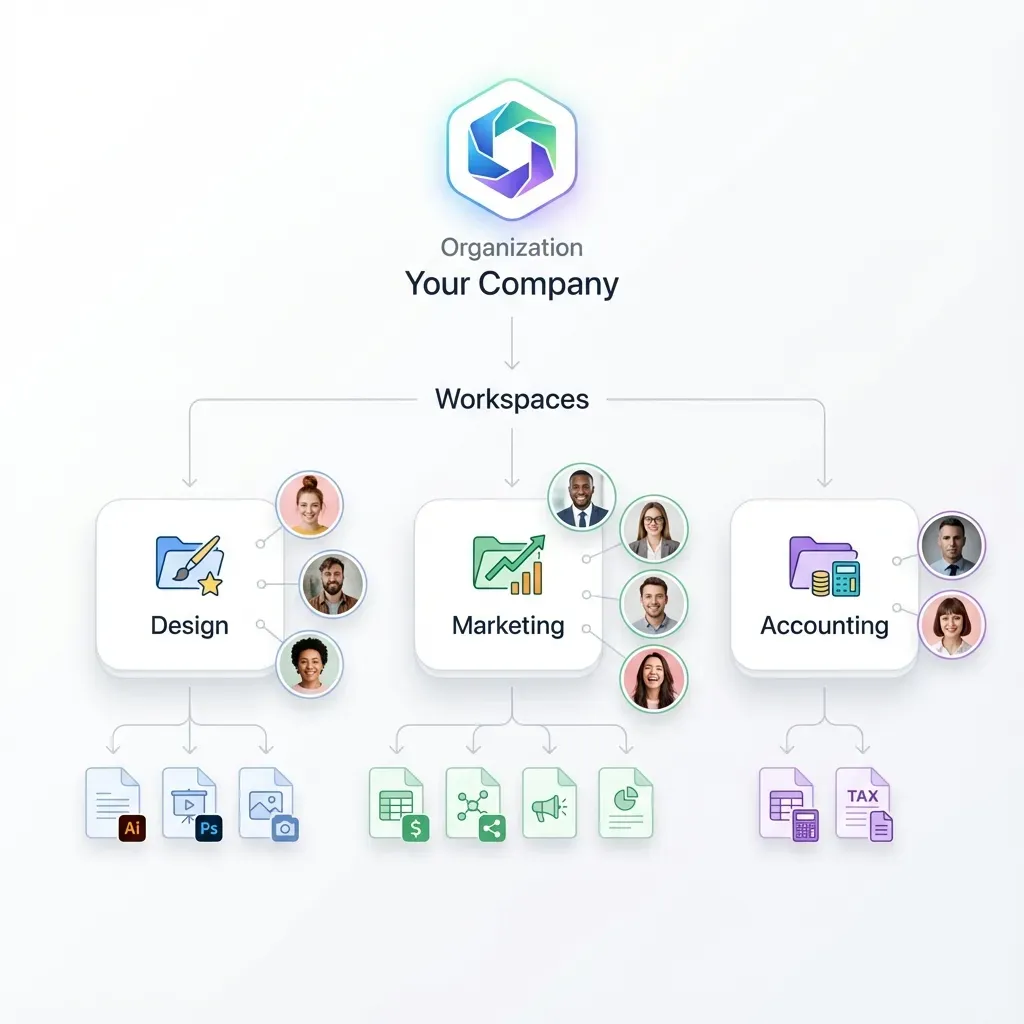
Fastio handles these requirements through workspaces with granular permissions at the organization, workspace, folder, and file level. Audit trails track every file operation, and the platform supports inline previews for PDFs, spreadsheets, and documents without requiring downloads. When intelligence is enabled on a workspace, files are automatically indexed for semantic search, which helps reviewers find specific claim language across large prosecution history collections.
For teams managing patent transactions alongside other IP work, Fastio's content portal feature lets you create branded, password-protected portals where buyers or licensees access their specific document set. Auto-expiring access links add another layer of control for time-limited due diligence windows.
Common Mistakes in Patent Data Rooms
After reviewing how patent transactions typically go wrong, these are the mistakes that cause the most delays and deal friction.
Incomplete prosecution histories. Missing office actions or response documents create gaps that force the buyer to request file wrapper copies from the patent office directly. This adds weeks to the timeline and signals poor preparation.
Broken chain of title. Every patent needs a clean assignment chain from the named inventors to the current owner. Missing inventor assignments, unrecorded assignments at the USPTO, or gaps in the chain are deal-breakers that surface during due diligence. Pull assignment records from the USPTO Assignment Database and include them in the data room before it opens.
Ignoring foreign counterparts. If you're selling a patent family with counterparts in Europe, Japan, or China, buyers need the status of each foreign filing. An expired European counterpart or an abandoned Japanese application changes the portfolio's value.
No maintenance fee calendar. Patent maintenance fees are due at 3.5, 7.5, and 11.5 years after grant (for USPTO patents). Missing a payment can result in patent expiration. Include a maintenance fee calendar showing past payments and upcoming deadlines for every patent in the portfolio.
Flat folder structure. Dumping all documents into a single "Patents" folder forces reviewers to sort through hundreds of files. The family-based structure described earlier saves hours of reviewer time and reduces the volume of Q&A requests.
Over-redaction. Redacting too aggressively makes documents useless for due diligence. Claim charts with redacted claim elements can't be evaluated. License agreements with redacted financial terms can't be valued. Work with your counsel to find the right balance between confidentiality and disclosure.
Building a well-organized patent data room takes upfront effort, but it directly affects deal velocity and buyer confidence. The teams that invest in proper document organization, clear folder structures, and responsive Q&A workflows close their transactions faster and with fewer last-minute surprises.
Sources
References used to verify factual claims in this guide.
-
The global intellectual property licensing market was valued at roughly $340 billion in 2024 and is projected to reach $580 billion by 2033
Frequently Asked Questions
What goes in a patent data room?
A patent data room contains patent grants, prosecution histories (file wrappers), continuation and divisional applications, claim charts, licensing agreements, litigation records, chain of title documentation, maintenance fee records, and financial data like royalty revenue. Each patent family should have its own subfolder with all related documents grouped together.
How do you organize patent documents for due diligence?
Organize by patent family rather than by document type. Create a top-level folder for each patent family containing subfolders for granted patents, prosecution history, continuations, foreign counterparts, claim charts, and licensing. Add a master portfolio spreadsheet that indexes every patent with its family, status, jurisdiction, and expiration date.
What is the best data room for patent sales?
The best platform depends on your portfolio size and deal complexity. Look for full-text search across PDFs (critical for prosecution histories), granular folder-level permissions, inline document previews, and detailed audit trails. Fastio offers these features with workspace-level intelligence that indexes documents for semantic search, plus content portals for branded buyer access.
How many documents are in a typical patent data room?
A typical patent portfolio sale involves 500 to 5,000 documents per patent family, depending on the prosecution history length and number of foreign counterparts. A portfolio with 20 patent families could contain 10,000 to 100,000 individual documents. The prosecution history alone for a single U.S. patent often runs 200 to 500 pages.
What is a prosecution history and why does it matter?
A prosecution history, also called a file wrapper, is the complete record of communications between a patent applicant and the patent office during examination. It includes office actions, applicant responses, claim amendments, and interview summaries. It matters because courts use prosecution history to interpret claim scope, and buyers need it to assess how broadly a patent can be enforced.
How do you handle confidential patent documents in a data room?
Use role-based access controls so each review team only sees relevant documents. Set folder-level permissions to restrict prosecution histories to legal reviewers and financial data to the business team. Use watermarking on sensitive documents, enable audit trails to track who accessed what, and consider auto-expiring access links for time-limited due diligence periods.
Related Resources

Organize Your Patent Portfolio for Due Diligence
Set up a secure data room with granular permissions, full-text search across prosecution histories, and audit trails that track every reviewer action. Start 14-day trial. Built for patent data room workflows.