How to Build an AWS IoT Greengrass Edge Agent with OpenClaw on Raspberry Pi
AWS IoT Greengrass handles device provisioning, telemetry pipelines, and fleet management. OpenClaw adds AI reasoning on top. Running both on a Raspberry Pi gives you an edge node that collects sensor data, makes local decisions, reports to the cloud, and hands off results to your team through a shared workspace.

Why Pair AWS IoT Greengrass with an AI Agent?
AWS IoT Greengrass extends AWS services to edge devices. It handles the infrastructure layer: provisioning devices, deploying software components, managing MQTT messaging, syncing device shadows, and streaming telemetry to the cloud. What it does not do is reason about the data flowing through it.
Most Greengrass tutorials stop at data collection. You get sensor readings in S3 or Kinesis, then build separate cloud-based processing to act on them. That round trip adds latency, costs bandwidth, and fails when connectivity drops.
OpenClaw fills the reasoning gap. It runs an AI agent directly on the Raspberry Pi, using the same sensor data that Greengrass collects. The agent interprets telemetry locally, decides whether to trigger alerts or actuators, and only escalates to cloud inference when the decision exceeds local model capabilities. Greengrass handles the plumbing; OpenClaw handles the thinking.
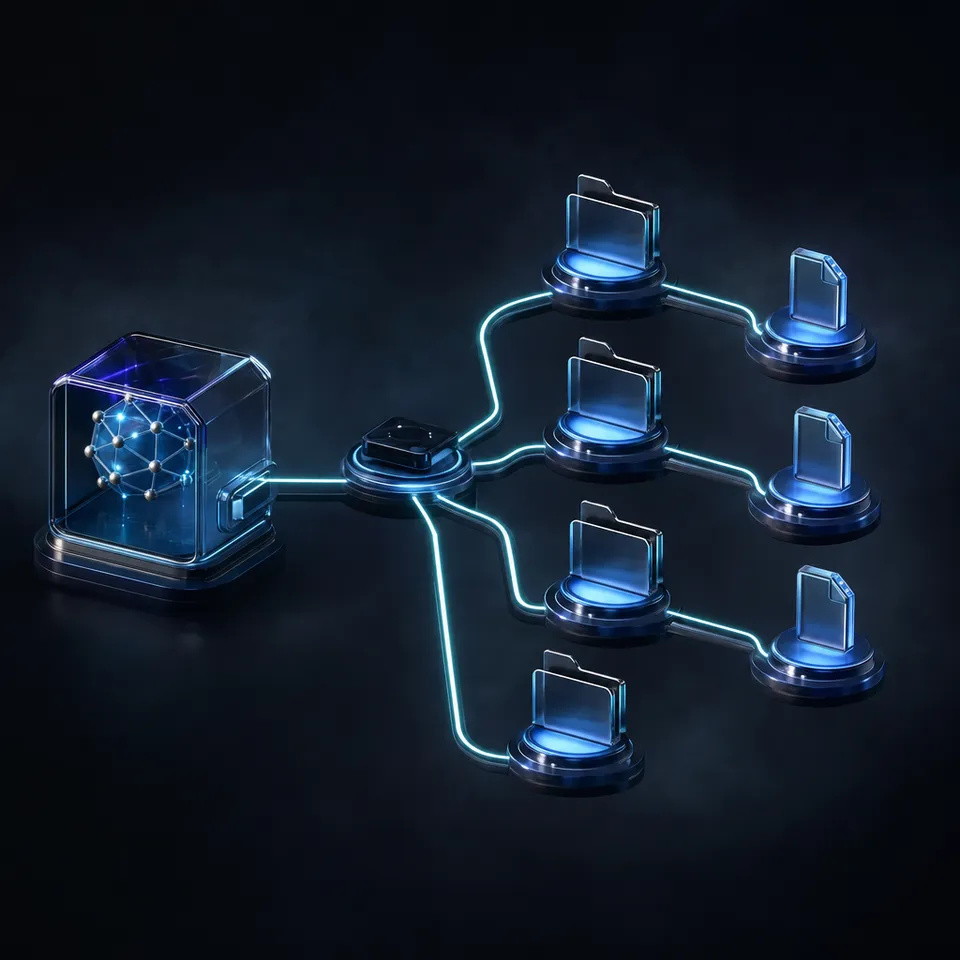
The combined architecture looks like this: sensors feed data through Greengrass components via local MQTT topics. An OpenClaw agent subscribes to those topics, processes readings through its tool pipeline, and publishes decisions back. Greengrass forwards relevant events to AWS IoT Core for fleet-wide visibility, while the agent stores its analysis and outputs in a persistent workspace for human review.
Global spending on edge computing is projected to reach $380 billion by 2028 according to IDC, driven largely by the need for real-time decision-making at the point of data generation. This architecture addresses that need without requiring custom firmware or cloud-dependent inference.
Related guides
- How to Build a Hermes Agent AI Code CheckerThe proportion of copy-pasted code in repositories rose from 8% in 2020 to 12% in 2024, representing a 48% relative...
- How to Build AI Agents with the Claude Agent SDKThe Claude Agent SDK is Anthropic's toolkit for building AI agents that can read files, run commands, search the web,...
- How to Build Edge AI Agents with OpenClaw on Raspberry PiEdge AI with OpenClaw on Raspberry Pi processes sensor data locally through an AI agent that makes decisions and takes...
- How to Build a Raspberry Pi Vending Machine Agent with OpenClawPi-based vending builds rarely go beyond dispensing logic, but adding an OpenClaw agent turns a Raspberry Pi into a...
- How to Build a Wireless Sensor Decoder Agent with RTL-433 and OpenClaw on Raspberry Pirtl_433 decodes signals from over 320 wireless device protocols using a cheap USB radio dongle. Pairing it with an...
- How to Build a Pool Water Quality Monitor with OpenClaw on Raspberry PiCommercial pool monitors display readings on a screen. They tell you the pH is 7.1 but not what to do about it. This...
More on this subject: OpenClaw on Raspberry Pi (192 guides)
Architecture and Data Flow
The system has three layers, each with a clear responsibility.
Device Layer (Greengrass Core)
The Greengrass nucleus runs on the Raspberry Pi as the base runtime. It manages component lifecycle, handles MQTT brokering between local devices and the cloud, and provides OTA updates for all deployed software. Client devices (sensors, actuators, cameras) connect to the Greengrass core via MQTT using the Moquette broker component.
Intelligence Layer (OpenClaw Agent)
OpenClaw runs alongside Greengrass as a separate process. It uses its Gateway + Node architecture where the Gateway handles task scheduling and LLM request routing, while the Node manages execution and sensor integration. The agent subscribes to local MQTT topics that Greengrass publishes sensor data to, processes readings through its skill pipeline, and publishes action commands back to actuator topics.
Cloud Layer (AWS IoT Core + Workspace)
Greengrass bridges selected local MQTT topics to AWS IoT Core using its MQTT bridge component. This gives you fleet-wide device telemetry in the cloud without routing all traffic through the internet. The OpenClaw agent pushes its analysis outputs, decision logs, and reports to a Fastio workspace where team members can review edge decisions, query historical data through Intelligence Mode, and take over when human judgment is needed.
The data flow for a typical sensor event:
- Temperature sensor publishes reading to local MQTT topic
sensors/zone-1/temperature - Greengrass MQTT bridge forwards the reading to AWS IoT Core for fleet dashboards
- OpenClaw agent receives the same reading via local subscription
- Agent evaluates against thresholds and recent trends using its tool pipeline
- If action needed: agent publishes command to
actuators/zone-1/hvacand logs the decision - Decision log syncs to Fastio workspace for human audit trail

How to Set Up Greengrass V2 on Raspberry Pi
AWS IoT Greengrass V2 installs directly on Raspberry Pi OS. The process takes 20-30 minutes and requires an AWS account with IoT permissions.
Prerequisites:
- Raspberry Pi 5 (8 GB) or Pi 4 (4+ GB) running 64-bit Raspberry Pi OS Lite (Bookworm)
- Java 11 or later (the Greengrass nucleus requires a JVM)
- Python 3.8+ for Lambda-based components
- AWS CLI configured with IAM credentials that have IoT and Greengrass permissions
- SSH enabled for remote access
Installation steps:
Install Java and verify:
sudo apt update && sudo apt install -y default-jdk
java --version
Download and run the Greengrass installer. The installer provisions the device as an AWS IoT thing, creates certificates, and starts the nucleus:
curl -s https://d2s8p88vqu9w66.cloudfront.net/releases/greengrass-nucleus-latest.zip > greengrass-nucleus-latest.zip
unzip greengrass-nucleus-latest.zip -d GreengrassInstaller

sudo -E java -Droot="/greengrass/v2" \
  -jar ./GreengrassInstaller/lib/Greengrass.jar \
  --aws-region us-east-1 \
  --thing-name EdgeAgent-Pi-01 \
  --thing-group-name EdgeAgentGroup \
  --component-default-user ggc_user:ggc_group \
  --provision true \
  --setup-system-service true
The --setup-system-service flag creates a systemd unit that starts Greengrass on boot and restarts it after crashes. Verify the service is running:
sudo systemctl status greengrass.service
Deploy the MQTT broker component so local devices can connect:
From the AWS IoT Greengrass console, create a deployment targeting your device. Add the aws.greengrass.clientdevices.mqtt.Moquette component. This gives you a local MQTT broker on port 8883 that client devices authenticate against using their IoT certificates.
Deploy the MQTT bridge to forward selected topics to AWS IoT Core:
Add aws.greengrass.clientdevices.mqtt.Bridge to the same deployment. Configure it to bridge sensors/# topics to IoT Core so fleet dashboards receive telemetry while local processing stays on-device.
Greengrass V1 reaches end of support in October 2026. All new deployments should use V2, which uses a modular component architecture instead of the older Lambda-centric model.


Persist your edge agent's intelligence where your team can find it
Fastio gives your OpenClaw agent indexed storage, semantic search across every report it generates once Intelligence is enabled, and ownership transfer to hand results to your operations team.
How to Add OpenClaw as the Intelligence Layer
With Greengrass handling device communication, OpenClaw adds the decision-making capability. OpenClaw uses a Gateway + Node architecture that maps well to this use case: the Gateway schedules tasks and routes LLM requests, while the Node executes tools and works alongside local hardware.
Install OpenClaw on the same Pi:
OpenClaw requires Node.js 20+ and installs as a single binary. On a Pi 5 with 8 GB RAM, both Greengrass (JVM-based) and OpenClaw (Node.js-based) coexist comfortably. The Pi 4 with 4 GB works but benefits from a 2 GB swap file.
Configure the LLM backend:
OpenClaw supports multiple model providers. For edge IoT use cases, lightweight models like Claude Haiku or GPT-4o-mini handle sensor interpretation at roughly $0.001 per call. For image analysis from cameras, route to a larger model at $0.01-0.05 per call. The agent selects the appropriate model based on task complexity.
For fully offline operation, connect OpenClaw to a locally hosted model through Ollama or llama.cpp. A quantized 7B parameter model runs on Pi 5 with acceptable latency for simple classification tasks, though complex reasoning still benefits from cloud inference.
Connect to local MQTT:
The agent needs to subscribe to sensor topics and publish to actuator topics. A Python-based OpenClaw skill can use the Paho MQTT client library to connect to the local Moquette broker that Greengrass runs. The skill receives sensor readings as they arrive, parses the JSON payload, and passes structured data to the agent's reasoning loop.
Resource allocation:
On a Pi 5 (8 GB), allocate memory limits via systemd:
- Greengrass nucleus: 1 GB (MemoryMax in systemd unit)
- OpenClaw Gateway: 1 GB
- OpenClaw Node: 2 GB
- Remaining: OS, MQTT broker, and sensor processes
Set the OpenClaw Node.js heap limit to match: NODE_OPTIONS=--max-old-space-size=2048
Headless boot:
Both services should start automatically and recover from crashes. Greengrass already installs as a systemd service. OpenClaw needs its own unit files for the Gateway and Node, configured with Restart=always and appropriate memory limits. The Node service should depend on both the Gateway and Greengrass services to ensure MQTT is available before the agent starts subscribing.

Practical Edge Scenarios
The Greengrass + OpenClaw combination works best when you need both fleet management and local intelligence. Here are three patterns that show the division of labor.
Environmental Monitoring with Adaptive Thresholds
Static threshold alerts generate noise. A warehouse freezer that normally runs at -18C might spike to -15C during defrost cycles, which is expected. A traditional system either fires false alarms on every defrost or misses genuine failures because the threshold is set too loose.
The OpenClaw agent learns normal patterns from sensor history. It distinguishes scheduled defrost spikes from genuine cooling failures by correlating time-of-day, duration, and rate of temperature change. Greengrass handles the sensor connectivity and forwards aggregated data to AWS IoT Core for fleet-wide trend analysis. When the agent detects an anomaly that doesn't match known patterns, it triggers an alert via MQTT publish and logs the reasoning to the team workspace.
Predictive Maintenance on Industrial Equipment
Vibration sensors on motors publish frequency spectrum data every second. Greengrass collects and locally buffers this stream using its Stream Manager component, which handles temporary connectivity loss without data loss. The OpenClaw agent periodically analyzes buffered readings, looking for frequency shifts that indicate bearing wear or imbalance.
When the agent identifies a degradation trend, it estimates remaining useful life and writes a maintenance report to the team workspace. Greengrass forwards the diagnosis to IoT Core where fleet managers see maintenance predictions across all sites on a single dashboard.
Access Control with Context
A badge reader authenticates via Greengrass client device auth. The OpenClaw agent adds context: is this person normally here at this hour? Did they badge into the exterior door first? Is this area under restricted access today? The agent makes the admit/deny decision locally in milliseconds. Greengrass logs all events to IoT Core for compliance reporting.
Each scenario follows the same pattern: Greengrass handles connectivity, authentication, and fleet visibility. OpenClaw handles the reasoning that turns raw data into decisions. Neither system alone covers both needs.
Storing and Sharing Edge Intelligence
Edge agents generate valuable outputs: anomaly reports, maintenance predictions, decision logs, processed sensor summaries. These need to persist beyond the Pi's local storage and reach the humans who act on them.
The storage problem on edge devices:
A Raspberry Pi with a 32 GB SD card has limited capacity and no redundancy. SD cards fail. Power losses corrupt filesystems. If the agent's analysis only lives on the Pi, one hardware failure erases months of operational intelligence.
Options for edge data persistence:
- AWS S3 via Greengrass Stream Manager: Works for raw telemetry. Uploads sensor data in batches. Good for compliance archiving, poor for collaborative review since S3 is not built for team access patterns.
- Local NAS or network share: Adds hardware complexity and doesn't solve remote access for distributed teams.
- Fastio workspace: The agent pushes reports, logs, and processed data to a shared workspace via the Fastio MCP server. Files are immediately indexed for semantic search through Intelligence Mode. Team members query edge data by asking questions in natural language rather than navigating folder structures.
Why a shared workspace fits edge deployments:
The OpenClaw agent on your Pi generates reports that a maintenance engineer in another city needs to review. A workspace handles that handoff naturally. The agent writes; the engineer reads and responds. Ownership transfer lets the agent build the workspace structure, then hand control to the operations team while retaining programmatic access for continued updates.
Intelligence Mode auto-indexes every file the agent uploads. When an engineer asks "what anomalies did the Zone 3 freezer agent flag last week?", the workspace returns relevant documents with citations. No manual tagging or folder organization required.
Fastio offers a 14-day Business Trial, card required; see pricing for plans starting with 250 GB on Starter. For a single-site deployment with one Pi running edge inference, plans include generous storage covering months of operational data. Multi-site fleets can use separate workspaces per location or aggregate into a central workspace with folder-level permissions.
File versioning tracks how the agent's outputs change over time. Audit trails show exactly when each file was created or modified. A realtime activity feed and WebSocket events feed allow downstream systems to monitor when the agent publishes new analysis, closing the loop between edge intelligence and team action.
Sources
References used to verify factual claims in this guide.
-
Global spending on edge computing is projected to reach $380 billion by 2028
-
Raspberry Pi 5 idle power consumption of 3-5W
-
AWS IoT Greengrass V1 reaches end of support October 2026
Frequently Asked Questions
Can I run AWS IoT Greengrass on Raspberry Pi?
Yes. AWS IoT Greengrass V2 officially supports Raspberry Pi running 64-bit Raspberry Pi OS. The Pi 5 and Pi 4 both work. You need Java 11+ installed since the Greengrass nucleus runs on the JVM. The installer provisions the Pi as an IoT thing, creates certificates, and sets up a systemd service for automatic startup. Installation takes about 20-30 minutes.
What is edge AI on Raspberry Pi?
Edge AI means running machine learning inference directly on the Pi rather than sending data to the cloud for processing. On a Pi 5 with 8 GB RAM, you can run quantized language models (7B parameters) through Ollama or llama.cpp, image classification models through TensorFlow Lite, and AI agent frameworks like OpenClaw that orchestrate multiple tools and models. The advantage is lower latency, continued operation during connectivity loss, and reduced cloud compute costs.
How does IoT Greengrass work with AI agents?
Greengrass handles device connectivity, MQTT messaging, component deployment, and fleet management. An AI agent like OpenClaw runs as a separate process on the same device and subscribes to the local MQTT topics that Greengrass manages. The agent receives sensor data through these topics, reasons about it using LLM inference, and publishes action commands back. Greengrass bridges selected topics to AWS IoT Core so fleet managers see aggregated telemetry across all edge nodes.
Does OpenClaw have a built-in AWS IoT Greengrass integration?
No. As of mid-2026, OpenClaw does not ship a dedicated Greengrass component or plugin. The integration is architectural rather than turnkey. OpenClaw's Gateway + Node design supports sensor integration through custom skills, and you connect it to Greengrass by writing a skill that subscribes to the local MQTT broker. The two systems complement each other but require manual configuration to work together.
How much does it cost to run this setup?
Hardware costs start around $100 for a Pi 5 (8 GB) with power supply and SD card. AWS IoT Greengrass has no per-device license fee. You pay for AWS IoT Core messaging (roughly $1 per million messages) and any cloud services you route data to. OpenClaw is open source. LLM API costs depend on your call volume, but lightweight models for sensor interpretation run about $0.001 per call. Total monthly operating cost for a single node is typically under $5 excluding internet connectivity.
Related Resources

Persist your edge agent's intelligence where your team can find it
Fastio gives your OpenClaw agent indexed storage, semantic search across every report it generates once Intelligence is enabled, and ownership transfer to hand results to your operations team.