Open Source Data Room Options for Secure Document Sharing
There is no single open source tool that replicates every feature of a commercial virtual data room. But several self-hosted platforms now offer enough security, permissions, and audit logging to handle basic deal room workflows. This guide evaluates the strongest open source VDR options, explains where they fall short, and covers when a managed platform makes more sense.


What Is an Open Source Data Room?
A virtual data room (VDR) is a secure online repository used to share confidential documents during due diligence, fundraising, M&A transactions, and legal proceedings. Commercial VDRs from vendors like Intralinks, Datasite, and iDeals charge per-page or per-user fees that can run into thousands of dollars for a single deal.
An open source data room is a self-hosted or community-maintained alternative that gives you full control over the infrastructure. Instead of uploading sensitive documents to a third-party vendor's servers, you run the software on your own hardware or cloud instance.
The appeal is straightforward: data sovereignty, no per-user licensing costs, and the ability to audit the source code yourself. The tradeoff is equally clear. You take on the responsibility for hosting, patching, backups, and configuring the security controls that commercial VDRs include out of the box.
For small deals, internal document reviews, or organizations that already run self-hosted infrastructure, open source tools can work well. For high-stakes M&A or regulated industries that require compliance certifications, the gap between open source and commercial platforms is still significant.
Helpful references: Fastio Workspaces, Fastio Collaboration, and Fastio AI.
Related guides
- Best Data Room Software for Secure Document SharingData room software provides secure, permission-controlled workspaces for sharing confidential documents during M&A,...
- How to Set Up a Secure Data Room for Confidential TransactionsA secure data room protects confidential documents during M&A deals, fundraising rounds, and legal proceedings. This...
- Best Virtual Data Room Providers for Every Deal TypeChoosing a virtual data room provider depends on what kind of deal you are running. This guide breaks down the top VDR...
- How to Choose a White Label Data Room for Client-Facing DealsA white label data room lets advisory firms, investment banks, and service providers rebrand a virtual data room with...
- How to Set Up a Private Placement Data RoomA private placement data room is a secure virtual workspace where issuers share private placement memorandums,...
- Best Datasite Data Room Alternatives for 2026Datasite dominates enterprise M&A data rooms, but its per-page pricing model and opaque quoting process push many deal...
More on this subject: Data Rooms and Due Diligence (53 guides)
The Best Open Source Data Room Tools
The open source VDR landscape is small but growing. Here are the platforms worth evaluating, ranked by how closely they match traditional data room functionality.
Papermark
Papermark is the most purpose-built open source data room available. Built with Next.js, it was designed specifically for secure document sharing with analytics.
What it does well:
- Unlimited data rooms with drag-and-drop uploads
- Page-by-page viewer analytics showing who read what and for how long
- Dynamic watermarking with email and IP address overlays
- NDA gates that require agreement before viewing
- Custom branding for client-facing rooms
- AES-256 encryption
Where it falls short:
PDFs are the primary supported format. Office documents lose formatting when converted. The self-hosted open source license covers personal and non-commercial use only. Teams or companies need a paid self-hosting license for production use. There is no structured Q&A workflow, which is a core feature of commercial VDRs used in M&A.
Papermark is the closest thing to a commercial VDR in open source form, but the licensing distinction matters. Check the current license terms before deploying it for a business transaction.
ONLYOFFICE DocSpace
ONLYOFFICE DocSpace takes a different approach. It is a room-based collaboration platform with a dedicated VDR room type added in recent releases.
What it does well:
- Self-hostable via Docker with a dedicated VDR room type
- Watermarks, download restrictions, and file lifetime settings
- AES-256 encryption at rest (added in version 3.1)
- Real-time collaborative document editing, which most VDR tools lack entirely
- Automatic content indexing and activity tracking
- Audit reporting and export
Where it falls short:
DocSpace is primarily a document collaboration tool. Its VDR features are newer and less mature than a platform like Papermark. It lacks structured Q&A workflows, NDA gates, and granular per-page analytics. The admin configuration for restricting access is more complex than a purpose-built VDR.
If your team already uses ONLYOFFICE for document editing and needs basic data room security for internal reviews, DocSpace is a strong option. For external-facing deal rooms, you may find the setup requires more manual work.
Nextcloud with VDR Configuration
Nextcloud is the most widely deployed self-hosted file platform, and it can be configured to function as a basic data room. Nextcloud itself describes this as "not a single feature but a combination of capabilities."
What it does well:
- File Access Control rules can block downloads for guest users
- Secure View mode displays watermarked PDFs and images with downloads disabled
- Guest accounts with enforced two-factor authentication
- Fine-grained audit logging through the admin audit app
- Massive plugin ecosystem for extending functionality
Where it falls short:
There is no single "enable VDR" toggle. You need to manually configure File Access Control, Secure View, guest accounts, and audit logging as separate features. Community forum threads show users finding the VDR setup confusing and incomplete compared to purpose-built solutions. Nextcloud lacks page-level analytics, structured Q&A, NDA management, and dynamic watermarking.
Nextcloud works best for organizations that already run it and need basic deal room functionality without purchasing a separate tool. Starting from scratch for a data room alone would be over-engineering the problem.
What Open Source Data Rooms Cannot Do
Before committing to a self-hosted data room, understand the features that remain exclusive to commercial VDR platforms. These gaps matter most for regulated transactions and external-facing deals.
Structured Q&A Workflows
Commercial VDRs include built-in question-and-answer modules where buyers can ask questions, sellers can assign them to subject matter experts, and threads are tracked with deadlines. No open source tool offers this. You would need to bolt on a separate project management or ticketing system.
Compliance Certifications
Commercial VDRs carry enterprise security standards, security requirements, and sometimes strict security requirements or government security requirements certifications. These certifications require ongoing third-party audits of the vendor's infrastructure, processes, and controls. Self-hosted open source software cannot provide these certifications because the certification applies to the hosting environment, not the software alone. Your organization would need to certify its own infrastructure.
Advanced Document Security
Features like fence view (restricting the visible area of a document to prevent screenshots), server-side redaction, and DRM-protected viewing exist only in commercial platforms. Papermark offers JavaScript-based screenshot protection, but it is easily bypassed with OS-level screen capture tools.
Deal Management Features
Bulk permission templates for common deal types (M&A, fundraising, litigation), automated activity reports for stakeholders, and dedicated deal support with project managers are standard in commercial VDRs. These features require significant development effort and are not available in any open source tool.
Per-Page Analytics at Scale
Papermark offers page-level analytics, but commercial VDRs provide deeper tracking: time spent per page per user, print attempts, download history, and exportable reports formatted for board presentations. The gap narrows each year, but commercial platforms remain ahead.


Need a secure data room without the hosting overhead?
Fastio gives you secure workspaces, granular permissions, and audit logs without self-hosting overhead. Monthly plans start with a 14-day Business Trial.
Other Self-Hosted Platforms Worth Considering
If none of the dedicated VDR tools fit your needs, several general-purpose self-hosted platforms can serve as a foundation for basic document sharing with access controls.
Pydio Cells is an enterprise-grade self-hosted document platform with fine-grained permissions, encryption, and audit trails. It markets itself for VDR use cases but is more of a general document management system. The open source edition covers core file sharing, while advanced features require a commercial license.
Seafile is an open source file sync platform with library-level encryption and strong permission controls. It does not have VDR-specific features, but its encryption model is solid for organizations that prioritize data sovereignty over deal-specific workflows.
Mayan EDMS and LogicalDOC are open source document management systems with metadata tagging, version control, and access control. They are better suited for long-term document management than time-bound deal rooms, but they can serve as a secure document repository when combined with proper access controls.
Each of these requires manual configuration to approximate data room functionality. None include Q&A workflows, NDA gates, or page-level analytics.
When a Managed Platform Makes More Sense
Self-hosting a data room works when you have the infrastructure team to support it and the deal does not require compliance certifications. But there are scenarios where a managed platform saves time and reduces risk.
You need audit trails without building them yourself. Managed platforms log every file view, download, and permission change automatically. Fastio, for example, provides audit trails covering file operations, membership changes, AI activity, and user activity, all without configuring a separate logging stack.
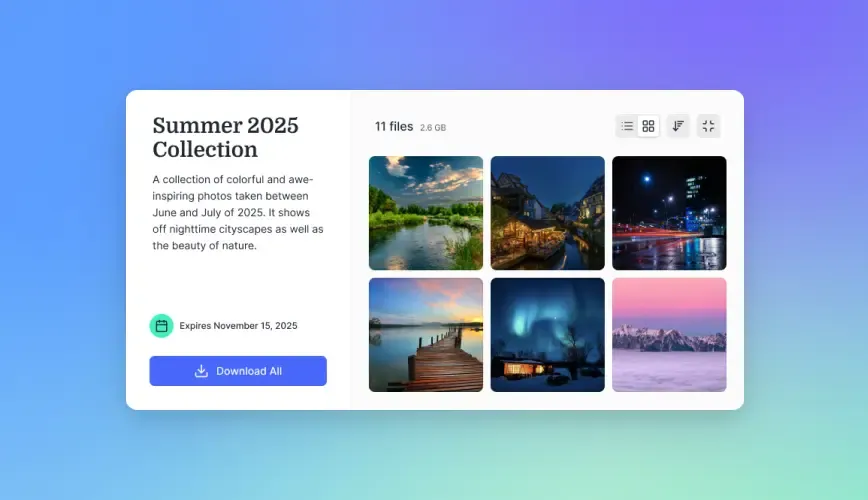
You need branded external sharing. When sharing documents with investors, buyers, or legal teams outside your organization, presentation matters. Fastio's branded shares support Send, Receive, and Exchange workflows with guest access, download controls, and custom branding. Setting up equivalent functionality on a self-hosted platform requires combining multiple tools and configurations.
You want workspace intelligence built in. Modern deal rooms benefit from the ability to search across documents by meaning, not just filename. Fastio's Intelligence feature auto-indexes uploaded files for semantic search and citation-backed AI chat. Upload a stack of due diligence documents and your team can ask questions across the entire corpus without reading every page.
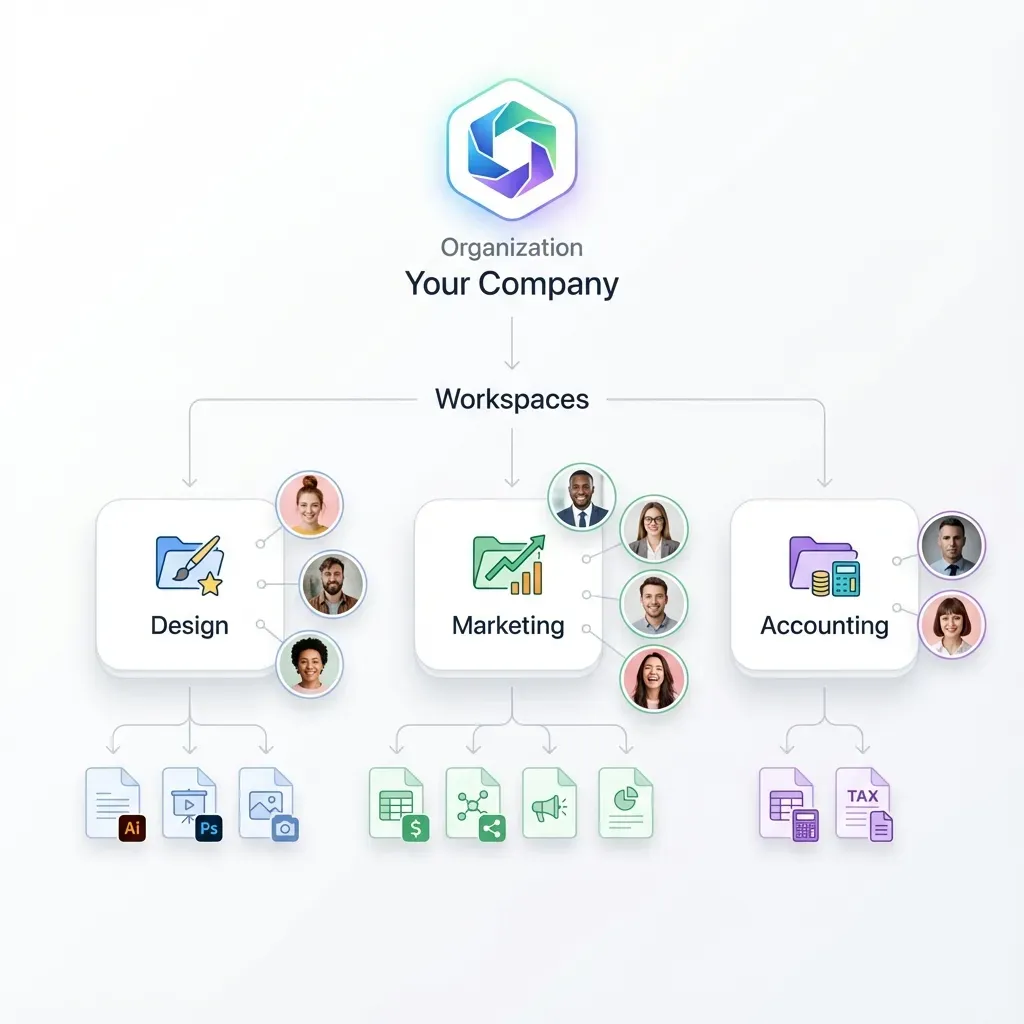
You need granular permissions without manual configuration. Fastio provides permission controls at the organization, workspace, share, folder, and file level. This is comparable to what you would build manually with Nextcloud's File Access Control, but it works out of the box.
Predictable plans scale with your deal. Fastio offers transparent plans with seats included, starting at $9.99/mo for Starter (250 GB) and $49.99/mo for Business (5 TB), with a 14-day Business Trial on monthly billing (credit card required) to get started.
Self-hosted tools give you full control over your data. Managed platforms give you full control over your time. The right choice depends on which resource matters more for your specific deal.
How to Evaluate a Data Room for Your Use Case
Whether you choose open source or managed, evaluate your data room against these criteria:
Document security. At minimum, you need encryption at rest and in transit, per-user permissions, and the ability to disable downloads for specific users or groups. Watermarking is important for external-facing rooms where you need to trace leaks.
Audit logging. Every access event should be recorded with timestamps, user identity, and the specific action taken. This is non-negotiable for due diligence. If a dispute arises about who had access to what information and when, your audit log is the evidence.
User management. How easily can you add external participants? Guest accounts with enforced two-factor authentication are a baseline requirement. NDA gates add a layer of legal protection.
Search and organization. Deal rooms can contain thousands of documents. Folder structures help, but full-text search saves significant time during review. Platforms with semantic search or AI-powered indexing take this further by letting reviewers ask questions across the document set.
Workflow support. Structured Q&A is critical for M&A transactions. If your use case does not require formal Q&A, basic commenting and activity tracking may be sufficient. Consider whether your deal type needs approval workflows, task tracking, or deadline management.
Exit strategy. How do you export your data when the deal closes? Self-hosted platforms give you direct access to the files on disk. With managed platforms, check that bulk export is straightforward and that you are not locked into a proprietary format.
For internal document reviews and small deals, an open source tool like Papermark or a configured Nextcloud instance can work. For external-facing transactions where compliance, structured Q&A, or professional presentation matter, a managed platform like Fastio or a commercial VDR is the more practical choice.
Sources
References used to verify factual claims in this guide.
-
Papermark offers unlimited data rooms with page-by-page analytics, dynamic watermarking, and AES-256 encryption
-
ONLYOFFICE DocSpace added AES-256 encryption at rest in version 3.1
-
Nextcloud describes its VDR as not a single feature but a combination of capabilities
-
ONLYOFFICE DocSpace 3.6 added AI agents in December 2025
Frequently Asked Questions
Is there a free open source data room?
Papermark is the most feature-complete open source data room, offering unlimited rooms, page analytics, and watermarking. However, its open source license restricts commercial use. ONLYOFFICE DocSpace and Nextcloud are fully open source alternatives, though they require more configuration to function as data rooms. For managed platforms, Fastio offers a 14-day Business Trial with workspace permissions and audit trails (see /pricing/).
Can Nextcloud be used as a data room?
Yes, but it requires manual configuration. You need to set up File Access Control to block downloads for guests, enable Secure View for watermarked viewing, create guest accounts with enforced two-factor authentication, and configure the admin audit app for logging. Nextcloud acknowledges that its VDR capability is a combination of features rather than a dedicated mode. It works for basic use cases but lacks Q&A workflows, NDA gates, and page-level analytics.
What is the cheapest virtual data room?
For self-hosted options, Papermark and ONLYOFFICE DocSpace are free to deploy on your own infrastructure, though you pay for hosting and maintenance. For managed platforms, Fastio offers plans starting at $9.99/mo (Starter, 250 GB) with a 14-day Business Trial. Commercial VDRs typically start at several hundred dollars per month, with pricing based on storage, users, or pages.
How do you build a data room without expensive software?
Start with a self-hosted platform like Nextcloud or ONLYOFFICE DocSpace. Configure per-user permissions, enable encryption, set up audit logging, and create guest accounts with two-factor authentication. For document viewing controls, enable watermarking and disable downloads where possible. Use a separate tool for Q&A if needed. Alternatively, use a managed workspace platform like Fastio to avoid self-hosting infrastructure overhead.
What features do open source data rooms lack compared to commercial VDRs?
The biggest gaps are structured Q&A workflows with expert routing, compliance certifications like enterprise security standards and security requirements, server-side document redaction, fence view DRM, automated NDA management with e-signatures, and dedicated deal support with project managers. Open source tools are catching up on basic security features like watermarking and encryption, but deal management workflows remain a commercial-only feature set.
Related Resources

Need a secure data room without the hosting overhead?
Fastio gives you secure workspaces, granular permissions, and audit logs without self-hosting overhead. Monthly plans start with a 14-day Business Trial.