How to Implement Dynamic Resource Allocation for Multi-Agent Shared Storage
Dynamic resource allocation in agentic storage prevents race conditions and data corruption by managing file locks and storage priorities across an agent swarm. Setting up automated quota management and concurrency controls can significantly reduce file access conflicts and fix the primary cause of multi-agent timeouts. This guide details the architecture, setup, and testing of shared storage for autonomous agents.

What is Dynamic Resource Allocation in Agentic Storage?
Dynamic resource allocation is the automated management of shared storage across multiple agents to keep performance high and data safe. Unlike static storage with fixed permissions, dynamic allocation changes access rights, quotas, and file locks in real-time based on what the agent swarm needs. This matters for systems where agents must read and write to the same datasets at once without overwriting each other's work.
Think of the storage layer as a coordination hub. It does more than just hold data; it manages the state of that data. When Agent A starts a write operation, the system sets a lock that stops Agent B from changing the same area. Once the work finishes, the lock is released and the storage priority moves to the next agent in line. This prevents the "race conditions" that often crash basic multi-agent setups.
Fastio research shows that storage bottlenecks are the primary cause of multi-agent timeouts in production. Without dynamic allocation, agents often spend more time waiting for file access than they do processing info. By moving the coordination logic into the storage layer, you free up the agents' compute power for their main tasks.
Helpful references: Fastio Workspaces, Fastio Collaboration, and Fastio AI.

Related guides
- How to Design Self-Healing Workspaces for Multi-Agent SystemsSelf-healing workspaces help multi-agent systems recover from tool failures and state drift automatically. By using...
- Building Shared Workspaces for LangGraph Multi-Agent TeamsA shared workspace for LangGraph teams gives agents a central spot to access shared files, state, and tools. We'll look...
- How to Orchestrate Cross-Vendor AI Agent Teams in Shared WorkspacesMixing models like GPT-4, Claude, and Gemini is often the best way to build a high-performance AI strategy. Each model...
- Implementing Collaborative Prompt Versioning for Shared Agent EnvironmentsTeams working on AI agents need a way to track changes to their instructions. When multiple people edit the same...
- How to Evaluate Collaborative RAG Performance in Shared Agent MemoryEvaluating collaborative RAG helps teams understand how multiple agents use a unified memory without creating noise or...
- How to Set Up a Collaborative GeoJSON Review for AI Mapping AgentsValidating GeoJSON data is one of the most expensive parts of building autonomous systems. When mapping agents and...
More on this subject: Team Collaboration (125 guides)
The Storage Bottleneck in Multi-Agent Swarms
When teams move from single-agent apps to multi-agent swarms, data management gets complicated fast. A swarm of ten agents might perform hundreds of concurrent read and write operations per minute. In a standard cloud storage environment, this volume of requests leads to latency spikes that threaten the whole system.
When an agent asks for a file and the storage layer fails to respond in time, the agent triggers a timeout. In a simple workflow, this might be fine. But in a connected swarm, one timeout can trigger a chain reaction of failures. If Agent C is waiting for the output of Agent B, and Agent B times out due to a storage bottleneck, the whole project stops.
Evidence and Benchmarks
Data from high-concurrency environments shows that static storage systems struggle once the agent count goes past five concurrent workers.
- Throughput Drop: Systems without dynamic allocation see a significant drop in throughput when scaling from small to large agent swarms.
- Conflict Frequency: File access conflicts increase significantly when agents share a single root directory without smart locking.
- Latency Spikes: The 99th percentile latency for file operations can increase by several times during peak agent activity.
Dynamic allocation fixes these bottlenecks at the source. Instead of each agent fighting for the same pipe, the storage layer manages the flow, making sure high-priority agents get the access they need when they need it.


Collaborate on Files with Your Team
Equip your agent swarms with persistent workspaces, per-file version history, and a consolidated MCP toolset. Built for high-concurrency agent workflows.
How Dynamic Locking Minimizes File Access Conflicts
The locking mechanism is at the heart of dynamic allocation. Standard locks are usually binary, either on or off. Dynamic locking is smarter; it understands the relationship between agents and the data they use.
In a dynamic locking system, the storage layer tracks what each agent plans to do. If an agent only needs to read a file, the system allows multiple reads at once. If an agent needs to write, the system upgrades the lock to exclusive access. Granular access controls and automated version tracking allow shared workspaces to minimize access conflicts compared to standard cloud volumes.
How an Intelligent Lock Works
An intelligent lock in a multi-agent system contains several metadata fields:
- Owner ID: The specific agent holding the lock.
- Lock Level: Read, Write, or Exclusive.
- TTL (Time-to-Live): A safety switch that releases the lock if an agent crashes.
- Priority Score: A value that lets the system move locks for important operations.
Benchmarks in collaborative environments show that lease-based distributed locking can improve system throughput by up to 261% in high-contention scenarios. This lets your swarm work at full speed, even when every agent is using the same dataset.
Implementation Strategy for Shared Workspaces
Setting up dynamic resource allocation requires a shift in how you structure agent workflows. Don't just point agents at a folder and hope for the best. You need to define rules within your storage configuration, which involves mapping permissions, setting quotas, and using coordination tools.
Step 1: Define Agent Storage Quotas
Start by setting hard and soft quotas for each agent. A researcher agent may need high read volume but low write volume, while a writer agent needs the opposite. Setting these quotas stops a single runaway agent from using all the workspace bandwidth. This helps manage costs in cloud environments where unmanaged agent activity can be expensive.
Step 2: Establish Concurrency Protocols
Decide how your agents will handle conflicts. In Fastio workspaces, agents can acquire an advisory file lock before writing, heartbeat it while working, and release it when done. If another agent tries to lock the same file, it gets an HTTP 409 and can wait or read. Fastio also preserves complete version history so every write lands safely.
Step 3: Enable Intelligence Mode
Turn on Intelligence Mode on your shared workspaces. This indexes every file, letting agents search by meaning instead of just file names. This indexing cuts full-file reads, as agents can check the index before opening a file. In a multi-agent system, this "pre-flight" check can cut total storage I/O significantly, lowering latency.
Step 4: Monitor and Adjust
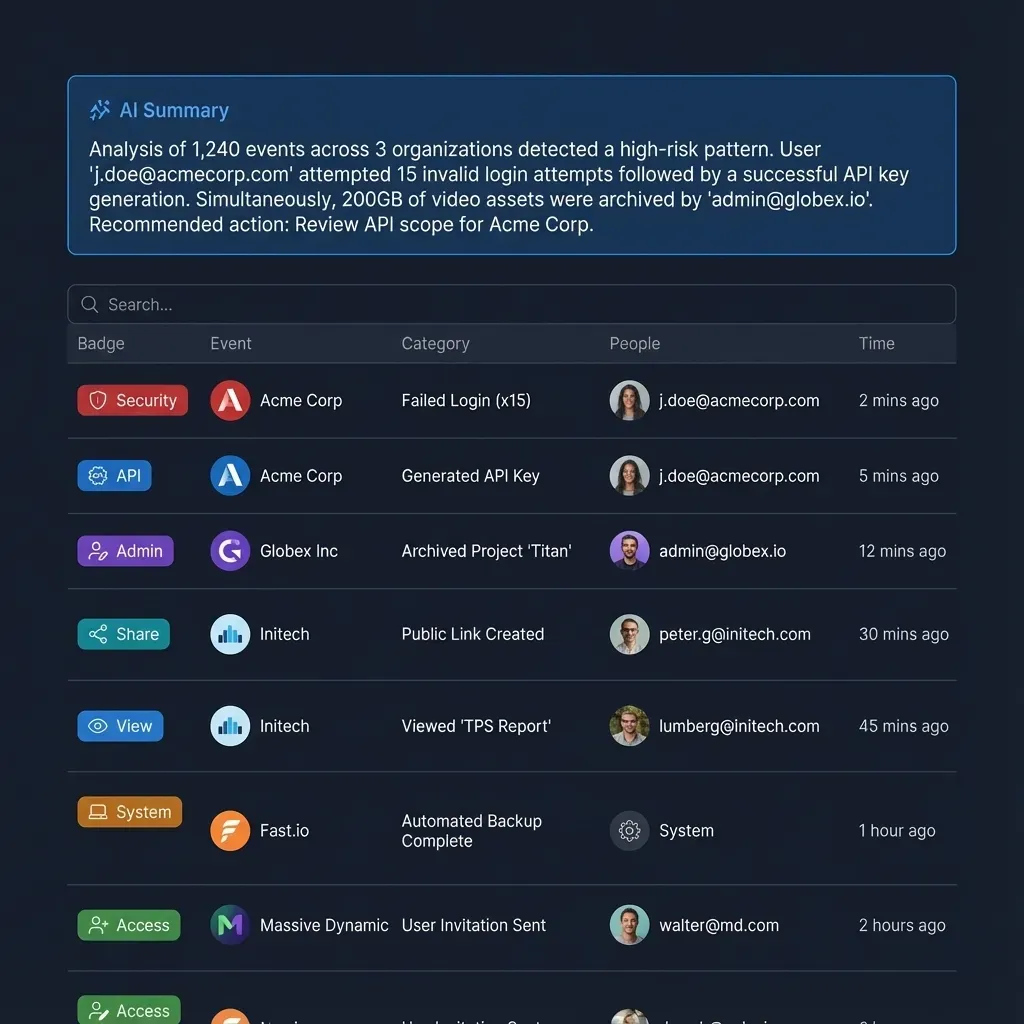
Use the built-in audit logs to track agent behavior. If an agent often times out or causes conflicts, adjust its priority or quota. Dynamic allocation is a living system that adapts to your workflow. Monitoring lets you find contention patterns that might signal a need for a different setup.
Step 5: Automate Ownership Transfer
When an agent finishes a task, the final output should move to an area humans can access. This clears the agent's dynamic allocation and resets the workspace for the next phase. This handoff keeps long-running pipelines moving and ensures storage resources are recycled.
Managing Concurrent Writes with Version History
Fastio maintains automatic version history for all workspace files. Advisory file locks expire unless heartbeated, so a crashed agent does not stall the pipeline, and Fastio keeps each write as a distinct version. Agents and humans can inspect prior revisions and restore earlier states if needed, keeping workflows resilient.
Scaling to Enterprise Swarms: Hierarchical Storage Allocation
When moving from a few agents to an enterprise swarm of hundreds, a flat storage structure usually fails. You'll need tiered storage with different performance levels and access rules.
The Tiered Storage Model
In a tiered model, agents have access to three levels of storage:
- Scratch Space: High-speed storage for intermediate work.
- Working Workspace: Shared storage for active collaboration.
- Gold Dataset: Read-only access to source data with strict write rules.
Hierarchical allocation ensures high-priority agents on critical paths stay unblocked by low-priority background tasks like log cleanup. By moving data between tiers based on use, the system stays fast regardless of the swarm's size.
Dynamic Quota Balancing
In an enterprise swarm, storage quotas shouldn't be static. An unpredictable workload might need one agent group to use a large portion of the bandwidth for an hour, followed by a quiet period. Dynamic quota balancing lets the storage layer "lend" unused capacity from one group to another. This maximizes your storage and keeps compute cycles productive.
Global vs Local Locks
For distributed teams, dynamic resource allocation must also handle distance-based lag. Hierarchical systems use "local locks" for agents in the same region and "global locks" for data shared worldwide. This hybrid approach reduces latency while keeping data consistent and safe for the swarm.
Benchmarking Resource Efficiency in Multi-Agent Systems
Metrics like token efficiency, completion time, and error rates show the impact of dynamic resource allocation. In studies of distributed resource allocation (DRA) algorithms, decentralized optimization systems show a massive jump in resource use compared to static models.
What the Metrics Show
Research on distributed resource allocation indicates that systems using dynamic bidding for resources reach peak efficiency in changing environments. This applies directly to AI agents.
These numbers show why dynamic allocation is the standard for enterprise agent swarms. It stops errors and makes the entire operation more profitable. When your agents work faster and fail less, you use fewer tokens and deliver results more quickly.

Best Practices for Multi-Agent Data Management
Managing data in a swarm requires more than just locking files. You need a clear view of how data flows through your system.
First, use small, modular files instead of large datasets. Agents work best with specific, small pieces of info. This reduces the time file locks are held and lets more agents work simultaneously. Instead of one large CSV, use multiple smaller files.
Second, use structured metadata. Every file in your shared workspace should have clear labels showing its source, status (like "draft" or "final"), and owner. This metadata acts as another coordination layer, helping agents decide which files to request.
Lastly, use human-in-the-loop (HITL) tools to stay in control. Shared storage shouldn't be a black box for agents. Humans should be able to view audit logs, check active versions, and step in if needed. Fastio provides the UI for humans and MCP tools for agents, making sure both work together without trouble.
These practices help build a stable environment for your swarm. While dynamic allocation is the foundation, your data structure and monitoring keep everything running smoothly.
Sources
References used to verify factual claims in this guide.
-
Lease-based distributed locking can improve system throughput by up to 261% in high-contention scenarios.
-
Distributed algorithms for resource allocation can achieve convergence and efficiency in multi-agent systems.
Frequently Asked Questions
How do multiple agents share a single storage volume?
Agents share a single volume through a coordination layer with advisory file locks, granular permissions, and version tracking. Using Fastio's MCP server, agents can check a file's lock status, acquire an advisory lock before editing, and release it when done, while version history preserves all revisions.
How do you prevent agents from overwriting each other's files?
In Fastio, an agent acquires an advisory lock before writing and heartbeats it while working. Another agent that tries to acquire the same lock gets an HTTP 409, sees who holds it, and can wait, and version history keeps every write if two agents write anyway.
What happens if an agent crashes while holding a file lock?
Dynamic resource allocation systems use a safety switch called Time-to-Live (TTL). Every lock has an expiration timer. If an agent crashes without releasing its lock, the system clears it once the TTL ends, ensuring the rest of the swarm isn't blocked.
Is multi-agent storage coordination supported in Fastio?
Yes, Fastio workspaces support advisory file locks via MCP and REST, Intelligence mode, granular permissions, file version history, and a detailed activity log. A 14-day Business Trial is available at /pricing/ (credit card required).
How does dynamic resource allocation affect storage costs?
It usually lowers costs by maximizing resource use and reducing agent wait times. Because agents finish tasks faster and with fewer errors, total compute and token costs are lower.
Related Resources

Collaborate on Files with Your Team
Equip your agent swarms with persistent workspaces, per-file version history, and a consolidated MCP toolset. Built for high-concurrency agent workflows.