How to Set Up Multi-Agent Manufacturing Workspaces
Multi-agent manufacturing workspaces help AI agents manage production lines and global supply chains in real-time. By treating a shared file system as a message bus, factories can coordinate procurement, quality control, and logistics agents without building brittle API integrations. In this guide, you will learn how to build these workspaces using Fastio's file locking and event webhooks. We cover four proven patterns, a step-by-step implementation guide, and real-world case studies showing how manufacturers reduce coordination latency by multiple%.
What Is a Multi-Agent Manufacturing Workspace?
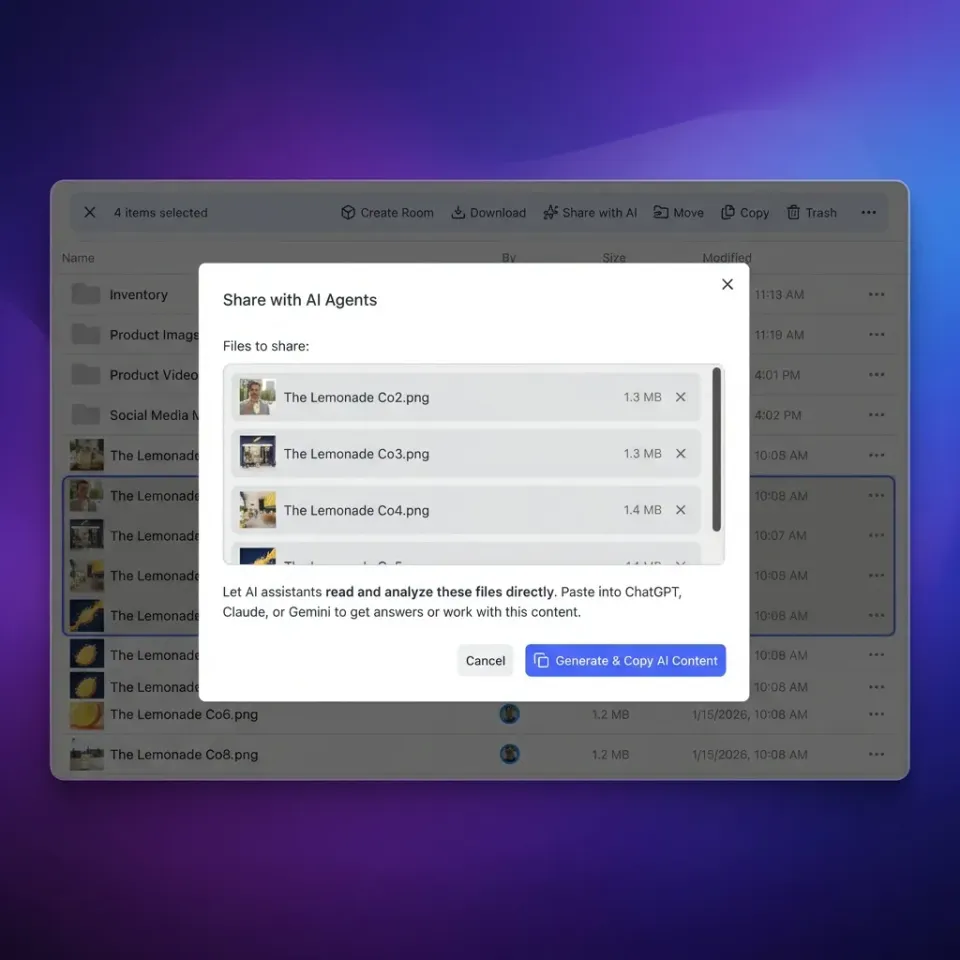
A multi-agent manufacturing workspace is a shared environment where multiple AI agents work together on industrial tasks. Unlike traditional automation where robots perform repetitive physical actions alone, multi-agent systems coordinate decisions, like adjusting production schedules based on material delays or moving shipments due to weather.
In these workspaces, the file system acts as the "message bus" and "state machine" for the entire factory. Instead of agents firing ephemeral API calls at each other (which are hard to debug), they read and write to shared, persistent files. A procurement agent updates an inventory.csv file. A production agent watches that file and adjusts the daily-schedule.json.
This approach solves the "silo problem" in manufacturing. Typically, procurement, logistics, and quality teams work in different software stacks. By connecting them in a Fastio workspace, agents from different domains can see each other's data right away.
Helpful references: Fastio Workspaces, Fastio Collaboration, and Fastio AI.
The "Workspace as a Bus" Concept
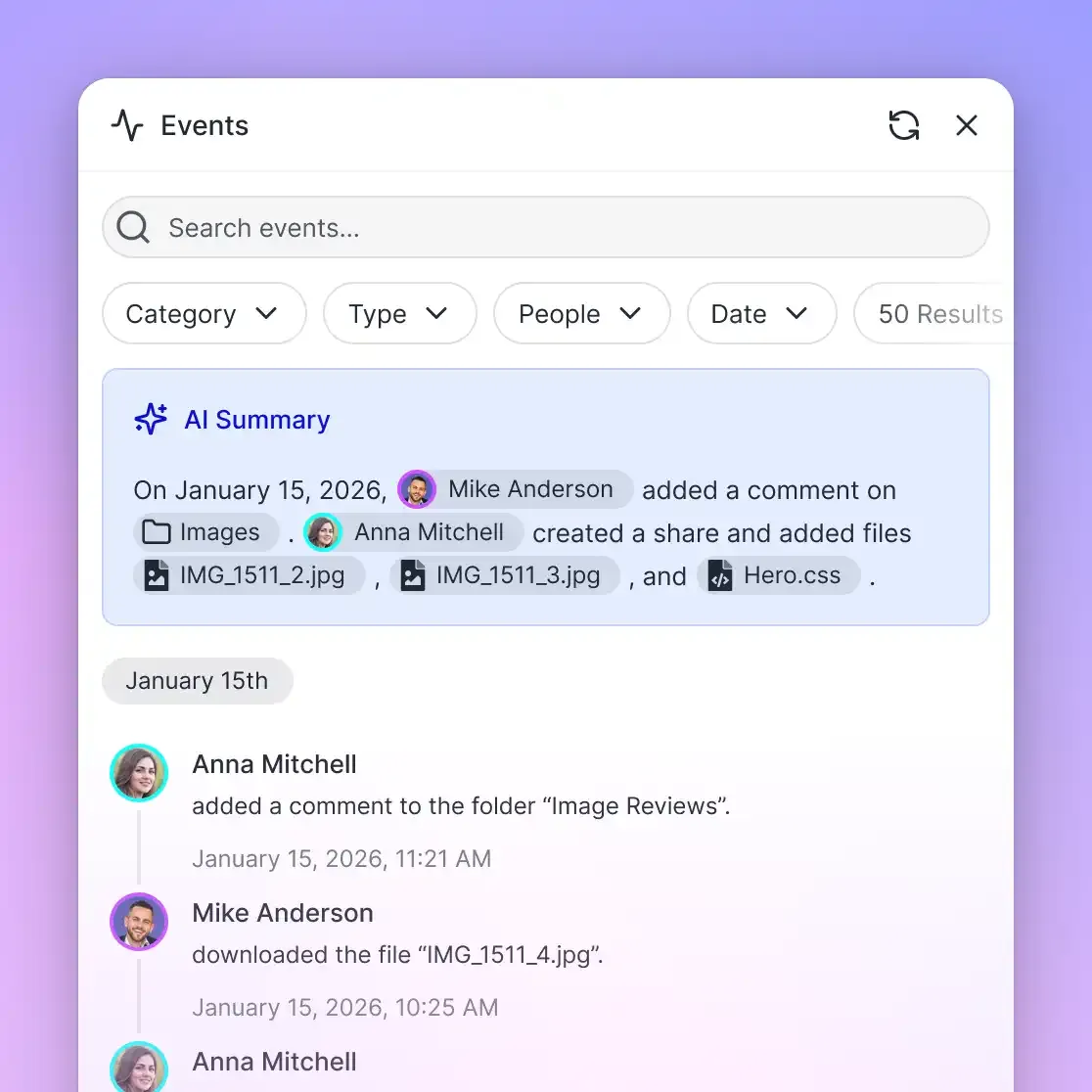
In software engineering, a message bus routes communication between services. In a multi-agent manufacturing setup, the workspace itself serves this function, but with persistence.
- State Persistence: The current state of the factory (inventory levels, active orders, machine status) is always visible in the files.
- Event Triggering: When a file changes (e.g., a new CAD drawing is uploaded), webhooks fire to wake up relevant agents.
- Human-in-the-Loop: Because the "bus" is just a set of files and folders, humans can inspect, verify, and edit the state using standard tools. This provides natural oversight.
Agent Roles in the Factory
Specialized agents handle distinct domains within the shared workspace:
- Procurement Agents: Monitor raw material levels and supplier contracts. They generate purchase orders when stock dips below thresholds defined in shared config files.
- Quality Control (QC) Agents: Analyze inspection logs and photos. They compare real-time production data against specification PDFs stored in the workspace, flagging deviations immediately.
- Logistics Agents: Track inbound and outbound shipments. They update delivery status files, allowing production agents to simulate delays before they happen.
- Maintenance Agents: Watch machine telemetry logs uploaded to the workspace. They predict component failures and schedule downtime during low-utilization windows.
Why Factories Are Adopting Multi-Agent Systems
Manufacturing is shifting from "automated" (machines doing work) to "autonomous" (machines making decisions). This shift is driven by the need to handle complexity that exceeds human limits.
According to Goldman Sachs Research, generative AI could raise global GDP by 7%, or nearly $7 trillion, with manufacturing being a main beneficiary. McKinsey estimates that AI in manufacturing could deliver $multiple.multiple trillion in value by multiple through supply chain and production efficiencies.
The adoption rate is increasing. A 2026 industry survey indicates that 78% of factories are now adopting multi-agent systems, up from just 45% the previous year. The main driver is speed. Multi-agent systems can cut coordination latency, the time between a disruption and a corrective action, by up to 60%.
For example, if a supplier emails a delay notice, it might sit in a human inbox for hours. An agent can parse that email, update the shared delivery schedule, and trigger a replanning event in milliseconds.

The Cost of Latency
In high-volume manufacturing, latency costs money. A multiple-hour delay in noticing a raw material shortage can idle an entire production line. By using agents to monitor shared state continuously, factories move from "reactive" to "predictive." Agents don't sleep, don't miss emails, and don't forget to check the latest version of a spreadsheet.


Build Your Multi-Agent Factory
Start with 50GB free storage and 251 MCP tools. Enable your agents to collaborate on CAD files, inventory, and schedules today. Built for multi agent manufacturing workspace workflows.
Architecture Patterns for Manufacturing Agents
Successful multi-agent deployments follow specific architecture patterns. These patterns ensure agents collaborate without conflicts.
Define clear tool contracts and fallback behavior so agents fail safely when dependencies are unavailable. This improves reliability in production workflows.
Pattern 1: The Shared State Repository
Best for: Inventory management, Bill of Materials (BOM), and Shift Schedules.
In this pattern, a single "Source of Truth" file (e.g., master-inventory.json) sits at the root of the workspace.
Read Access: All agents (Procurement, Production, Sales) have read access to this file. 2.
Write Access: Only the Inventory Agent has write access. Other agents must request changes by writing to a requests/ folder (e.g., requests/order-multiple.json).
3.
Conflict Resolution: The Inventory Agent processes requests sequentially, updates the master file, and moves the request to completed/.
This prevents race conditions where two agents try to deduct stock simultaneously.
Pattern 2: The Handoff Chain
Best for: CAD Design to Fabrication workflows.
This pattern mimics a physical assembly line using folders.
- Stage multiple (Design): A Design Agent generates a CAD file and places it in
multiple-draft/. - Stage multiple (Review): A Compliance Agent watches
multiple-draft/. It runs simulations. If it passes, it moves the file tomultiple-approved/. If it fails, it moves it tomultiple-rejected/with a log file explaining why. - Stage multiple (Fabrication): A CAM Agent watches
multiple-approved/, generates machine G-code, and places it inmultiple-production/.
This clear folder structure creates an audit trail. You can see exactly where any job is by checking which folder it resides in.
Pattern 3: The Supervisor-Worker Swarm
Best for: Complex problem solving, like supply chain re-optimization.
A "Supervisor Agent" creates a plan and breaks it into tasks.
Task Creation: The Supervisor writes task files to a tasks/todo/ folder.
2.
Execution: Multiple "Worker Agents" watch this folder. When a worker is free, it locks a task file, moves it to tasks/in-progress/, and executes it.
3.
Reporting: Upon completion, the worker writes the result to tasks/done/ and updates a shared progress.md summary.
This allows dynamic scaling. If the workload spikes, add more Worker Agents to the workspace.
Pattern 4: The Vendor Portal
Best for: Secure collaboration with external suppliers.
Isolation: Create a separate workspace for each major vendor (e.g., Vendor-Acme-Portal).
2.
Sync: Use a "Sync Agent" to copy approved purchase orders from your internal Production workspace to the Vendor-Acme-Portal.
3.
Interaction: The vendor (human or agent) uploads invoices and shipping docs to their portal. 4.
Ingestion: The Sync Agent scans the portal, validates the docs, and moves them to the internal workspace for processing.
This keeps your internal production data secure while allowing automated interaction with the outside world.
Core Features for Manufacturing Agents
To implement these patterns, your infrastructure needs specific capabilities. Fastio provides the "primitives" for agent coordination: File Locking, Webhooks, and Semantic Search.
Define clear tool contracts and fallback behavior so agents fail safely when dependencies are unavailable. This improves reliability in production workflows.
File Locking for Concurrency
In a factory, two agents cannot edit the inventory list at the same time. If Agent A reads "multiple units", subtracts multiple, and writes "multiple", while Agent B reads "multiple", subtracts multiple, and writes "multiple", the final count will be wrong.
Fastio supports explicit File Locking via MCP.
- Acquire Lock:
lock_file(path, timeout=300) - Release Lock:
unlock_file(path)
If an agent tries to lock a file that is already locked, it receives an error and knows to retry later. This prevents errors in critical files like BOMs and financial ledgers.
Webhooks for Event-Driven Architecture
Polling (checking "is there a new file?" every multiple seconds) is inefficient and slow. Fastio uses Webhooks to push events to agents.
You can subscribe agents to specific events:
file.created: Trigger a QC check when a new spec is uploaded.file.updated: Trigger a replan when the schedule spreadsheet changes.file.deleted: Trigger an alert if a critical certificate is removed.
This creates a fast system where agents sleep until there is work to do. This saves compute credits and reduces latency.
Intelligence Mode (RAG) for Unstructured Data
Manufacturing generates massive amounts of unstructured data: PDF datasheets, email threads, compliance reports, and images. Traditional databases can't handle this.
Fastio's Intelligence Mode automatically indexes every file uploaded to the workspace. Agents can use the query_intelligence tool to ask natural language questions:
- "Summarize the safety incidents reported in Q3."
The system returns an answer with citations linking directly to the source file. This turns your simple storage into a queryable knowledge base for your agents.
Step-by-Step Implementation Guide
This guide assumes you have a Fastio account. We will build a "Pattern multiple: Handoff Chain" for a Quality Control workflow.
Prerequisites:
- A Fastio account (free agent tier works).
- An LLM client (Claude Desktop, customized agent script, or OpenClaw).
- Node.js installed (if building custom agents).
Step 1: Create the Workspace and Folder Structure
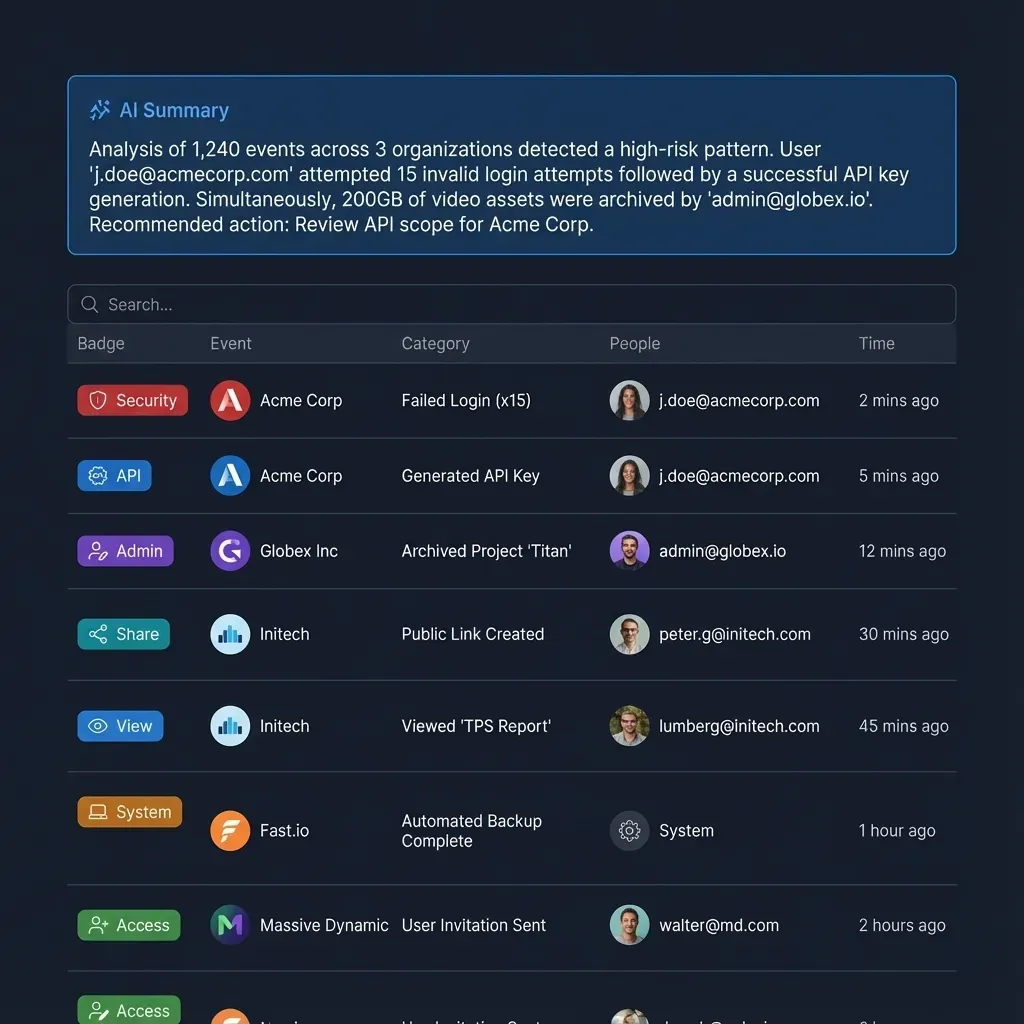
Create a new workspace named Factory-QC-Pipeline. Inside, create three folders:
01-pending-inspection/02-passed/03-rejected/
Enable Intelligence Mode in the workspace settings. This allows agents to "read" the visual content of inspection photos and PDF specs.
Step 2: Configure the MCP Server
If using OpenClaw or a local agent, install the Fastio MCP server.
# Using OpenClaw
clawhub install dbalve/fast-io
Configure the environment variables with your Fastio API key. Verify the connection by listing files in your new workspace.
Step 3: Deploy the Inspector Agent
The Inspector Agent needs a prompt that defines its role.
System Prompt:
"You are a Quality Control Inspector. Watch the multiple-pending-inspection/ folder. When a file appears:
- Read the file (if it's an image or PDF).
- Compare it against the 'Specs.pdf' located in the root.
- If it meets specs, move it to
multiple-passed/. - If it fails, move it to
multiple-rejected/and write a markdown report explaining the failure."
Step 4: Set Up Webhooks (Optional but Recommended)
Instead of the agent looping and checking, set up a webhook.
Payload: {"event": "file.created", "path": "/01-pending-inspection/*"}
Target: Your agent's endpoint.
Now, your agent only wakes up when a new image lands in the inspection folder.
Step 5: Test the Workflow
- Upload a dummy inspection photo
part-multiple.jpgtomultiple-pending-inspection/. - Watch the workspace. Within seconds, the file should disappear.
- Check
multiple-passed/ormultiple-rejected/. You should see the file there, along with a generated report if it was rejected. - Query the intelligence: "How many parts were rejected today and why?" The RAG system will summarize the generated reports.
Real-World Case Studies
These examples show how manufacturers use these patterns in production environments today.
Case Study 1: Automotive Tier-1 Supplier
The Problem: A supplier of brake components struggled with "Certificate of Analysis" (CoA) management. They received hundreds of PDFs from sub-suppliers daily. Verifying these against current chemical specs was a manual, error-prone process that caused production bottlenecks.
The Solution: They implemented a Pattern multiple Handoff Chain. Sub-suppliers upload CoAs to a portal. A "Compliance Agent" uses OCR and Intelligence Mode to extract chemical composition data from the PDFs. It compares this data against the "Master Spec" database.
The Results:
- Throughput: Verification time dropped from multiple hours to multiple seconds per document.
- ROI: The system paid for itself in less than multiple months.
Case Study 2: Custom Electronics Manufacturer
The Problem: A high-mix, low-volume electronics factory faced constant scheduling chaos. Component shortages were often discovered only when the production line was already set up, leading to expensive changeovers.
The Solution: They built a Pattern multiple Shared State workspace. A "Planning Agent" continuously simulated the production schedule based on live inventory feeds. When a "Procurement Agent" updated a delivery date for a delayed capacitor, the Planning Agent immediately flagged the conflict and re-optimized the weekly schedule to prioritize jobs that had all parts available.
The Results:
- Coordination: The daily "fire-fighting" meeting was cancelled as agents handled the routine rescheduling.
Fastio Features for Manufacturing
Fastio is designed to be the infrastructure layer for these agent workflows.
- MCP Native: With multiple tools available via the Model Context Protocol, your agents have granular control over the file system. They can list, read, write, move, copy, and lock files using standard tool definitions.
- Free Agent Tier: We believe agents should be standard users of the workspace. The free tier includes multiple of storage and multiple monthly credits (enough for thousands of file operations), with no credit card required.
- OpenClaw Compatible: For teams that want a "no-code" agent experience, Fastio works with OpenClaw. Run
clawhub install dbalve/fast-ioto give your existing LLMs access to your manufacturing data. - Ownership Transfer: Consultants can build these workspaces for clients, set up the agents, and then transfer full ownership of the workspace to the client's organization while retaining admin access for maintenance.
Frequently Asked Questions
What are the best workspaces for manufacturing agents?
Fastio is a strong workspace for manufacturing agents because it combines standard file storage (for CAD, BOMs, PDFs) with agent-native features like MCP integration, file locking, and semantic search. It acts as a shared state machine for multi-agent coordination.
How do file locks prevent conflicts in multi-agent systems?
File locks serialize write access to shared files. When Agent A locks a file (like `inventory.csv`), Agent B receives an error if it tries to modify it. Agent B must wait until Agent A releases the lock. This prevents "race conditions" where simultaneous edits would corrupt critical data.
Can agents handle manufacturing supply chain docs?
Yes. Agents can import documents from URL links (e.g., from supplier emails), auto-index them for content extraction, and trigger workflows. For example, an agent can read a PDF invoice, extract line items, and match them against a Purchase Order CSV in the same workspace.
What is the "Workspace as a Bus" pattern?
This pattern treats the shared file system as a message bus. Agents communicate by reading and writing files rather than sending direct API requests. This decouples the agents. They don't need to know about each other, only the file structure. That makes the system more reliable and easier to debug.
Is there a free tier for manufacturing AI agents?
Yes, Fastio offers a free tier for agents: multiple of storage, multiple operation credits per month, and multiple workspaces. This is sufficient to run substantial pilot programs or manage production cells without any upfront cost or credit card.
How does Intelligence Mode help with manufacturing data?
Intelligence Mode uses RAG (Retrieval-Augmented Generation) to make unstructured files queryable. You can ask "Show me all defects related to thermal stress in the last month" and the system will search across all inspection reports, PDFs, and logs to provide a cited, summarized answer.
What file formats does Fastio support for manufacturing?
Fastio supports any file type. For manufacturing specifically, it handles large CAD files (STEP, IGES, STL up to multiple), spreadsheets (CSV, XLSX), and PDFs. The browser interface includes previews for many of these formats, allowing humans to visually verify agent work.
Related Resources

Build Your Multi-Agent Factory
Start with 50GB free storage and 251 MCP tools. Enable your agents to collaborate on CAD files, inventory, and schedules today. Built for multi agent manufacturing workspace workflows.