How to Build Multi-Agent File Annotation Workflows
Manual data annotation is a bottleneck for AI development. Multi-agent file annotation allows parallel labeling with conflict resolution, speeding up workflows. By using specialized agents for different data types and a coordination layer like Fastio, teams can process thousands of files simultaneously while coordinating who edits each file.

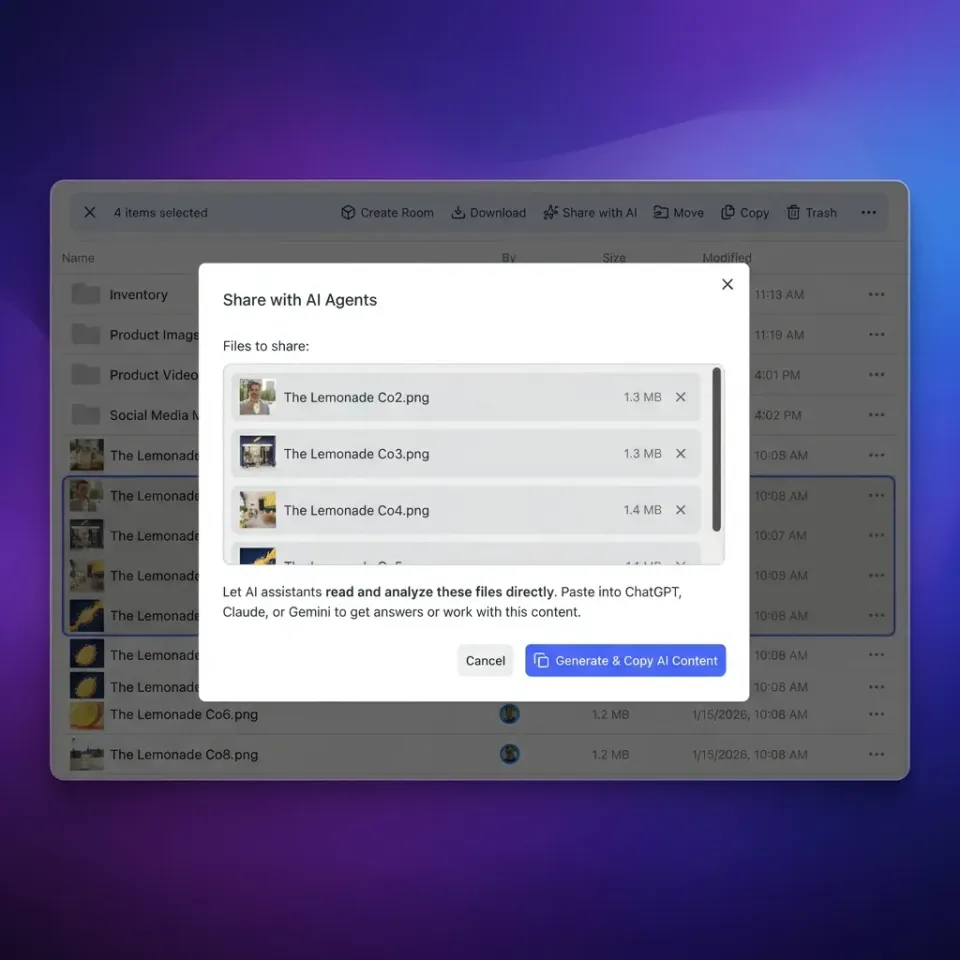
The Annotation Bottleneck
Data annotation is often the slowest part of the machine learning pipeline. Human teams struggle to keep up with the volume of raw data generated by modern systems. While AI-assisted labeling tools exist, they often run as single-threaded processes or require complex custom infrastructure to scale.
The real challenge isn't just speed, it's coordination. When multiple annotators (human or AI) work on the same dataset, they risk overwriting files, creating duplicate labels, or corrupting data. This "race condition" forces teams to work serially or split datasets into fragmented batches, slowing down the entire feedback loop.
Teams often resort to outsourcing or hiring more staff, but these solutions introduce additional delays and costs. Multi-agent systems overcome these limitations by providing built-in coordination for parallel work.
Related guides
- How to Implement Multi-Agent Context Sharing PatternsMulti-agent context sharing patterns are architectural frameworks that define how AI agents exchange state and memory....
- How to Automate Document Processing with AI AgentsAI agent document processing uses autonomous agents to extract, analyze, and transform information from documents...
- Top 5 File Sharing Tools for AI WorkflowsOver 60% of AI workflows involve document or file processing. Multi-agent systems can generate hundreds of artifacts...
- How to Build Automated Metadata Extraction Webhook WorkflowsPolling for new files wastes compute and delays processing. Webhook-driven metadata extraction pipelines react to file...
- How to Build an Agentic File Router with Fastio EventsAn agentic file router uses Fastio realtime events to dispatch uploaded files to specialized AI agents based on...
- How to Set Up AI Agent File Indexing (The Easy Way)Most AI agent file indexing requires complex Python pipelines and vector databases. This guide shows you how to skip...
More on this subject: Agent File and Document Workflows (325 guides)
Parallelism in Multi Agent File Annotation
Multi-agent file annotation solves this by assigning distinct roles to specialized agents. Instead of one model trying to do everything, you can deploy a fleet of agents: one to classify images, one to draw bounding boxes, and another to validate the output against ground truth.
This approach allows for massive parallelism. You can spin up dozens of agents to process folders of thousands of images in minutes rather than days. However, this speed creates a new problem: how do you ensure agents don't crash into each other when writing results back to the same storage?
Specializing agents for specific tasks like image classification, bounding box drawing, or output validation further boosts efficiency and reduces errors across the workflow. This targeted approach ensures higher quality outputs, as each agent focuses on its core competency without overload.


Start with multi agent file annotation on Fastio
Deploy autonomous agents in a workspace built for collaboration. Get started with generous storage.
How to Solve Conflicts Using File Locking
To make multi-agent annotation safe, you need a locking mechanism. Just as databases use transactions to prevent data corruption, file-based agent workflows need to "check out" a file before editing it and "check in" the result.
Fastio provides this coordination layer natively. Agents can acquire a lock on a file using the MCP server or API, perform their annotation, save the metadata (e.g., a JSON sidecar or embedded tags), and then release the lock. If another agent tries to acquire the lock while it is held, it gets an HTTP 409 and can wait or move to the next available file. Locks are advisory, so agents check them before writing, and version history keeps every version. Teams can thus run dozens of agents concurrently on shared datasets, scaling throughput directly with compute availability.
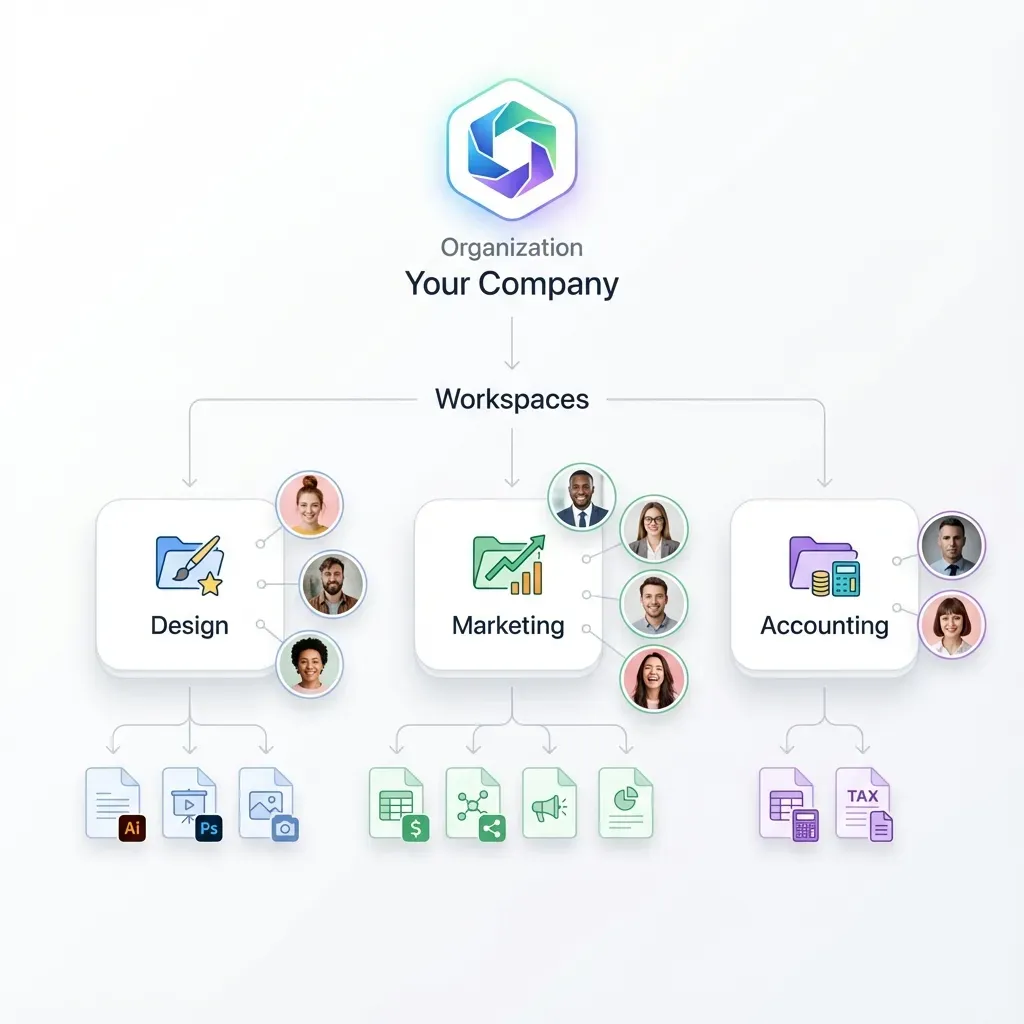
Step-by-Step Multi Agent File Annotation Workflow
Here is a reliable architecture for a multi-agent annotation pipeline:
- Ingest & Index: Upload raw data to a Fastio workspace. Intelligence Mode automatically indexes files for semantic search.
- Dispatch: An "Orchestrator Agent" scans the directory and assigns files to worker agents.
- Lock & Label: Each worker agent acquires a lock on its assigned file, runs its inference model (e.g., via OpenClaw or custom code), and writes the annotation to a sidecar file (e.g.,
image1.json). - Validate: A "Reviewer Agent" or human annotator checks a sample of the output. If issues are found, they can flag the file for re-processing.
- Merge: Once validated, the annotations are merged into the main dataset or exported for training.
Tools You Need
You can build this today using standard tools. Use the Fastio MCP Server to handle file operations and locking. You can sign up for the Business Trial to get started (credit card required). Because Fastio supports standard protocols, your agents can run anywhere, on your laptop, in a container, or as a serverless function. They share the same central storage. This eliminates data transfer overhead and allows instant access to the latest annotations from any agent or human reviewer.
Performance Gains
Moving from serial to parallel annotation delivers dramatic results. By removing the manual coordination overhead and allowing agents to work asynchronously, teams can see massive throughput improvements.
According to Keylabs, automation in computer vision projects can reduce total project timelines by up to 80%. This efficiency doesn't just save time; it allows data teams to iterate on their models faster, retraining on fresh data daily instead of monthly.
Parallel annotation unlocks daily training cycles, enabling rapid model evolution. Teams gain a significant advantage by continuously refining AI systems with freshly labeled data.
For example, teams annotating large datasets like surveillance footage have used specialized agents for object detection and classification, cutting weeks of work down to days. A key constraint is balancing agent workloads to prevent bottlenecks in the queue. These workflows deliver faster iterations, lower costs, and models that improve rapidly with continuous fresh data.
Sources
References used to verify factual claims in this guide.
-
Automation can reduce computer vision project timelines by up to 80%.
Frequently Asked Questions
How do agents handle file conflicts?
Agents use advisory file locking to coordinate edits. Before editing or annotating a file, an agent requests a lock from the storage system. If the file is locked, other agents wait or skip to the next file, and version history keeps every version.
Can humans and agents work in the same workspace?
Yes, Fastio workspaces are designed for hybrid teams. Humans can upload and review files via the web UI, while agents access the same files via the API or MCP server. Real-time updates ensure everyone sees the latest version.
Do I need a separate database for annotations?
Not necessarily. For many workflows, storing annotations as JSON sidecar files next to the source media is efficient and portable. This keeps the data and labels together and allows for easy versioning and backup.
What happens if an agent crashes while holding a lock?
Fastio locks expire unless the holder keeps renewing them by heartbeat, so a crashed agent's lock lapses on its own. Anyone with write permission on the file can also take the lock over.
Is this limited to text files?
No, this workflow applies to any file type. You can annotate images, video, audio, or 3D models. Fastio supports previewing and streaming for all these formats, making it easy for humans to spot-check agent work.
Related Resources

Start with multi agent file annotation on Fastio
Deploy autonomous agents in a workspace built for collaboration. Get started with generous storage.