How to Set Up Motion Graphics Proxy Sharing Workflows
Proxy files let motion graphics teams review and iterate on compositions without transferring full-resolution source files. This guide walks through proxy generation settings, folder structures for sharing, and tools that keep proxies synced between editors, animators, and clients.


Why Motion Graphics Projects Need Proxy Workflows
Motion graphics projects generate enormous files. A 30-second After Effects composition with 4K footage, nested pre-comps, and high-bitrate renders can easily reach tens of gigabytes. When multiple team members need to review that work, transferring full-resolution files becomes a bottleneck.
Proxy files solve this by creating lightweight versions of your compositions that preserve timing, layout, and animation decisions while dramatically reducing file size. A 4K ProRes 4444 render at around 330 Mbps drops to roughly 4 Mbps as a 720p ProRes Proxy, cutting file size by around 90%. That means a 10 GB render becomes a proxy under 1 GB.
The real value shows up in three scenarios:
- Client review rounds. Clients don't need pixel-perfect quality to approve animation timing and layout. A proxy lets them watch, comment, and request changes without waiting for a massive download.
- Remote editor handoffs. When a motion designer in one city hands off to a compositor in another, proxies let work continue immediately while full-resolution files transfer in the background.
- Version comparison. Keeping proxy versions of each revision makes it practical to compare v1, v2, and v3 side by side without filling up local storage.
The challenge isn't generating proxies. After Effects, Premiere Pro, and DaVinci Resolve all have built-in proxy tools. The challenge is organizing and sharing those proxies so every collaborator has the right version at the right time.
Helpful references: Fastio Workspaces, Fastio Collaboration, and Fastio AI.
Related guides
- VFX Pipeline: File Management and Sharing GuideA VFX pipeline is the end-to-end workflow that visual effects studios use to manage assets, shots, and renders from...
- How to Review and Share Film Dailies During ProductionManaging terabytes of raw footage daily is one of the biggest logistical challenges in film production.
- How to Share and Manage EXR Files in VFX WorkflowsEXR files are the standard for high-end visual effects, but sharing image sequences that total terabytes is a...
- Video Editing Storage Solutions: Best Options for EditorsVideo editing storage solutions are specialized systems designed to handle the massive bandwidth and file sizes...
- Building AI-Native Video Storage InfrastructureGuide to native video storage infrastructure: Traditional storage treats video as a playback stream. AI agents treat it...
- How to Edit and Modify Video Metadata TagsVideo metadata tags control how files are titled, organized, and discovered across players and platforms. This guide...
More on this subject: Video and Media Production (36 guides)
Step-by-Step Proxy Generation in After Effects
After Effects handles proxy creation through its render queue. Here's how to set it up for a shareable workflow.
1. Select Your Composition or Footage
In the Project panel, select the composition or footage item you want to proxy. Go to File > Create Proxy > Movie. This adds the item to the Render Queue with the Post-Render Action set to "Set Proxy," which automatically links the proxy back to the original after rendering.
2. Choose a Proxy Codec
Click the Output Module name in the Render Queue to configure your codec. The two standard choices for proxy workflows are:
- Apple ProRes Proxy. Lowest bitrate in the ProRes family. Excellent quality-to-size ratio. Native on macOS; playback works on Windows but encoding requires macOS or a third-party tool.
- Avid DNxHR LB (Low Bandwidth). Cross-platform encoding and playback. The better choice if your team mixes macOS and Windows machines.
Both codecs are edit-friendly, meaning they decode quickly during playback without taxing your CPU the way H.264 or H.265 would.
3. Set Resolution and Frame Rate
Match the frame rate of your source composition exactly. For resolution, scale down to 1/2 or 1/4 of the original. A 3840x2160 comp becomes a 1920x1080 or 960x540 proxy. Keep the aspect ratio identical to avoid distortion when you swap back to full resolution.
4. Establish a Naming Convention
Name proxies so they can be matched back to their source. A pattern like [comp-name]_proxy_v[number]_[date].[ext] works well. For example: hero-animation_proxy_v02_2026-03-23.mov. This makes it clear which proxy belongs to which composition when you're sharing a folder with dozens of files.
5. Render and Verify
Render the proxy and spot-check it. Scrub through to confirm timing matches the original, audio is present if needed, and the file plays back without artifacts. Then move it to your proxy output folder.
Organizing Proxy Files for Team Sharing
Generating proxies is the easy part. Keeping them organized across a team is where most workflows break down. A consistent folder structure prevents the "which version is this?" confusion that kills productivity.
Mirror Your Project Structure
Your proxy folder should mirror your After Effects project structure. If your project has folders for scenes/intro, scenes/main, and scenes/outro, your proxy output should follow the same hierarchy. This makes relinking straightforward when someone needs to swap proxies for full-resolution files.
project-proxies/
├── scenes/
│   ├── intro/
│   │   ├── intro_proxy_v01.mov
│   │   └── intro_proxy_v02.mov
│   ├── main/
│   │   └── main_proxy_v03.mov
│   └── outro/
│       └── outro_proxy_v01.mov
└── assets/
    ├── logo-anim_proxy_v01.mov
    └── lower-thirds_proxy_v01.mov
Version Control Matters
Every proxy should carry a version indicator. When you re-render after changes, increment the version rather than overwriting the previous file. This lets reviewers compare versions and prevents the situation where someone is reviewing an outdated proxy because their download finished before you re-rendered.
Include a Manifest File
For larger projects, include a simple text or spreadsheet manifest that lists each proxy, its corresponding source composition, render date, resolution, and codec. This takes five minutes to maintain and saves hours of confusion when a new team member joins the project or when you return to a project after a break.


Stop emailing proxy files to your team
Fastio workspaces preserve folder structure, version proxy files automatically, and let you control access with granular permissions. Start with generous storage.
Sharing Proxies with Remote Collaborators
Once your proxies are organized, you need a reliable way to get them to collaborators. The method you choose depends on file count, team size, and how often proxies get updated.
Cloud Storage Options
Google Drive and Dropbox work for small teams with infrequent updates. Upload your proxy folder, share the link, and collaborators download what they need. The downsides are slow sync for large folders, no built-in version tracking beyond basic file history, and limited control over who downloads what.
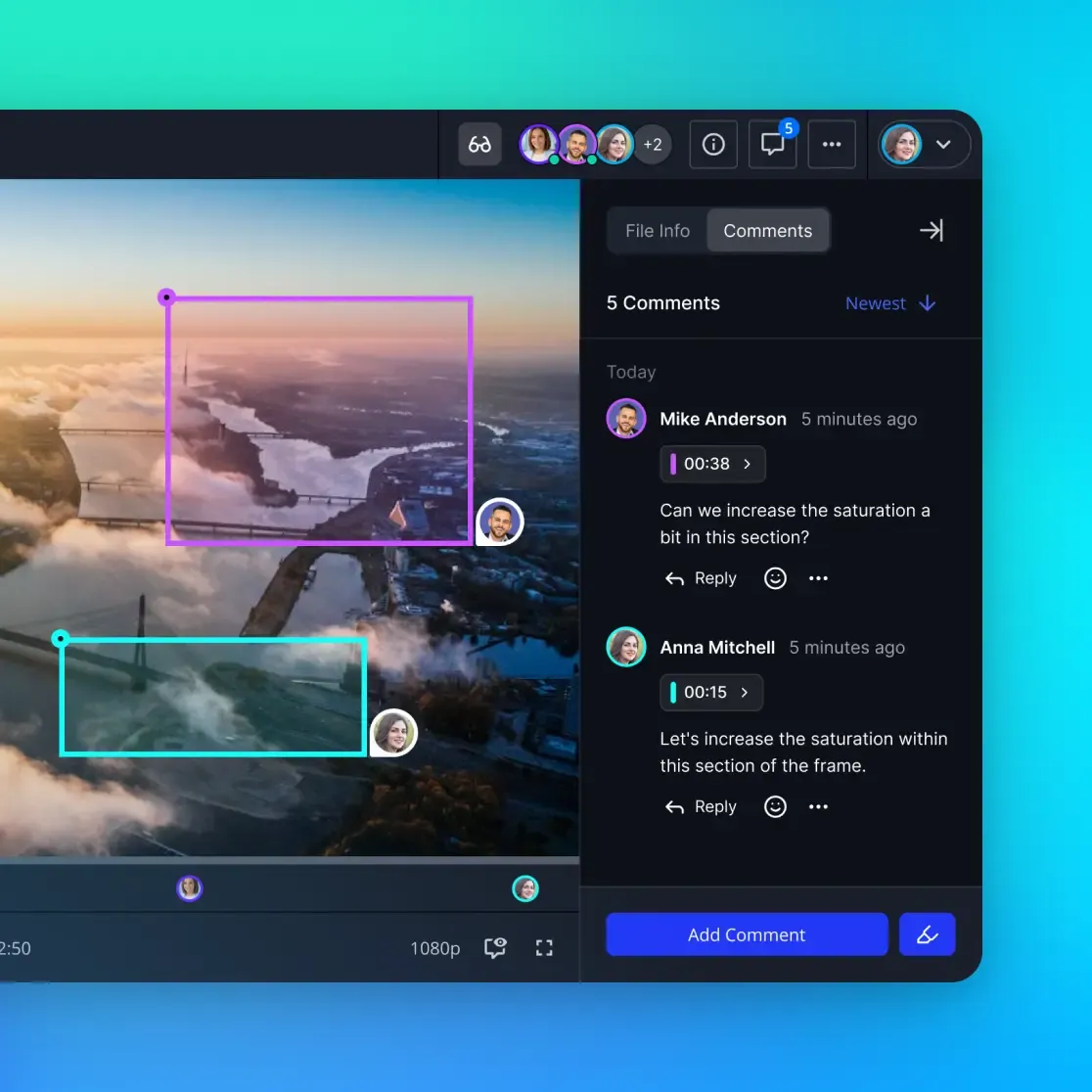
Frame.io is purpose-built for video review. It handles proxy playback in the browser with frame-accurate comments, which makes it excellent for client review. However, it's focused on review rather than general file management, so it works best as one piece of a larger workflow.
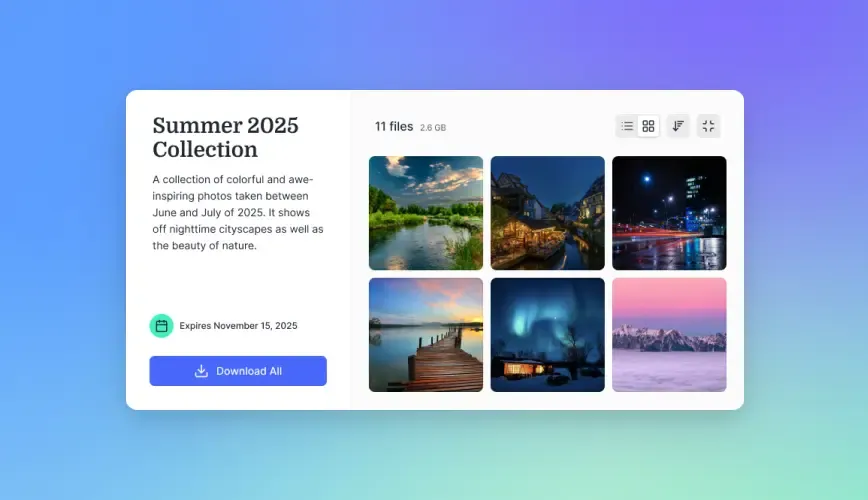
Fastio works well for proxy sharing workflows because it preserves folder structure on upload, supports inline video preview, and lets you control access with granular permissions at the organization, workspace, folder, or file level. You can set up a workspace for each project, invite collaborators with specific roles, and use branded shares to send proxy packages to clients with download controls. File versioning means you can upload updated proxies without losing access to previous versions. If your team works with AI-assisted tools, enabling Intelligence Mode on the workspace auto-indexes your files for semantic search, which helps when you're looking for a specific scene or asset across dozens of proxy files.
Transfer Services for Large Batches
When you need to send a complete proxy package (dozens of files, several gigabytes), dedicated transfer services like MASV handle the bandwidth better than consumer cloud storage. MASV preserves folder structure during transfer, which matters for proxy workflows where the folder hierarchy needs to match the project structure on the receiving end.
Automating Proxy Distribution
For teams that generate proxies frequently, manual uploads get tedious. Consider a watch-folder approach: designate a local folder as your proxy output directory, then use a sync tool to automatically upload new files to your cloud workspace. Adobe Media Encoder's watch folder feature can handle the proxy encoding side, picking up new renders and encoding them to your proxy preset automatically. On the distribution side, Fastio's API supports automated uploads, so you can script the process to push new proxies to your team's workspace as soon as they're encoded.
Proxy Workflows Across Motion Design Tools
After Effects isn't the one of the few tools in a motion graphics pipeline. Here's how proxy workflows extend across common tools.
Premiere Pro
Premiere Pro has the most mature proxy workflow in Adobe's suite. The Ingest Settings let you automatically generate proxies on import using presets like ProRes Proxy or DNxHR LB. The Toggle Proxies button in the Program Monitor switches between proxy and full-resolution playback instantly. For shared projects, the proxy files live in a predictable subfolder next to the project file, making them easy to bundle and share.
DaVinci Resolve
Resolve uses an "Optimized Media" approach rather than traditional proxies. You generate optimized media for selected clips at a lower resolution and codec, and Resolve automatically uses them during editing. For sharing, you'll need to export the optimized media folder alongside the project file, since Resolve stores these in its cache directory by default.
Cinema 4D and Blender
3D applications in a motion graphics pipeline typically output image sequences or video files for compositing in After Effects. The proxy strategy here is to render preview-quality outputs (lower samples, reduced resolution, no motion blur) for review, then re-render at full quality for final delivery. Share these preview renders using the same folder structure and naming conventions as your AE proxies.
Cross-Tool Consistency
Regardless of which tools your team uses, standardize on one proxy codec (ProRes Proxy or DNxHR LB), one resolution ladder (full, half, quarter), and one naming convention. This consistency means anyone on the team can grab a proxy folder and immediately understand what they're looking at, no matter which application generated it.
Troubleshooting Common Proxy Sharing Problems
Even well-planned proxy workflows hit snags. Here are the issues that come up most often and how to fix them.
Proxies Won't Relink After Download
This happens when the folder structure changes between upload and download. If you uploaded project-proxies/scenes/intro/intro_proxy_v02.mov but the recipient's download flattened the folder structure, After Effects can't find the file where it expects it. Fix this by using a sharing tool that preserves folder hierarchy, or by zipping the proxy folder before sharing so the structure stays intact on extraction.
Color Shift Between Proxy and Full Resolution
ProRes Proxy and DNxHR LB use different color subsampling than their full-resolution counterparts. ProRes Proxy uses 4:2:2 subsampling, which is fine for review but can show subtle color differences compared to ProRes 4444 (4:4:4). This is expected behavior. Remind reviewers that color-critical decisions should be made on the full-resolution files, not proxies.
Proxy File Sizes Are Still Too Large
If your proxies are still too big for practical sharing, drop the resolution further. A 960x540 proxy of a 4K composition is perfectly adequate for reviewing animation timing and layout. You can also lower the data rate within your chosen codec. DNxHR LB at 960x540 produces small files while maintaining enough visual clarity for editorial review.
Version Confusion Across the Team
When multiple people are generating and sharing proxies, version conflicts are inevitable. Establish one person as the proxy manager for each project, responsible for rendering, naming, and uploading proxies. Everyone else pulls from the shared location rather than generating their own. On Fastio, file versioning handles this automatically: uploading a new version of a file preserves the history, so collaborators always see the latest while retaining access to previous versions if needed.
Sync Delays With Large Teams
Cloud storage sync can lag when multiple people access the same folder simultaneously. If your team regularly hits sync conflicts, switch to a pull model: upload proxies to a central workspace and let collaborators download only the files they need rather than syncing the entire folder. Workspace-level permissions let you control who can upload new proxies versus who has view-only access.
Sources
References used to verify factual claims in this guide.
-
ProRes Proxy encodes at approximately 4 Mbps for 720p content, while ProRes 4444 reaches around 330 Mbps at 4K DNxHR and ProRes are the most common proxy codecs with wide NLE support, and are nearly interchangeable for proxy workflows
-
MASV preserves the complete file and folder structure of source uploads for proxy editing workflows
Frequently Asked Questions
How do I share motion graphics proxies with a client?
Generate proxies using ProRes Proxy or DNxHR LB at half or quarter resolution. Organize them in a folder structure that mirrors your project. Upload the folder to a cloud workspace or file sharing service that preserves the folder hierarchy, then share the link with your client. Services like Fastio let you create branded shares with download controls, so clients get a clean interface to review and download proxy files.
What is the best proxy codec for After Effects sharing?
ProRes Proxy and DNxHR LB are the two standard choices. ProRes Proxy offers slightly better quality at similar file sizes but requires macOS for encoding. DNxHR LB encodes on both macOS and Windows, making it the safer choice for cross-platform teams. Both decode quickly during playback, which is the main requirement for an editing proxy.
How much do proxies reduce file size for motion graphics?
Proxies typically reduce file size by 80-95% compared to full-resolution renders, depending on the codec and resolution you choose. A 4K ProRes 4444 file at around 330 Mbps becomes roughly 4 Mbps as a 720p ProRes Proxy. A 10 GB full-resolution render might produce a proxy under 1 GB.
Can I automate proxy generation in After Effects?
After Effects doesn't have built-in watch-folder proxy generation, but you can use Adobe Media Encoder's watch folder feature to automatically encode proxies from a designated folder. Render your compositions to the watch folder, and Media Encoder picks them up and encodes them using your preset. Third-party scripts like Proxynator can also batch-link footage items to proxies.
How do I keep proxy versions organized across a remote team?
Use a consistent naming convention that includes the composition name, version number, and render date. Designate one team member as the proxy manager who handles rendering and uploading. Store proxies in a cloud workspace with file versioning enabled so previous versions are preserved when new ones are uploaded. Include a manifest file listing each proxy and its corresponding source composition.
Do proxies affect final render quality?
No. Proxies are non-destructive stand-ins used only during editing and review. When you render the final output, After Effects uses the original full-resolution footage. Toggle off proxies in the Project panel before your final render to confirm the originals are linked correctly.
Related Resources

Stop emailing proxy files to your team
Fastio workspaces preserve folder structure, version proxy files automatically, and let you control access with granular permissions. Start with generous storage.