How to Choose Marketing Project Management Software for Creative Teams
Marketing teams juggle campaigns, creative assets, and client feedback across dozens of tools. This guide breaks down what to look for in marketing project management software, where generic PM tools fall short for creative workflows, and how to close the gap between task tracking and asset delivery.


Why Marketing Teams Need Specialized PM Software: marketing project management software
Marketing project management software helps teams plan campaigns, coordinate creative production, manage assets, and track deliverables from brief to launch. That sounds simple enough, but the reality is more complicated than a Gantt chart suggests.
A 2025 PMI survey found that 97% of creative campaigns faced significant delivery challenges in the past year. More than half went over budget, and 54% missed their deadlines. The root cause wasn't lazy teams or bad ideas. It was process: too many handoffs, too many tools, too little visibility into who's doing what.
Generic project management tools like Asana, Monday.com, or Trello work fine for tracking tasks. But marketing teams don't just track tasks. They produce large creative files, route them through rounds of review, collect client feedback, manage versioning across design iterations, and then deliver final assets to partners or publishers. That workflow has requirements that a simple Kanban board can't address.
The gap shows up in predictable ways. Designers email PSD files because the PM tool's attachment limit is too small. Feedback lives in Slack threads that nobody can find a week later. Version control means naming files "final_v3_FINAL_actually_final.psd." Client approvals stall because the reviewer needs to create an account in yet another tool.
Choosing the right software means understanding which parts of your workflow are task management problems (where any PM tool works) and which parts are asset management problems (where you need something purpose-built).
Helpful references: Fastio Workspaces, Fastio Collaboration, and Fastio AI.
Related guides
- How to Build a Content Production Workflow That ScalesMost content workflow guides stay abstract. This one walks through the actual steps to build a repeatable production...
- How to Manage Marketing Campaigns with the Right Software StackMarketing campaign management software helps teams plan, execute, and measure campaigns by coordinating tasks, assets,...
- How to Choose File Storage for Martech StacksMartech stack file storage puts assets in one place across marketing tools. Marketing teams handle dozens of platforms...
- How to Set Up an AI Marketing Team Intelligence WorkspaceAI marketing team intelligence workspaces combine semantic search and agent collaboration for files. Marketing teams...
- How to Set Up a Content Marketing Platform for Your TeamA content marketing platform is an integrated workspace where teams create, store, collaborate on, and distribute...
- How to Manage Cross-Channel Campaign FilesCross-channel campaign file management keeps assets consistent across email, social media, web, and print. Teams often...
More on this subject: Creative and Marketing Teams (27 guides)
What Makes Marketing PM Different from Regular PM
Regular project management assumes a workflow of tasks, dependencies, and milestones. Marketing project management includes all of that, plus a layer of creative production that most PM tools ignore.
Here's what makes marketing workflows distinct:
Asset-heavy output. A single campaign might produce dozens of files: video cuts, social graphics, landing page designs, email templates, print collateral. These aren't Google Docs. They're large binary files that need previewing, annotation, and version tracking.
Multi-stakeholder review cycles. Creative work goes through internal review, legal review, brand review, and client approval. Each round generates feedback that needs to be tracked against specific file versions, not just attached to a task card.
External collaboration. Marketing teams work with freelancers, agencies, clients, and media partners who aren't on the company's internal tools. Every handoff to an external stakeholder is a friction point.
Parallel workstreams. A campaign might have copy, design, video, and paid media tracks running simultaneously with interdependencies. The social team needs the designer's output. The video team needs the copywriter's script. The media buyer needs the final assets. One delay cascades.
Tight deadlines with shifting scope. Marketing campaigns are tied to launch dates, seasonal events, or product releases. The deadline doesn't move, but the creative brief often does. Teams need tools that absorb scope changes without losing track of what's been approved.
According to the same PMI survey, 47% of creative teams reported that process overhead constrained their creativity. The tools designed to help them were actually getting in the way.
8 Features to Look for in Marketing PM Software
Not every feature matters equally. Here are the eight capabilities that separate marketing-grade PM software from generic task trackers, ranked by impact on creative team productivity.
1. Campaign-Level Planning Views
You need to see the full campaign on one screen: timelines, dependencies, resource allocation, and status across workstreams. Gantt charts, timeline views, and portfolio dashboards all serve this purpose. The specific view matters less than having a single place where a marketing lead can answer "where does this campaign stand?" without opening five tabs.
2. Creative Brief and Request Management
Every campaign starts with a brief. Good PM software lets you templatize briefs, route incoming requests through an intake form, and link the brief to all the tasks and assets it generates. This prevents the common problem of a campaign's deliverables drifting from what was originally requested.
3. File Review and Annotation
This is where most generic PM tools break down. Marketing teams need to mark up images, annotate specific frames in a video, highlight text in a PDF, and compare versions side by side. Tools like Wrike and Filestage have invested heavily here. If your PM tool only supports "attach a file and leave a comment," you'll end up using a separate proofing tool.
4. Approval Workflows
Multi-stage approvals are the norm in marketing. A design might need sign-off from the creative director, then legal, then the client. Each approver needs to see the right version and leave structured feedback (approved, approved with changes, rejected). Basic task management treats approval as a checkbox. Marketing PM tools treat it as a workflow with routing, escalation, and audit trails.
5. External Collaboration Without Account Friction
Clients and freelancers shouldn't need to create an account in your PM tool to review a proof or upload a deliverable. The best tools offer guest access, branded portals, or shareable review links that work without a login. This single feature can cut days off approval cycles.
6. Large File Handling and Asset Delivery
Marketing produces big files. A 30-second video spot might be 2GB. A brand photography shoot generates gigabytes of RAW files. Your PM software needs to either handle these natively or integrate cleanly with a platform that does. File size limits, upload timeouts, and missing preview support for creative formats (PSD, AI, INDD) are deal-breakers.
7. Version Control for Creative Assets
This goes beyond "version history" on a document. Creative version control means tracking which version was approved, which version went to the client, and which version is the current working file. It means being able to compare two versions of a design side by side. Without this, teams waste hours reconciling which file is the "real" final.
8. Reporting and Campaign Analytics
You need to know how long campaigns actually take, where bottlenecks form, and which types of projects consistently miss deadlines. Good reporting helps marketing leaders make the case for more resources or fewer concurrent campaigns. Look for customizable dashboards, not just pre-built reports.


Give your marketing team a better way to share creative assets
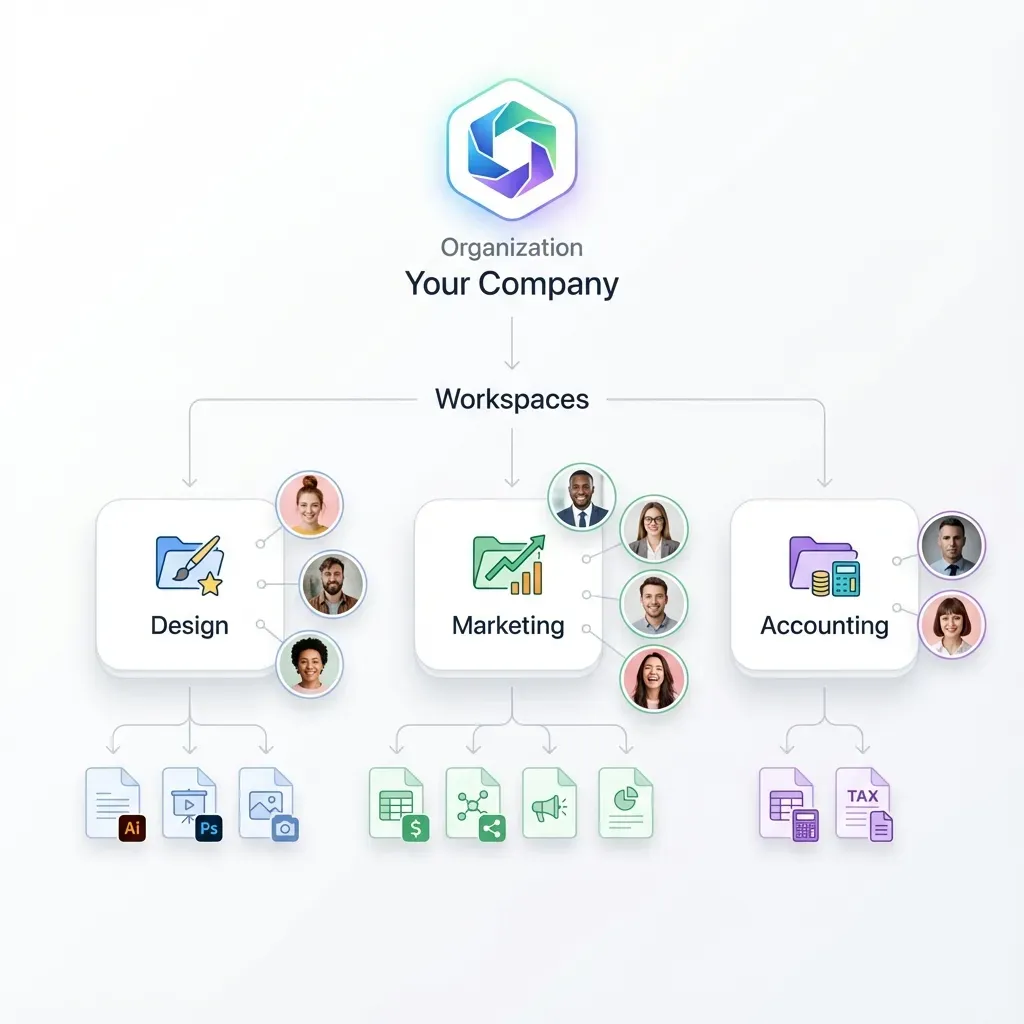
Fastio workspaces handle large file delivery, branded shares, and client collaboration so your PM tool can focus on the work. generous storage. Built for marketing project management software workflows.
Popular Marketing PM Tools Compared
No single tool does everything well. Here's how the most common options stack up for creative marketing teams.
Asana is strong for cross-functional project tracking with portfolios, goals, and workflow automation. Its creative review features are limited, though. You can attach files and leave comments, but there's no built-in annotation or version comparison for design files. Best for teams that need operational visibility more than creative production tools.
Monday.com offers flexible, visual boards with marketing-specific templates. It handles campaign planning and resource management well. File management is basic, relying on integrations with external storage. Best for teams that want a customizable hub they can shape to their workflow.
Wrike stands out for enterprise creative teams. Its built-in proofing supports image, video, and PDF annotation with version comparison. The Adobe Creative Cloud integration means designers can manage tasks without leaving Photoshop. The trade-off is complexity. Wrike has a steep learning curve. Best for large teams running complex, multi-channel campaigns.
Workfront (Adobe) goes deepest on the creative production workflow: briefs, requests, proofing, approval routing, and DAM integration. It's enterprise-priced and enterprise-complex. Best for organizations already invested in the Adobe ecosystem.
Hive combines project management with chat and proofing in one interface. It's lighter than Wrike or Workfront but covers more ground than Asana or Monday for creative workflows. Best for mid-size teams that want an all-in-one tool without enterprise overhead.
Filestage is purpose-built for creative review and approval rather than full project management. If your bottleneck is specifically the review cycle, Filestage can layer on top of whatever PM tool you already use. Best as a complement to a task-focused PM tool.
The pattern across all of these: task management is a solved problem. The differentiation is in how they handle creative assets, review workflows, and external collaboration. And most of them still struggle with large file delivery and branded client-facing handoffs.
Closing the Asset Gap in Your PM Stack
Even the best marketing PM tools have a blind spot: what happens after the creative work is approved. The campaign is done, the assets are finalized, and now you need to deliver a 4GB video file to a media partner, share a branded folder of launch assets with a client, or hand off a collection of photography to a publisher.
This is where most PM tools punt to email attachments, WeTransfer links, or a shared Google Drive folder with unclear permissions. It works, but it introduces risk: no audit trail, no version control on the delivery side, no branded experience for the recipient.
A dedicated file sharing and delivery layer can fill this gap. Here's what to look for:
Chunked uploads for large files. Creative assets are large. You need a platform that handles multi-gigabyte uploads reliably, not one that times out at 100MB.
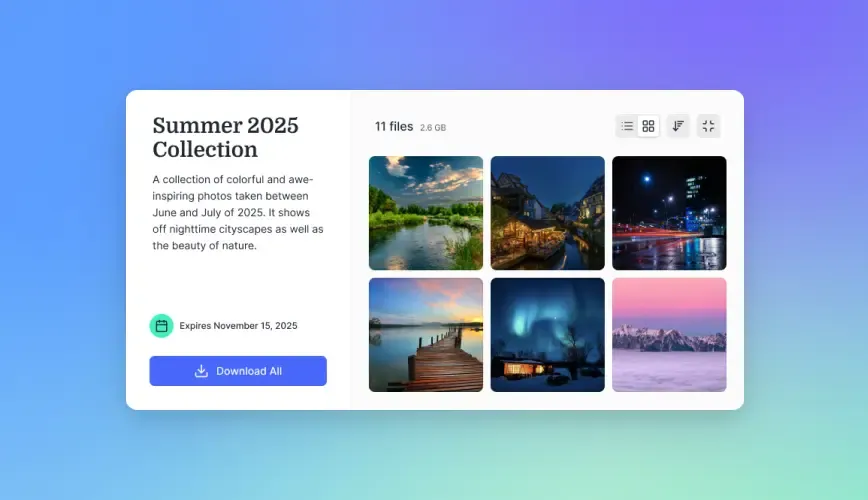
Branded delivery experiences. When you share final assets with a client, the experience should reflect your brand, not a generic file transfer UI. Branded shares with custom logos, colors, and messaging make the handoff feel professional.
Guest access without accounts. Recipients should be able to view, download, or upload files without creating an account. Reduce friction, speed up handoffs.
Granular permissions. Not everyone needs access to everything. You should be able to control who can view, download, or upload at the folder and file level.
Audit trails. Know who downloaded what and when. This matters for compliance, for client relationships, and for tracking down issues when a partner uses the wrong version of an asset.
File previews and inline review. Recipients should be able to preview video, images, PDFs, and other creative formats in-browser without downloading.
Fastio handles this delivery layer well. Its shared workspaces support chunked uploads (25 to 100 GB per file depending on plan), branded shares with Send, Receive, and Exchange workflows, granular permissions at the org, workspace, folder, and file level, and inline previews for video, images, PDFs, and more. Guest access works without requiring recipients to create accounts, and every action generates an audit trail.
For teams that produce a lot of creative content, Fastio can sit alongside your PM tool as the asset delivery and collaboration layer. The PM tool tracks the work. Fastio handles the files. When Intelligence Mode is enabled on a workspace, uploaded files are automatically indexed for semantic search and AI-powered chat, so you can find assets by describing what you're looking for rather than remembering a file name.
Fastio offers a 14-day Business Trial, card required; see Fastio pricing, which is enough to test the workflow with a real campaign before committing.
Rolling Out Marketing PM Software Successfully
Buying software is the easy part. Getting a creative team to actually use it consistently is harder. Here's what works based on common patterns across marketing teams that successfully adopt PM tools.
Start with one campaign type. Don't try to migrate every workflow at once. Pick your most repeatable campaign type (maybe monthly content production or quarterly campaign launches) and build your templates, workflows, and approval chains for that one use case. Get it working smoothly, then expand.
Map your handoffs before configuring anything. The biggest source of friction in marketing workflows is the handoff between people, teams, or tools. Before you set up a single board or workflow, map out every point where work moves from one person to another. Those handoff points are where your PM software needs to add the most value.
Don't duplicate your file storage. If you're using a dedicated file sharing platform for asset delivery, don't also store those same files in your PM tool's attachment system. Pick one source of truth for files and link to it from your PM tool. Duplication creates version confusion.
Set up intake forms early. The number one complaint from marketing teams is unstructured requests arriving via Slack, email, and hallway conversations. An intake form in your PM tool (even a simple one) forces requesters to provide the information the team needs to scope the work. This alone can cut back-and-forth by half.
Measure what matters. Track cycle time (brief to delivery), approval turnaround, and the number of revision rounds per deliverable. These metrics tell you whether the tool is actually reducing friction or just moving it around. Avoid vanity metrics like "tasks completed" that don't reflect the quality or timeliness of the output.
Review and adjust quarterly. Marketing workflows change as campaigns evolve, team size shifts, and new channels emerge. Schedule a quarterly review of your PM setup. Archive templates that aren't being used, update workflows that have drifted from reality, and check whether your tool integrations are still serving the team.
Sources
References used to verify factual claims in this guide.
-
97% of creative campaigns faced significant delivery challenges in the past year 54% of campaigns missed deadlines and 55% went over budget 47% of creative teams reported that process overhead constrained their creativity
Frequently Asked Questions
What project management tool is best for marketing teams?
It depends on your team's biggest pain point. Asana and Monday.com are strong for campaign tracking and cross-functional visibility. Wrike and Workfront are better for teams that need built-in creative proofing and approval workflows. For asset delivery and external sharing, a dedicated platform like Fastio complements any PM tool.
How do marketing teams manage projects differently than other teams?
Marketing projects involve heavy creative asset production, multi-stakeholder review cycles, external collaboration with clients and agencies, and tight deadlines tied to launches or events. This combination requires tools that go beyond task tracking to support file review, version control, approval routing, and branded asset delivery.
What is the difference between marketing project management and regular project management?
Regular project management focuses on tasks, timelines, and resource allocation. Marketing project management adds layers for creative production, asset management, stakeholder review and approval, and external delivery. A marketing PM tool needs to handle large files, support visual annotation, manage approval workflows, and make it easy to share finished work with clients and partners.
Do I need a separate tool for creative file delivery?
If your PM tool can't handle large file uploads, branded sharing, or guest access without accounts, yes. Many marketing teams use their PM tool for task tracking and a dedicated platform like Fastio for asset storage, delivery, and client-facing shares. This keeps the PM tool focused on workflow while giving creative assets the infrastructure they need.
How many campaigns can a marketing team realistically manage at once?
Most marketing teams run 5 to 15 campaigns simultaneously, though the number varies by team size and campaign complexity. The key constraint isn't the number of campaigns but the number of handoffs and review cycles happening in parallel. Good PM software makes those handoffs visible and manageable.
What's the biggest mistake teams make when adopting marketing PM software?
Trying to migrate every workflow at once. Teams that succeed typically start with one repeatable campaign type, build their templates and approval chains for that use case, and expand from there. The second most common mistake is duplicating file storage across the PM tool and other platforms, which creates version confusion.
Related Resources

Give your marketing team a better way to share creative assets
Fastio workspaces handle large file delivery, branded shares, and client collaboration so your PM tool can focus on the work. generous storage. Built for marketing project management software workflows.