How to Build Marketing Automation AI Workspaces
Marketing automation AI workspaces let teams orchestrate AI agents for personalized campaigns using persistent storage. Traditional tools lack multi-agent funnel storage. Fastio provides shared workspaces, a consolidated MCP toolset, built-in RAG, and granular permissions.

What Is a Marketing Automation AI Workspace?
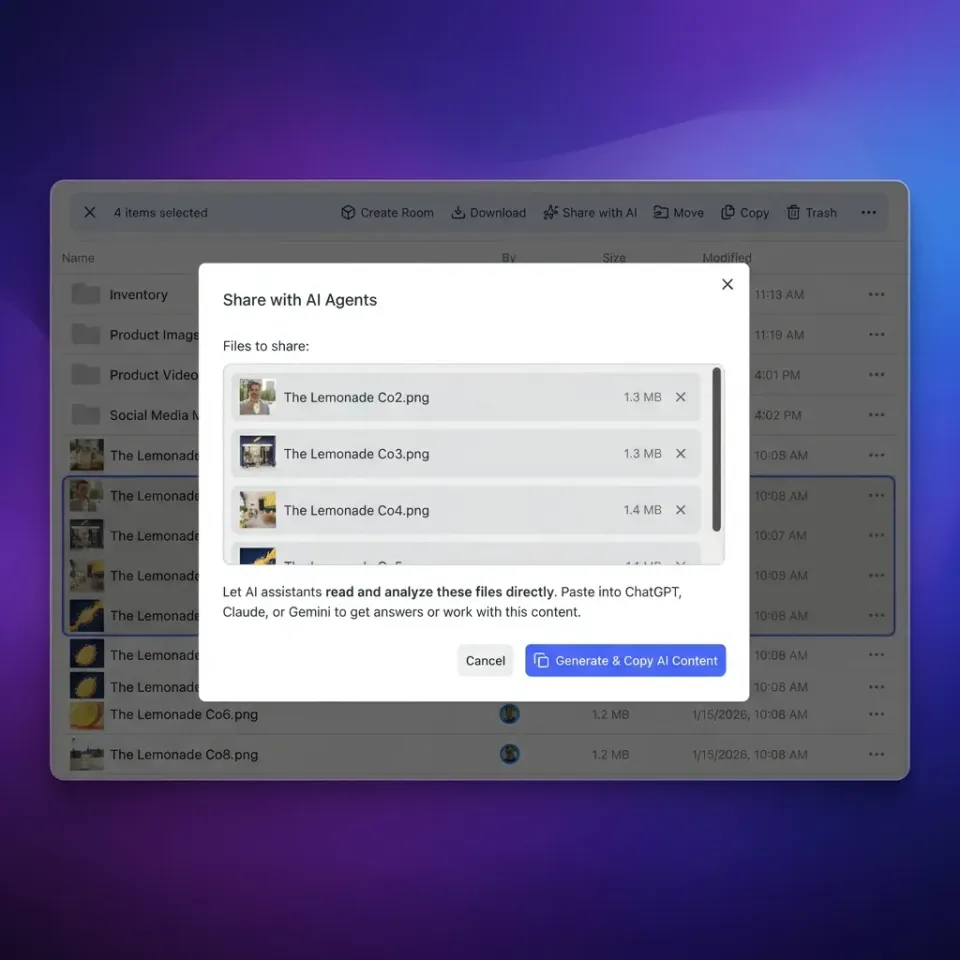
A marketing automation AI workspace is a persistent shared environment where AI agents and human teams collaborate on campaigns. Agents upload data, query insights, generate assets, and pass outputs to the next step. all backed by indexed storage.
Traditional tools like HubSpot automate emails and scoring but treat storage as secondary. AI workspaces make storage the core, with features like file locks, real-time event feeds, and RAG to support multi-agent flows. Agents don't start from scratch each run; they build on previous outputs.
Picture this workflow. A lead gen agent imports CSV from a form via URL import, stores in /leads/q1. A segmenter agent uses semantic search to group by behavior, creates /segments/high-value. A content agent pulls profiles for RAG, generates emails in /content/drafts. An optimizer agent reviews open rates from logs, updates templates. Humans review in the UI, approve, and launch. The workspace persists everything for the next campaign.
Fastio makes this easy. Create an organization and workspace, then enable Intelligence Mode once files are added. Files auto-index for queries like "Find underperforming segments from last month" with citations.
Links: Fastio Workspaces, Fastio AI.

Core Components
Persistent Storage: generous storage, files don't expire. Organization-owned, survives agent restarts.
MCP Tools: A consolidated MCP toolset for CRUD, search, and sharing via Streamable HTTP or SSE.
Intelligence Mode: Auto RAG indexing, semantic search, chat with citations.
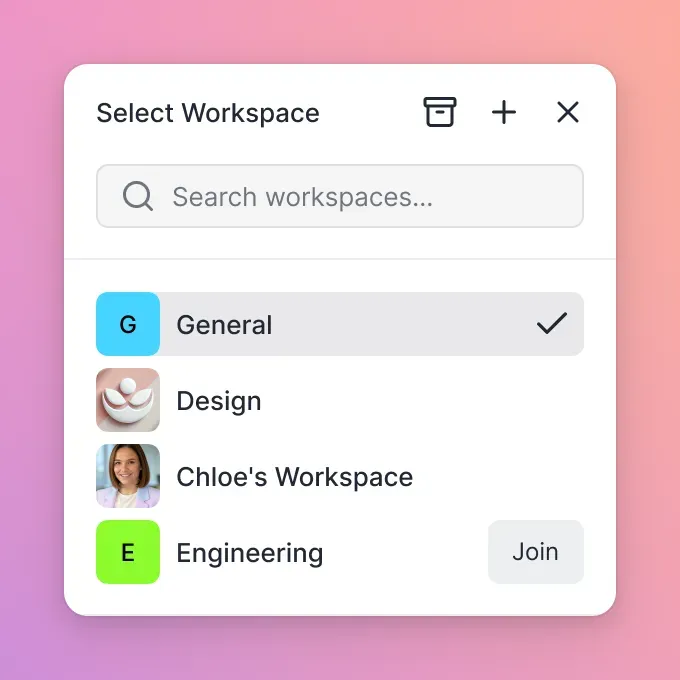
Human-Agent Collab: Agents join as members, role permissions. ownership transfer.
How It Differs From Traditional Marketing Automation
Traditional marketing automation platforms like Marketo, Pardot, or Mailchimp focus on email workflows, lead scoring, and CRM integration. They excel at executing predefined sequences but treat data storage as an afterthought: files live in separate systems, and agentic workflows require custom integrations.
AI workspaces flip this model. Storage becomes the foundation. Every campaign asset, lead list, A/B test result, and analytics export lives in one searchable, indexable space. Agents can query past campaigns. reference successful templates, and build on historical data without manual data migration.
The practical difference shows up in campaign velocity. A traditional setup might take days to spin up a new nurture sequence because analysts must export data, format it, import to the email tool, and configure triggers. In an AI workspace, an agent pulls the segment. generates variations, tests them, and logs results in hours.
For teams running dozens of campaigns quarterly, this compounding efficiency matters. Q1 learnings directly inform Q2 execution because the data lives in the same workspace, not scattered across disconnected tools.
The Role of Persistent Storage in Agentic Workflows
Persistent storage isn't just about keeping files around. It's about state continuity. When an agent processes 10,000 leads, generates personalized content for each, and logs engagement metrics, that work persists. The next agent in the chain doesn't start from zero: it references what came before.
This matters for several scenarios. Campaign optimization becomes possible because agents can compare Q1 vs Q2 performance on the same datasets. Multi-agent handoffs become reliable because Agent B knows exactly where Agent A left off. Human review becomes meaningful because reviewers see the full chain, not just final output.
Fastio's workspace structure supports this naturally. Folders like /campaigns/q1/leads, /campaigns/q1/content, and /campaigns/q1/analytics create explicit state boundaries. Agents write to their stage, and downstream agents read from previous stages. File version history, granular permissions, and a detailed activity log prevent conflicting edits when multiple agents work in parallel.
Related guides
- How to Set Up Demand Generation Asset Workspaces for Marketing TeamsDemand generation asset workspaces organize creatives for lead gen campaigns. Marketing teams keep graphics, videos,...
- How AI Agents Streamline Marketing Automation WorkflowsMarketing teams lose a significant chunk of their week to repetitive tasks like list cleaning, report generation, and...
- How to Set Up an AI Marketing Team Intelligence WorkspaceAI marketing team intelligence workspaces combine semantic search and agent collaboration for files. Marketing teams...
- How to Build a Canva Agency Collaboration WorkflowCanva agency collaboration workflow simplifies design reviews for remote teams. Agencies use Canva Teams for real-time...
- How to Manage Marketing Assets with AI AgentsMarketing teams use AI agents in intelligent workspaces to store, version, and share AI-generated files securely. These...
- How to Set Up a Content Marketing Platform for Your TeamA content marketing platform is an integrated workspace where teams create, store, collaborate on, and distribute...
More on this subject: Creative and Marketing Teams (27 guides)
Why Marketing Teams Need AI Workspaces Now
Marketing demands speed and personalization at scale. Manual processes slow teams down, and single-agent tools can't handle full funnels.
According to HubSpot's 2026 State of Marketing Report, 80% of marketers use AI for content and 75% for media production. Yet coordination between agents is rare. Persistent storage bridges this, letting workflows carry state.
Benefits include faster campaigns, higher engagement, lower costs. Marketing automation boosts ROI by 25%, according to Forrester. With AI workspaces, teams achieve this by scaling agent chains without data silos.
Without persistent funnels, agents repeat work. With them, learnings compound. For example, Q1 A/B results inform Q2 personalization automatically.
Fastio's Business Trial lets you test this, with a detailed activity log for tracking agent and human activity.
The Personalization at Scale Challenge
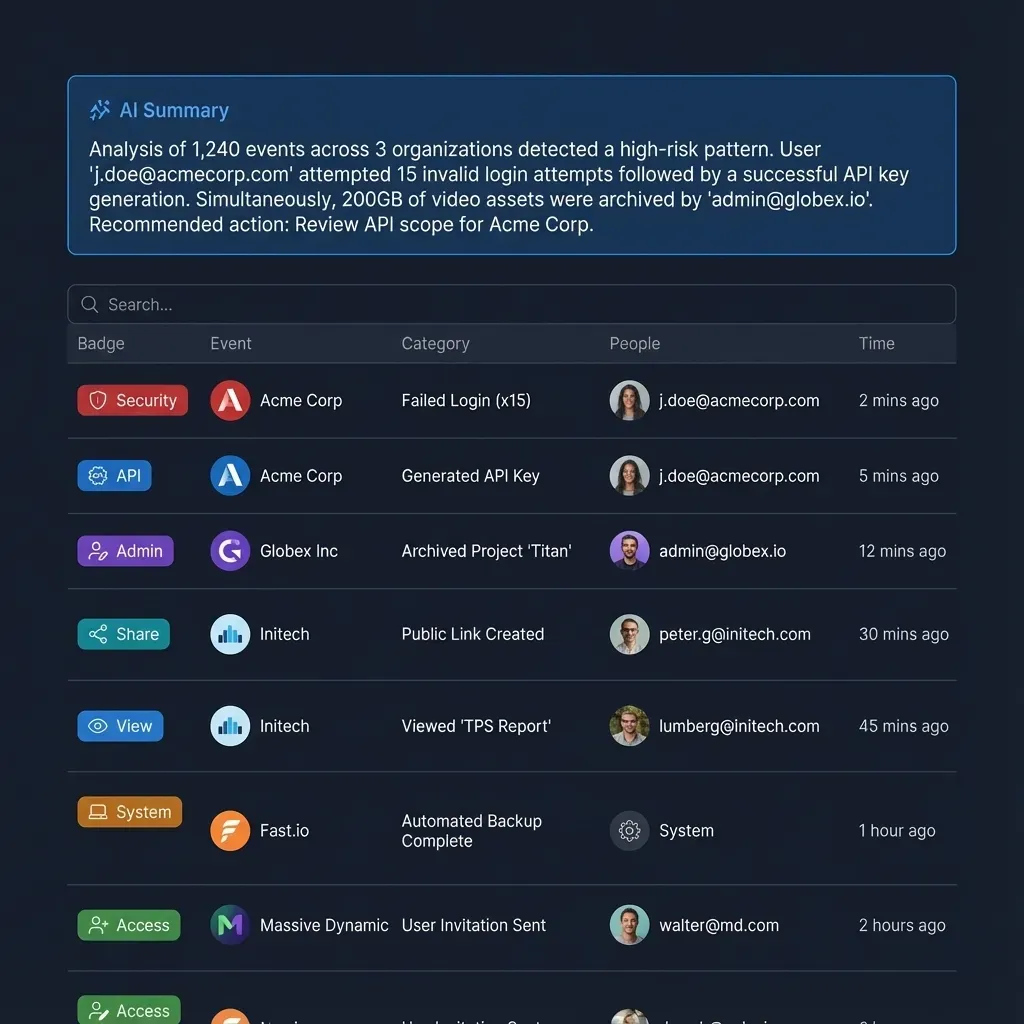
Modern consumers expect personalized experiences. A B2B software company might need different messaging for healthcare prospects versus financial services. A retail brand needs product recommendations that vary by region, season, and purchase history. Manually crafting these variations is impossible at volume.
AI agents solve this by generating thousands of variations, but they need somewhere to store them, track them, and reference them for optimization. Without persistent storage, each campaign starts fresh. With it, agents learn from every interaction.
Fastio workspaces handle this naturally. Store audience segments in /audiences/, campaign variants in /variants/, and results in /analytics/. Agents query this hierarchy to generate increasingly relevant content.
Why Single-Agent Tools Fall Short
Most AI marketing tools focus on one task: generate email subject lines, create ad copy, write social posts. These single-agent solutions work for isolated tasks but break down when campaigns require multiple handoffs.
A complete campaign flow might include lead enrichment, segmentation. content generation, A/B test creation, performance analysis, and budget reallocation. Each step could theoretically use AI, but connecting them requires data persistence that most tools don't provide.
AI workspaces solve this by providing the shared foundation all agents need. Think of it as the operating system for agentic marketing: each agent is a process that reads from and writes to persistent storage.


Ready for Agentic Marketing?
Persistent storage, a consolidated MCP toolset, and built-in search to build funnels that boost ROI.
Key Features of AI Marketing Workspaces
Effective AI marketing workspaces have features for agent reliability and team integration.
Real-time event feeds and activity polling notify agents of file changes, enabling responsive multi-step campaigns.
Version history with restore, granular permissions, and a detailed activity log track every human and agent action.
URL import pulls from Drive, Dropbox, Box, or public links in a one-time transfer without local file downloads.
Ownership transfer lets agents build workspaces and hand them to humans via claim links.
Remote MCP integration lets agents connect over Streamable HTTP without custom local packages.
Fastio bundles these capabilities with multi-LLM support (Claude, GPT, Gemini) and usage-based credits.
Other: Semantic search, RAG chat, branded shares for campaign assets.
Real-Time Event-Driven Reactivity
Real-time event feeds transform static storage into reactive infrastructure. Instead of agents guessing when updates occur, they can listen to Fastio's WebSocket events feed or poll the activity feed.
In practice, this looks like: Agent A finishes generating 500 email variants and saves to /content/emails/. The activity feed captures the new files, alerting Agent B (the A/B tester) that new content is ready. Agent B pulls the variants, creates test groups, and runs the experiment: all triggered by the new file, not a timer.
This matters for campaign speed. Traditional batch processing might run nightly. Event-driven flows can complete in minutes, letting marketing teams iterate faster.
Permissions, File Locks, and Version History for Concurrent Safety
Multi-agent systems face a fundamental coordination challenge: what happens when multiple agents collaborate in the same directory? Without proper coordination, agents can collide when modifying shared assets like leads.csv.
Fastio solves this with advisory file locks alongside granular permissions and file version history. An agent acquires a lock on a file before writing and maintains it with heartbeats; if another agent attempts to lock the same file, it receives an HTTP 409 and can wait or inspect the locker. When finished, the agent releases the lock, or it expires automatically if abandoned. Furthermore, version history preserves every write regardless, while the activity log records all human and agent activity.
URL Import for Seamless Integrations
Most marketing data lives in other systems: CRM exports in Google Drive, customer lists in Box, asset libraries in Dropbox. Downloading files locally, re-uploading, and formatting wastes time.
URL import connects directly. Fastio performs a one-time import from external services or public URLs into the workspace. No local I/O required on the agent host.
This feature matters for teams with existing data investments. Instead of migrating everything manually, agents can import the necessary files straight into Fastio.
How to Set Up a Marketing Automation AI Workspace
Setting up takes minutes with Fastio.
Step 1: Sign up at Fastio and start a 14-day Business Trial.
Step 2: Create a workspace and enable Intelligence Mode once files are uploaded.
Step 3: Connect your agent client to Fastio's remote MCP server at https://mcp.fast.io/mcp/tools.
Step 4: Verify connectivity with the consolidated MCP toolset to list files and inspect folder structures.
Step 5: Agents upload data, and query indexed files with natural language chat and citations.
Step 6: Test chain: check the activity feed to confirm file completion before the downstream agent runs.
Monitor usage in the dashboard to track storage and credits across campaigns.
Scale by adding humans: Invite team members and review agent outputs in the UI.
Workspace Structure Best Practices
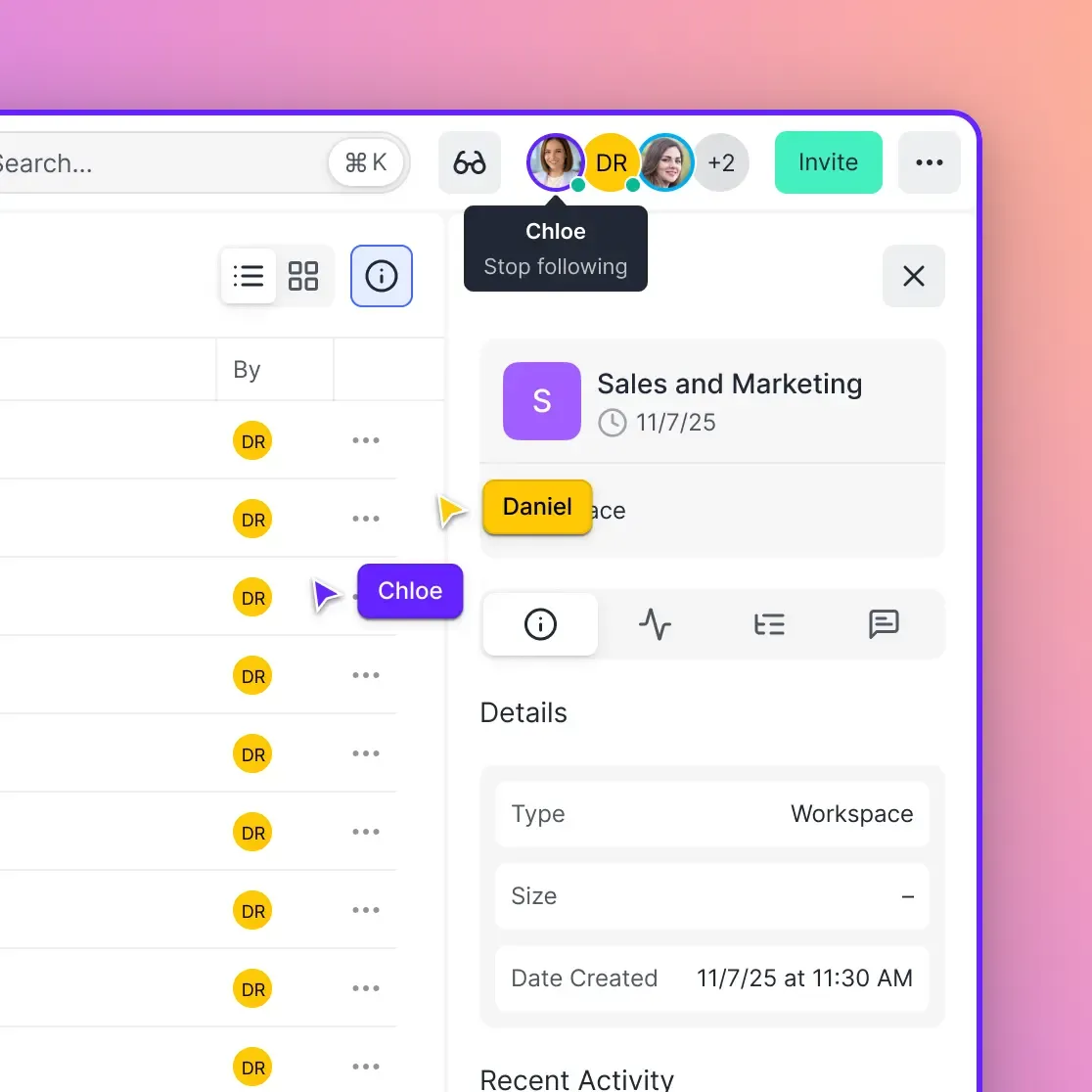
A well-organized workspace makes agent workflows predictable. Use a consistent folder hierarchy that agents can navigate programmatically.
Recommended structure: /campaigns/{year}/{quarter}/{campaign_name}/{stage}/
Stages might include: /raw/ (imported data), /segmented/ (processed audiences), /content/ (generated assets), /testing/ (A/B variants), /live/ (deployed campaigns), /analytics/ (results).
This structure mirrors the marketing funnel and lets agents know exactly where to read from and write to. Humans can navigate the same structure visually.
Intelligence Mode Setup
Intelligence Mode enables automatic RAG indexing: every file uploaded gets parsed, indexed, and becomes searchable by meaning. This transforms static storage into a queryable knowledge base.
Enable it via the workspace toggle. Once active, upload a CSV of past campaign performance and ask "Which email subject lines had the highest open rate?" The system returns relevant rows with citations.
This is powerful for campaign planning. Instead of flipping through old reports, agents query directly. The citations ensure humans can verify the source.
Testing Your First Agent Chain
Start simple. Create a two-agent chain: one generates subject line variations, another scores them by predicted open rate.
Agent 1 takes a product description, writes 10 variations to /test/subjects.txt. The activity feed logs the new file.
Agent 2 reads /test/subjects.txt, applies a scoring prompt, writes results to /test/scored.txt.
Review outputs in the UI. If the chain works, add a third agent for A/B test execution. Build complexity gradually.
Multi-Agent Funnel Storage: Filling the Content Gap
Competitors focus on single agents or ephemeral storage. Multi-agent funnels need persistent hierarchy.
Structure: /campaigns/{quarter}/{stage}/files. E.g., /campaigns/q1/leads/raw.csv, /q1/nurture/emails/, /q1/conversion/scripts/.
Agents 1-3: Gen -> Nurture -> Convert. Activity feed logs completion for the next agent.
Version history ensures safe handoff across pipeline stages.
Humans audit via logs, comment on outputs.
Gap filled: Full funnel persistence lets you replay, optimize over time. Scale to 10+ agents.
Example: Agent analyzes past ROI, adjusts budget allocation automatically.
Designing the Funnel Folder Structure
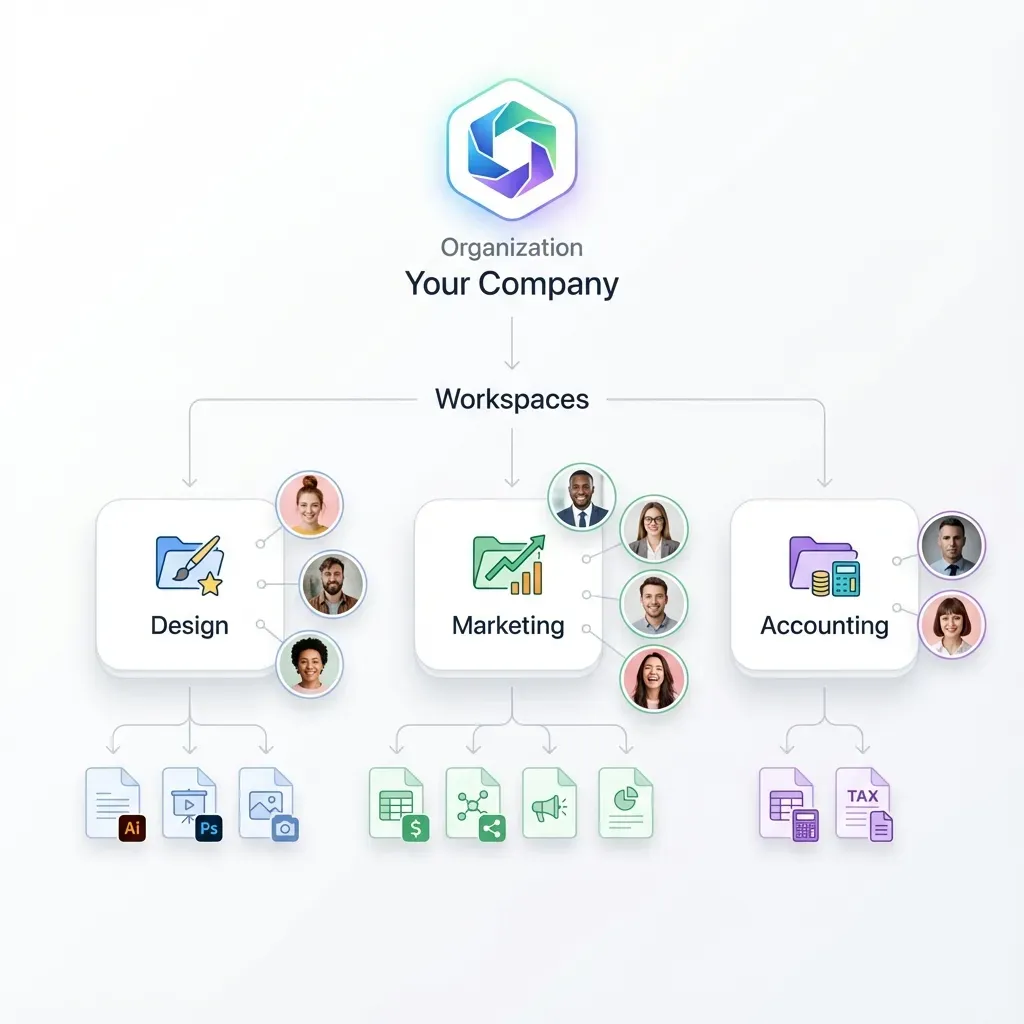
The folder structure is the backbone of multi-agent coordination. Each agent knows where to read input and where to write output.
A practical Q1 campaign structure:
- /campaigns/2026/q1/product-launch/leads/raw.csv (imported list)
- /campaigns/2026/q1/product-launch/leads/qualified.csv (Agent 1 output)
- /campaigns/2026/q1/product-launch/content/emails/draft-v1.txt (Agent 2 output)
- /campaigns/2026/q1/product-launch/content/emails/final-v1.txt (human approved)
- /campaigns/2026/q1/product-launch/testing/variants.json (Agent 3 A/B config)
- /campaigns/2026/q1/product-launch/analytics/opens.csv (results)
This explicit structure lets any agent navigate the funnel programmatically. It also provides an audit trail for compliance.
Handling Agent Handoffs Safely
When Agent A passes work to Agent B, clarity matters. What exactly is being handed off? In what format? What if Agent B needs to re-process?
Use checkpoint files. Instead of overwriting, Agent A writes to /stage/pending/{timestamp}. Agent B reads from pending, processes. writes to /stage/complete/{timestamp}. This creates a record of every handoff.
Event feeds trigger the handoff. When Agent A completes and writes its checkpoint, the activity feed alerts Agent B. This replaces fragile polling with event-driven reliability.
Best Practices for Agentic Marketing Workflows
Follow these to maximize reliability.
Segment workspaces by campaign or client to avoid clutter.
Use semantic search for insights: "Show high-engagement segments."
Transfer ownership after agent build for human control.
Monitor audit logs for agent actions, errors.
Chain with event feeds or activity polling, not arbitrary sleep timers, for efficiency.
Test edge cases: Large files (up to your plan's upload limit), concurrent access.
Integrate with tools like HubSpot via URL import.
Pitfall: Ignoring version history leads to confusion. Verify file versions before writing.
Measure success: Track time saved, engagement lift, ROI.
Future-proof: Use LLM-agnostic MCP for flexibility.
Security and Access Control
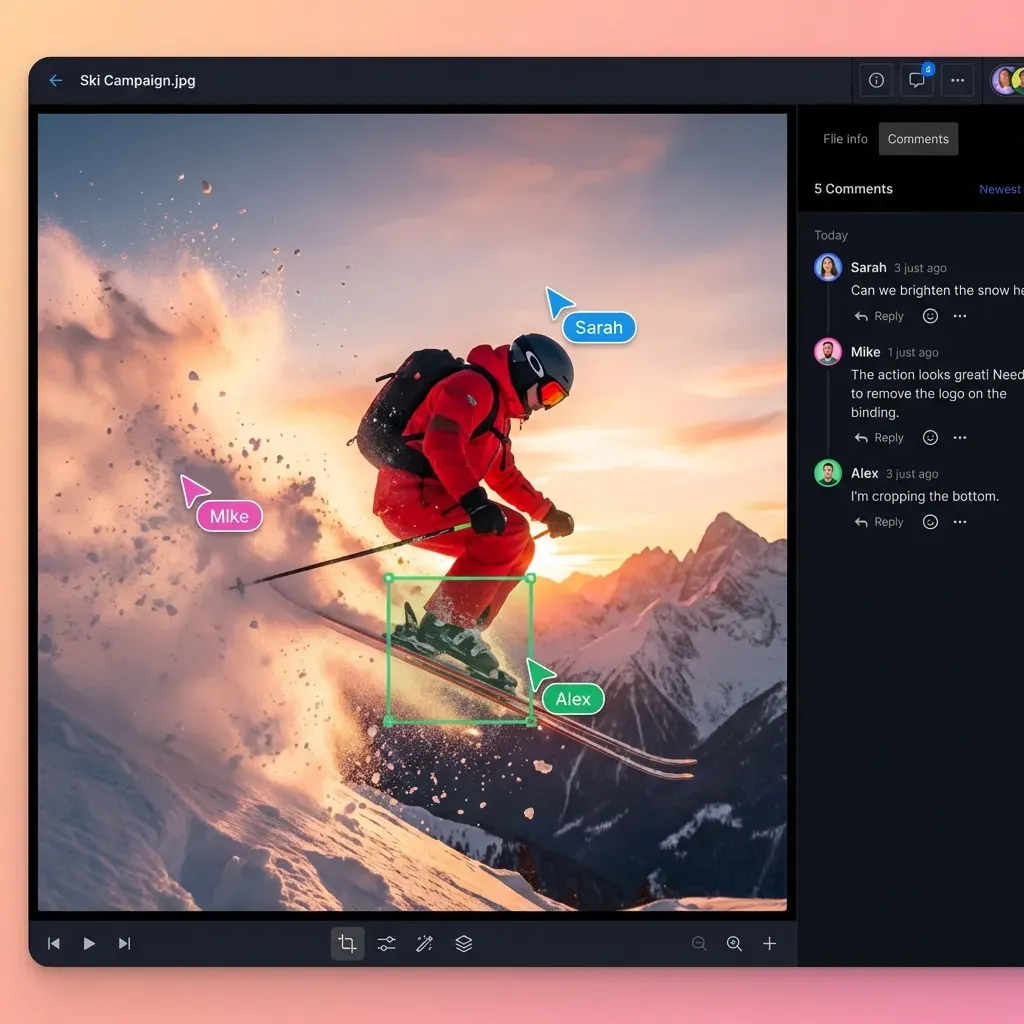
Even with agent automation, human oversight matters. Use role-based permissions to control what agents can do versus what humans can approve.
A practical setup: Agents have write access to their stage folders but need human review before writing to /live/. Humans have admin access to everything and can revert agent outputs if needed.
Audit logs track every action. When an agent modifies a file, the log records who (which agent), what (file path), when (timestamp), and what changed. This creates accountability without slowing down experimentation.
Scaling From Pilot to Production
Start with one campaign, prove the concept, then scale. A pilot might use 3 agents for a single nurture sequence. Production might use 15 agents across multiple simultaneous campaigns.
Credit consumption: plans include monthly credits for AI work. Track usage per agent. Complex prompts consume more. Budget accordingly or upgrade.
Workspace organization: As campaigns multiply, so do folders. Consider sub-workspaces per client or per product line to keep things manageable.
Human review bottlenecks: If every agent output requires human review gates, you create a bottleneck. Prioritize which stages need human review (content usually does, analytics usually doesn't).
Measuring ROI and Performance
Track the right metrics to prove agentic workflow value.
Time saved: How long would these tasks take manually? Compare agent execution time against previous manual benchmarks.
Engagement lift: Did personalized content outperform generic baselines? A/B tests reveal this clearly.
Campaign velocity: How many more campaigns can you run in the same period? This is often the biggest win.
Cost per acquisition: With agents handling segmentation and personalization, does your CPA decrease?
Fastio's activity log lets teams track all agent actions directly. Query past results to inform future campaigns.
Ready for Agentic Marketing?
Persistent storage, a consolidated MCP toolset, and built-in search to build funnels that boost ROI.
Common Challenges and How to Solve Them
Agentic marketing workflows introduce new failure modes. Preparing for them prevents disruptions.
Credit exhaustion: Monitor usage via the dashboard. Set alerts at 75% consumption. Plan upgrades before running critical campaigns.
Agent drift: Without constraints, agents may drift from defined processes. Use checkpoint files and human review steps at critical stages.
Data silos: If agents store outputs in inconsistent locations, downstream agents fail. Enforce folder structure conventions.
Integration failures: External APIs (CRM, ad platforms) may timeout. Build retry logic and fallback handling.
Sources
References used to verify factual claims in this guide.
-
80% of marketers use AI for content creation
Frequently Asked Questions
What is an AI marketing workspace?
A shared persistent space for agents and humans to run marketing campaigns. Includes RAG, MCP tools, storage.
How to automate marketing with agents?
Upload data via MCP, query RAG, generate content, and coordinate via activity feeds for full funnels.
What storage do AI marketing agents need?
Persistent storage, version history, granular permissions, URL import, and indexed search.
Does Fastio support multi-LLM agents?
Yes, Claude, GPT, and Gemini connect directly via Fastio's remote MCP server.
How much does agent storage cost?
Fastio plans start at $9.99/month for Starter with 250 GB storage, with a 14-day Business Trial available.
What are agentic marketing workflows?
Chains of specialized agents: lead gen, personalization, optimization, connected by persistent storage.
How do teams coordinate multi-agent setups safely?
Fastio provides advisory file locks (acquire, heartbeat, release) to coordinate multi-agent writes, backed by file version history with restore, granular permissions, and a detailed activity log.
Related Resources

Ready for Agentic Marketing?
Persistent storage, a consolidated MCP toolset, and built-in search to build funnels that boost ROI.