How to Integrate Linear with AI Agents via MCP
A Linear MCP integration allows agents to read, create, and update issues directly within the Linear project management environment. By connecting Linear to your AI agents via the Model Context Protocol, you can automate triage, track issues faster, and reduce project management work. This guide walks you through the setup process.

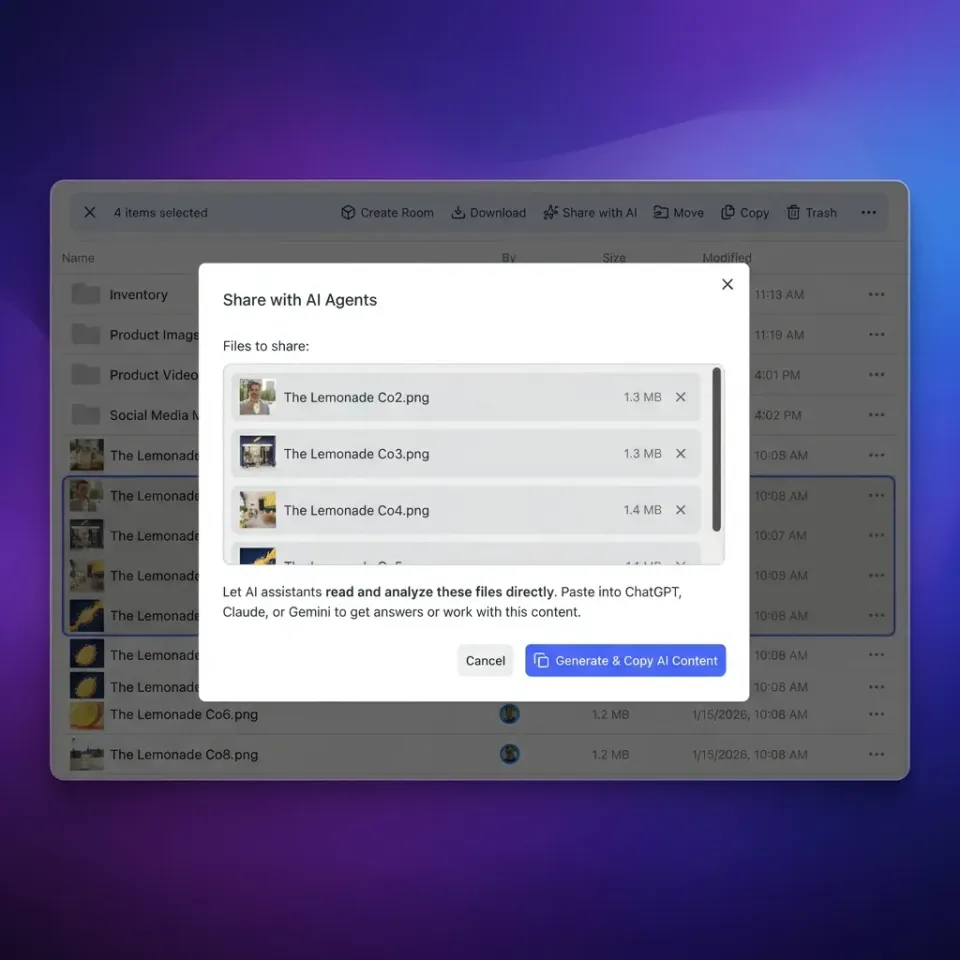
What is the Linear MCP Integration?
The Linear Model Context Protocol (MCP) integration acts as a secure bridge between your AI agents and your Linear workspace. Unlike traditional API integrations that require custom code for every interaction, the Linear MCP server exposes a standardized set of tools that any MCP-compliant agent (like Claude, Cursor, or Fastio agents) can use immediately.
For engineering teams moving fast, this integration changes how project management happens. Instead of humans manually copying bug reports from support chats into Linear, an agent can read the chat, format the issue, check for duplicates, and create the ticket without human intervention.
Key capabilities include:
- Reading issues: Agents can search and retrieve issue details to answer questions.
- Creating issues: Agents can draft and submit new tickets with proper labels and priorities.
- Updating status: Agents can move tickets through workflows as tasks are completed.
- Project visibility: Agents can query project states to generate progress reports.
By standardizing these interactions, the MCP server allows you to swap agents or upgrade models without breaking your integration logic.
Helpful references: Fastio Workspaces, Fastio Collaboration, and Fastio AI.

Related guides
- How to Integrate Fastio MCP with OpenAI SwarmFastio MCP integration provides OpenAI Swarm agents with a unified, persistent workspace to share context, lock files...
- How to Integrate Fastio MCP With MetaGPTIntegrating Fastio MCP with MetaGPT gives your multi-agent teams persistent, shared file workspaces. They can store and...
- How to Integrate Fastio MCP with Phidata for Agent MemoryUsing Fastio MCP with Phidata equips agents with a persistent workspace for document storage, retrieval, and long-term...
- Fastio MCP Server Integration Guide for DevelopersThe Fastio MCP server is a remote server. Your client connects to it over a URL, which means there is no package to...
- GPT Actions vs MCP: Which Integration Approach to Use?Choosing between GPT Actions and the Model Context Protocol (MCP) comes down to one question: do you want to build for...
- How to Connect Fastio MCP to FlowiseThe Fastio Model Context Protocol (MCP) server lets Flowise agents read and write files directly in your workspace. You...
More on this subject: MCP and Model Context Protocol (244 guides)
Prerequisites for Setup
Before you begin the integration, ensure you have the following components ready. The setup is straightforward but requires administrative access to your Linear workspace.
Required Components
- Linear Workspace Admin Access: You need permissions to generate API keys.
- MCP Client: An environment to run your agent, such as:
- Fastio Agent Workspace (Recommended for persistence and file access)
- Claude Desktop App
- Cursor IDE
- Node.js Environment: If running the server locally, you'll need Node.js v16 or higher.
- Linear API Key: A personal API key from your Linear account settings.
Pro Tip: Use a dedicated "Bot" user account in Linear for generating the API key. This ensures that agent actions are distinguished from human actions in your audit logs.
How to Set Up the Linear MCP Server
Setting up the Linear MCP server allows your agents to communicate with the Linear API using the Model Context Protocol. Follow these steps to get your server running and connected.
Step 1: Generate a Linear API Key
- Log in to Linear.
- Navigate to Settings > Account > API.
- Under "Personal API Keys," click Create Key.
- Label it "MCP Agent Integration" and copy the key immediately (you won't see it again).
Step 2: Configure the MCP Server
You can run the Linear MCP server using npx directly within your MCP client configuration.
For Claude Desktop:
Open your claude_desktop_config.json file (typically located in ~/Library/Application Support/Claude/) and add the Linear server configuration:
{
  "mcpServers": {
    "linear": {
      "command": "npx",
      "args": [
        "-y",
        "@modelcontextprotocol/server-linear"
      ],
      "env": {
        "LINEAR_API_KEY": "lin_api_..."
      }
    }
  }
}
For Fastio Agent Workspaces:
- Navigate to your agent's Tools settings.
- Select Add MCP Server.
- Choose Linear from the community registry or enter the package name
@modelcontextprotocol/server-linear. - Paste your
LINEAR_API_KEYinto the environment variable field. - Click Deploy.
Step 3: Verify the Connection
Once configured, restart your MCP client. Ask your agent: "Can you list the last 10 issues in the 'Engineering' team?"
If the integration is successful, the agent will request permission to use the list_issues tool and then display your actual Linear data. If it fails, check your API key permissions and ensure the team name matches exactly what exists in your workspace.


Give your agents a workspace.
Connect Linear to Fastio to give your AI agents a secure place to store files, logs, and long-term memory. Built for linear mcp integration agents workflows.
Available Linear MCP Tools
The Linear MCP server provides a set of tools that agents can invoke. Understanding these tools helps you design better prompts and workflows.
Issue Management
create_issue: Creates a new issue. Required arguments usually includetitleandteamId. Optional arguments includedescription,priority, andassigneeId.update_issue: Modifies an existing issue. Useful for changing status (e.g., "In Progress" to "Done") or adding additional context.list_issues: Retrieves issues based on filters. Agents can filter by assignee, status, or labels to find relevant work.get_issue: Fetches detailed metadata for a specific issue ID (e.g., "ENG-123").
Search and Organization
search_issues: Performs a text search across issues. This is powerful for duplicate detection before creating new tickets.list_projects: Lists active projects to help agents associate issues with broader initiatives.list_teams: Retrieves team IDs, which are often required arguments for creating issues.
Commenting
post_comment: Adds a comment to an issue. Agents can use this to ask for clarification or provide updates on automated tasks.
By combining these tools, you can create complex behaviors. For example, an agent could search for an existing bug (search_issues), and if none is found, create a new one (create_issue) and assign it to the correct project (list_projects).
Best Practices for Agent Workflows
Integrating agents into your project management requires more than just technical setup. You need to design workflows that build trust and efficiency.
1. Implement "Human-in-the-Loop" for Creation
While agents are capable of creating issues autonomously, it's often safer to have them draft the issue first.
Workflow: "Draft a Linear issue for this bug report and ask for my confirmation before submitting."
This prevents a flood of low-quality or duplicate tickets in your backlog.
2. Use Strict Triage Rules
Instruct your agents on your specific triage conventions. Provide them with your team's definitions for "Urgent" vs. "High" priority.
Prompt: "When creating issues, strictly follow our Triage Guide: Only mark as 'Urgent' if production is down. Otherwise, use 'High' for blocking bugs and 'Medium' for minor glitches."
3. Automate Routine Updates
Agents excel at administrative toil. Configure an agent to scan "In Progress" tickets that haven't been updated in several days and post a gentle reminder comment asking for a status check. This keeps your board healthy without nagging colleagues personally.
4. Use Contextual Retrieval
Use the agent's ability to read issue history to generate summaries. Before a sprint planning meeting, an agent can read all completed issues from the last cycle and generate a "Release Notes" draft for the team to review.
Why Use Fastio for Agent Storage?
While the Linear MCP server handles issue tracking, your agents often need to work with files, logs, screenshots, design specs, and documentation that live outside of Linear. This is where Fastio helps.
Persistent Memory for Agents
Fastio provides a secure, persistent filesystem for your AI agents. When an agent processes a bug report, it can save the relevant server logs, stack traces, and screenshots directly into a shared workspace. It can then link these file assets in the Linear issue description.
Benefits of the Fastio + Linear Combination:
- Unified Context: Agents can read a spec file from Fastio and check Linear to see if the implementation tasks exist.
- Asset Management: Attach heavy video files or large log dumps to Fastio and reference the URL in Linear, keeping your issue tracker clean.
- Team Collaboration: Humans can upload a screen recording to a Fastio folder, and the agent can automatically detect the new file, analyze it, and create a Linear bug report.
This creates a complete loop: File upload → Agent Analysis → Linear Issue Creation → Resolution.

Evidence and Benchmarks
Integrating AI agents into triage and project management workflows saves time. Fast-moving teams use these integrations to free up engineering hours.
Reduction in Triage Time Manual triage is a major bottleneck for growing teams. According to Sophos, implementing AI-driven investigation and triage agents can reduce investigation time by up to 50%. This efficiency gain comes from the agent's ability to instantly correlate data, check for duplicates, and format information that would take a human minutes to assemble.
Improved Data Quality Agents don't get tired or skip fields. When configured correctly via MCP, agents consistently fill out required fields like "Environment," "Version," and "Steps to Reproduce," ensuring that engineers have all the necessary context to fix bugs without back-and-forth communication.
Sources
References used to verify factual claims in this guide.
-
AI agents can reduce investigation and triage times by up to 50%.
Frequently Asked Questions
Can I use Linear with Claude?
Yes, you can use Linear with Claude via the Claude Desktop app. You need to configure the Linear MCP server in your `claude_desktop_config.json` file using your Linear API key. Once set up, Claude can read and write to your Linear workspace.
Is the Linear MCP server free?
The Linear MCP server software is open-source and free to use. However, you need a valid Linear account to generate an API key. Linear offers a free tier for small teams, which is sufficient for testing the integration.
How do I handle authentication securely?
Authentication is handled via your Linear API key. Never share this key or commit it to public repositories. When using Fastio or local MCP clients, the key is stored in environment variables, keeping it separate from your agent's conversation history.
Can agents delete issues in Linear?
Technically, the Linear API supports deletion, but most MCP server implementations prioritize `archive` or `change status` actions over hard deletion for safety. It is best practice to instruct agents to close or archive issues rather than attempting to delete them.
Related Resources

Give your agents a workspace.
Connect Linear to Fastio to give your AI agents a secure place to store files, logs, and long-term memory. Built for linear mcp integration agents workflows.