Top 10 Lesson Plan Collaboration Tools for Teachers in 2026
Teachers spend roughly 7 hours per week searching for instructional materials and another 5 hours creating their own. Lesson plan collaboration tools cut that time by letting teams co-create, share, and refine plans in one place. This guide compares 10 tools across AI planners, visual boards, and shared workspaces.


What Lesson Plan Collaboration Tools Actually Do
Lesson plan collaboration tools go beyond shared folders. They give teaching teams a single workspace where everyone can draft plans, attach resources, tag standards, and leave feedback without switching between apps.
The core difference from solo planning: when one 10th-grade English teacher builds a Shakespeare unit, the whole department can see it, adapt it, and improve it. Strong strategies spread across classrooms instead of staying locked in one person's Google Drive.
Three capabilities separate real collaboration tools from basic file storage:
- Real-time co-editing so two teachers can work on the same plan simultaneously
- Version history so you can see who changed what and roll back if needed
- Resource libraries where teams build a shared collection of activities, rubrics, and assessments over time
Schools that adopt these tools consistently report less duplicate work and more consistent instruction across grade levels.
Helpful references: Fastio Workspaces, Fastio Collaboration, and Fastio AI.
Related guides
- 10 Best Classroom File Collaboration Tools for TeachersClassroom file collaboration tools let teachers share assignments, projects. and feedback with students in real time....
- How to Share Educational Resource Libraries SecurelyEducational resource library sharing enables teachers, schools, and districts to organize and distribute lesson plans,...
- How to Set Up a Teacher Student File Feedback SystemTeachers face a weekly grind reviewing student work—essays, spreadsheets, art sketches, video projects. Traditional...
- How to Set Up Student Project Collaboration WorkspacesStudent project collaboration workspaces give groups a single place to upload files, add comments, and track changes...
- Top Student Homework Submission Portals for SchoolsStudent homework submission portals let students upload assignments online in a secure way. Files get organized...
- Best Cloud Storage for Educators in 2026Guide to cloud storage educators: Teachers and school admins use cloud storage every day for lesson plans, student...
More on this subject: Education (15 guides)
Why Collaborative Lesson Planning Matters
Teachers get about 53 minutes of planning time per day on average, roughly 4.5 hours per week. Elementary teachers get even less. That time disappears fast when you're searching for materials, formatting documents, and aligning to standards alone.
A 2022 RAND survey found that teachers spend 7 hours per week searching for instructional resources and 5 hours per week creating their own. Collaborative planning attacks both numbers. When five teachers share one well-built unit instead of building five separate versions, the math works immediately.
Beyond time savings, shared planning improves instruction quality. New teachers get access to veteran-designed lessons and can adapt them rather than starting from scratch. Veteran teachers get fresh perspectives from early-career colleagues who bring current training and digital fluency.
The practical barrier most schools hit isn't motivation. It's tooling. Email attachments, scattered Google Drive folders, and "I'll share it at the meeting" don't scale. That's where purpose-built collaboration tools come in.
Top 10 Lesson Plan Collaboration Tools for 2026
We evaluated tools on collaboration features, AI capabilities, pricing for educators, and standards support. Each entry includes what it does well, where it falls short, and who should use it.
1. Planbook
The established leader in online lesson planning, used by over one million teachers. Set up weekly, bi-weekly, or cycle schedules, bump lessons when dates shift, and attach files, videos, and links. Standards alignment is built in across all 50 states.
Pros:
- Drag-and-drop schedule management
- Attach files, links, and standards to any lesson
- Share plans with substitutes, parents, or administrators
Cons:
- Limited AI features compared to newer tools
- Collaboration is plan-sharing, not real-time co-editing
Pricing: Paid plans available for individual teachers; school plans also available
Best for: Individual teachers and small teams who want structured planning with standards alignment.
2. MagicSchool AI
Generates complete lesson plans, quizzes, rubrics, and IEPs from natural language prompts. Teachers type what they need, and MagicSchool produces standards-aligned drafts in seconds. Team workspaces let departments share and refine outputs.
Pros:
- Standards-aligned content generated from text prompts
- Differentiation tools for diverse learners
- Community library of educator-tested prompts
Cons:
- AI outputs need human review for accuracy and tone
- Advanced collaboration features require paid plans
Pricing: Free basic plan; Pro at $9.99/month billed annually
Best for: Elementary and middle school teams who want AI-assisted first drafts.
3. Common Planner
AI-powered planbook designed for team collaboration. Teachers co-plan in a shared, living planbook, share and co-create lessons, and backward-plan from standards. Built specifically for collaborative lesson development rather than individual scheduling.
Pros:
- True co-planning in shared planbooks
- AI-assisted lesson generation
- Backward design from learning goals
Cons:
- Newer platform, smaller user community
- Limited integrations with LMS platforms
Pricing: Free tier available; paid plans for schools
Best for: Teams that want a dedicated co-planning environment with AI support.
4. Edcafe AI
A centralized hub where teachers organize AI-generated lesson plans, quizzes, and interactive materials into folders. Co-teachers can access, duplicate, and customize each other's resources. The lesson plan structure includes objectives, procedures from hooks to closing, differentiation, and reflection prompts.
Pros:
- Custom folder system for organizing shared materials
- Detailed lesson structure with differentiation built in
- Easy duplication and customization of colleague resources
Cons:
- More focused on individual planning than real-time co-editing
- Some features still in development
Pricing: Free core features; premium plans available
Best for: Teachers who want AI-generated materials with strong organizational structure.
5. Fastio Intelligent Workspaces
Cloud workspaces for lesson files, videos, and documents with real-time collaboration and AI-powered semantic search. Enable Intelligence Mode on a workspace to index all uploaded content, then ask questions like "Find ecosystem activities with hands-on examples" and get cited responses from your own materials.
Pros:
- Semantic search across all workspace files, not just filenames
- Uploads up to 100 GB per file on the Enterprise plan for video lessons and rich media
- Activity logs, comments, and granular permissions by folder
- 14-day Business Trial with plans starting at Starter $9.99/mo (250 GB storage, 3 seats)
Cons:
- Focuses on file collaboration and search rather than pre-built lesson templates
- No built-in standards database
Pricing: From $9.99/mo (Starter, 250 GB, 3 seats), Business ($49.99/mo), Enterprise ($199.99/mo); 14-day Business Trial
Best for: Departments managing large collections of videos, research, and shared resources across grade levels.
6. Lumio by SMART
Turns PDFs, Google Slides, and PowerPoint files into interactive lessons with activities, games, and formative assessments. Shared and team libraries let teachers co-edit lesson files.
Pros:
- Convert existing materials into interactive formats
- Collaborative workspaces for student co-creation
- Game-based learning activities built in
Cons:
- Full collaboration features require the Spark plan
- Storage limited to 100MB on the free tier
Pricing: Free plan available; Standard plan priced per teacher; Spark for districts (custom pricing)
Best for: Teachers who want to transform existing slides into interactive, shareable lessons.
7. Google Classroom with Gemini
Combine Google Docs and Sheets for planning with Classroom for distribution. Gemini assists with content drafting across the Google ecosystem. The strength is integration: plan in Docs, create assignments in Classroom, video call in Meet.
Pros:
- Tight integration across Google Workspace tools
- Direct student assignment distribution
- Free for schools using Google Workspace for Education
Cons:
- Per-user storage caps apply
- AI capabilities more general-purpose than education-specific tools
Pricing: Free for Google Workspace for Education schools
Best for: Schools already running Google Workspace for Education.
8. Nearpod
Interactive lesson platform where teachers create or import lessons with embedded activities, polls, and assessments. Lesson Collaboration lets teachers within a school or district share, co-edit, and distribute Nearpod lessons with customizable permissions.
Pros:
- Built-in collaboration with permission levels for sharing
- Interactive elements like polls, VR field trips, and simulations
- Substitute plan sharing for teacher absences
Cons:
- Best features require school or district licenses
- Learning curve for building interactive lessons from scratch
Pricing: Free basic; School and District licenses with full collaboration
Best for: Schools that want interactive lesson delivery combined with collaborative planning.
9. FigJam (Figma for Education)
Infinite digital canvas for visual lesson planning with sticky notes, timers, templates, and voting. Free for verified educators. Great for brainstorming sessions, curriculum mapping, and visual unit overviews.
Pros:
- Visual brainstorming with real-time collaboration
- Free for verified educators
- Education-specific templates for curriculum mapping
Cons:
- Not designed for structured lesson plan storage
- Steeper learning curve for text-heavy planning
Pricing: Free for verified educators
Best for: Creative planning sessions, curriculum mapping, and visual unit design.
10. Padlet
Interactive boards where teachers and students post notes, links, videos, and images in real time. Works as a quick-sharing tool for lesson ideas, resource collections, and collaborative brainstorming.
Pros:
- Simple drag-and-drop multimedia posting
- Works for both teacher collaboration and student activities
- Generous free tier
Cons:
- Lacks structure for full lesson plans with standards alignment
- Board organization can get messy at scale
Pricing: Free basic; paid plans for additional boards and features
Best for: Quick idea sharing, resource collection, and multimedia brainstorming boards.
How to Pick the Right Tool for Your Team
Match tools to how your team actually works, not how you wish they worked.
| If your team needs...
| Start with... | Why | |---|---|---| | AI-generated first drafts | MagicSchool AI or Edcafe AI | Fast content creation with human refinement | | Visual curriculum mapping | FigJam | Infinite canvas, free for educators | | Shared file libraries with search | Fastio | Semantic search across all content types | | Interactive lesson delivery | Nearpod or Lumio | Built-in student engagement tools | | Standards-first planning | Planbook or Common Planner | Structured alignment and scheduling | | Minimal change from current tools | Google Classroom or Nearpod | Works inside existing ecosystem |
Most schools end up combining two tools: a planning tool (Planbook, MagicSchool, or Common Planner) paired with a storage and sharing layer (Google Drive, Fastio, or their LMS). The planning tool handles the daily workflow. The storage layer holds the growing library of shared resources.
One thing to check early: your district's IT approval timeline. Most districts take 4 to 6 weeks to clear a new platform that touches student data. Start the approval process before you promise teachers the tool will be ready by September.
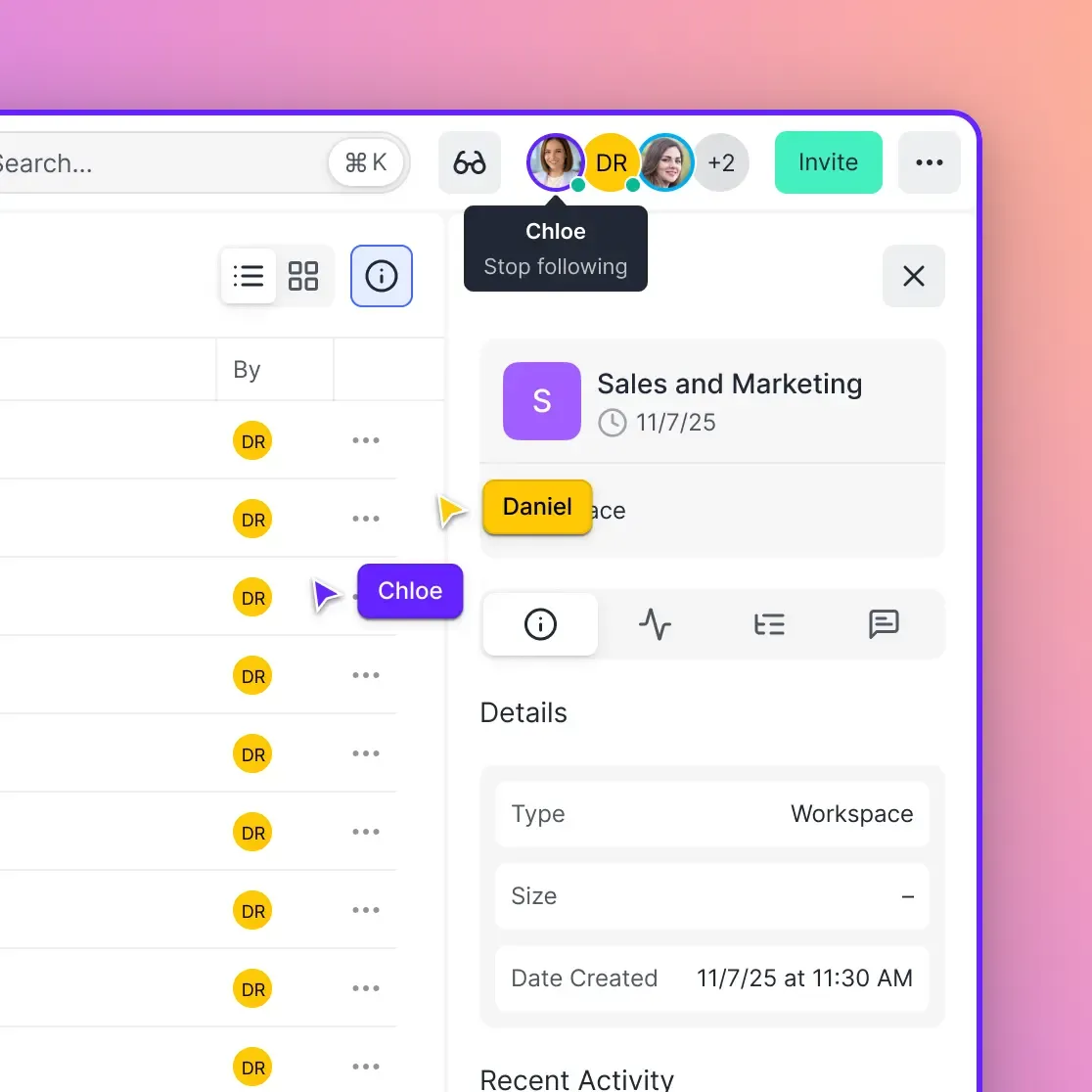


Stop Rebuilding Lessons from Scratch
Build a shared lesson library your whole department can search, edit, and improve. Fastio gives teaching teams generous storage with AI-powered search across all your files. Built for lesson plan collaboration tools workflows.
Setting Up Shared Planning in Your School
Adopting a collaboration tool is 30% software and 70% process. Here's a practical rollout sequence.
1. Audit what you already have. Gather every lesson plan, rubric, and activity your department uses. You'll find duplicates, outdated materials, and resources nobody knew existed. This step alone saves time.
2. Organize by subject and unit, not by teacher. Folder structures like "Grade 5 > Science > Unit 3 > Week 2" survive staff turnover. Teacher-name folders don't. Set a naming convention early. Without one, you'll end up with "Science Oct," "sci oct FINAL," and "oct science v2" sitting next to each other within weeks.
3. Pick one department as a pilot. Run the pilot for a full semester before expanding school-wide. Staff who learn from the pilot group come in knowing the basics, and you'll have worked out permission structures and naming conventions before scaling.
4. Schedule regular curriculum check-ins. The tool holds the plans. The meetings drive improvement. Bi-weekly sessions where teachers review what worked, update shared plans, and discuss student results keep the library alive instead of stale.
5. Track usage and impact. Activity logs and version history show which resources get used most and which sit untouched. This data helps department heads balance workloads and identify top-performing materials.
For schools with large media collections (recorded lessons, lab videos, project examples), a workspace with semantic search makes a real difference. Fastio's Intelligence Mode indexes uploaded files so teachers can search by concept rather than filename, finding "photosynthesis lab demonstration" across hundreds of video files without remembering what each one was called.
Common Mistakes to Avoid
Schools that struggle with collaborative planning usually hit the same problems.
Picking a tool before defining the workflow. If teachers don't know when they'll collaborate, how often they'll update shared plans, or who owns what, the best software in the world sits unused. Define the process first, then pick the tool that fits it.
Trying to centralize everything at once. Start with one subject area or grade level. Get that working well, document what you learned, then expand. Going school-wide on day one creates chaos.
Ignoring file organization. Shared spaces without naming conventions and folder structures become digital junk drawers within a month. Agree on a structure before uploading anything.
Skipping the feedback loop. Collaborative planning works when teachers discuss what happened in class and update the shared plan accordingly. Without regular check-ins, you just have a shared filing cabinet.
Underestimating training time. Even intuitive tools need onboarding. Budget 2 to 3 sessions for teachers to get comfortable. Pair tech-confident teachers with those who need more support.
Sources
References used to verify factual claims in this guide.
-
Teachers spend 7 hours per week searching for instructional resources
-
Public school teachers receive roughly 53 minutes of planning time per day
-
Planbook used by over one million teachers
Frequently Asked Questions
What are the best free lesson plan collaboration tools?
Google Classroom, FigJam, and Padlet all offer strong free tiers for educators. For paid departmental storage, Fastio provides 250 GB on Starter ($9.99/mo) with AI-powered search across uploaded lesson materials. MagicSchool AI has a free plan for basic AI-generated lesson drafts.
How much time can teachers save with collaboration tools?
Research from the Education World survey shows teachers spend 7 hours per week searching for materials and 5 hours creating them. Schools using shared planning tools report cutting that time by eliminating duplicate work and building on existing resources instead of starting from scratch.
Which tools work best for remote or hybrid teaching teams?
Cloud-based tools like Google Classroom, Nearpod, and Fastio work well for distributed teams since everything is accessible from any browser. Nearpod adds interactive lesson delivery that works in both live and student-paced modes. Fastio handles large video files and media that remote teams need to share without email attachment limits.
Can these tools help with standards alignment?
Yes. Planbook and Common Planner include built-in standards databases for all 50 states. MagicSchool AI generates standards-aligned content from prompts. Google Classroom works alongside Google's standards tagging. For tools without built-in standards, teachers typically tag plans manually using folder structures or document metadata.
How do I get IT approval for a new collaboration tool?
Start early. Most districts take 4 to 6 weeks to review new platforms, especially those handling student data. Prepare a one-page summary covering data storage location, encryption, access controls, and student data handling. Tools with enterprise security standards compliance or similar certifications move through review faster. Run a pilot with one department to demonstrate value before requesting school-wide approval.
Related Resources

Stop Rebuilding Lessons from Scratch
Build a shared lesson library your whole department can search, edit, and improve. Fastio gives teaching teams generous storage with AI-powered search across all your files. Built for lesson plan collaboration tools workflows.